

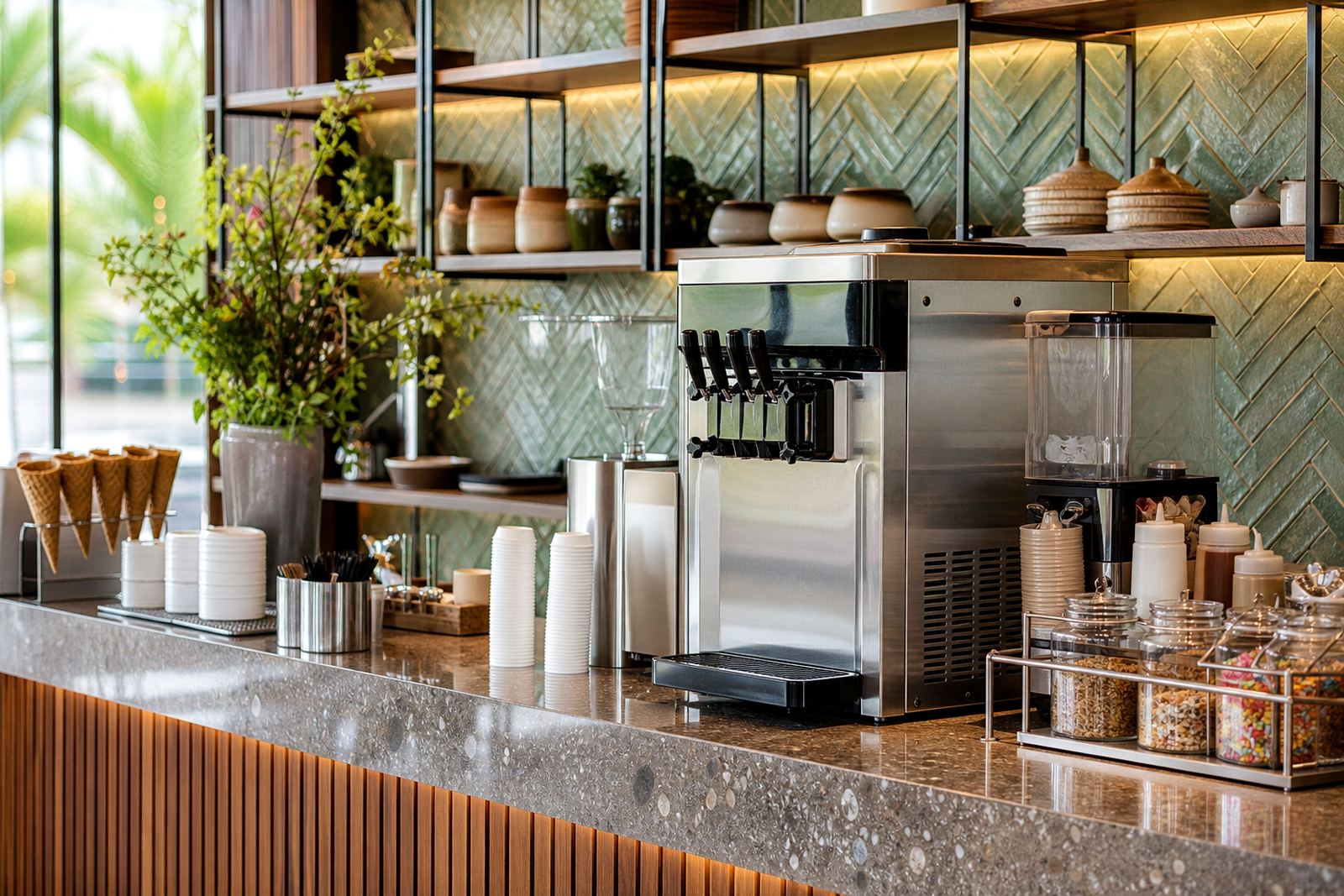
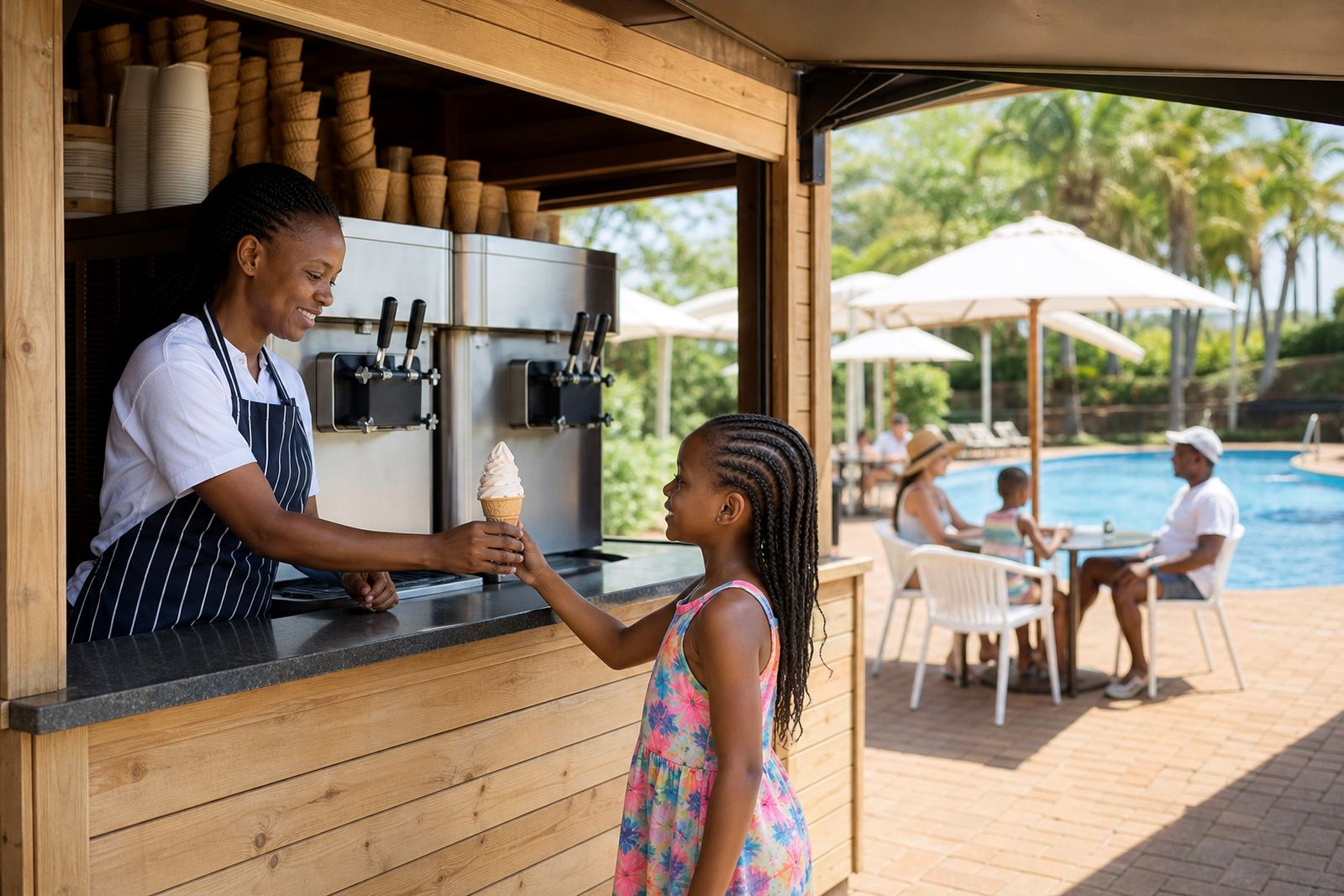
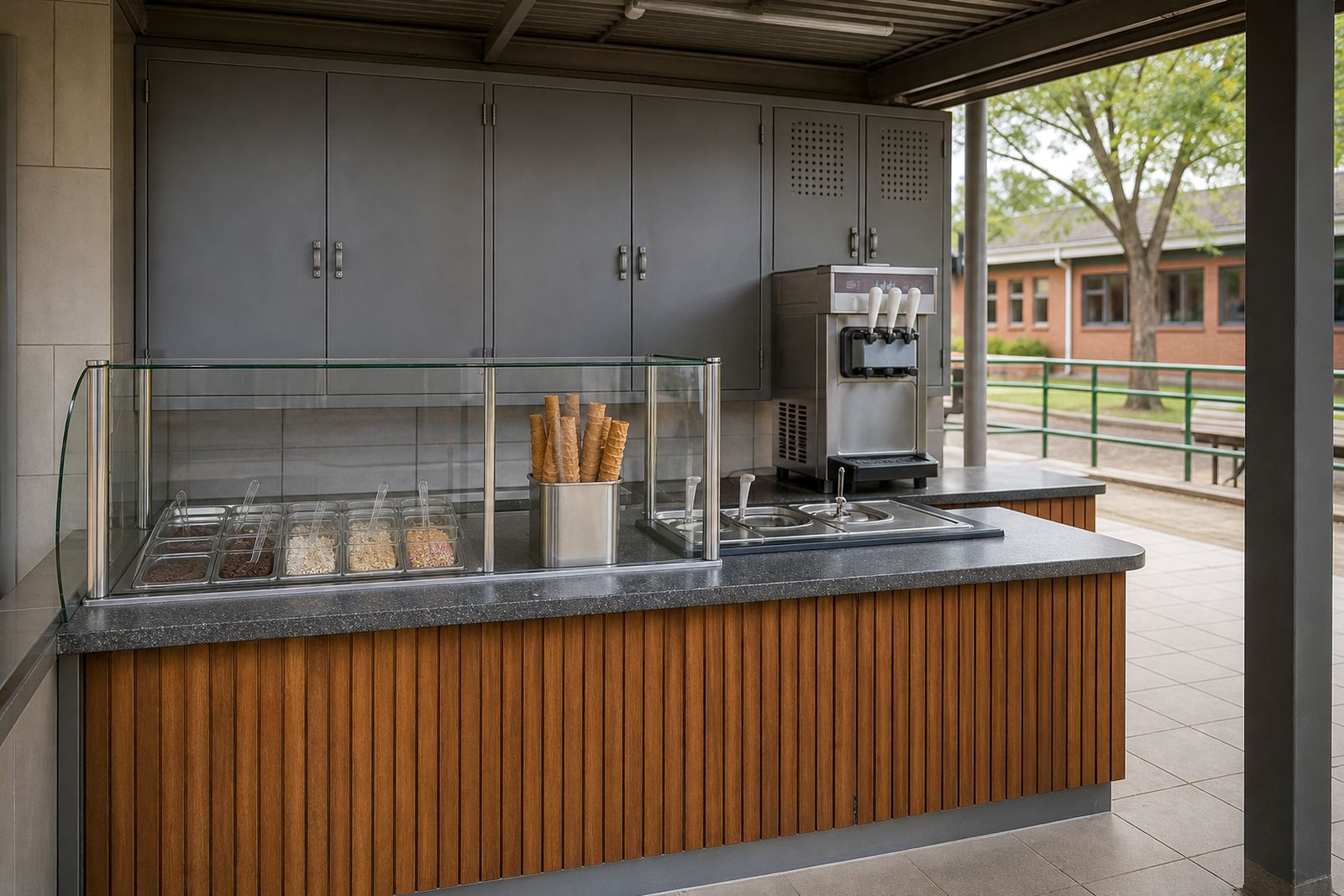
Dessert Counters for Different Trading Speeds
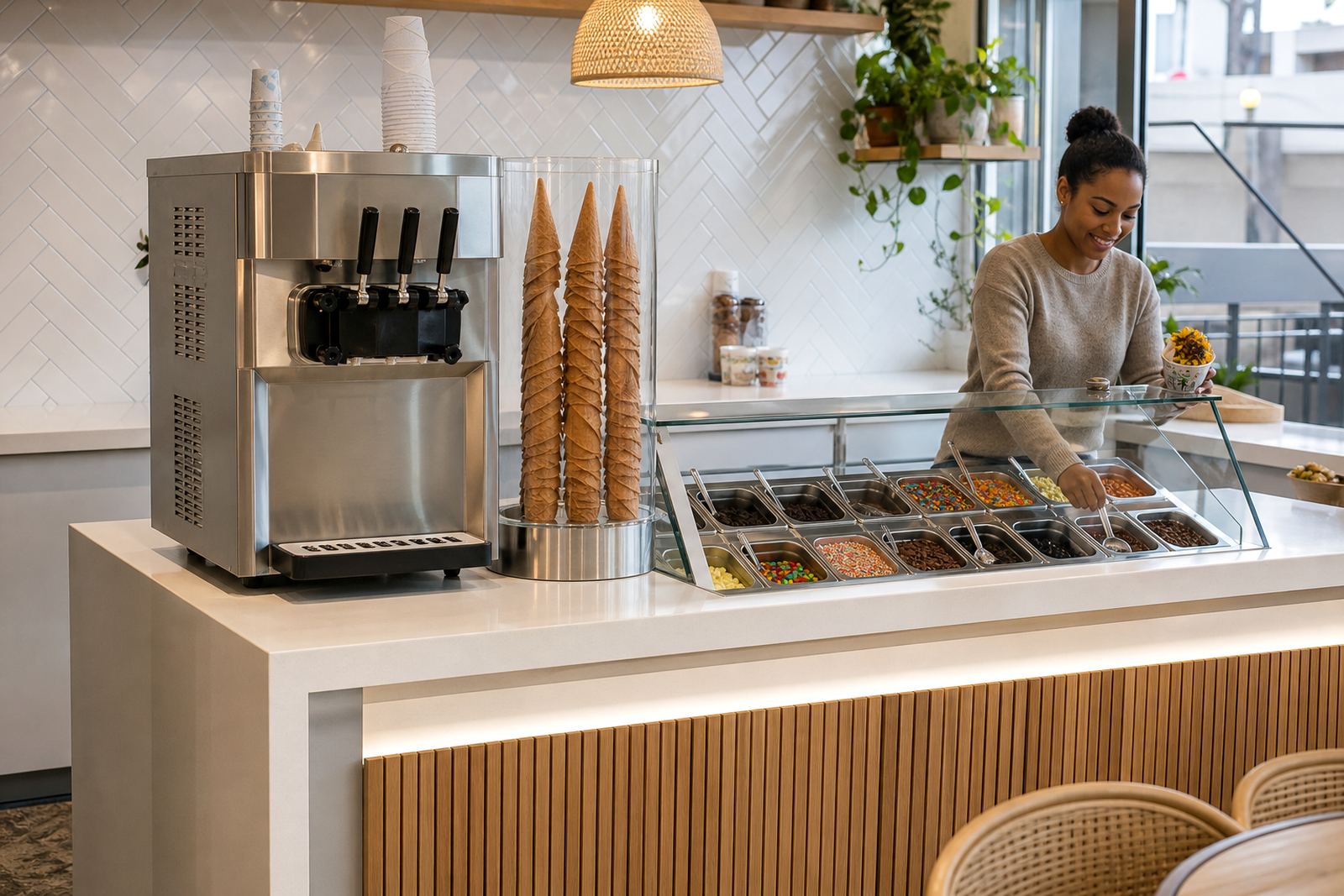
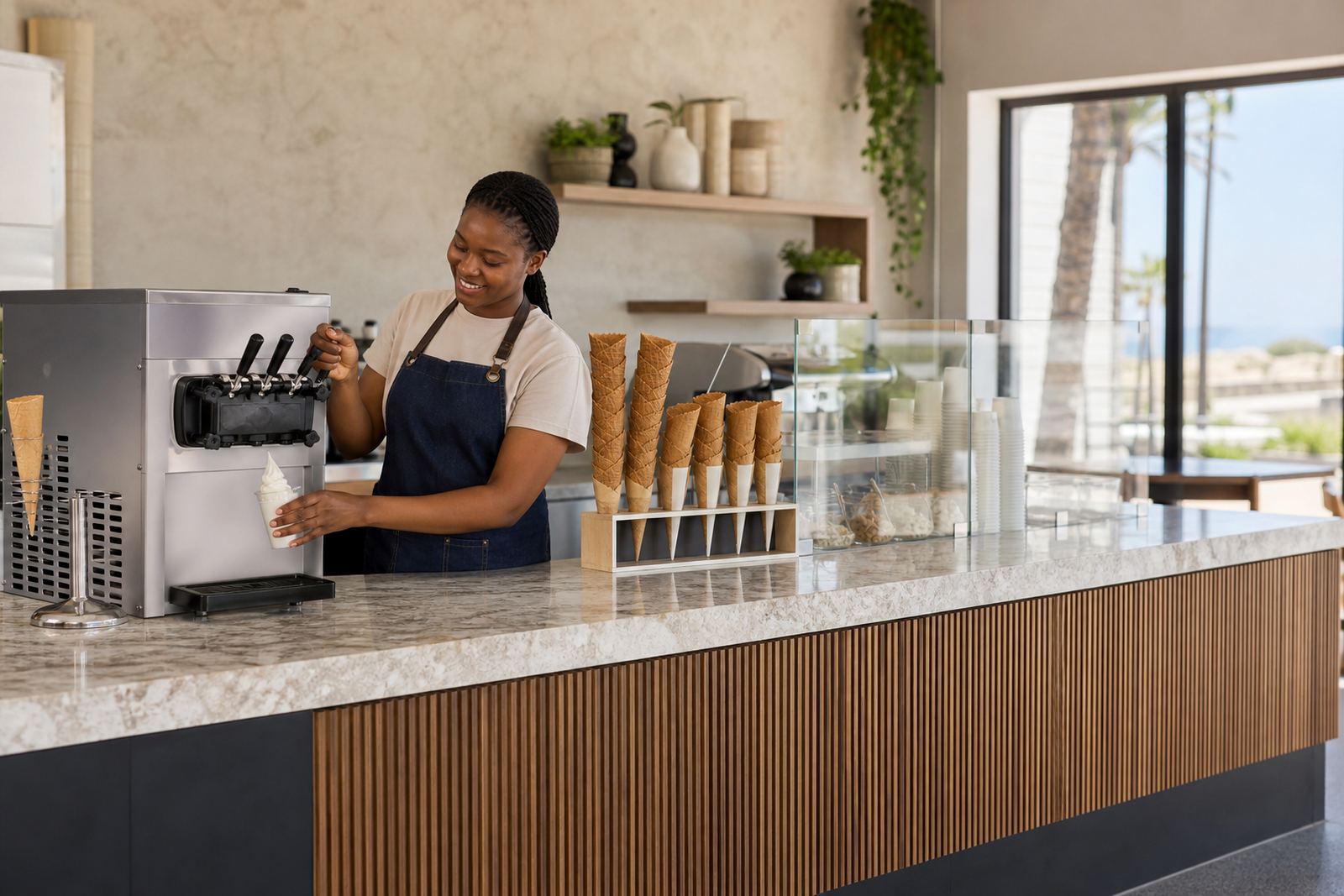
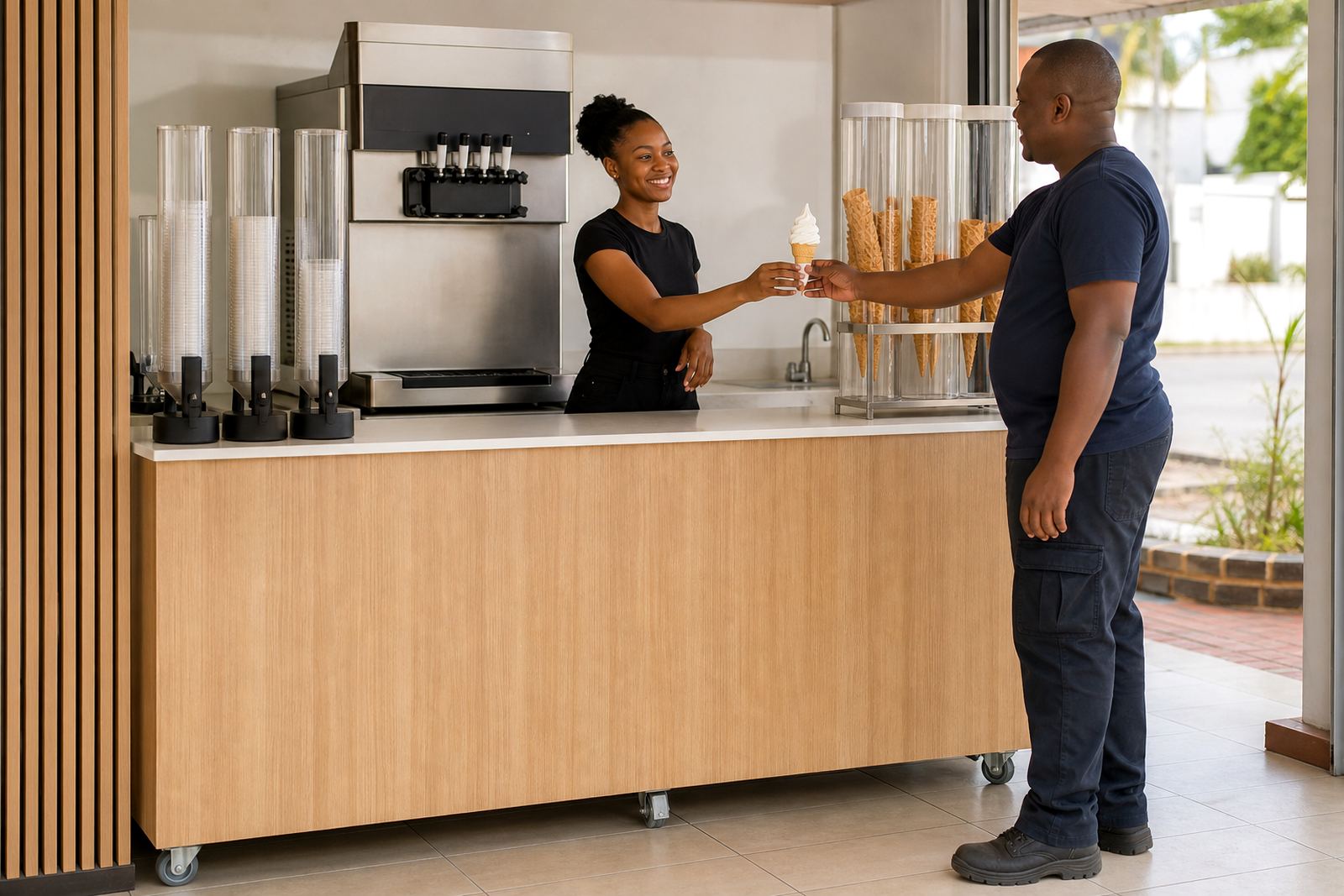
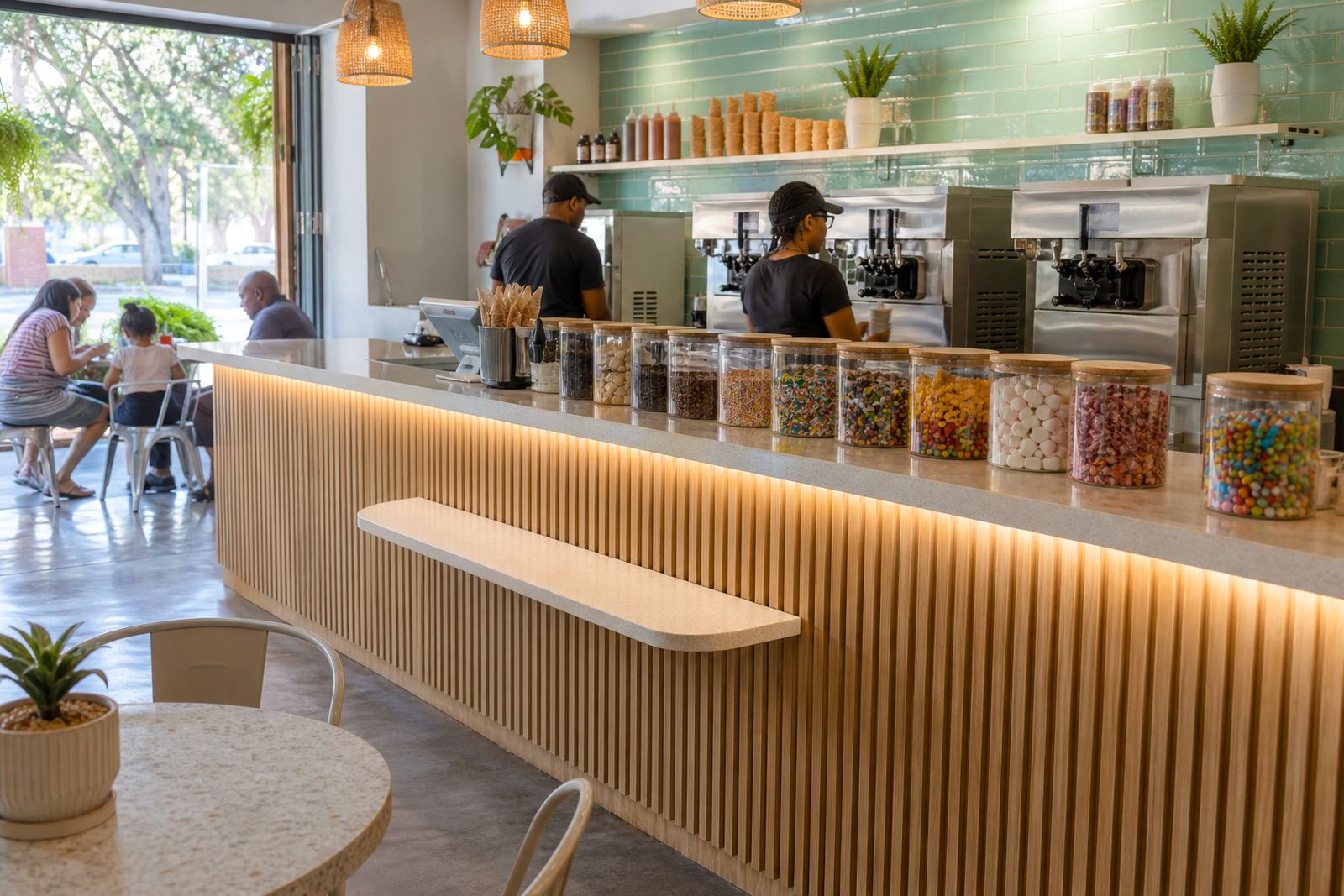
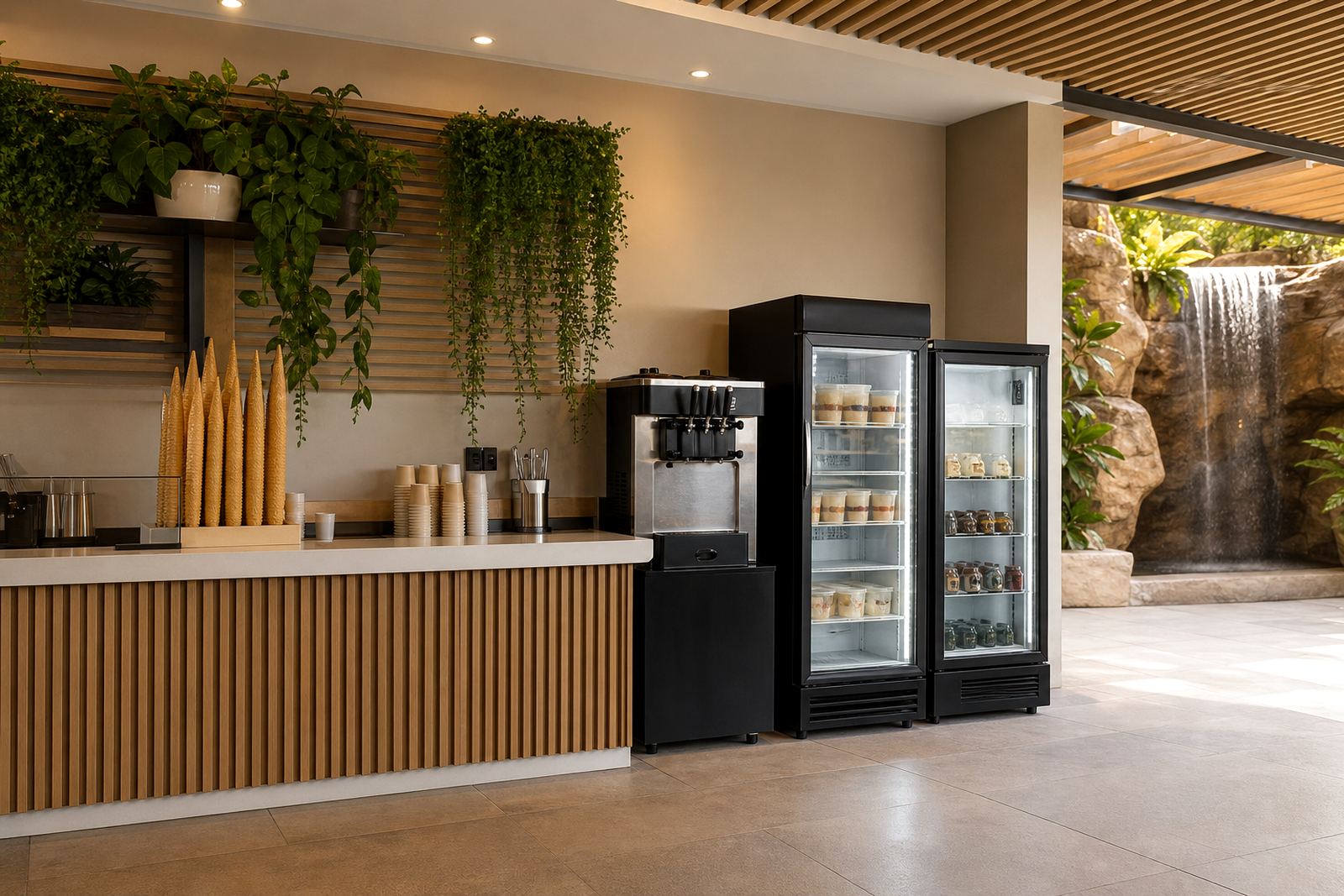
A dessert counter has to match the pace of the site. A small café in Umhlanga may only need one soft-serve machine and a compact topping area, while a busier family restaurant in Durban or Johannesburg may need space for two machines, mix storage and a wider service point. The right layout keeps the team moving without crowding the till or blocking the queue.
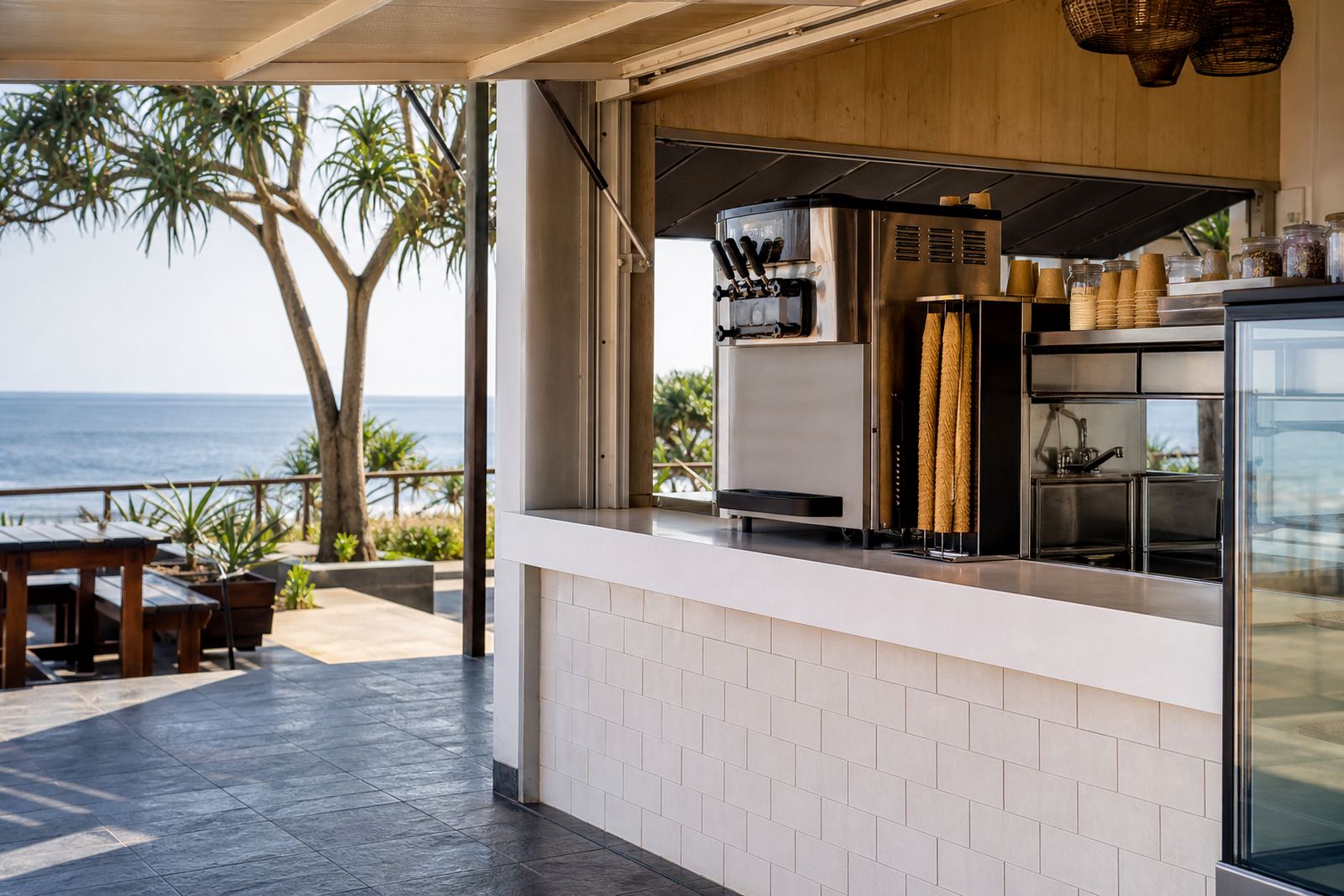
When we look at a counter project, we start with the hours of trade, expected footfall, power supply and available floor space. That helps guide the choice between a single serve point, a self-serve style set-up, or a fuller dessert station with room for cones, spoons and backup mix. In coastal areas like Durban and Gqeberha we also allow for humidity, because packaging and dry stock need cleaner storage conditions.
How to Choose the Right Counter Format
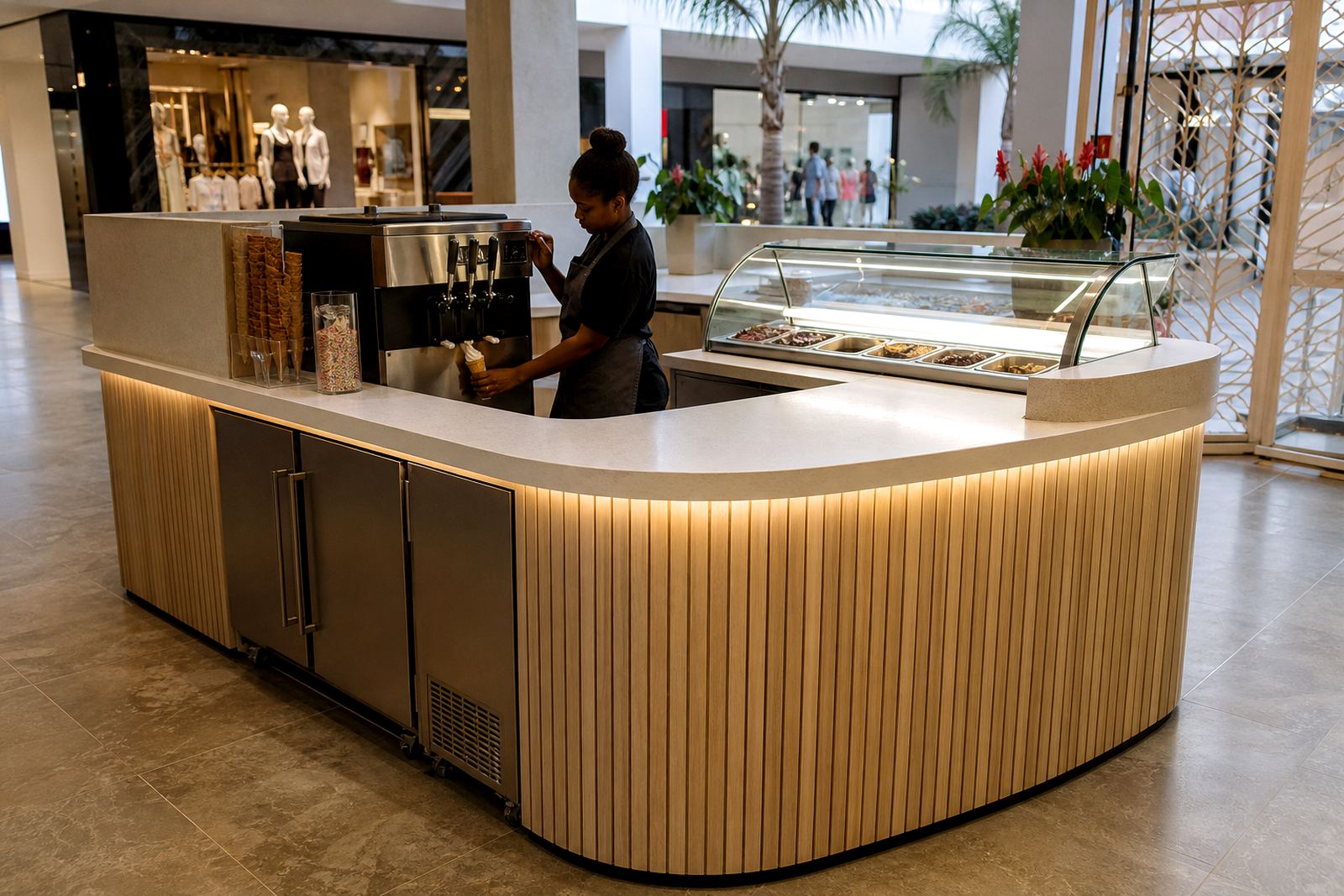
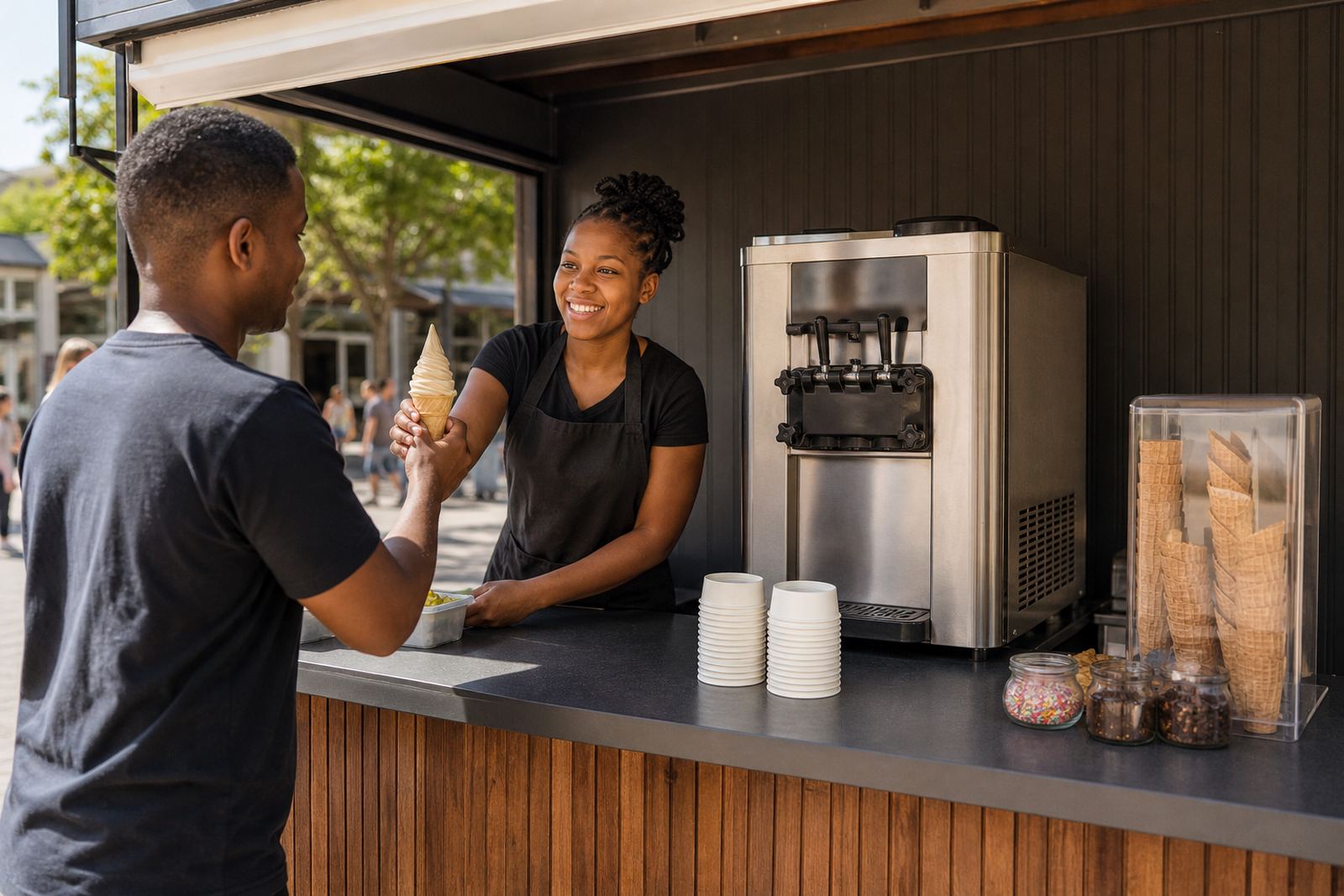
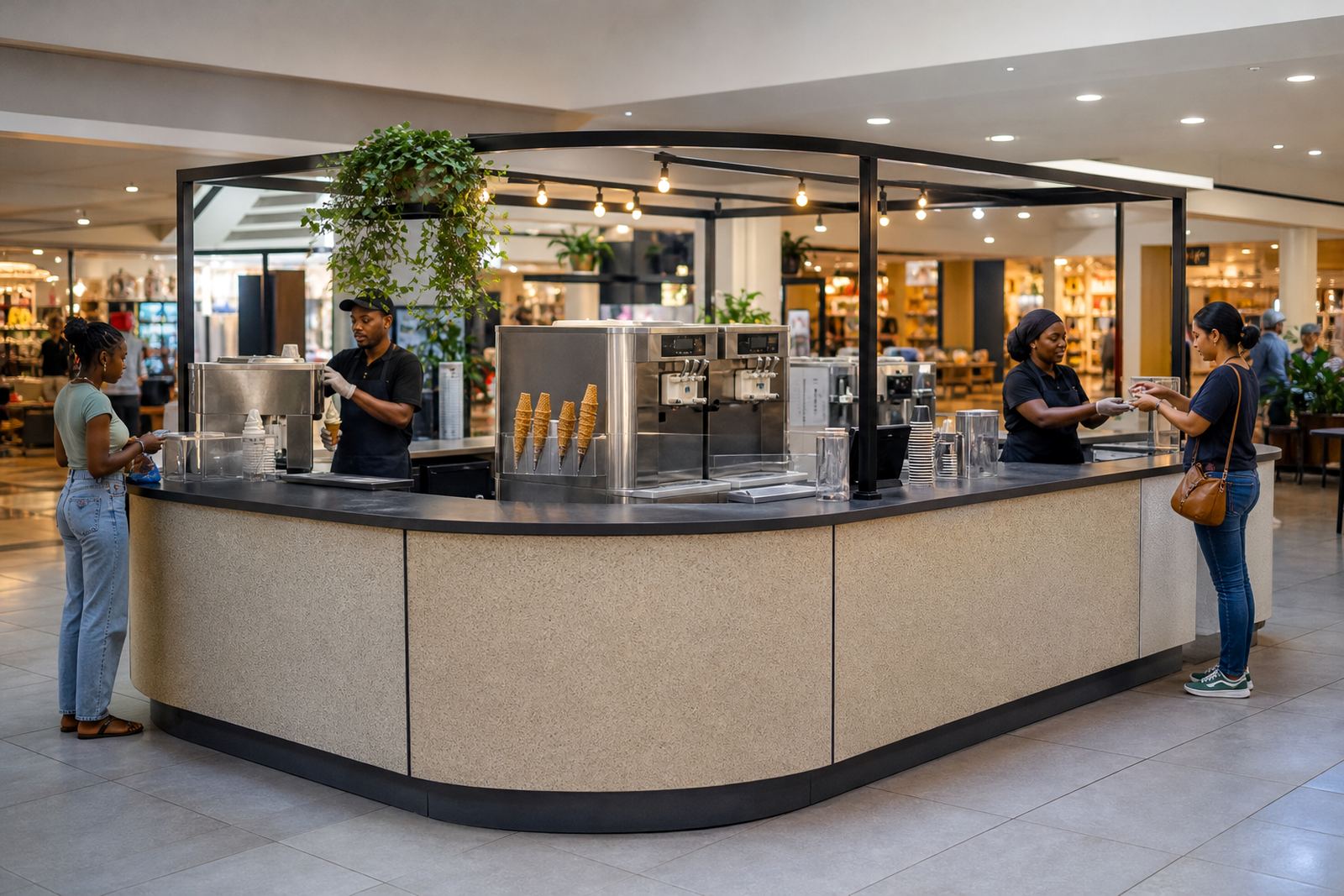
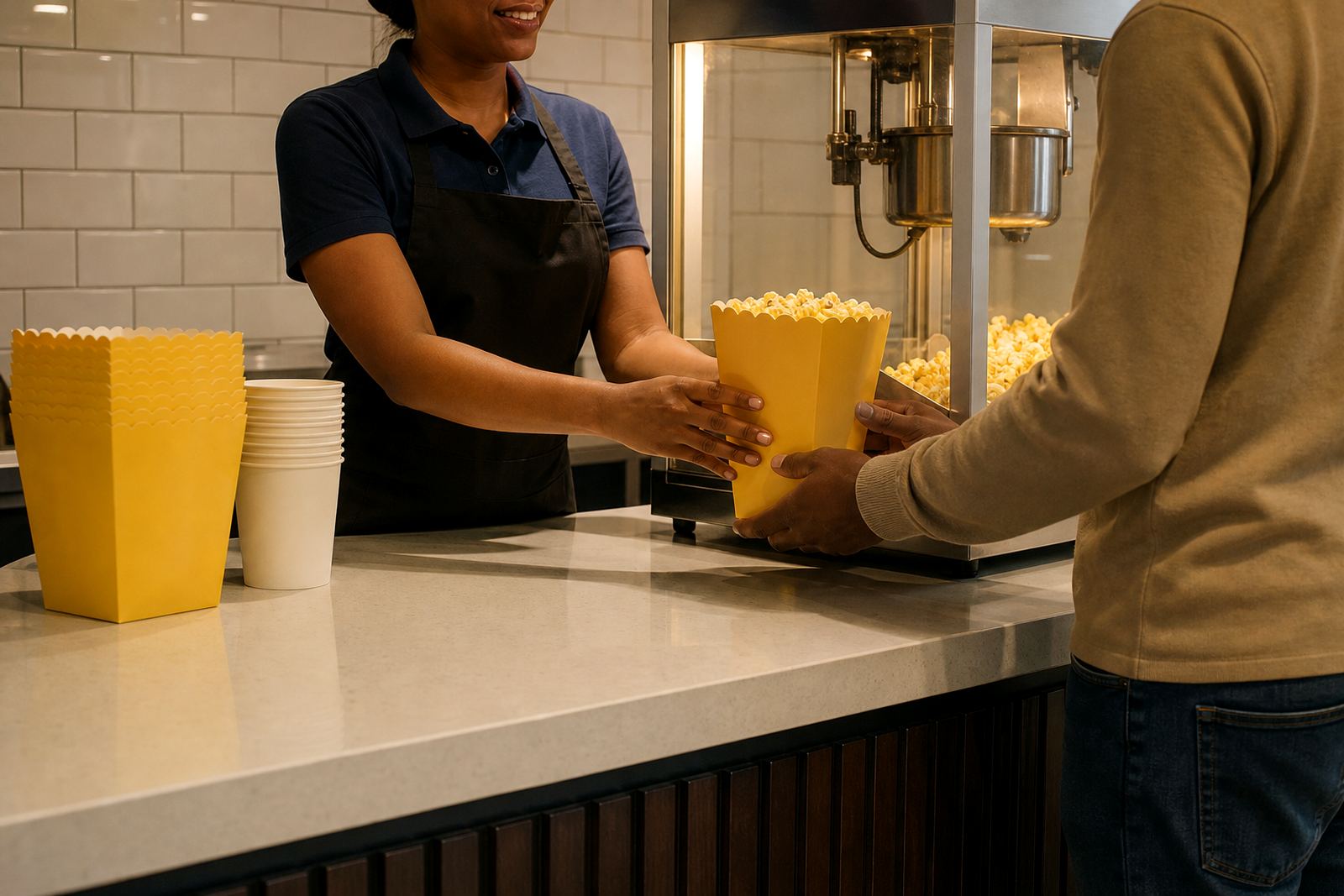
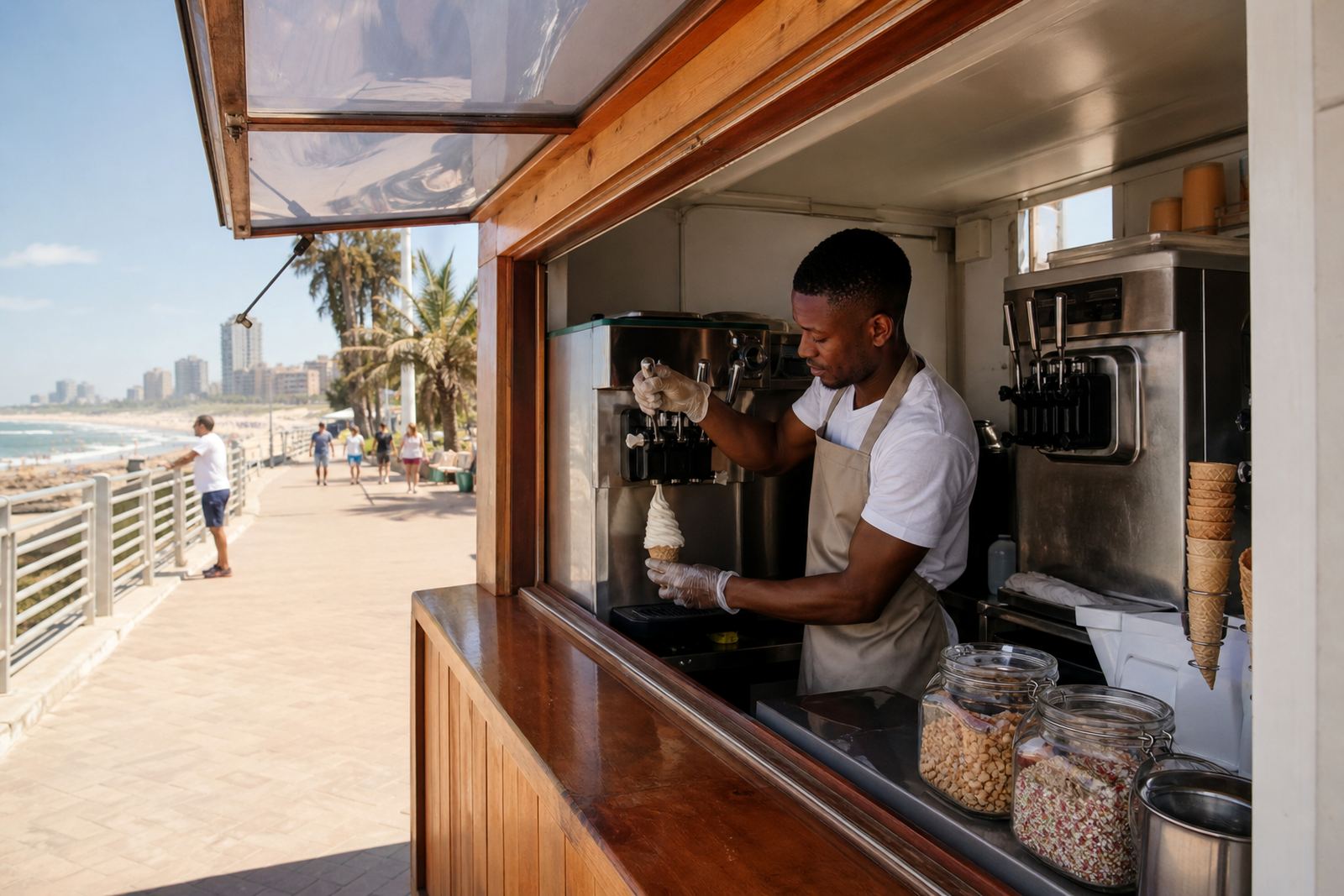
Not every site needs the same footprint. A kiosk at a mall entrance will usually need quick handover, clear product visibility and simple cleaning at close of trade. A restaurant dessert counter may need more prep surface and better separation between service and washing up. The best choice depends on how the counter will be used hour by hour, not just on the menu list.
- Choose a compact counter when space is tight and foot traffic is steady but not constant.
- Choose a wider counter when you need room for cones, toppings and a second staff member.
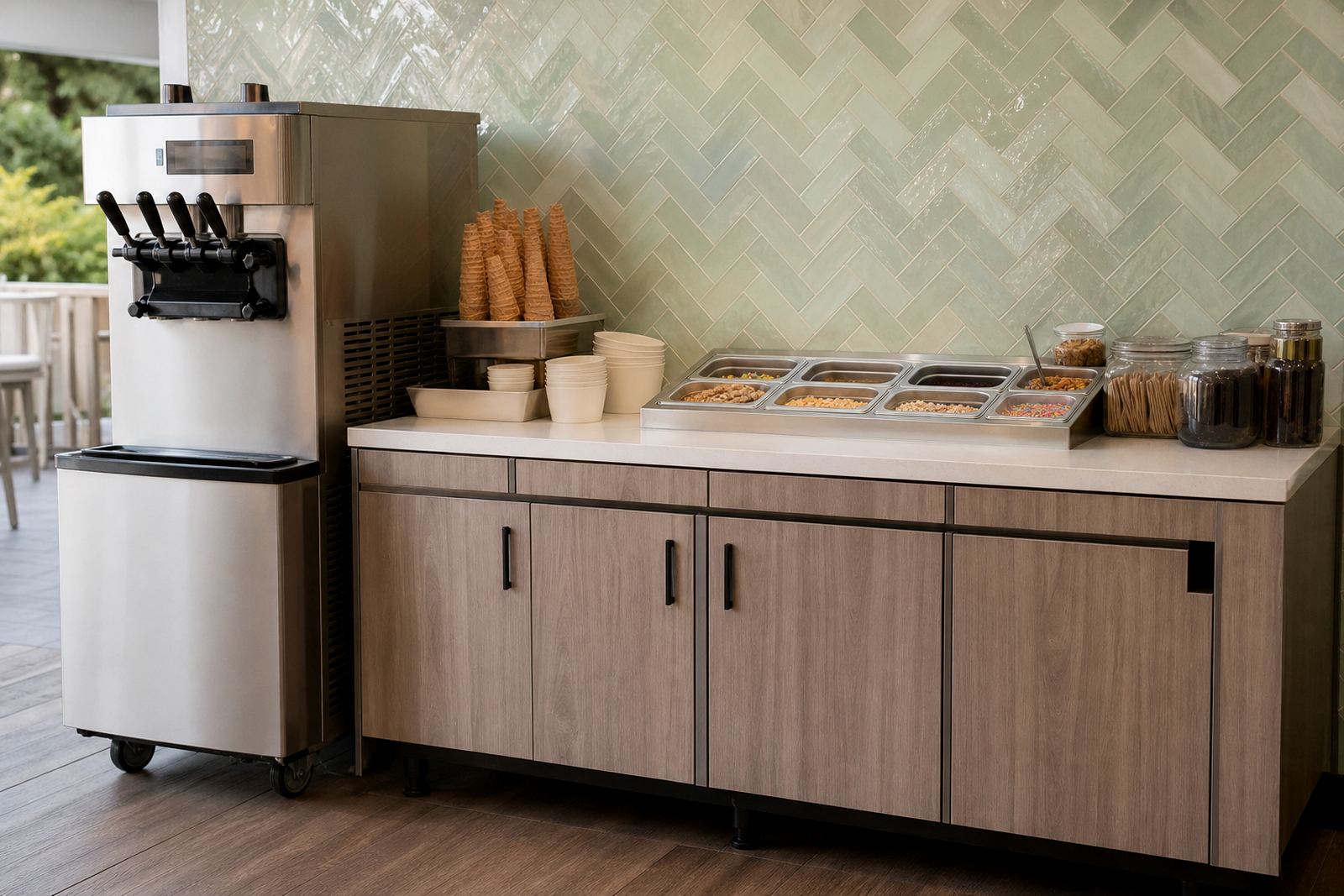
- Choose a layout with storage below the counter if you are working with limited back-of-house space.
- Choose a setup that allows safe access to power points, drainage and cleaning access.
We also look at seasonal trading. Many sites in South Africa need more freezer support in summer and more careful stock control through quieter months, so the counter should handle a change in volume without becoming hard to servce.
Layout Thinking That Keeps Service Moving
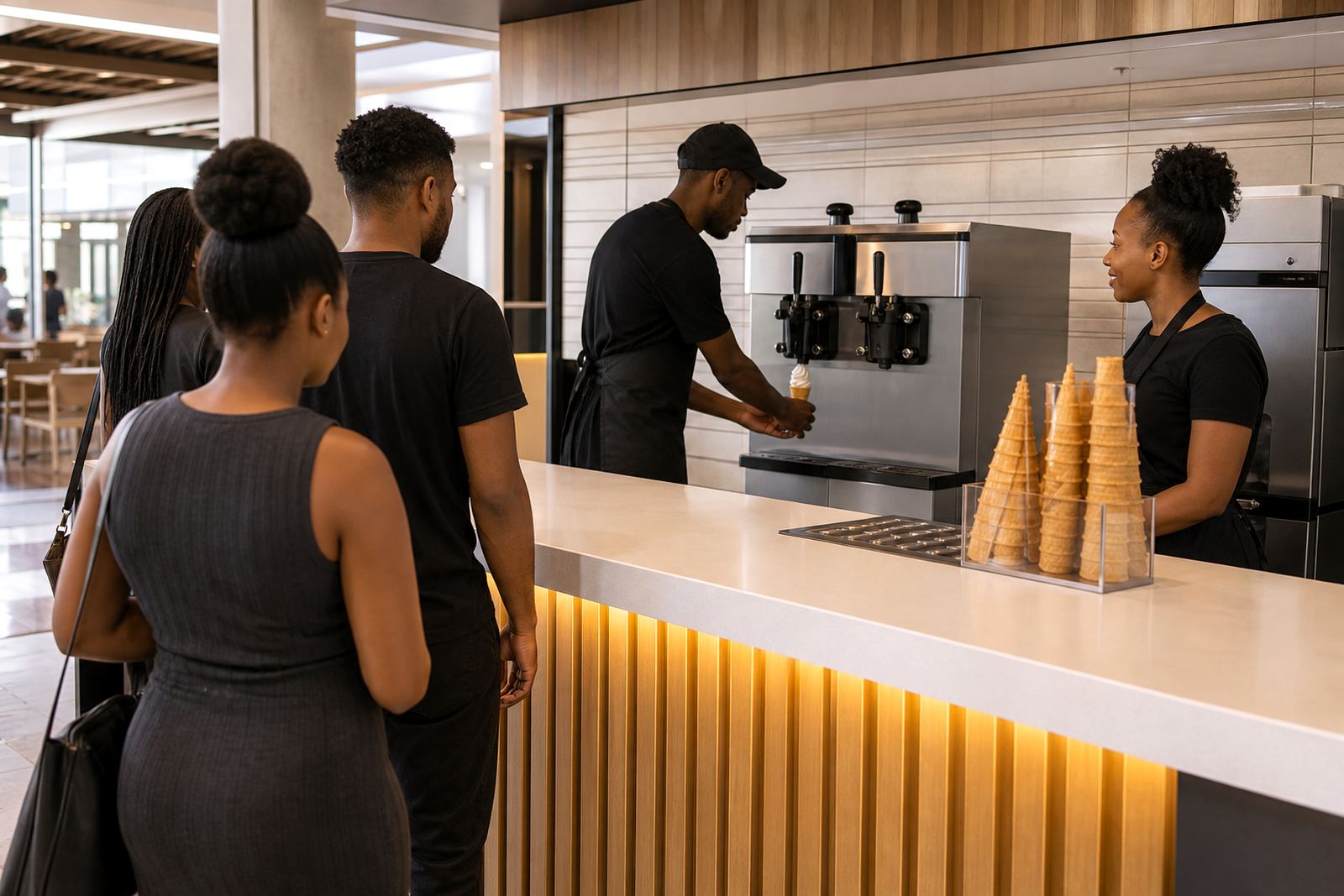
A good dessert counter keeps the customer flow simple. The order point, machine, cone storage and finishing area should follow a clear line so staff do not cross over each other. That matters in lunch rush periods and during school holiday trade when queues can build fast. A neat flow also helps new staff settle in more quickly after training.
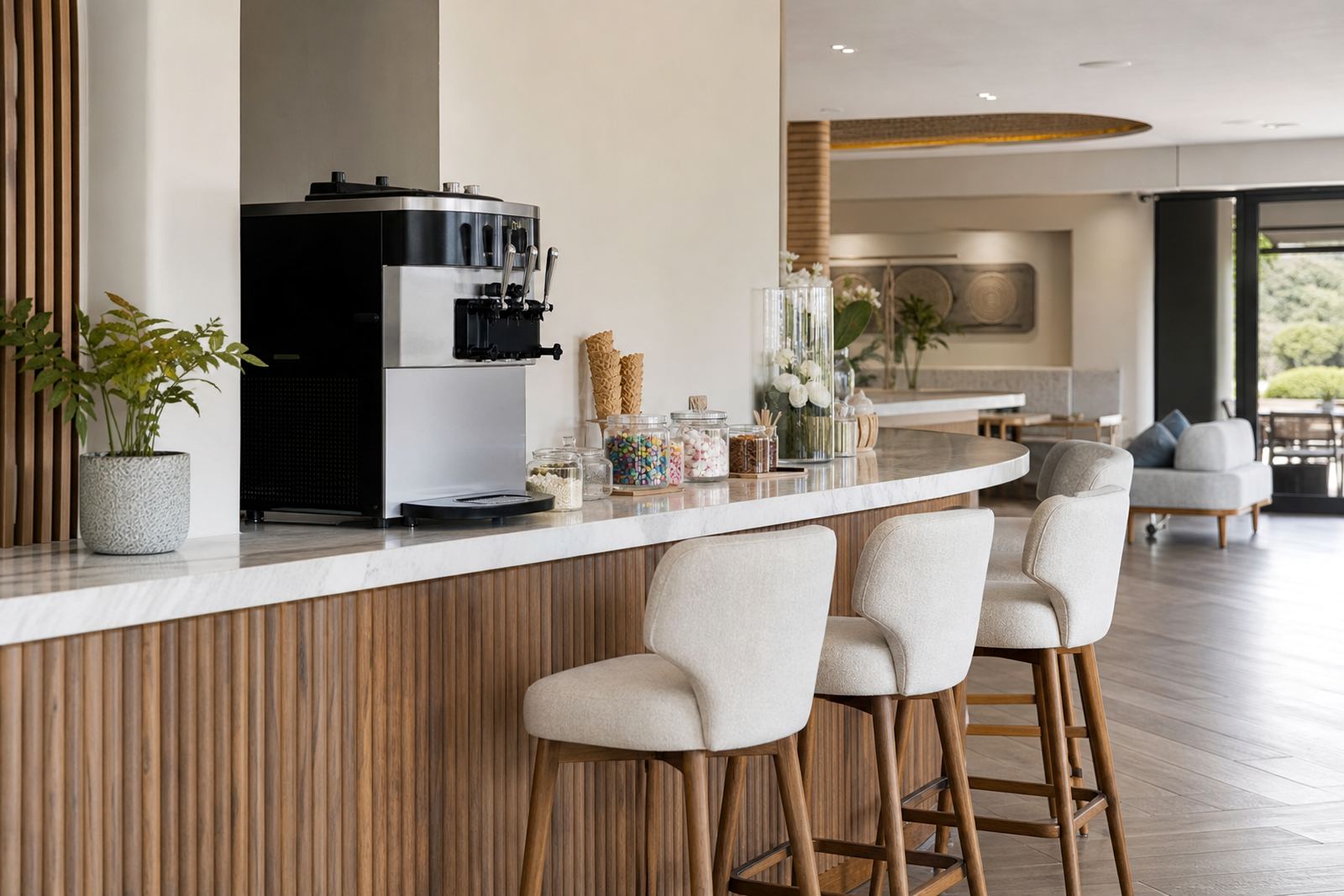
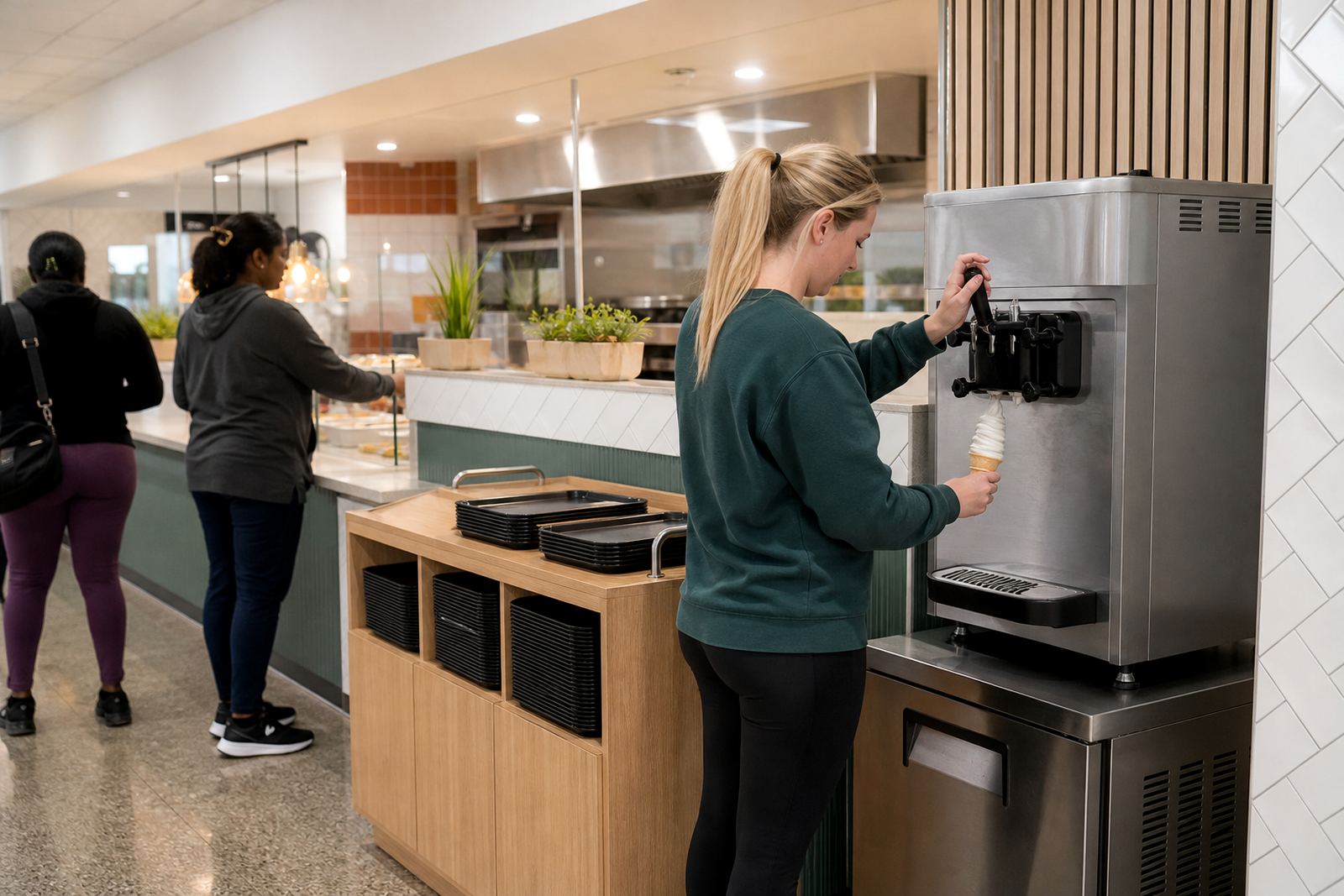
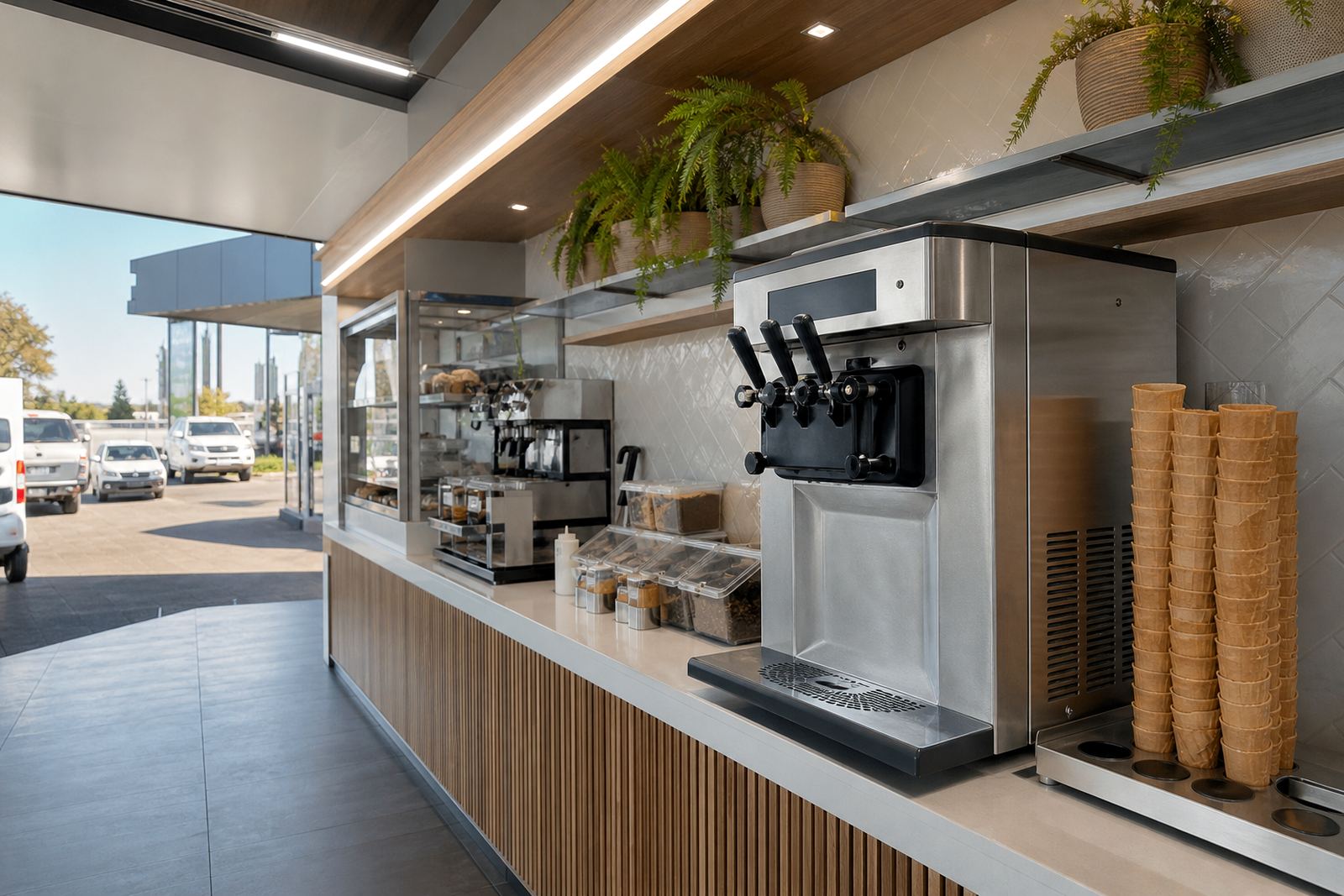
Practical layout details usually include easy-clean surfaces, enough height for safe serving, and a position that keeps the machine visible but protected from dust and splashes. In some sites, the counter is placed close to the till so payment and collection happen in one movement. In others, especially in larger restaurants, the serving point is separated from the main till to reduce congestion.
- Keep cones and serving items within one arm’s reach of the operator.
- Leave space for daily wipe-downs and deeper cleaning after close.
- Avoid placing the counter where direct sun or hot kitchen air will affect the mix.
- Plan for cable routes and plug positions before the final fit-out.
Machine Choice for Small and Larger Counters
The machine choice should suit the menu and the volume of trade. For a small café or kiosk, one well-sized soft-serve machine may be enough to keep service steady. For a bigger venue, a second machine can help if you offer more than one flavour or want a stronger backup plan during peak periods. Frozen yoghurt counters often need the same careful planning, especially where customers expect a neat self-serve or fast serve format.
We look at output, product type, cleaning time and operator experience. If the team is small, a simpler machine with straightforward controls and clear cleaning steps is usually the better fit. If the site is high traffic, the main concern is keeping product quality consistent through long trading hours and load-shedding risks. That means checking storage, backup power arrangements and the daily start-up routine before the counter goes live.
What These Project Pages Show
Each dessert counter project page gives you a practical view of what worked on the ground. You can compare different site types, see how the counter was arranged and note how the machine choice supported service. These examples are useful for owners planning a first counter, as well as businesses looking to improve an existing frozen dessert station.
Use the examples to judge what you need, not just what looks neat. A strong counter setup should support fast service, simple cleaning and reliable trade through busy weekends, holiday periods and unpredictable power supply. That is where the real value sits, especially for cafes and kiosks working across Durban, Pretoria, Cape Town and Gqeberha.
Planning Support for New or Busy Sites
If you are setting up a new dessert counter, the safest approach is to map the trading flow before equipment is placed. That includes operator position, stock storage, cleaning access and where customers queue. For existing sites, the main goal is often to fix slow points in service, improve hygiene routines or make room for a better machine arrangement without changing the whole shopfront.
Our support team works with sites in Springfield Park, Pietermaritzburg, Johannesburg and other trading areas across South Africa. We assist with installation, startup commissioning, operator training, preventive maintenance and breakdown repairs so the counter stays practical after opening day. A well planned counter makes daily trade easier, and it usually shows in faster service and cleaner presentation.