
What the Cape Town site needed from day one
The client was a busy restaurant bar in Cape Town serving plated desserts after supper and frozen yoghurt over the counter during lunch and weekend trade. The brief was simple on paper: the system had to look neat, fit a compact service area, and keep product quality steady through long trading hours. The front-of-house team also wanted something that was easy to learn, because staff changes happen often in hospitality and nobody wanted a machine that needed constant fussing. The site sits in a coastal area, so we also had to consider humidity, salt air and the extra wear that can show up on seals, fittings and external panels.
The restaurant did not have room for a large back-of-house footprint, and the electrical load had to be kept within what the premises could support without upsetting other appliances. Load-shedding planning was part of the conversation as well, because a dessert counter cannot afford to go quiet just when supper service starts picking up. We shaped the solution around those realities instead of forcing in equipment that looked good on paper but would be awkward in practice.
Equipment supplied and how it was specified
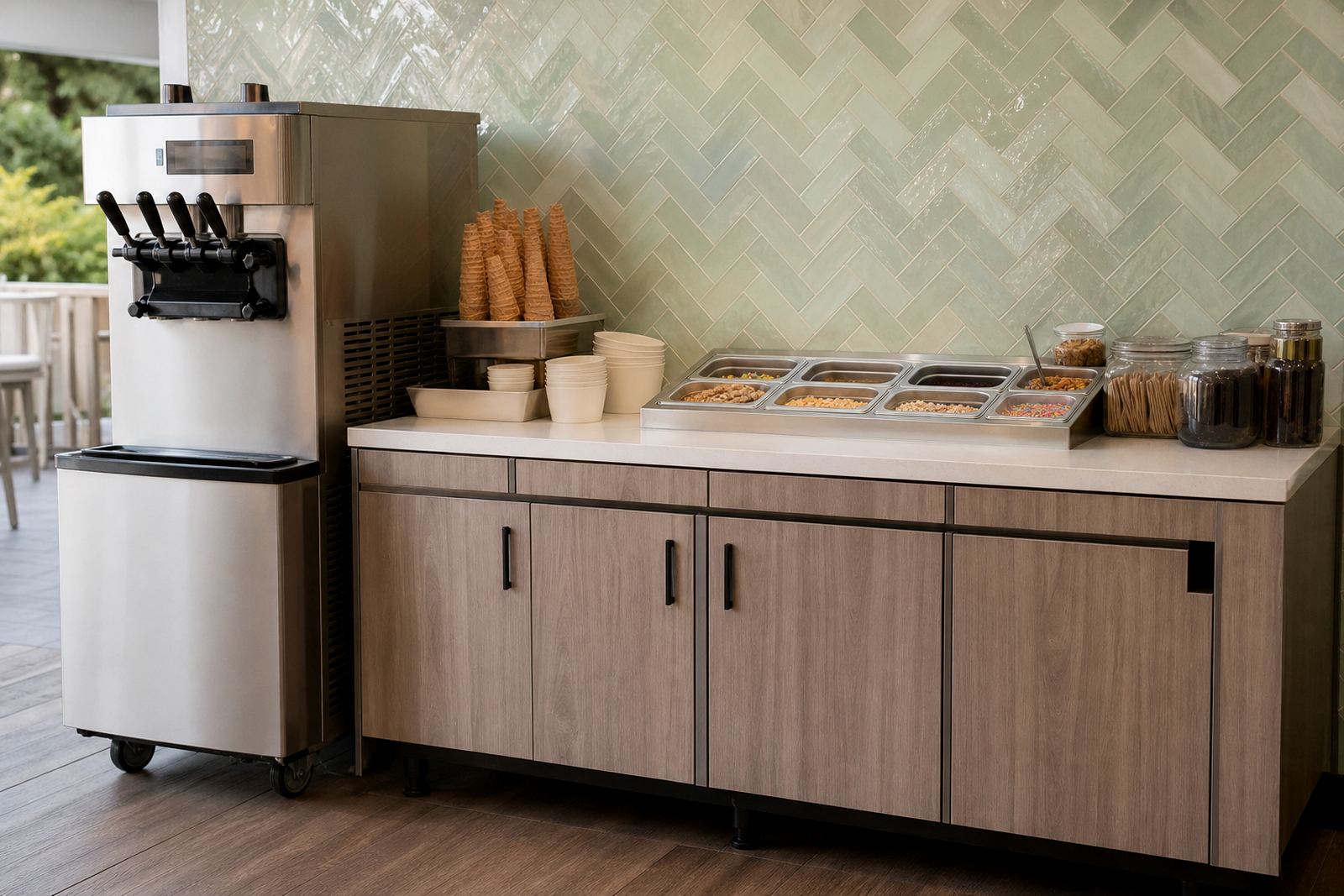
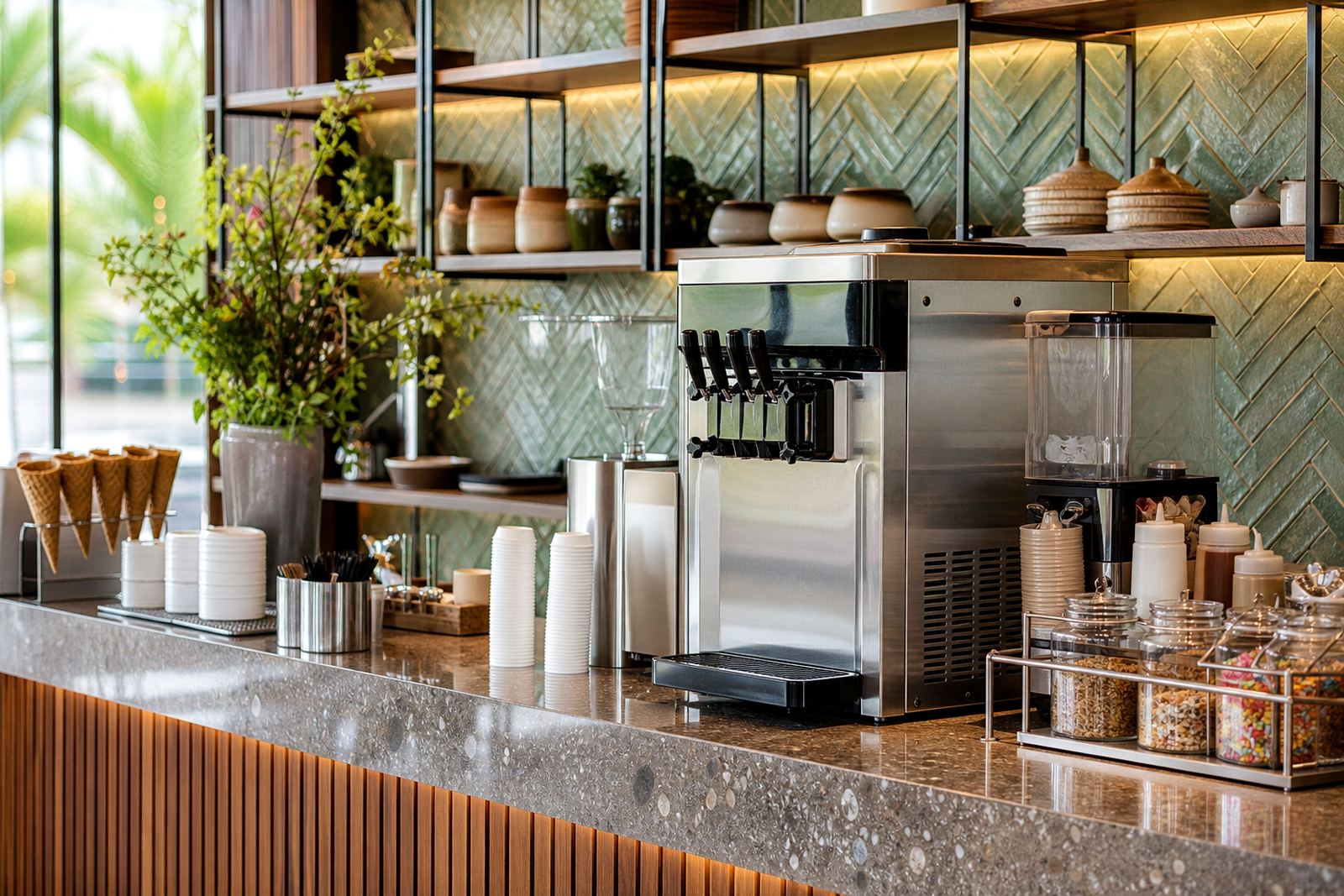
We supplied a compact soft-serve and frozen yoghurt machine suited to medium-volume retail service, together with starter product support and the first set of consumables. The machine was selected for straightforward operation, quick cleaning, and stable output during continuous service windows. It was matched to the counter space and the product mix the client intended to offer, with enough capacity to keep queues moving without oversizing the setup. The final arrangement supported both plated dessert presentation and self-serve or assisted walk-up sales from the same point.
- One countertop frozen dessert machine with dual-flavour output and a twist option
- Single-phase power compatibility for a standard restaurant electrical setup
- Compact footprint for limited prep space
- Food-grade hoses, seals and fittings for daily sanitation
- Starter mixes and cones selected for the menu style and expected footfall
- Basic spare parts kit for normal wear items
For a Cape Town venue, we paid close attention to airflow around the machine and where hot air would vent in relation to the room layout. That matters more than many people think. If a unit is boxed into a tight corner, product consistency can suffer and cleaning becomes slower than it should be.
Installation, commissioning and staff training
Installation took place over one working day, followed by startup commissioning and an operational check once the machine had settled in. We confirmed level placement, electrical supply, first-fill settings, freezing performance and the mix flow before handover. The team on site needed to start serving quickly, so we kept the process practical and focused on what matters during a real shift rather than on theory alone.
Training covered daily start-up, cleaning, product loading, texture adjustment and simple fault checks. We also showed the bar team how to manage the machine when trade gets busy and when trade drops off, because the settings are not always the same from breakfast to late evening. The crew were shown how to spot early warning signs such as unusual noise, slow draw, product over-thickening and temperature drift.
- Startup sequence and shutdown routine
- Safe cleaning steps after service
- Mix calibration for consistent texture
- Basic operator checks before calling for support
- Correct use of sanitising supplies
The handover was kept clear and hands-on. One of the big wins was that the staff left with a routine they could repeat without guessing, which is often where service problems begin.
Timeline from brief to first service
The full project ran over three weeks from the first site discussion to live trading. Week one covered the brief, site measurements and power review. Week two covered supply, delivery coordination and pre-install checks. Week three covered installation, commissioning, operator training and a short monitoring period after the first trading runs. The schedule worked because the restaurant had to keep trading while we fitted the dessert point into an already busy service layout.
There were a few practical constraints to work around. Deliveries in Cape Town can be affected by traffic and building access times, so we planned the drop carefully. The site also needed clear movement between the bar, pass and dessert counter, and we had to make sure cleaning access remained easy. In a venue like this, a machine that blocks the wrong walkway quickly becomes a problem for everyone.
- Week 1: brief, measurements, electrical review
- Week 2: product selection, delivery scheduling, site prep
- Week 3: installation, commissioning, handover and first service support
Results on the floor and behind the counter
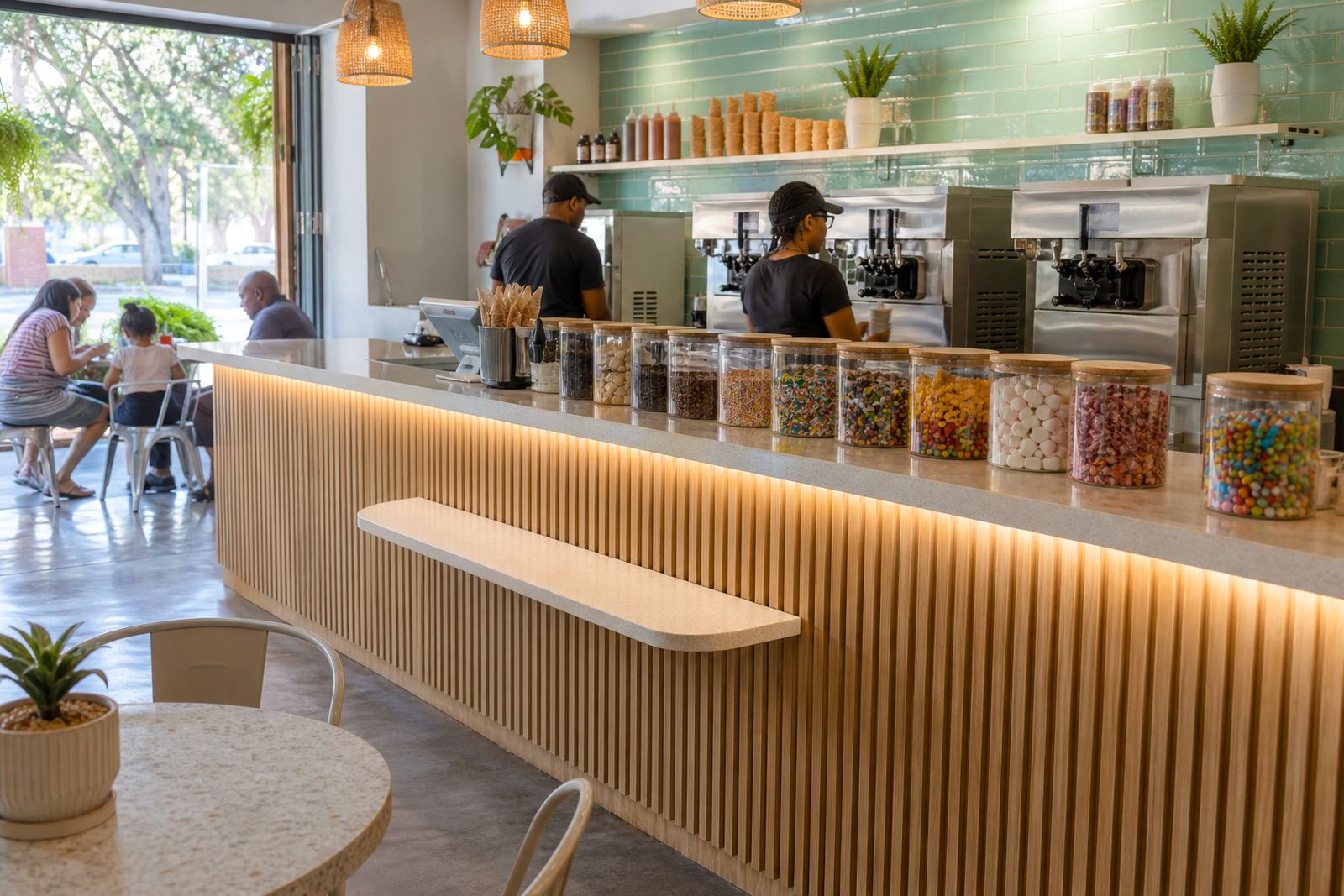
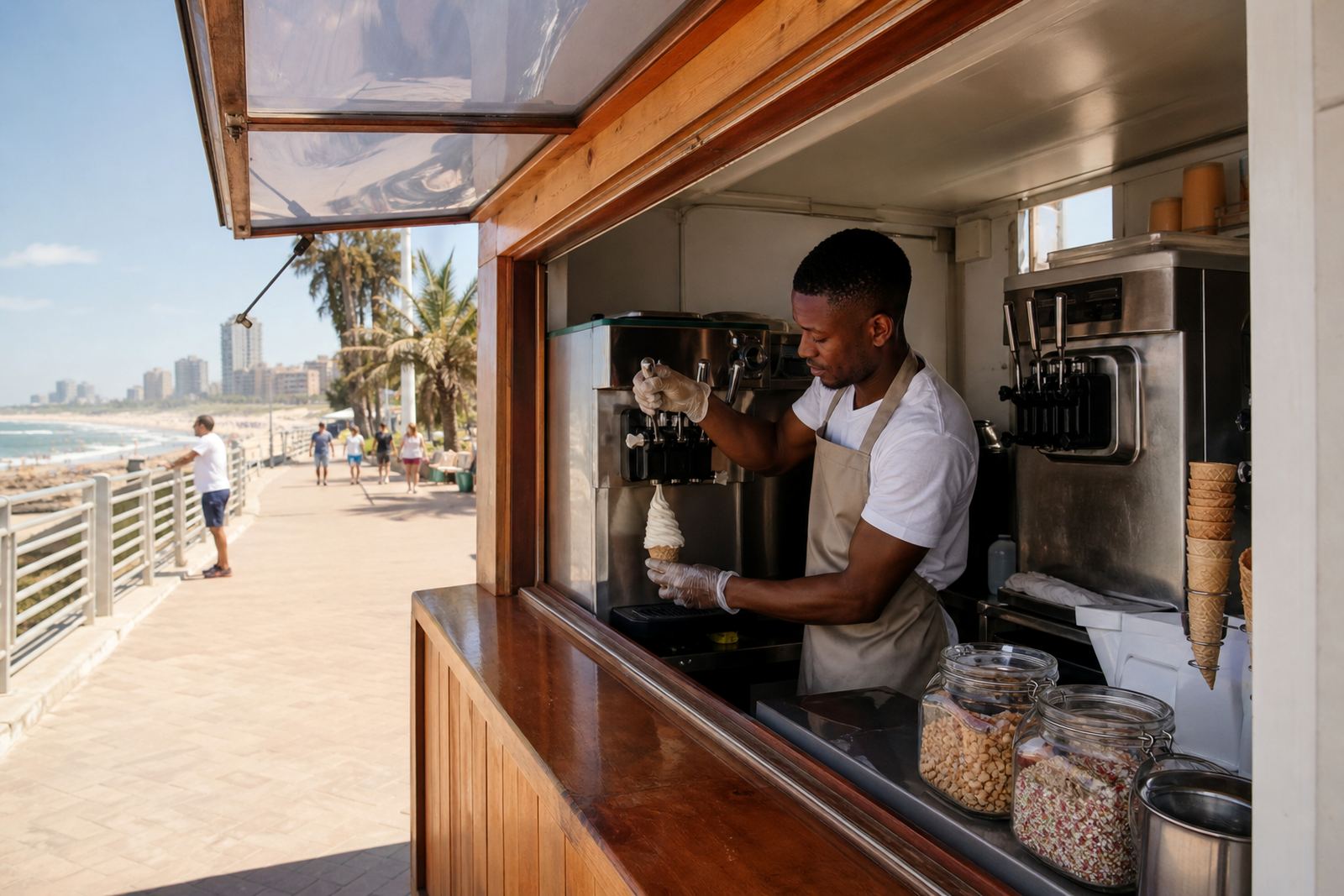
Once the system was in use, the restaurant bar gained a dessert offer that suited both plated service and casual walk-up sales. The machine produced a consistent texture, and the team were able to serve faster without sacrificing appearance or portion control. The frozen yoghurt offer gave the menu a lighter option, which worked well after heavier mains and late-afternoon traffic.
The client also reported easier service planning. Because the machine was matched to the site instead of oversized for it, there was less waste and less downtime for cleaning and changeovers. The staff could keep the counter tidy, and the dessert section now looks like part of the restaurant rather than an add-on squeezed in at the last minute. That made a real difference to customer perception, especially during busy weekend trade.
From a maintenance point of view, the setup has been manageable. The seals and product path are simple to inspect, and the team knows what to watch for before small issues become bigger repairs. That kind of practical discipline matters in coastal conditions where wear can show up quicker than inland.
What we would repeat on another Cape Town hospitality job
If we were doing the same type of project again, we would keep the same approach: short site review, realistic equipment sizing, hands-on training and a clean handover. For restaurant bars in Cape Town, the main thing is to respect the space and the trading rhythm. A dessert machine should support the kitchen and front of house, not compete with them.
We would also repeat the service planning we used here, including preventive maintenance checks, season prep before peak periods and a quick response plan for power interruptions. It is better to agree on these details before the first busy Friday night than to sort them out after the queue has formed. The result is a setup that keeps working, keeps product quality steady and gives the team confidence at the counter.
For venues with plated desserts and walk-up sales, this is a practical format that holds up well. It is neat, it is easy to manage, and it gives the restaurant another selling point without creating extra headaches.
Key facts
| Project type | Restaurant bar dessert counter |
|---|---|
| Town | Cape Town, Western Cape |
| Timeline | 3 weeks from brief to first service |
| Equipment | Compact soft-serve and frozen yoghurt machine |
| Power requirement | Single-phase commercial supply |
| Core support | Installation, commissioning, training and maintenance planning |