The brief from a busy Durban North dining room
The client was an upmarket restaurant in Durban North with a compact dessert service area tucked into the main pass. They wanted a clean frozen dessert offering that would work after lunch and dinner service, without taking over the kitchen flow. The request was simple on paper, but the site had tight counter space, heat from the pass, and limited tolerance for anything that would slow plating.
The menu team wanted soft-serve and frozen yoghurt options for plated desserts, take-away cups, and a few seasonal specials. They also needed a setup that staff could learn quickly, because turnover in the front and back of house can be high in busy coastal venues. The client wanted practical support too, from startup commissioning to clear cleaning routines and mix calibration.
- Site: Durban North, KwaZulu-Natal
- Use case: integrated dessert station in a pass and plating area
- Service style: dine-in desserts, quick finish items, and takeaway cups
Space limits, power supply and service flow
The main challenge was fitting the station into an existing line without blocking hot pass movement or plate handover. The footprint had to stay compact, the service points had to be easy to reach, and the unit layout had to leave enough room for tubs, cones, scoops, sanitising supplies and daily wipe-downs. We also checked the local power conditions on site, because restaurant equipment in Durban can be affected by load-shedding and voltage dips if the installation is not planned properly.
Coastal humidity was another factor. Sugar-based products and cone stock do not like damp storage conditions, so we planned for covered storage and a station layout that kept ingredients away from direct steam and splash zones. The service team also wanted clear access for cleaning, since inspection standards and kitchen hygiene routines are strict in restaurant operations.
- Compact layout suited to an existing counter run
- Prepared for 230V single-phase supply with surge protection planning
- Storage set out to reduce moisture exposure and product spoilage
What we supplied and how the station was set up
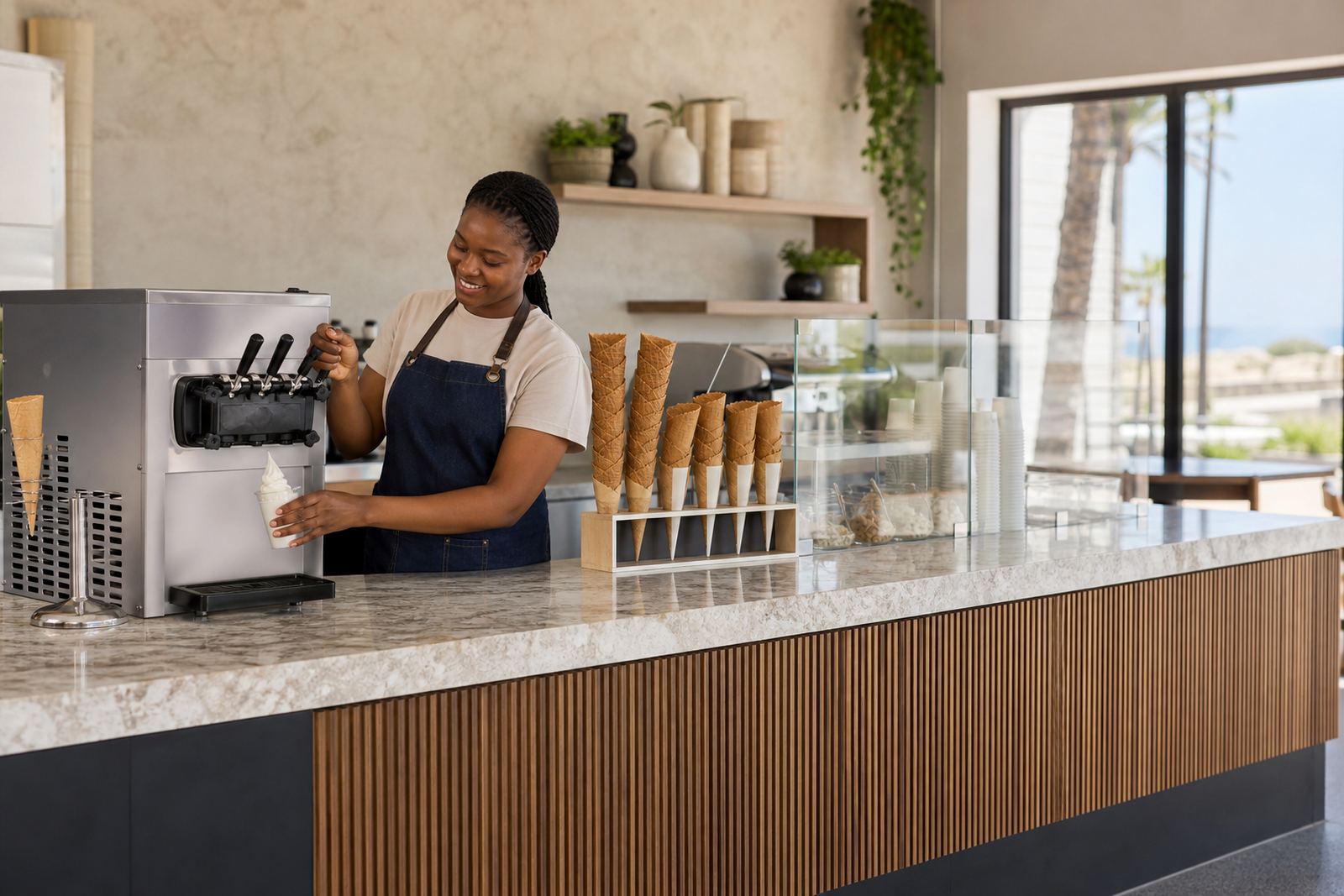
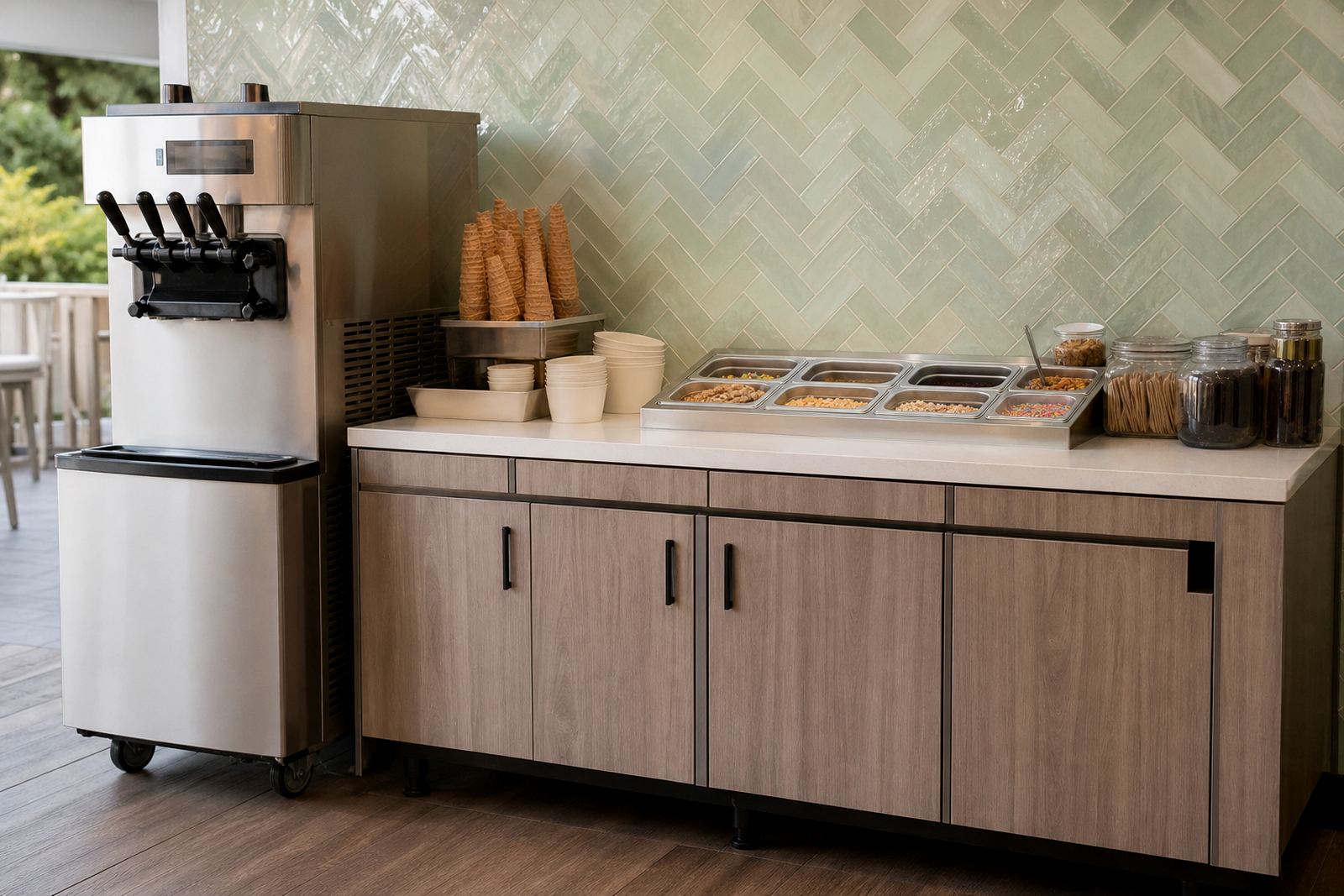
We supplied a soft-serve machine, a frozen yoghurt machine, matching mix supply, serving cones, and the basic sanitising items needed for daily operation. The machines were selected for ease of use, predictable output, and straightforward cleaning at close of service. The setup was completed with attention to the working height of the counter, product access, and the route staff use when passing from kitchen to front-of-house.
The installation included machine positioning, initial setup, startup commissioning, and first-day checks on consistency and flow. We also carried out mix calibration so the product texture matched the restaurant's plated dessert style rather than a loose retail scoop. The cone stock and dry goods were stored in a way that kept them ready for service, not stacked in awkward corners. It sounds small, but that makes a differnce when the dining room is full.
- Soft-serve machine for plated desserts and takeaway cups
- Frozen yoghurt machine for lighter menu options
- Mixes, cones and sanitising supplies included
- Commissioning completed on site with first batch checks
Installation and training over two weeks
The project ran over two weeks from site assessment to handover. In week one, we reviewed the counter dimensions, confirmed the power point positions, checked ventilation and planned the service path. We then scheduled delivery and placed the equipment so it would not interfere with other prep tasks. In week two, we completed startup commissioning, showed the team how to run the machines, and went through cleaning, shutdown and restart steps for daily use.
The operator training was kept practical. Staff learned how to recognise correct mix consistency, how to deal with common errors, and how to keep the machine stable during a dinner rush. We also covered breakdown basics, so the team could identify when a simple reset was safe and when to log a service call. The restaurant manager wanted fewer surprises during service and that was a fair ask.
- Week 1: site assessment, layout planning and power review
- Week 2: delivery, installation, commissioning and operator training
- Handover included cleaning routines and daily checks
Results after service launch
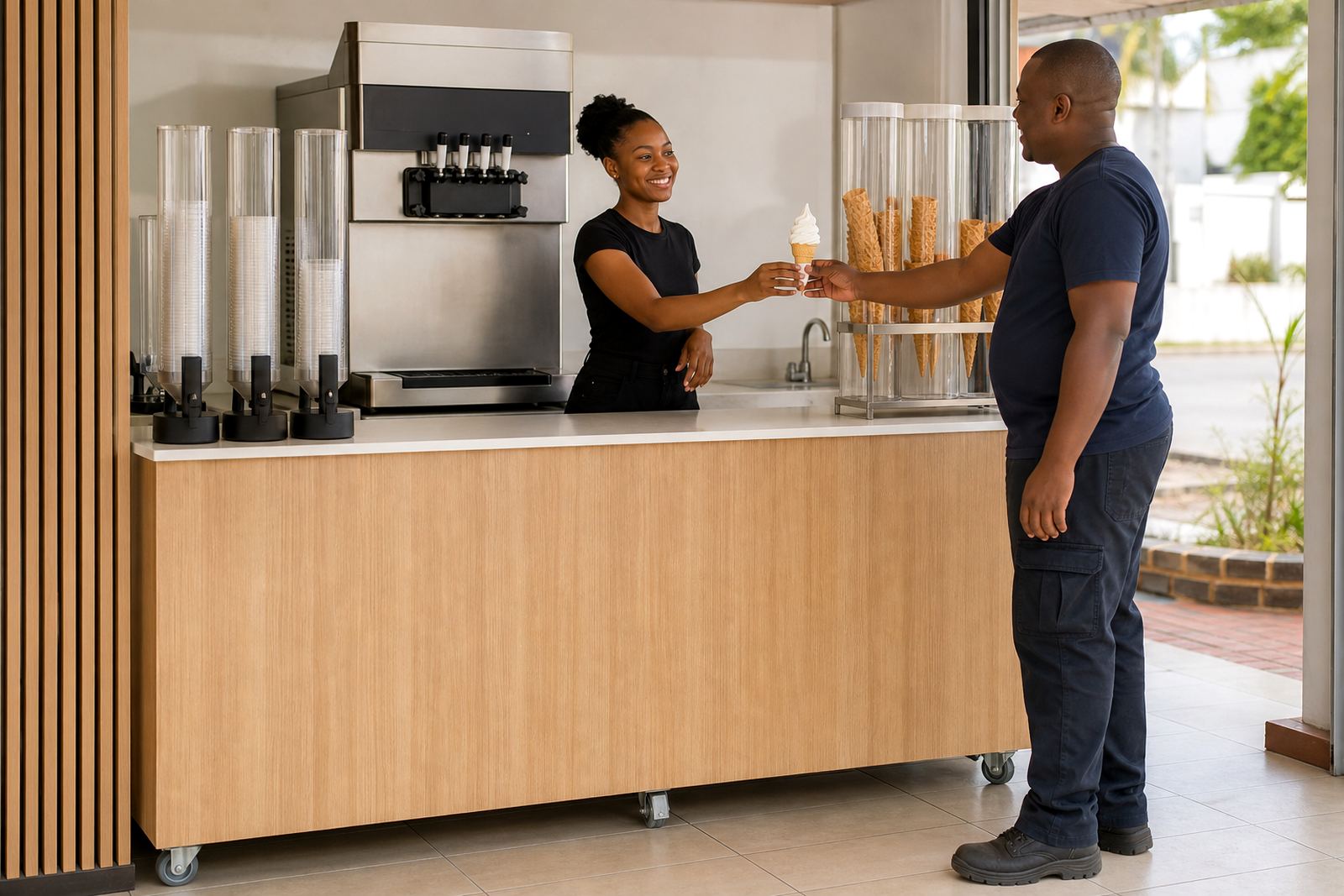
Once the station went live, the kitchen team had a dessert offer that could be turned around quickly without sending staff to a separate cold room or prep area. The pass stayed tidy, the frozen dessert output became more predictable, and the front-of-house team could sell a finished item with less delay. The restaurant also gained a menu line that worked in both warm weather and quieter weekday service.
The client reported better consistency in portioning and less waste from over-mixed product. Because the machine settings were matched to their menu, the texture stayed steady through service rather than changing halfway through the evening. The team also appreciated having clear phone support from our side, especially in the first few weeks when they were still getting used to their new process.
- Faster dessert turnover during dinner service
- Cleaner pass area with less ad hoc handling
- More consistent product texture and portion control
What we would do again for a similar restaurant
For a similar site in Durban, Umhlanga or anywhere along the coast, we would again start with the counter layout before choosing equipment. In a restaurant setting, the machine must fit the service flow first, then the menu. That means checking reach, cleaning access, ingredient storage and power stability before the first carton of mix is opened.
We would also keep the training practical and short, with one lead operator and one backup person fully confident on start-up and close-down. For restaurants with seasonal pressure, we would recommend a pre-summer season prep check and a maintenance visit before school holidays or festive trading. That keeps downtime lower and helps avoid the kind of last-minute scramble that no one enjoys.
- Plan the station around service flow, not only around available space
- Train two people minimum for daily operation
- Schedule preventive maintenance before peak trading periods
Support for restaurant dessert stations across South Africa
This Durban North project is a good example of how a frozen dessert station can be fitted into a working restaurant without disrupting the rest of the kitchen. We support cafes, kiosks and restaurants across South Africa with machine installation, preventive maintenance, breakdown repairs, deep cleaning, mix calibration and site relocations. For restaurants, the important part is usually not just the machine itself, but how it sits in the real working space and how well the team can live with it every day.
From Springfield Park in Durban, our team works with sites in Johannesburg, Pretoria, Cape Town, Gqeberha and Pietermaritzburg too. If a venue needs a dessert offer that can handle local trading patterns, load-shedding, humidity and tight service space, we can set it up properly from the start. The aim is simple: good output, less hassle, and a station that keeps up with the rest of the kitchen.
Key facts
| Project type | Restaurant dessert station integration |
|---|---|
| Location | Durban North, KwaZulu-Natal |
| Timeline | 2 weeks from assessment to handover |
| Equipment supplied | Soft-serve machine, frozen yoghurt machine, mixes, cones |
| Services completed | Installation, startup commissioning, operator training, mix calibration |
| Operating context | Existing pass and plating area with compact counter space |