Tourist footfall called for fast, simple service
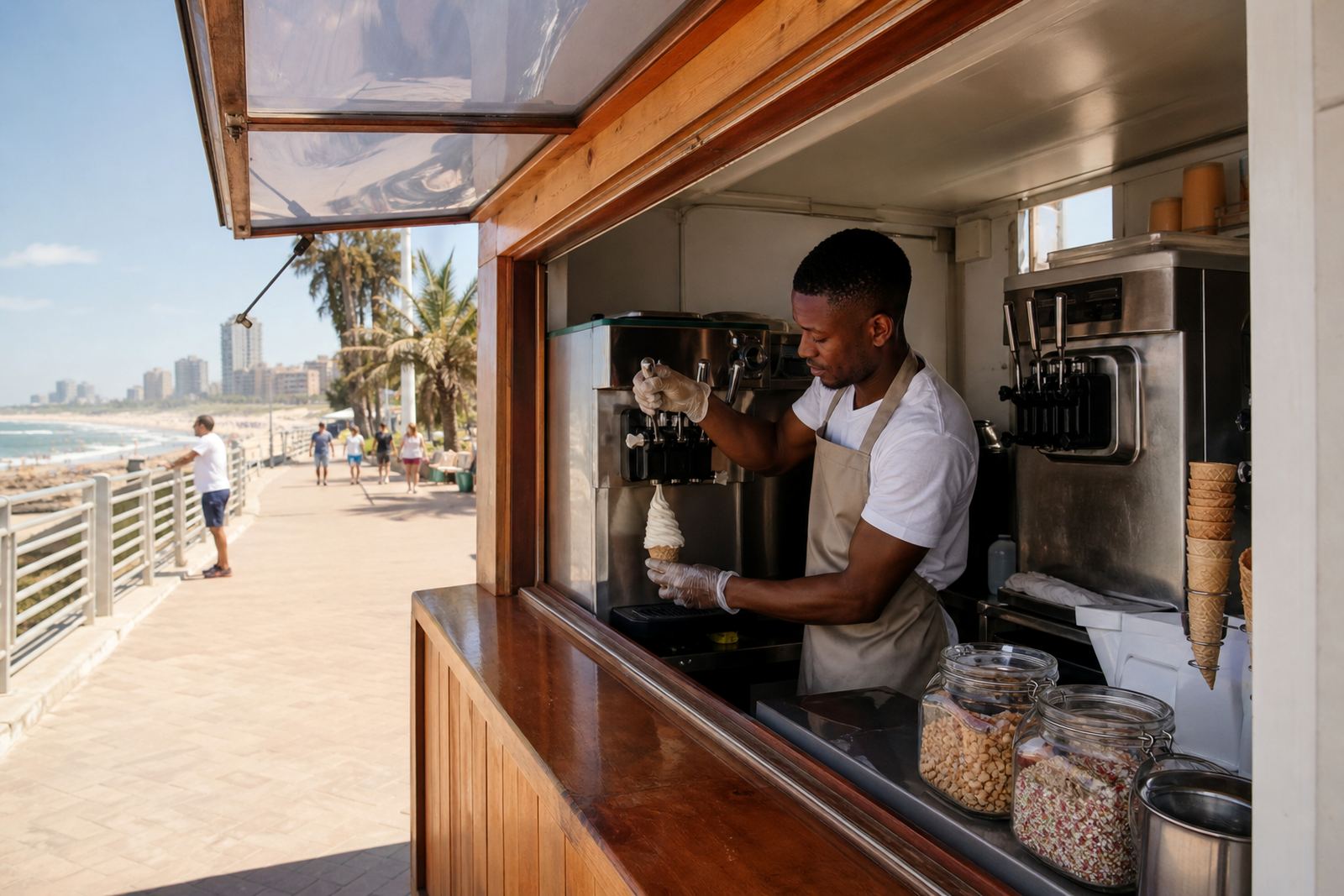
The client was a seaside kiosk operator in Gqeberha serving holidaymakers, families and weekend traffic along the seafront. The brief was straight forward: set up a frozen treat station that could handle busy spells, keep queue times short, and make good margin on cones, cups and yoghurt pots. They needed something that could work for peak summer trade without becoming a maintenance headache once the weather turned cooler and footfall became more uneven.
The kiosk layout had limited floor space, a narrow service counter and no room for complicated back-of-house handling. Power supply was also a concern, as the site had to cope with intermittent load-shedding and the usual coastal humidity that can affect motors, seals and product consistency. The client wanted a setup that would be reliable enough for seasonal trading, but also practical for daily use by a small team.
What we planned around for the site
We started with the operating conditions rather than the menu. The seafront environment meant salt air, fine sand and frequent wipe-downs, so the machine choice and the service plan had to account for that. The kiosk also had to meet local food handling expectations, keep the serving area clean, and allow staff to move quickly without crowding the counter.
- Limited counter depth and a narrow service opening
- Coastal humidity and salt exposure
- Power interruptions during trading hours
- High-volume cone sales during holiday periods
- Need for easy cleaning between shifts
We recommended a compact soft-serve and frozen yoghurt solution with a simple footprint, plus product support that would keep the menu steady. That included cone stock, serving mixes, sanitising supplies and a calibration plan so the first scoop of the day matched the last one. It sounds small, but on a busy seaside kiosk those details matter alot.
Equipment supplied for the kiosk build
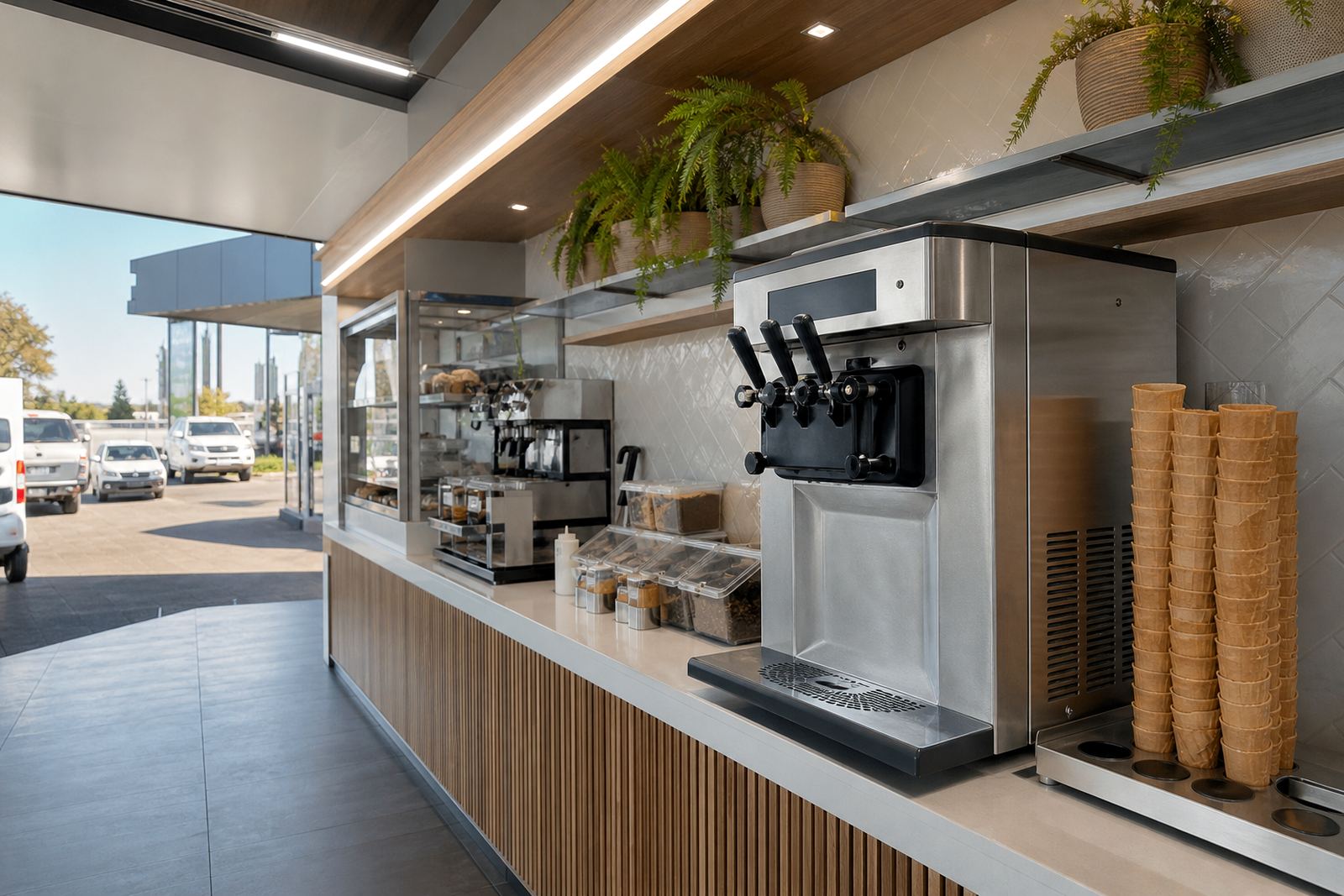
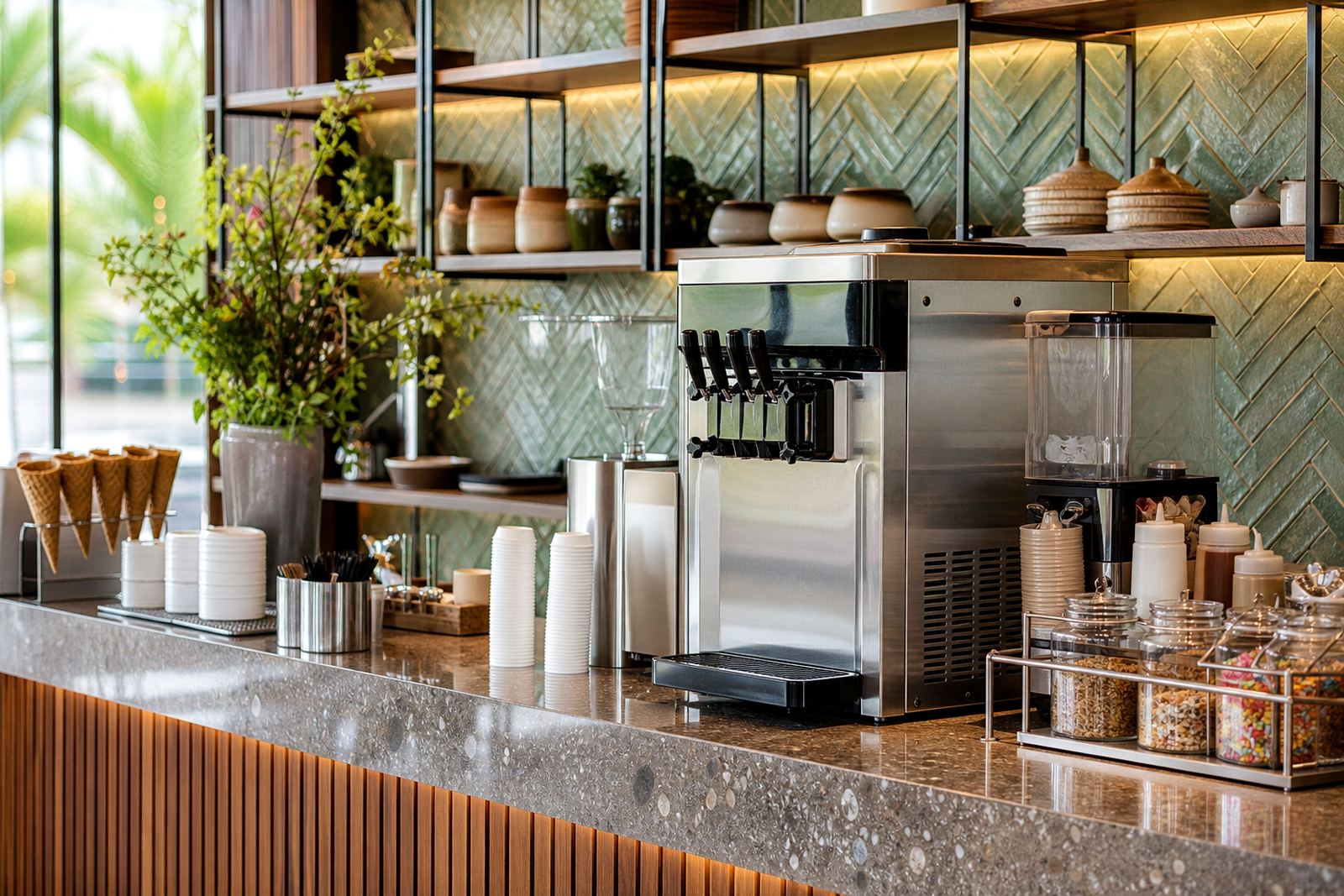
The supply package covered the main machine, startup consumables and the bits needed to get trade going properly. The machine selected for the site was a twin-flavour soft-serve and frozen yoghurt unit with a compact footprint, suitable for a kiosk counter rather than a full restaurant prep area. We also supplied the first round of mixes, cones and cleaning materials so the team could open with stock already matched to the equipment settings.
- Twin-flavour soft-serve and frozen yoghurt machine
- Initial stock of mixes for consistent texture and overrun
- Wafer cones and serving cones for cone-led sales
- Sanitising supplies for daily and end-of-day cleaning
- Seal and parts kit for routine wear items
- Operator guide covering mix handling and machine care
Because the kiosk would work long trading days in summer, we made sure the machine could be cleaned and restarted without dragging out the process. The team needed a unit that was easy to learn, quick to recover after service breaks, and suited to small-batch top-ups instead of constant rework.
Installation and commissioning took two weeks
The project ran over two weeks from final sign-off to handover. In week one we completed site checks, confirmed power and counter clearance, and prepared the machine for installation. During week two we carried out startup commissioning, mix calibration and operator training. We also checked the flow of cones and cups across the service counter so the team could keep the handover process clean and quick.
Commissioning included temperature checks, texture testing and basic fault-response drills. We made sure the team knew how to respond to a warm mix issue, how to manage short power cuts and what to do if the machine needed a fast restart after a busy rush. The setup was done to suit local working conditions, not just the technical spec on paper.
Training covered daily trading, not just machine buttons
The staff training was aimed at the people who would actually run the kiosk on a hot Saturday afternoon, not just the owner. We covered startup steps, filling, priming, serving pace, rinse routines and basic shutdown. We also went through portion control because seaside trade can move fast and waste creeps up if the cone size is not managed carefully.
- How to prepare the machine before opening
- How to keep mix at the right consistency during rush periods
- How to clean after trade without missing seals or nozzles
- How to spot early signs of wear or low mix flow
- How to handle sanitation between flavours and shifts
We also spoke about seasonal trade patterns. In Gqeberha a kiosk can swing from quiet to packed within an hour, especially when the wind drops and the promenade fills up. The team needed a routine that could hold up under pressure, and still be simple enough for casual staff to follow without confusion.
Results from the seafront kiosk setup
The kiosk opened with a cleaner menu flow, faster serving times and steadier texture across both flavours. The owner reported that cone sales picked up early because the machine gave a consistent finish that suited tourists and families. The yoghurt option also helped widen the menu beyond plain soft-serve, which mattered for customers looking for a lighter treat after a day at the beach.
From an operations point of view, the biggest gain was predictability. The team could plan stock better, clean faster at close, and keep the machine working through longer trading windows without unnecessary interruptions. That is important at a seafront site where a missed rush can mean lost trade for the whole day.
- Shorter serving times during peak tourist periods
- Better control of portions and stock usage
- More consistent product texture across both flavours
- Cleaner end-of-day routines for a small team
- Less downtime when power supply was interrupted
If we were to do this one again, we would keep the same practical approach: compact equipment, cone-focused merchandising and training from day one. We would also keep a seasonal service schedule in place, with pre-summer checks and a mid-season clean-down, because coastal kiosks need a bit more attention than an inland site. That way the machine keeps earning through the busy months, instead of needing avoidable repairs when trade is strongest.
Key facts
| Project type | Seafront kiosk frozen treat setup |
|---|---|
| Town | Gqeberha, Eastern Cape |
| Timeline | 2 weeks from site check to handover |
| Machine spec | Twin-flavour soft-serve and frozen yoghurt unit |
| Support supplied | Mixes, cones, sanitising supplies, startup training |
| Key operating note | Configured for coastal humidity and load-shedding conditions |