
Forecourt sales needed speed, not fuss
The client was a forecourt operator in Johannesburg looking to add a frozen dessert point that could trade well through lunch, after school and into the evening rush. The site already had good foot traffic, but the brief was clear: keep the menu simple, serve quickly, and make sure the setup could cope with busy weekends, load-shedding, and the regular dust that builds up on roadside sites in Gauteng.
They wanted a solution for soft-serve and frozen yoghurt that would suit a convenience-led environment rather than a sit-down dessert shop. That meant short queue times, easy cleaning between shifts, and equipment that staff could learn quickly without needing a specialist on site every day.
- Location: Johannesburg forecourt site
- Use case: impulse dessert sales at a fuel and convenience stop
- Trading focus: fast service, low wastage, easy daily cleaning
- Menu focus: soft-serve, frozen yoghurt, and cone service
What the site had to work around
The biggest constraint was space. The dessert point had to fit into a busy forecourt layout without blocking the cashier flow or creating a bottleneck near the service counter. We also had to allow for practical access to power, drainage and cleaning points, because forecourt teams do not have time for awkward equipment placement during a rush.
Another factor was power stability. Like many Johannesburg sites, the customer wanted a setup that could recover properly after interruptions and still hold product quality through the day. We planned the install around easy start-up checks, straightforward temperature control, and a layout that would keep staff moving from mix storage to dispensing without unnecessary steps.
- Limited counter space and tight customer movement area
- Need for simple cleaning access and clear service flow
- Power interruptions to be managed with practical restart procedures
- Equipment had to suit a mixed day shift and evening trade pattern
Equipment supplied and installed
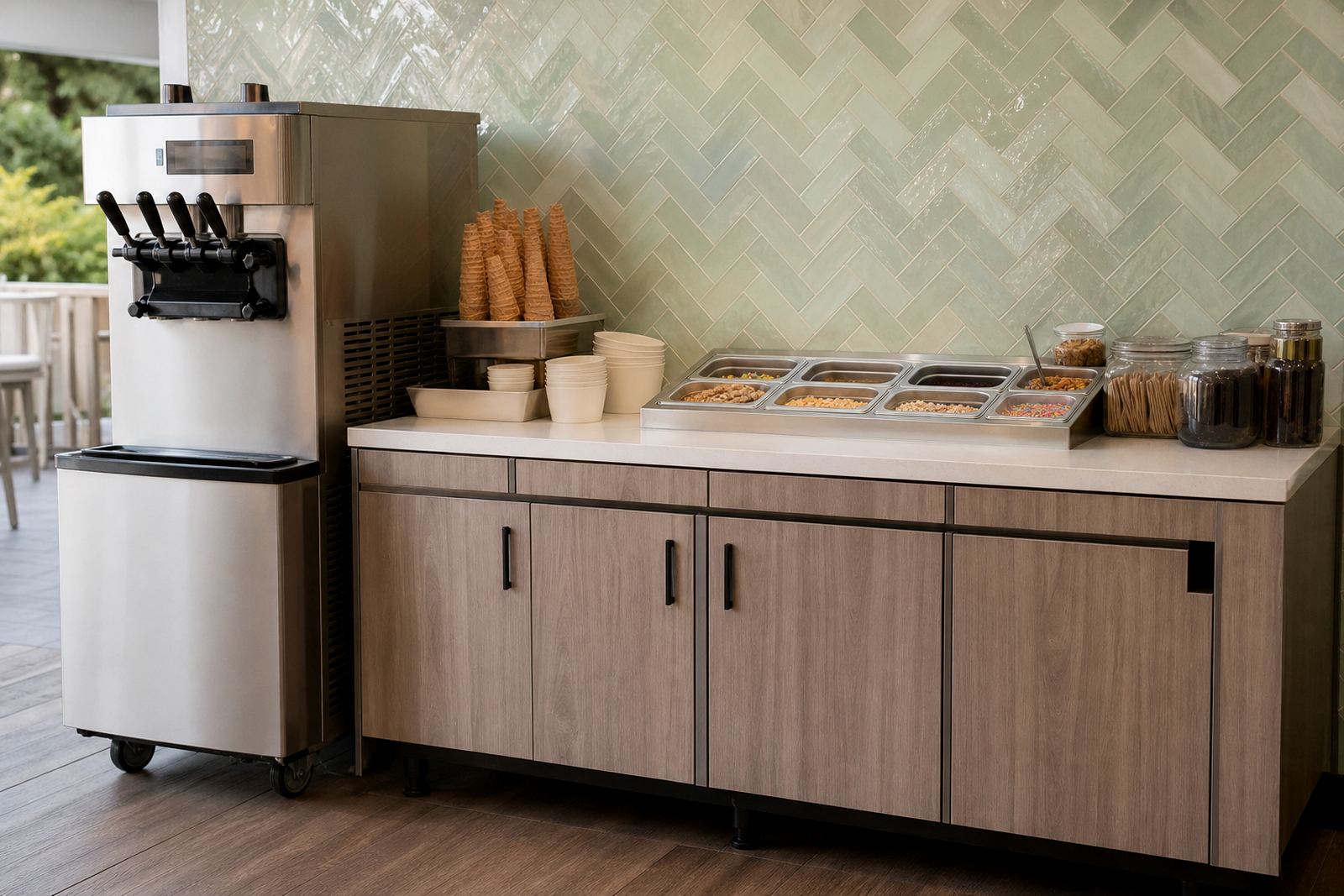
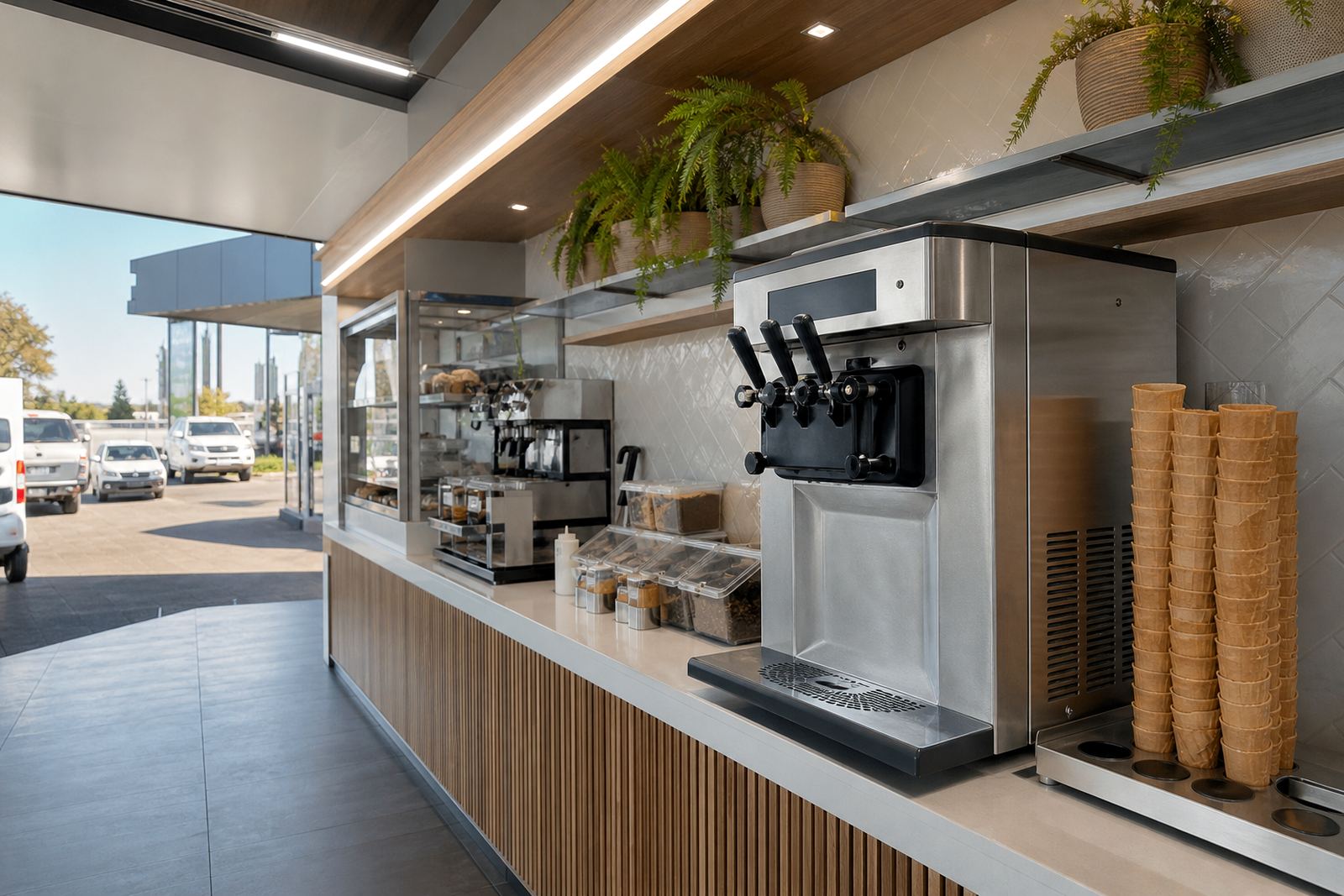
We supplied a compact frozen dessert line made up of a soft-serve machine, a frozen yoghurt machine, cone and sundae service stock, and the basic sanitising supplies needed for daily operation. The machines were positioned so staff could switch between products without crossing paths, which helps keep service tidy when queues build up.
Our technical team handled installation, startup commissioning, and mix calibration on site. We checked the machine settings, confirmed product texture, and tested output under normal service conditions. The aim was not only to get the machines running, but to set them up in a way that would hold up over repeated use in a busy forecourt environment.
- Soft-serve machine configured for quick serving during peak hours
- Frozen yoghurt machine set for consistent texture and portion control
- Mix calibration completed for stable overrun and flavour balance
- Sanitising supplies and cleaning steps handed over to the site team
Training the team for daily trade
Once the equipment was in place, we ran operator training with the forecourt team. This covered start-up, shutdown, cone service, basic cleaning, and what to do when the machine needs a quick check during the day. The staff also received guidance on handling mixes in warm weather and keeping the service area neat when the forecourt is busy.
Because forecourt teams often work in shifts, we kept the training practical and repeatable. The supervisors were shown how to spot early signs of product inconsistency, how to manage the mix levels, and how to follow the daily hygiene steps without slowing service. That kind of support helps reduce mistakes and keeps wastage down.
- Start-up and shutdown procedure explained step by step
- Cleaning routine matched to end-of-day forecourt operations
- Basic fault spotting covered for the first line of support
- Shift handover notes provided so service stays consistent
Four-week rollout from sign-off to first serving
The full project ran over four weeks from final site sign-off to first trade. Week one focused on planning the layout, checking access, and confirming the equipment mix. Week two covered delivery coordination and site preparation, including positioning and utility checks. Week three was installation and commissioning, with product calibration and operational testing. Week four was hands-on training, final adjustments, and first-day support while the team served customers.
That timeline worked well because it gave the client enough time to prepare the forecourt team and keep the launch orderly. It also meant the machines were not rushed into service before the staff were comfortable with the daily routine. For a busy Johannesburg site, that matters just as much as the equipment itself.
Results on the forecourt floor
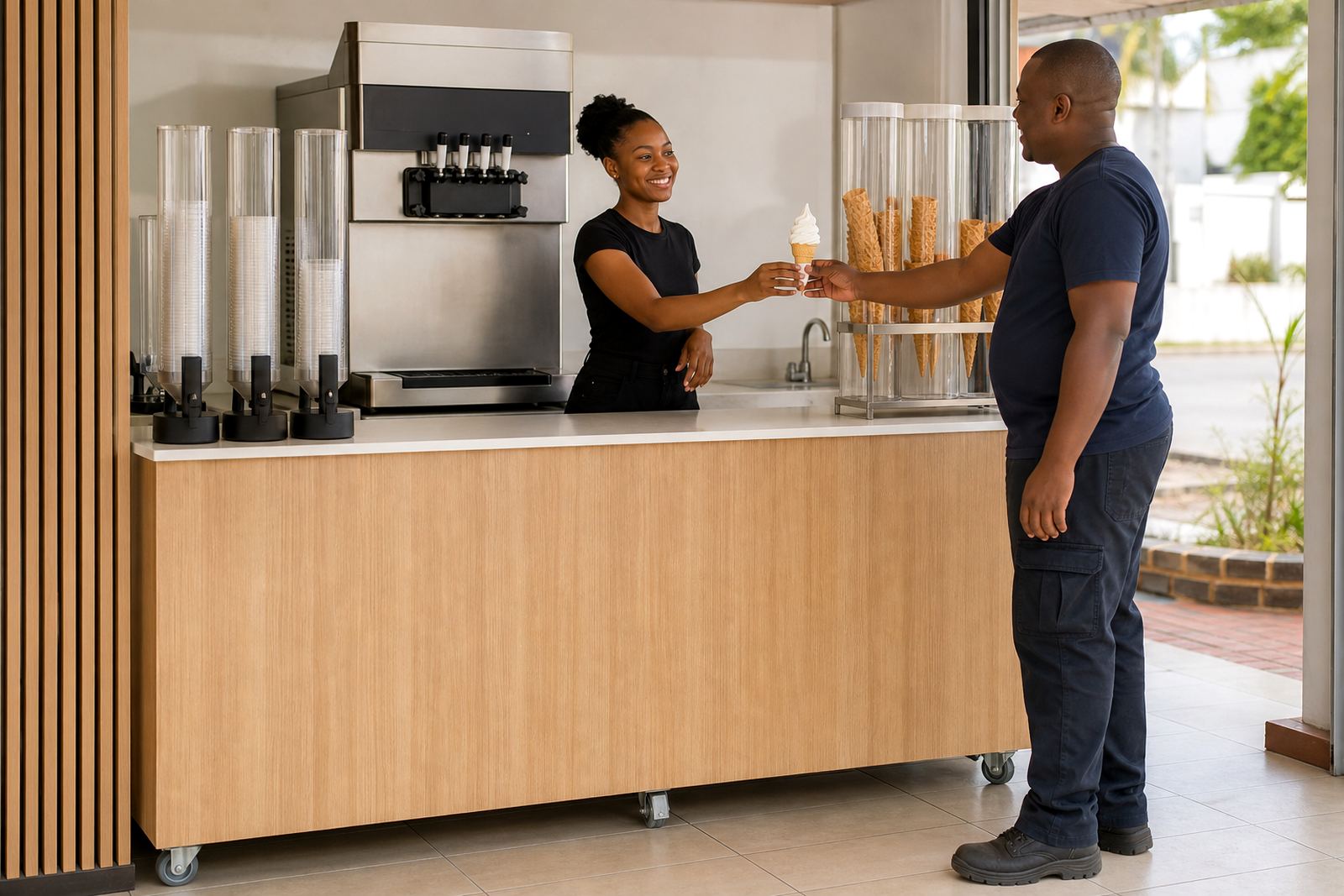
After launch, the site had a clean dessert offering that fitted neatly into the existing forecourt trade. Customers could buy a frozen treat without waiting long, and the staff were able to manage the service point alongside normal convenience-store traffic. The customer wanted a simple add-on to the business, and the result was a practical dessert station that worked with the rest of the forecourt rather than against it.
The team reported steadier service, fewer delays during peak periods, and a better understanding of day-to-day maintenance. The machine setup also helped keep product quality consistent, which is important when customers expect the same cone or yoghurt every time they visit. In a busy retail setting, consistency is what turns an impulse buy into repeat sales.
- Shorter service times at busy periods
- Cleaner product presentation at the counter
- Staff confidence improved after training and handover
- Regular maintenance planning became easier to follow
What we would repeat on the next site
If we were doing the same kind of forecourt dessert project again, we would keep the same approach: tight layout planning, clear training, and a practical service schedule from the start. Forecourt operations need equipment that is easy to use, easy to clean, and simple to support when trading is busy or power supply is interrupted.
We would also recommend early planning for seasonal demand. Frozen desserts sell differently in summer and winter, so mix levels, cleaning timing and stock control all need to be ready before the hotter months hit. For a Johannesburg site, that preparation makes a real difference to service speed and waste control.
SnoCream continues to support forecourt, kiosk and cafe clients across South Africa with machine installation, preventative maintenance, breakdown repairs, deep cleaning, seal and parts work, and season prep checks.
Key facts
| Project location | Johannesburg forecourt site |
|---|---|
| Project type | Convenience-led frozen dessert installation |
| Equipment supplied | Soft-serve machine, frozen yoghurt machine, cones, mixes and sanitising supplies |
| Installation timeline | 4 weeks from sign-off to first trade |
| Services completed | Installation, startup commissioning, operator training, mix calibration and handover |
| Site challenge | Limited space, busy foot traffic and power interruption planning |