The brief: quick service, low downtime, clean finishes
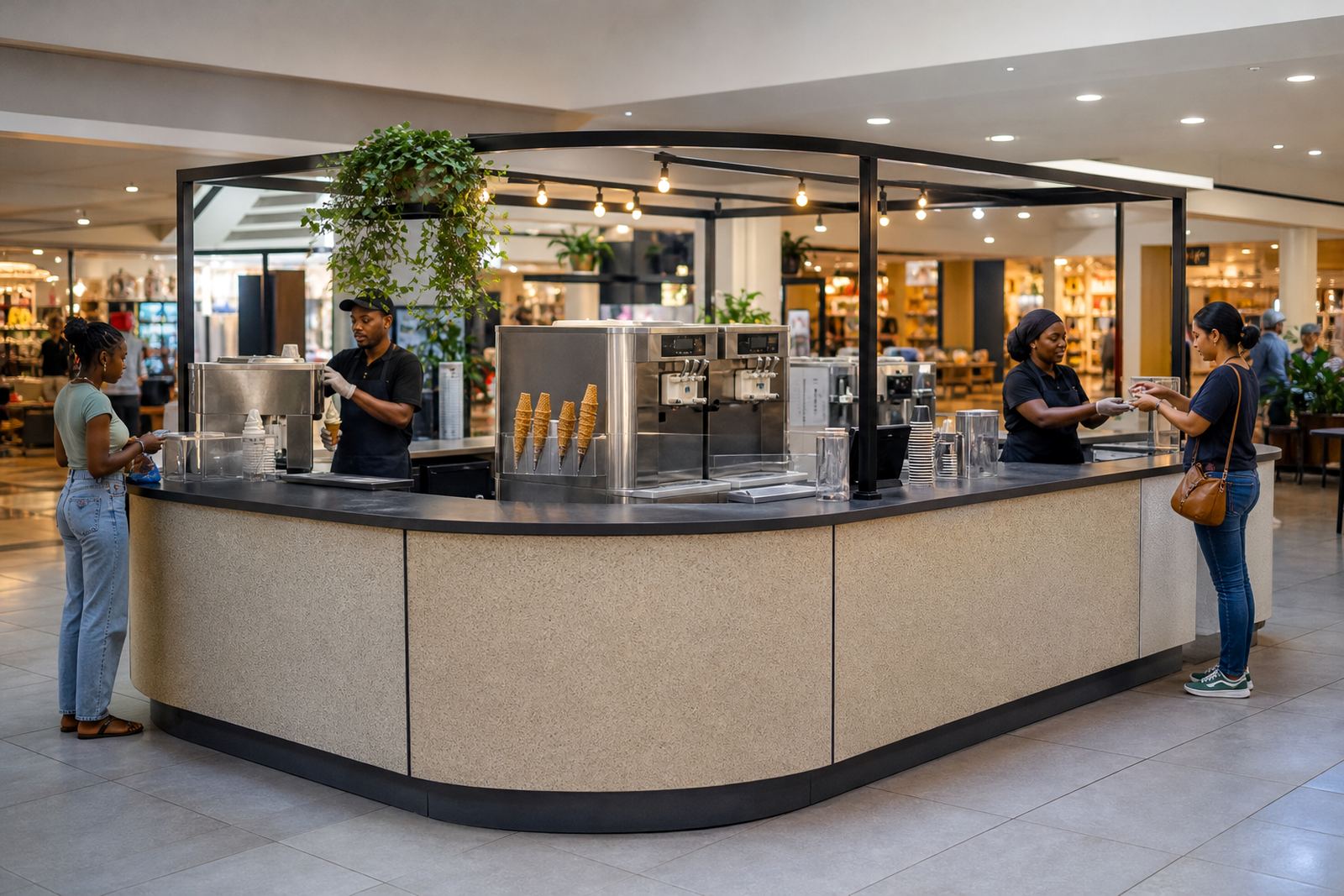
The client was a tertiary campus catering team in Pretoria serving students, staff and visitors from one central food point. Their main requirement was simple enough on paper: a dessert station that could handle peak periods without slowing the line, and that could be cleaned and turned around quickly between service blocks. They also wanted the setup to fit a tight counter area and keep the serving side tidy for health inspections.
We were asked to keep the equipment easy for different operators to use, because shift changes were common and not every team member had experience with frozen dessert machines. The campus also had to work around load-shedding, so the layout needed sensible power planning and a process that would recover quickly after an outage without wasting mix or causing long delays.
What we supplied for the Pretoria counter
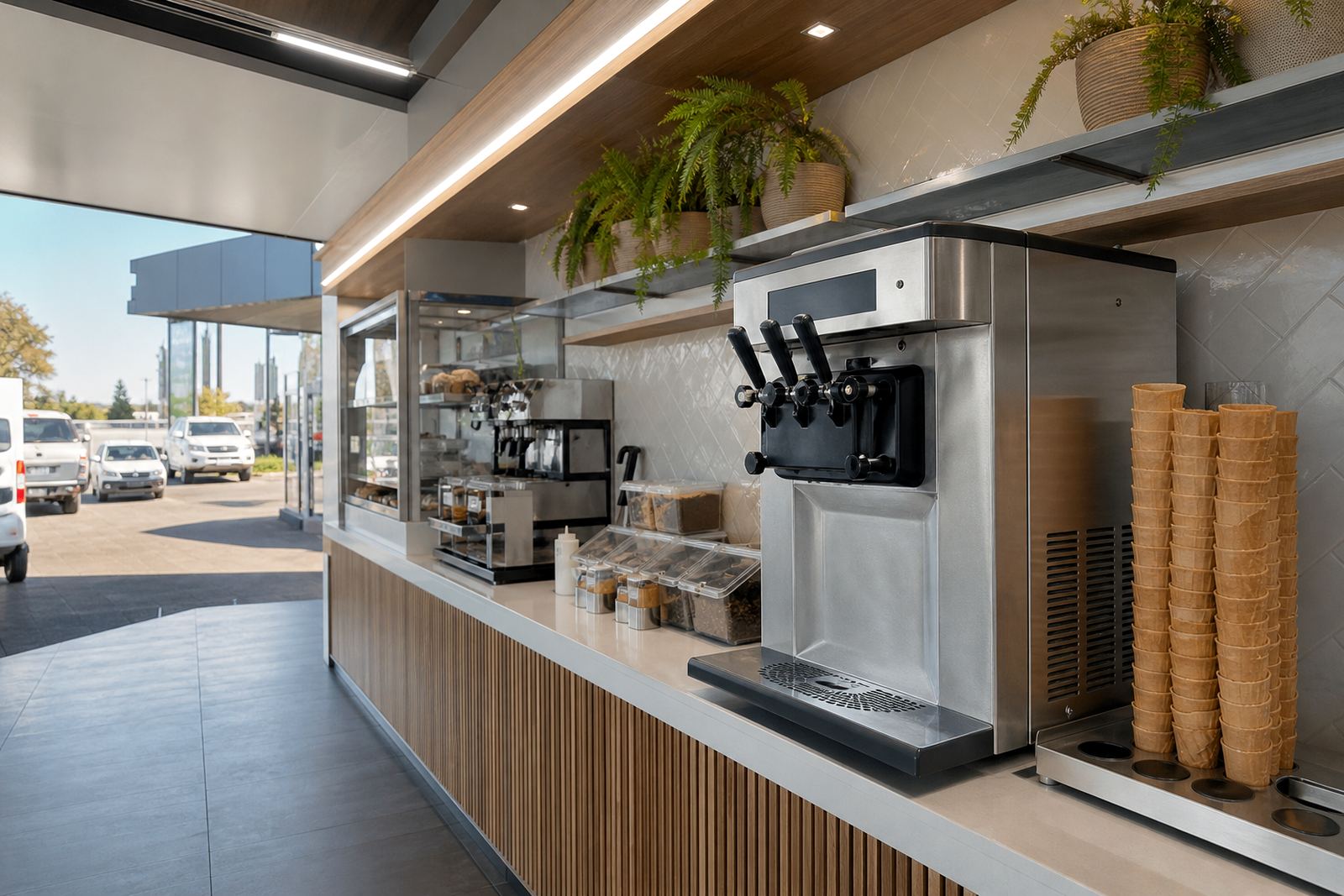
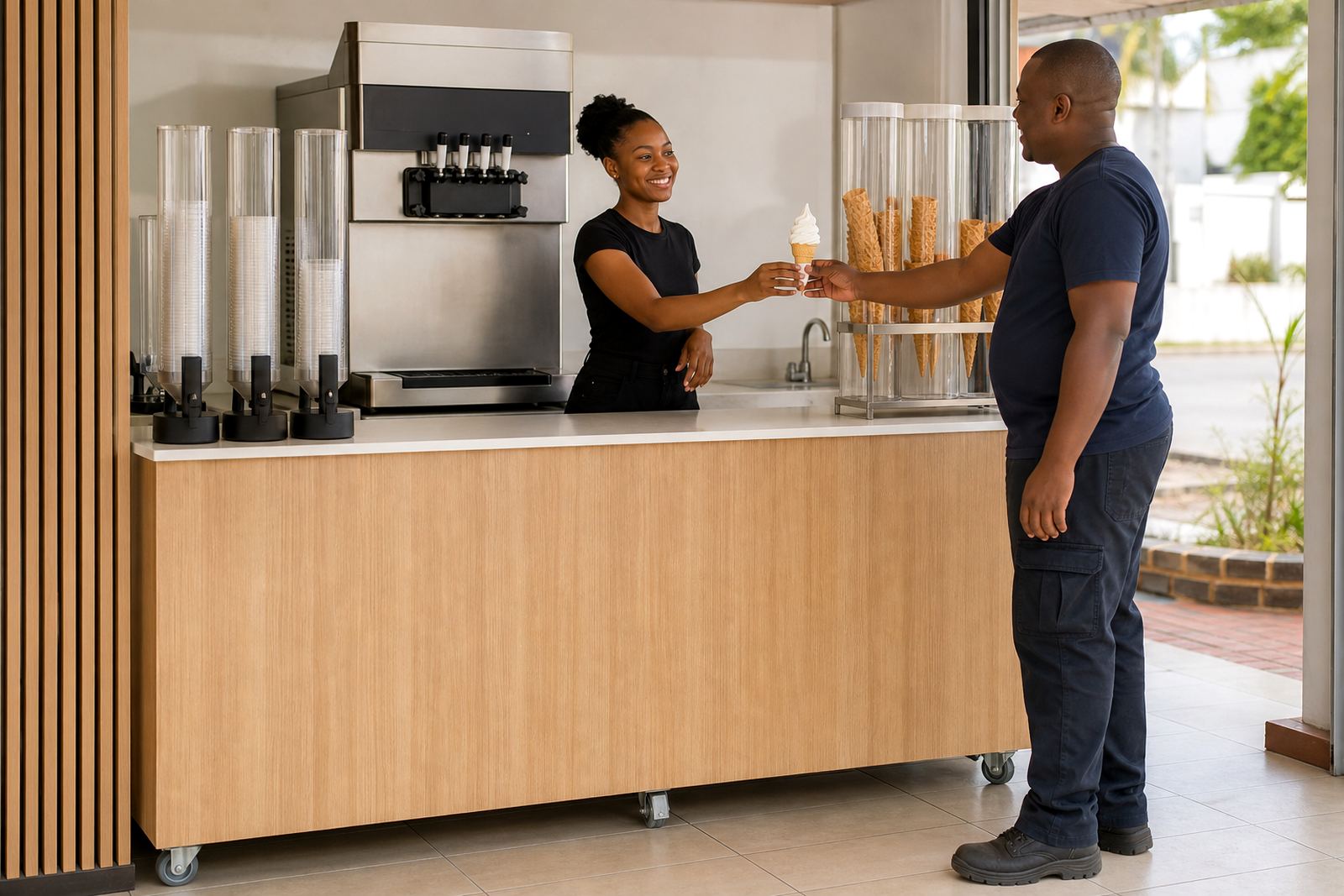
For this project we supplied a soft-serve machine suited to steady daytime demand, together with yoghurt and dairy-style mix options, cone stock and sanitising supplies for daily use. The counter layout was arranged so the machine, topping area and cone storage sat within easy reach of the operator, which cut down on unnecessary movement during busy periods. We also helped the client match portion control to their expected serving size so there was less waste and better cost control.
- Counter-top soft-serve machine with dual-flavour capability
- Food-grade mix range for vanilla, yoghurt and seasonal specials
- Wafer cone and sugar cone supply for retail serving
- Cleaning kit, sanitising chemicals and daily rinse support
- Starter signage and serving guidance for student self-order flow
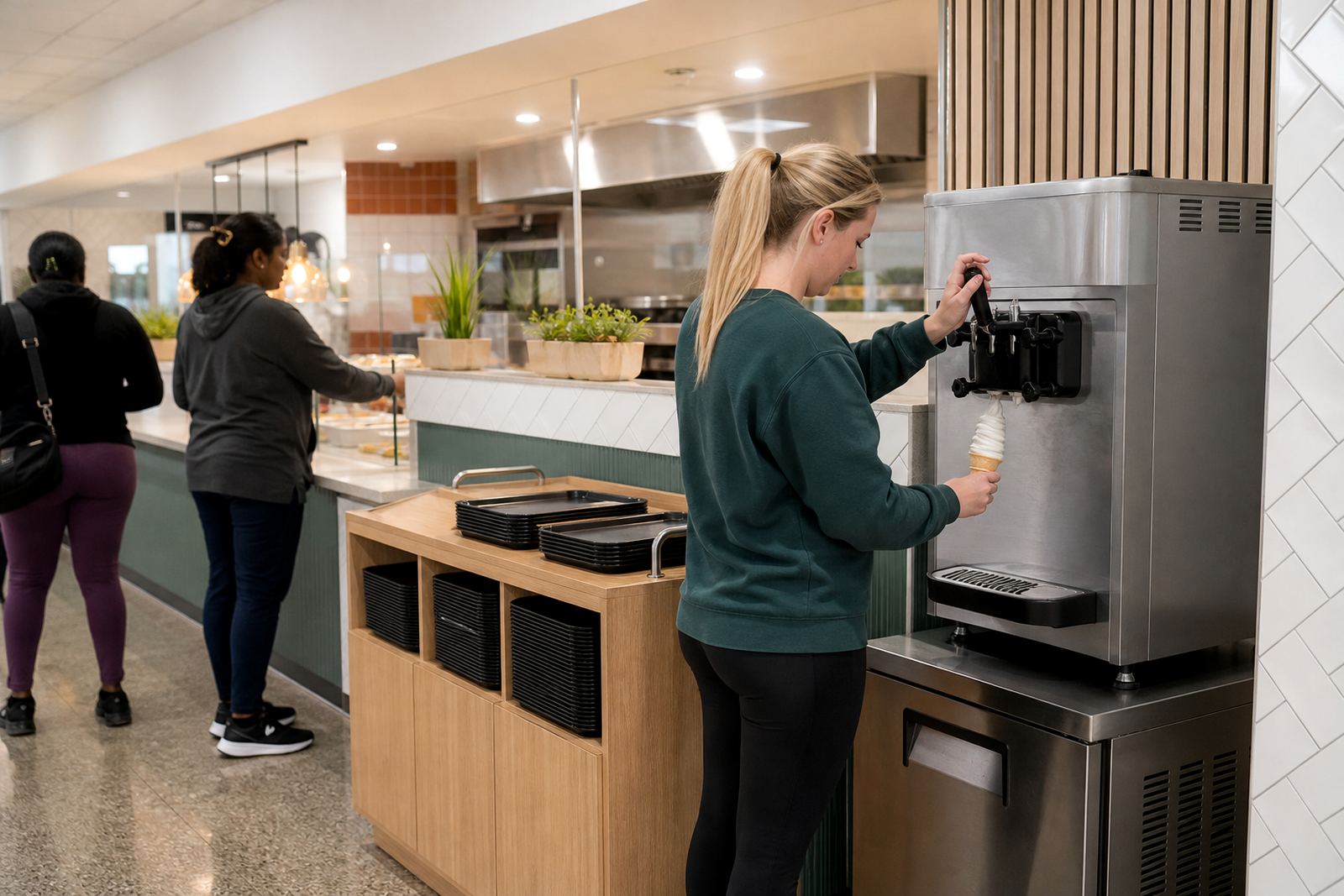
The machine format was chosen for quick startup and straightforward daily operation. In a campus setting, that matters because queues build fast and the next service period often begins before the team has finished clearing the previous one.
Site constraints in Pretoria and how we handled them
The counter space was limited, so every centimetre counted. There was also a need to keep the front of house neat for student traffic while still giving staff enough working room behind the counter. We measured the area, checked access for delivery and lift movement, and positioned the unit so the service side faced the queue without blocking the serving hatch. The campus wanted a setup that looked tidy in photos and still held up under daily use.
Power continuity was another issue. Pretoria campuses can have sudden interruptions during class changes or weather-related outages, and frozen mix does not forgive poor planning. We kept the electrical load simple, arranged the plug points sensibly, and made sure the operating team knew what to do if the machine stopped mid-cycle. That sort of prep avoids product loss and makes the next restart quicker, especially when the temperature rises in late summer.
- Compact footprint to suit a narrow service counter
- Simple cable routing and clear access for cleaning
- Workflow suited to one main operator and one support person
- Practical restart steps for outages and power dips
Commissioning, training and first-week support
Installation and startup commissioning were completed over a two-week period from site check to handover. In week one we confirmed measurements, finalised the machine position and checked the service flow with the campus team. In week two we completed fitment, mix calibration, test runs and operator training. The handover covered daily cleaning, safe filling levels, how to read product texture and what to watch for when output starts changing. We kept the instructions practical and repeated the key steps a few times so the team could use the equipment confidently from day one.
Because campuses have rotating staff and holiday relief teams, we left a clear routine that could be followed without needing specialist knowledge. The support lead was trained to spot early warning signs such as inconsistent draw, over-thick mix or unusual noise. That way small issues could be caught before they became a breakdown.
Results after launch on campus
Once the station went live, the client saw a better flow at peak lunch times and far less waiting around at the counter. Students moved through faster because the product was ready to serve without a long recovery period between orders. The campus also reported cleaner end-of-shift routines, since the machine design and supplied cleaning process made it easier to close down properly and reopen the next day.
There was also a noticeable improvement in stock control. With mix calibration in place, the team could plan usage more accurately and reduce over-pouring. That helped keep the cost per serving predictable, which matters when dessert sales run alongside a fixed campus catering budget. The team said the reliablity was the biggest win, because it reduced tension during rush periods and kept service steady even when the queue got long.
- Faster serving during lunch and late-afternoon traffic
- Shorter cleaning and reset times between service blocks
- Better portion control and less product waste
- Staff confidence improved after training and live testing
What we would repeat for another campus project
If we were doing the Pretoria Campus Counter again, we would keep the same approach: measure carefully, keep the layout simple, and choose a machine that is easy to clean without sacrificing output. Campus food service needs consistency more than anything else. When the station can handle rush periods, recover after power issues and stay easy for rotating staff to run, it becomes a useful part of the daily meal offer instead of another problem for the kitchen team.
We would also keep the support plan practical from the start. That means operator training, a maintenance schedule, spare seals and a clear cleaning routine from the first week. In a busy academic setting, those small habits protect the equipment and help the counter keep earning through the term.
Key facts
| Project type | Campus dessert station |
|---|---|
| Town | Pretoria, Gauteng |
| Machine format | Compact dual-flavour soft-serve unit |
| Footprint | Approx. 650 mm wide x 720 mm deep |
| Power requirement | 220V single-phase, suitable for site planning around load-shedding |
| Timeline | 2 weeks from site check to handover |