A forecourt add-on that had to work fast
The client was a fuel forecourt operator in Waterfall, Durban, serving passing motorists, office staff and nearby families. They wanted a dessert counter that could lift basket spend without slowing the till flow, and it had to be straightforward enough for staff to run during peak periods and shift handovers.
The space was tight and exposed to heat from the forecourt, so the layout had to support short service times, clean product presentation and easy refilling. We also had to account for load-shedding and the kind of power interruptions that are part of daily trading in KwaZulu-Natal, so the installation plan kept the system practical and manageable.
The brief, the constraints and the key decisions
The brief was simple on paper but specific in execution. The owner wanted a dessert point that could sell soft-serve and frozen yoghurt with limited staff time, low waste and a neat footprint that would not crowd the forecourt shop. They also wanted the counter to be easy to sanitise, with sensible access for cleaning and routine checks.
- Footprint sized for a compact counter area with a clear serving line
- Equipment suitable for high turnover and short peak bursts
- Mix handling that would reduce spillage and product loss
- Operator controls that new staff could learn quickly
- Cleaning access for daily wipe-downs and end-of-day wash routines
Another concern was the coastal climate. Durban humidity can affect storage discipline, packaging and general hygiene if a counter is not set up properly, so the service plan placed emphasis on ventilation, product rotation and keeping dry goods off the floor. The result was a setup that fit the site rather than forcing the site to fit the setup.
What we supplied and installed
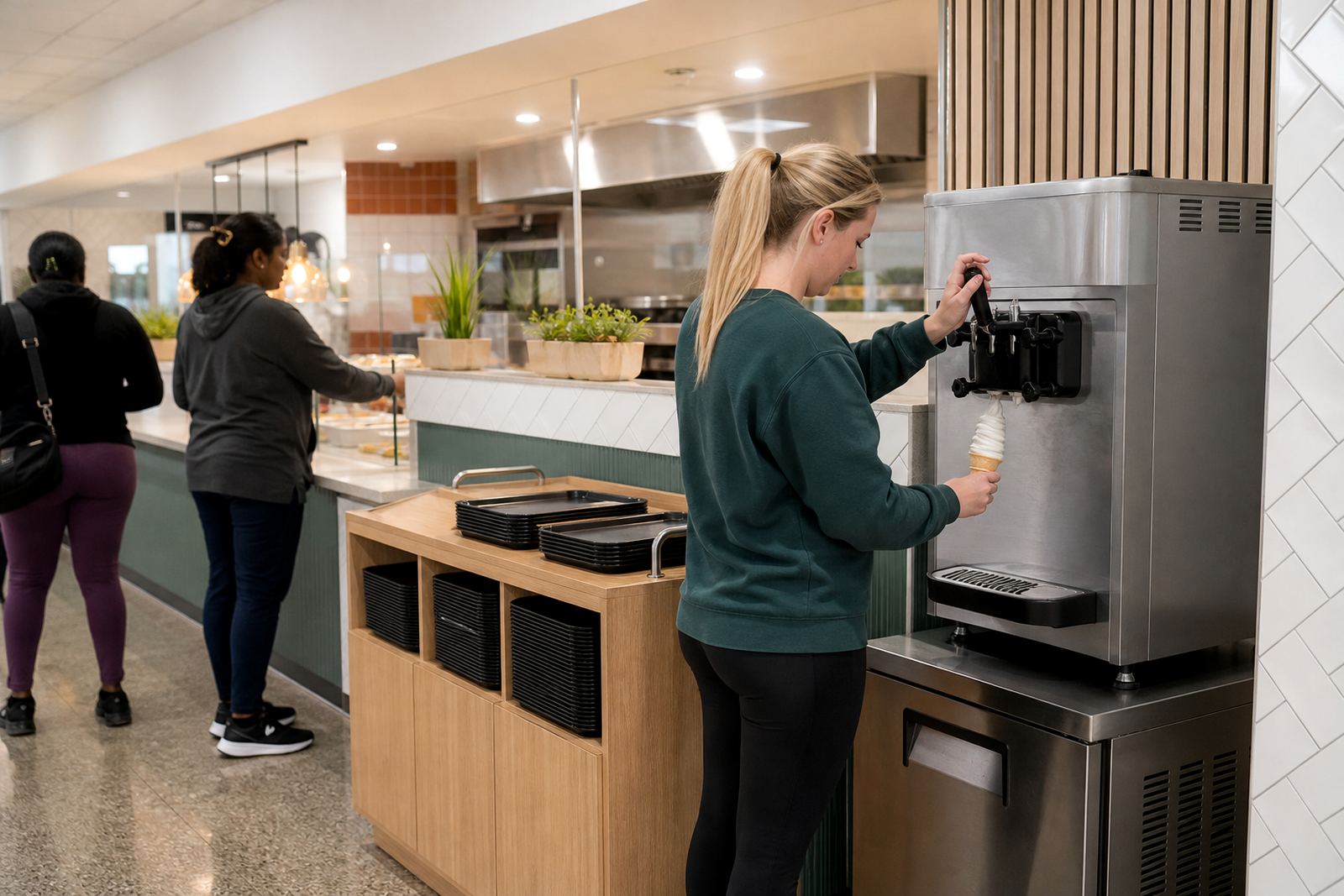
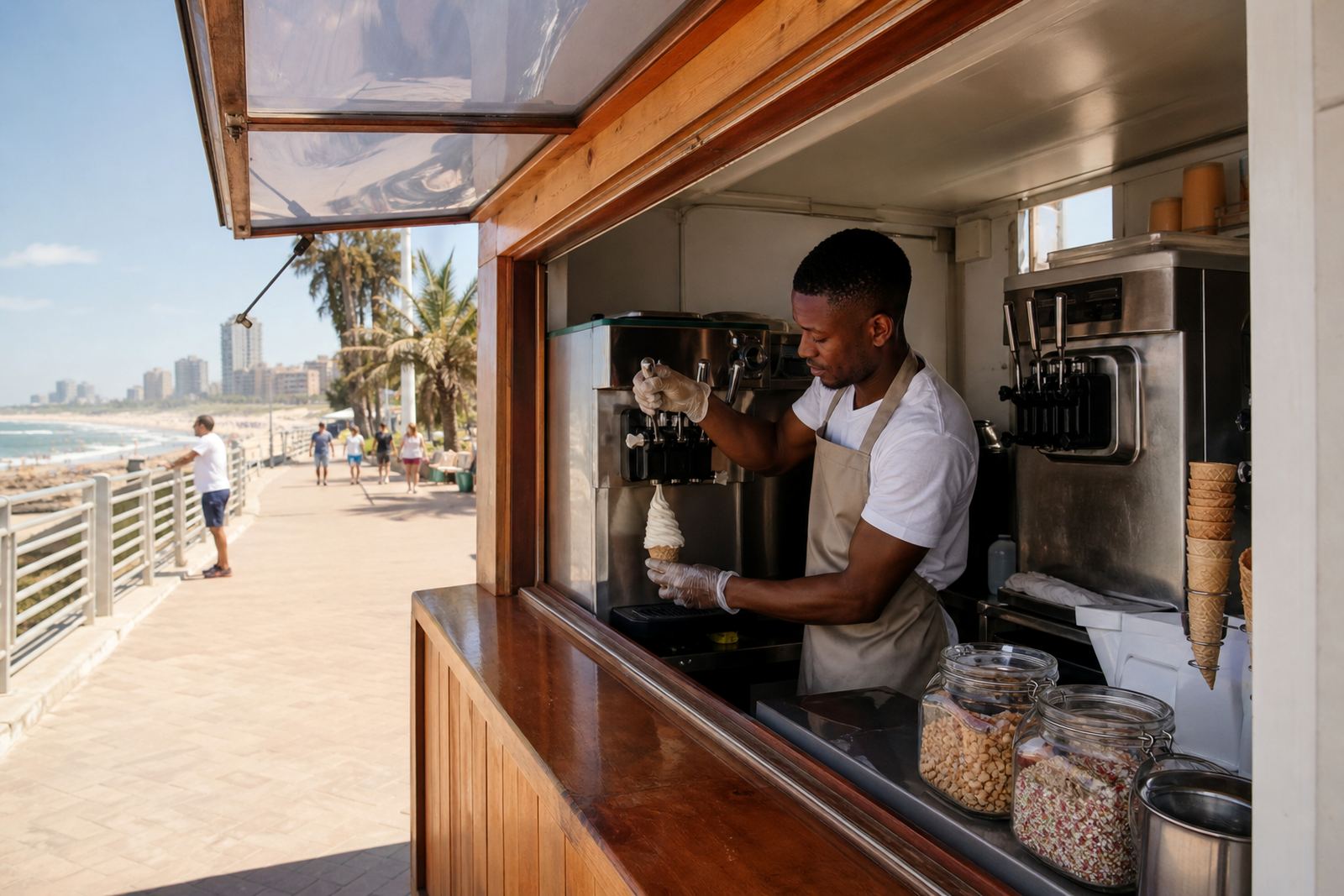
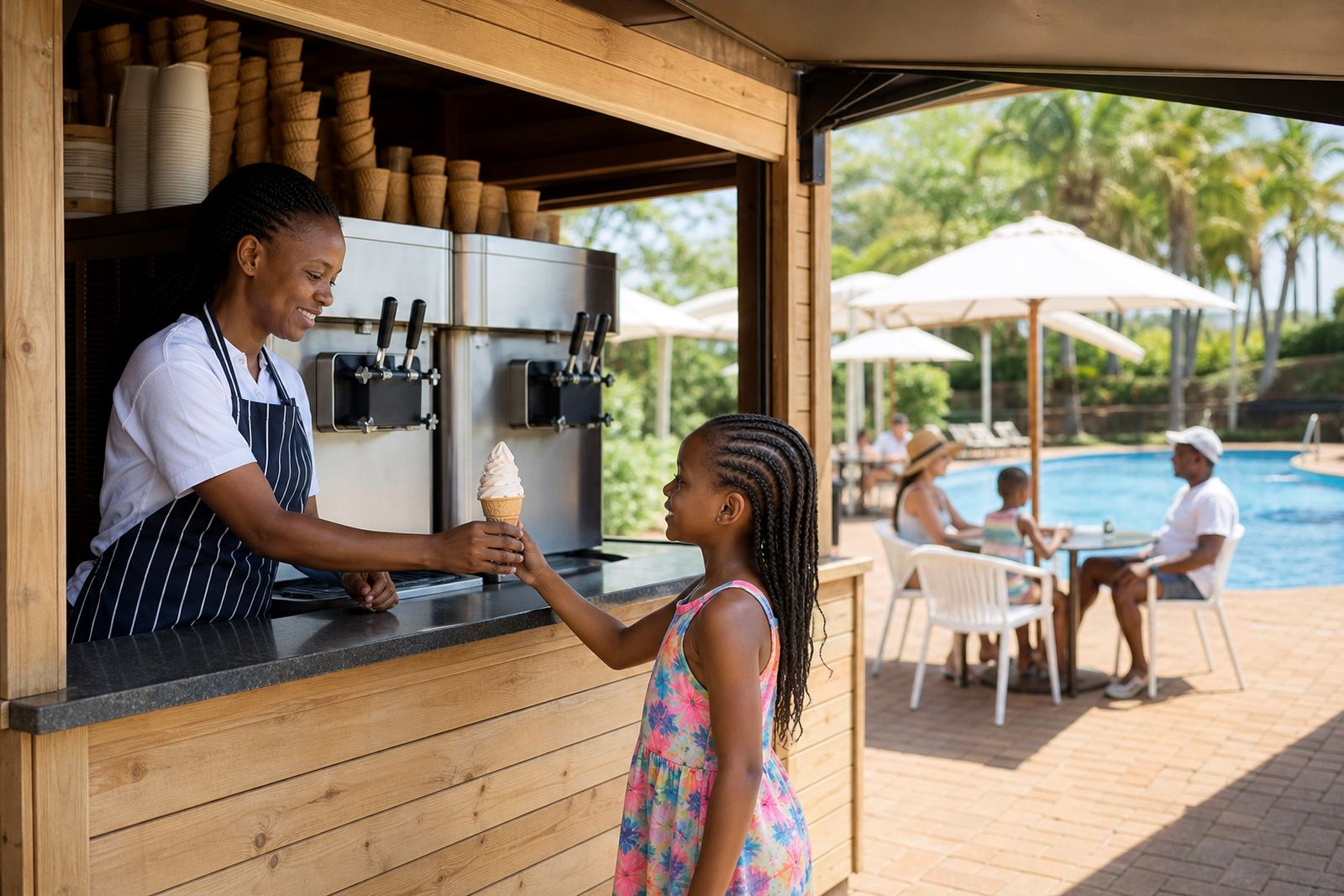
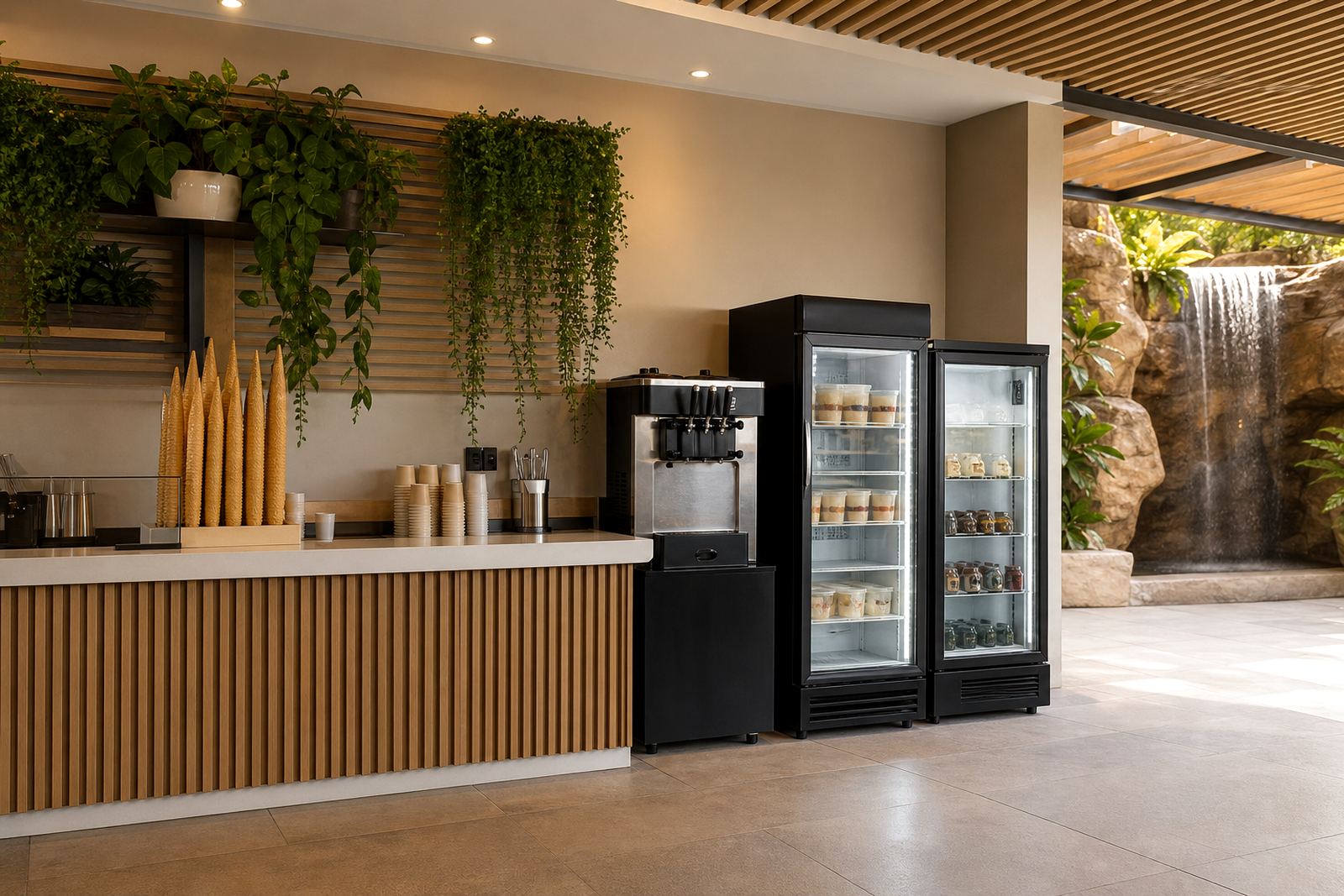
We supplied the core dessert equipment, the matching mix and cone range, and the practical items needed to start trading quickly. The installation included soft-serve and frozen yoghurt units, support for mix calibration, startup commissioning and a full operator handover. The counter was set up so staff could serve cones, cups and quick add-ons without needing to move back and forth across the shop floor.
The machine selection focused on reliable output, simple controls and predictable portioning. That matters in a forecourt environment, because a dessert counter must keep moving even when the shop is busy with fuel, airtime and grocery customers. We also set out the storage and serving workflow so the team could keep ingredients orderly, and not lose time looking for scoops, lids or cleaning items.
- Soft-serve machine with practical portion control
- Frozen yoghurt machine for a second flavour lane
- Mixes matched to the expected daily sales pattern
- Cones and serving consumables for immediate trading
- Sanitising supplies for daily hygiene routines
Installation, training and handover
The project ran over three weeks from site assessment to handover. Week one covered site measurements, power checks and final layout confirmation. Week two was installation, commissioning and setting of product ratios. Week three focused on training, cleaning routines and making sure the team could manage service without needing constant support.
Our technical supervisor worked through the startup sequence with the operators, showing them how to check consistency, monitor stock levels and handle basic fault spotting before it became a bigger issue. The training also covered safe cleaning order, because a dessert counter only performs well when the team is disciplined about rinse cycles and seal care. It sounds basic, but in a busy store it makes a big difference.
The handover was done with the store manager and the floor team together, so everyone left with the same process. That cut down on confusion during shift changes and helped the site move into trading with confidence rather than trial and error.
Early trading results at the stop
Once the counter opened, the main result was speed. Customers could add dessert to a fuel stop or shop visit without waiting long, and the operator side stayed calm because the workflow was practicaly built around short service steps. The store reported steadier add-on sales during afternoon traffic and weekend family visits, which is exactly what a forecourt dessert point should do.
The second result was consistency. Because the mix calibration and serving process were set properly from the start, portion sizes stayed even and waste stayed down. The owner also liked that the counter could be cleaned quickly at closing time, which matters when trading ends late and staff are working around a tight schedule.
- Quicker queue movement during peak periods
- More impulse dessert sales at the till
- Less waste from inconsistent portions
- Easier cleaning and end-of-day shut down
What we would repeat on the next forecourt project
If we were to do the same project again, we would keep the same approach: start with the operator workflow, then fit the equipment around the actual trading pattern. That means planning for rush periods, checking the site power carefully and keeping the service area uncluttered. In Durban, with heat, humidity and regular supply interruptions, those details are not extras, they are part of the job.
We would also repeat the same service mix of installation, startup commissioning, operator training and follow-up support. For this kind of site, the best outcome comes when the machine, the stock and the staff routine all work together. Once that happens, the counter becomes a dependable extra revenue point instead of another thing for the team to manage.
For a forecourt in Waterfall, that was the aim from the start and it is still the standard we would use again on the next project.
Key facts
| Project | Waterfall Service Stop dessert counter |
|---|---|
| Client type | Forecourt convenience and service stop |
| Town | Waterfall, Durban, KwaZulu-Natal |
| Scope | Soft-serve and frozen yoghurt counter with mixes, cones and operator support |
| Timeline | 3 weeks from assessment to handover |
| Key services | Installation, commissioning, training, mix calibration and support |