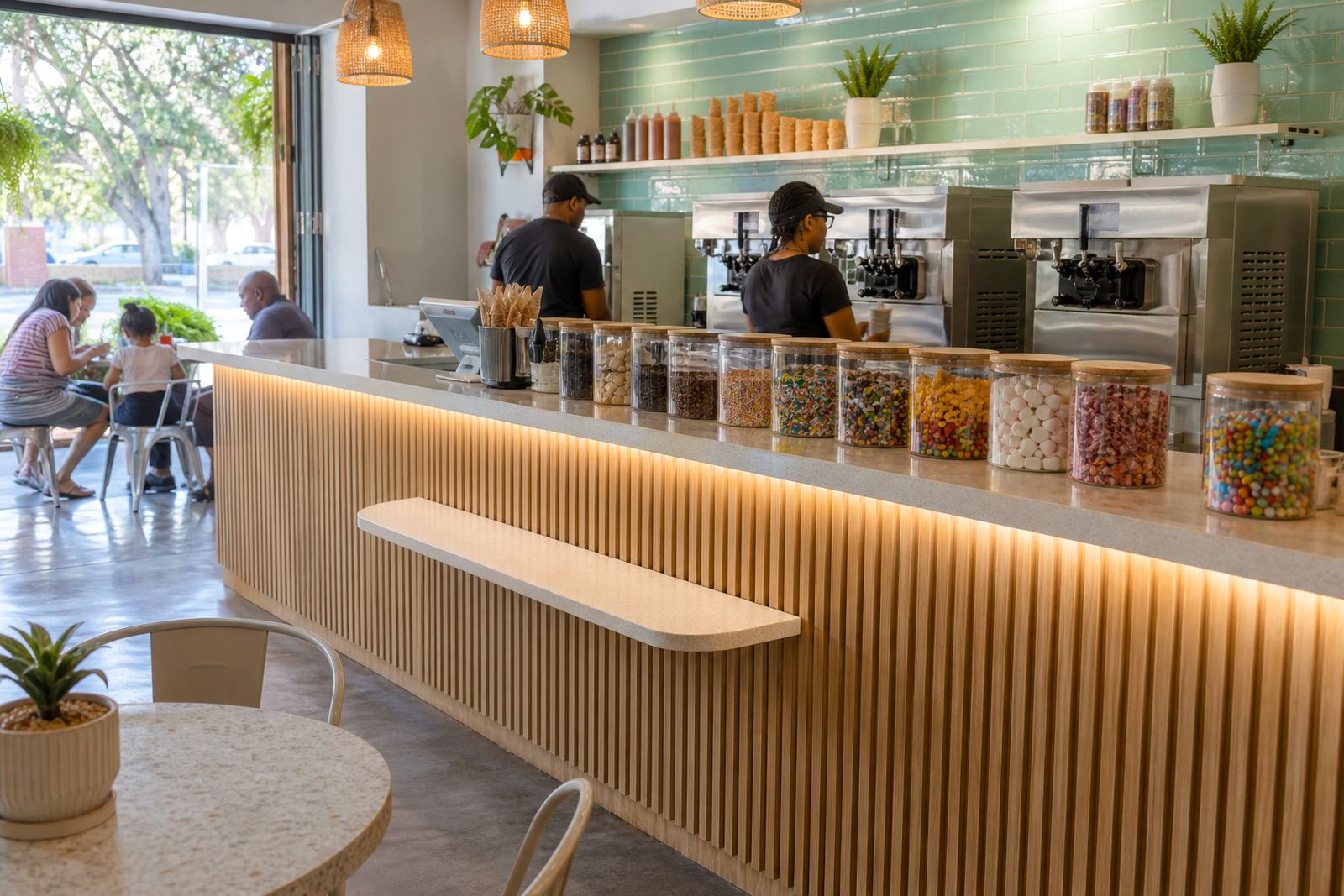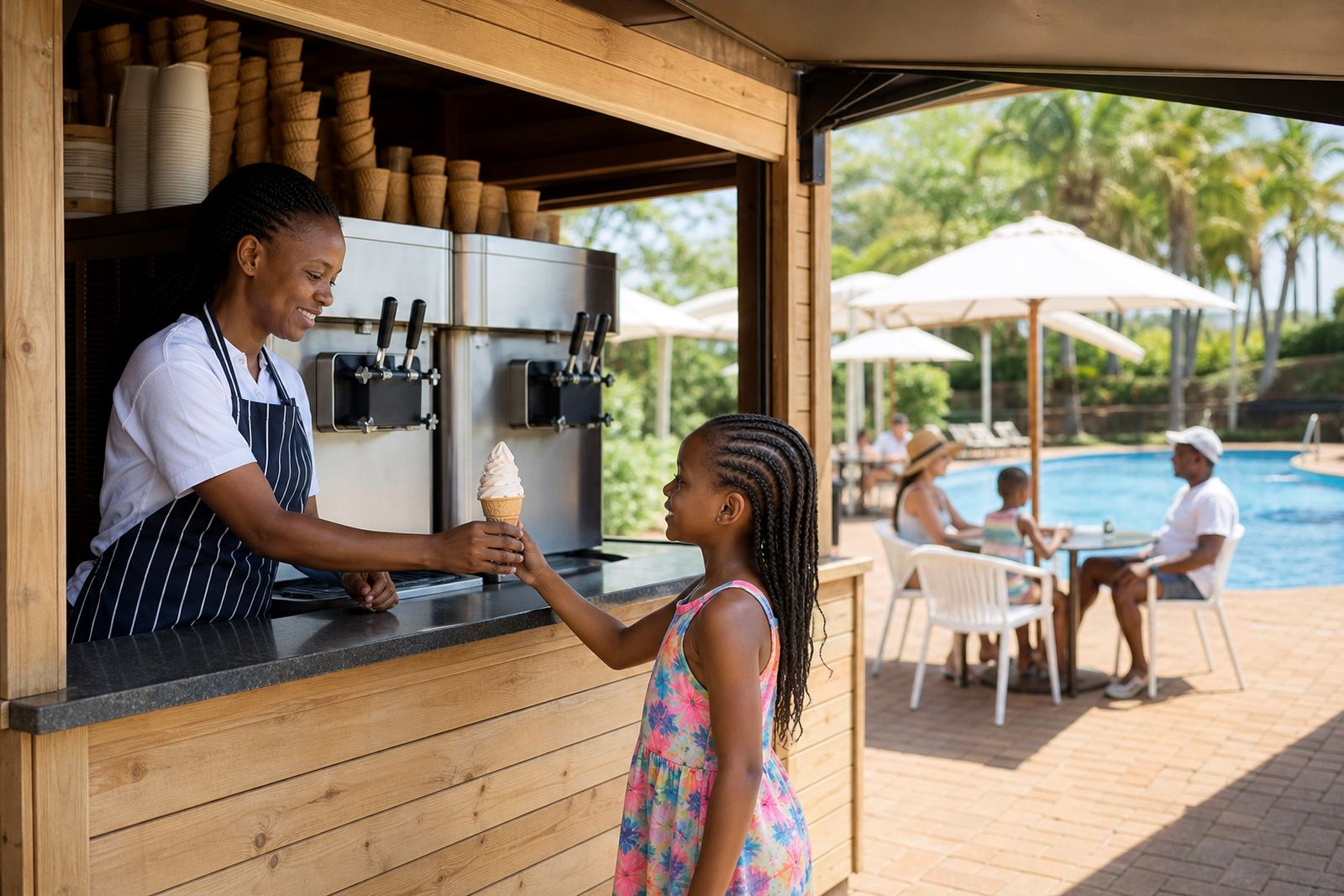

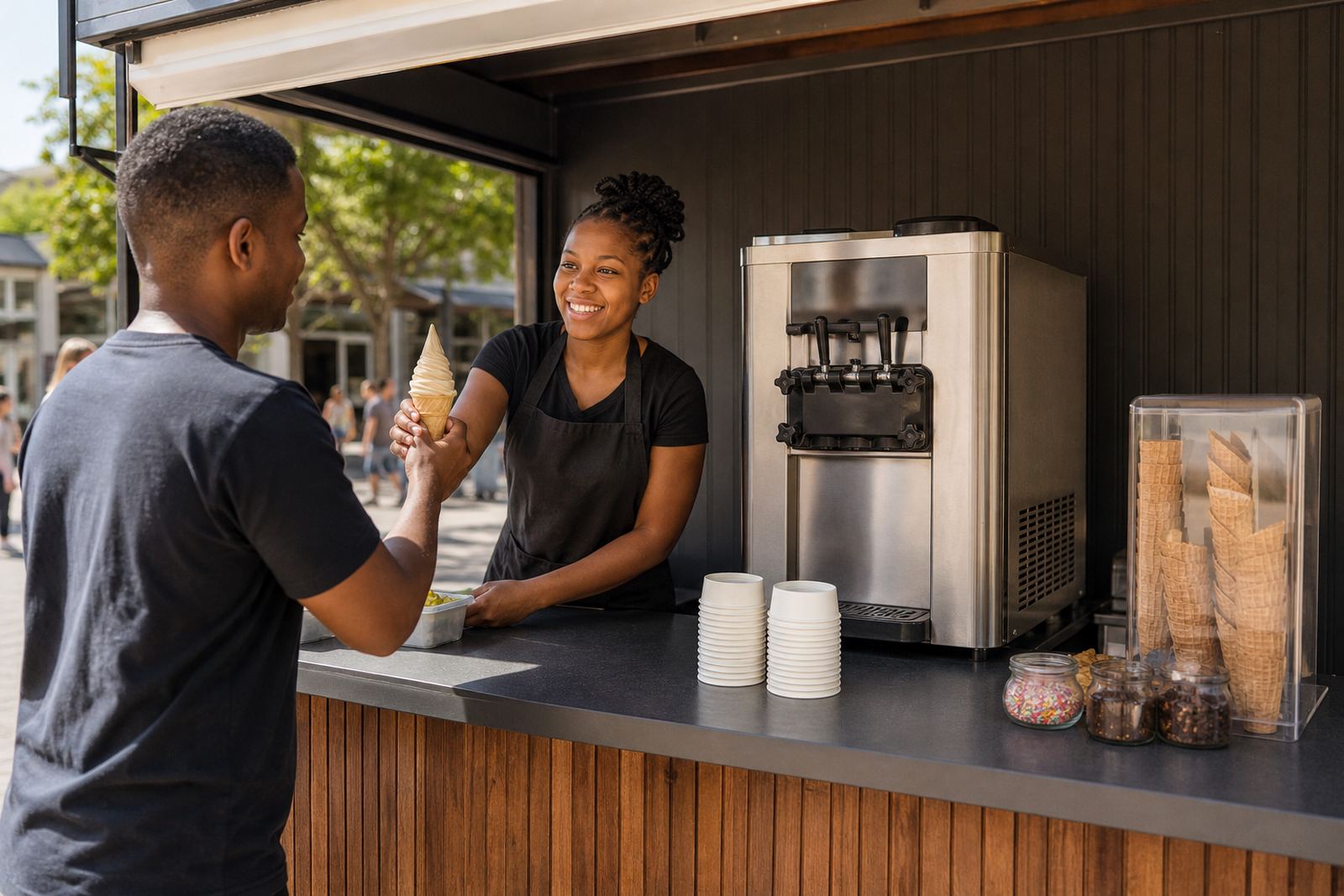
A campus kiosk with short queues and long trading hours
The client was a student-facing kiosk in Glenwood, Durban serving soft-serve and frozen yoghurt to learners, staff and visitors between classes. The brief was straightforward on paper: fit equipment into a tight counter area, keep cleaning time low, and make sure the operator could keep serving during rush periods without chasing faults or wasting mix.
They needed a practical setup that would work in warm weather, hold up under daily use and fit into a space where every metre mattered. The kiosk also had to meet campus hygiene rules and stay tidy through peak lunch queues, so we focused on quick-clean surfaces, clear access around the machine and a layout that did not block service flow.
- Client type: campus kiosk serving students and staff
- Area: Glenwood, Durban
- Use case: soft-serve and frozen yoghurt sales during peak campus hours
- Main goal: compact footprint with simple daily cleaning
What the brief asked us to solve
The site team wanted a machine that could be operated by a small staff complement, with predictable output and basic controls. They also asked for help choosing the right mix ratios, cone stock and sanitising routine so the kiosk could stay consistent even when the shift changed mid day. On campus, there is no room for complicated handovers.
We also had to think about Durban conditions. Heat, humidity and regular power interruptions can affect frozen product service if the machine is not set up properly. We planned the install around load shedding risk, made sure the operator had clear restart steps and set expectations around holding times during quieter periods. A small details matter here because melted product means lost sales and unhappy customers.
- Compact footprint for a narrow kiosk counter
- Easy wipe-down surfaces for daily end-of-shift cleaning
- Simple controls for casual and trained operators
- Practical service plan for load-shedding interruptions
Equipment supplied and the key specs
We supplied a compact soft-serve unit suited to kiosk service, together with starting stock of mix and cones, plus the cleaning and sanitising items needed for the first trading cycle. The machine was selected for steady output, quick recovery between servings and straightforward operator controls. It was the right size for the space and left enough counter area for toppings, cones and cash handling.
The installation included placement, levelling, startup commissioning and a full check of product flow, temperature control and daily cleaning points. We also walked the team through the mix calibration so the product texture stayed consistent across the week. Once the machine was running, we tested a few real service cycles so the staff could see how it behaved at peak pace, not just in a quiet demo.
- Machine format: compact countertop soft-serve unit
- Service style: single flavour with controlled dispensing
- Output focus: steady serving through peak lunch periods
- Cleaning focus: quick strip-down contact points and smooth exterior wipe-down
- Supplies: mix, cones and sanitising consumables
- Support: startup commissioning and operator handover
How the installation went over the two week timeline
The project ran over two weeks from site assessment to handover. In week one we confirmed dimensions, power access and the position of the service counter. We then finalised the equipment choice and prepared the delivery schedule so the kiosk could keep trading with minimal interruption. Week two was installation, startup commissioning and training.
Because the kiosk was inside a busy campus environment, we worked around operating hours and kept the site tidy throughout. The team on site needed fast answers and practical guidance, so we kept the handover direct: how to start the machine, how to check product texture, what to do if a fault light appears and how to shut down safely after closing. No wasted time, no overcomplicated steps.
- Week 1: measure-up, planning and equipment confirmation
- Week 2: delivery, installation, commissioning and training
- Handover: same-day operational sign-off after testing
Training the kiosk team for day to day service
Training was aimed at the people who would actually run the kiosk during class breaks and busy afternoons. We covered startup checks, mix handling, sanitising routines and how to spot early signs of service issues before they became stoppages. The idea was to make the machine easy to live with, not just easy to admire on day one.
We also showed the team how to manage stock rotation so cones and mix stayed fresh, and how to keep the counter area clean without slowing service. In a student setting, speed matters but so does presentation. A neat kiosk tells customers the product will be handled properly. That confidence helps sales and keeps repeat custom coming back through the term.
- Operator startup and shutdown routine
- Daily cleaning and sanitising steps
- Mix calibration and texture checks
- Basic fault spotting and when to call for support
The result on campus
By the end of the project, the kiosk had a reliable frozen treat setup that suited the pace of campus trading. The machine ran well within the available space and the team was comfortable with the daily routine. Service became faster, cleaning was simpler and the customer area stayed more orderly, which matters a lot when queues start building between lectures.
The client also had a clearer supply rhythm. With the right mix and cone stock on hand, they could plan for busy days and avoid shortfalls. The result was a better fit between equipment, staff and student demand. It was not about making the kiosk bigger, only making it work better.
For a site like Glenwood, that kind of improvement shows up quickly in everyday trading. Fewer delays, less product waste and a cleaner finish at closing time are all practical gains that make a real difference to the bottom line.
What we would do again on a similar site
For another campus kiosk, we would follow the same approach: measure carefully, choose a compact machine, keep the layout simple and train the team in the real trading routine. We would also plan for Durban heat and power interruptions from the start, because those conditions are part of normal operations here and should never be treated as an afterthought.
We would also keep the cleaning and supply plan close to the machine setup. When cones, mix and sanitising materials are stored within easy reach, the service flow stays smooth and the staff are less likely to cut corners. On a busy student site, simple systems usually work best. That is what keeps the kiosk moving and the product consistent.
- Keep the footprint compact and the work area uncluttered
- Train the team on the actual service rhythm, not just the manual
- Plan for load-shedding and hot weather from day one
- Use quick-clean surfaces and a clear closing checklist
Key facts
| Project | Glenwood Campus Kiosk, Durban |
|---|---|
| Client type | Student-facing kiosk |
| Equipment | Compact soft-serve machine |
| Timeline | 2 weeks from site check to handover |
| Supplies | Mix, cones and sanitising consumables |
| Services | Installation, commissioning, training and support |