When Dessert Must Move as Fast as the Pass
Restaurants often add soft-serve or frozen yoghurt to improve average spend per table, but the machine has to fit the pace of service. In a busy dining room, dessert cannot become another bottleneck at the pass or a distraction for the kitchen team. The right setup should be simple to operate, quick to clean and reliable during peak trading, even when load-shedding or a hot coastal day puts extra pressure on equipment.
For many restaurants in Durban, Johannesburg and Cape Town, the first question is not whether guests will buy dessert, but whether the back-of-house space can support it. A compact machine near the serving point can work well for casual dining, while a larger venue with higher footfall may need a dual-flavour unit or an additional freezer for mixes and cones. Planning matters because a machine that is too small will hold you back, while one that is oversized can waste space and energy.
SnoCream works with restaurants from Springfield Park to Umhlanga, Pietermaritzburg, Pretoria and Gqeberha, helping teams choose equipment that suits their menu, service style and daily covers. The goal is straightforward: add a dessert option that looks good on the menu and functions properly on a Tuesday lunch rush or a packed Saturday evening.
A Typical Restaurant Dessert Setup
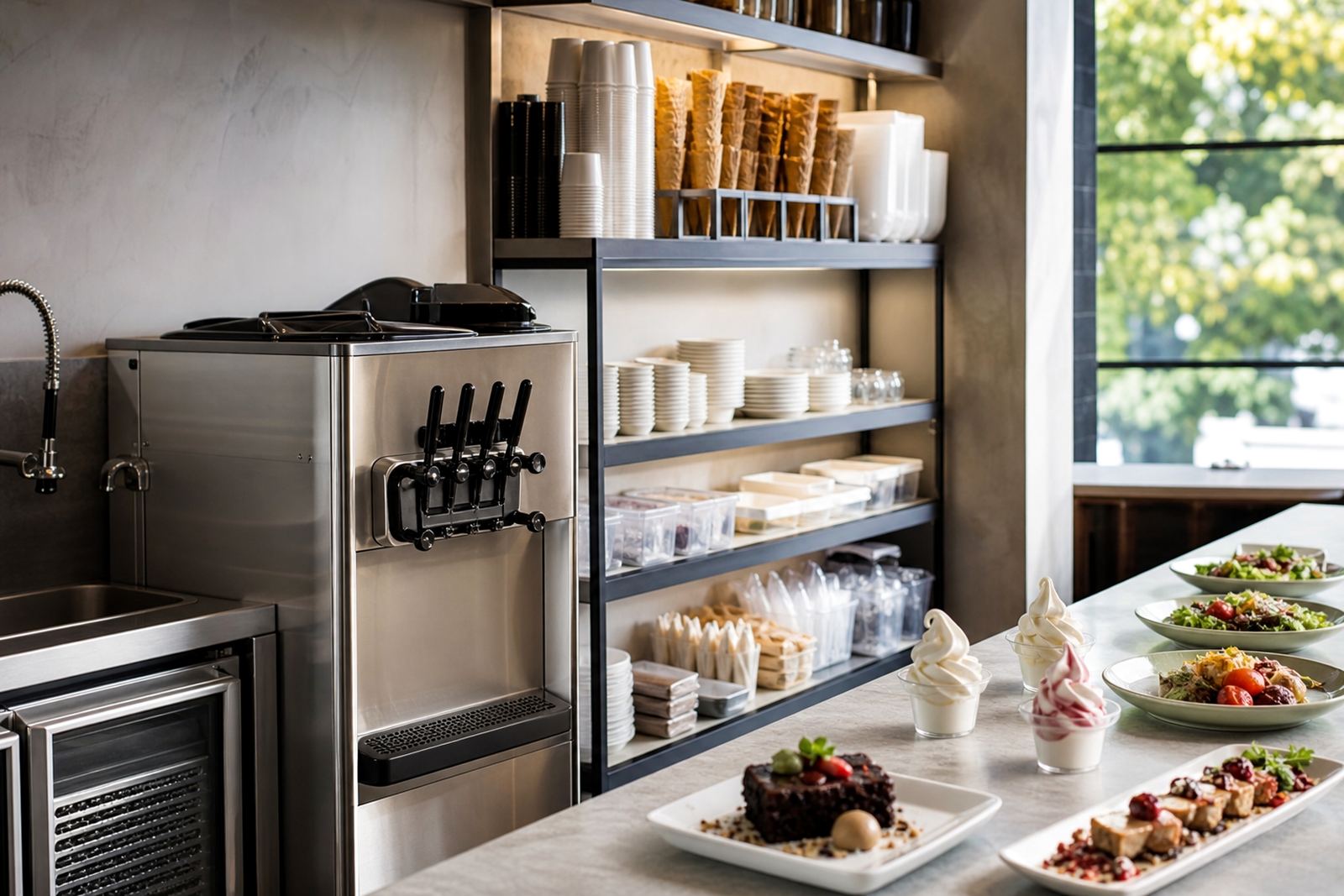
Most restaurant installations start with a single soft-serve or frozen yoghurt machine, then build around it with consumables and cleaning supplies. The exact choice depends on whether the restaurant wants a simple vanilla soft-serve, two flavour options, or a yoghurt-style offering with toppings. Some venues prefer a counter-top layout, while others allocate a small prep area behind the service counter so the dessert station stays neat and easy to manage.
- Soft-serve machine for one or two flavours
- Mixes suited to the chosen menu and portion size
- Cone stock in standard retail packs or bulk cartons
- Storage for sanitising supplies and cleaning tools
- Space for drip tray access and easy wipe-downs
- Backup plan for freezer storage during high-volume periods
For restaurants with a café-style dessert offering, the menu can stay modest and profitable. A machine paired with a small toppings selection often performs better than a long list of items that slow service. If your kitchen already handles plated desserts, the machine should complement that flow, not compete with it.
Planning the Space Before You Buy
Good planning prevents expensive changes later. Before ordering equipment, measure the available floor area, the counter height, nearby plug points and the route for delivery into the building. In older properties or shopping centre units, access can be tight and a machine may need to move through narrow doors, corridors or service lifts. That is especially important in central Durban and parts of Cape Town where space is often limited.
Restaurants should also check power supply and ventilation. A machine placed too close to a hot grill, oven or direct sunlight can struggle to perform properly. In coastal areas, humidity can affect handling and storage, so it helps to keep mixes, cones and cleaning supplies in dry, covered storage. If the venue depends on diesel backup power during outages, make sure the electrical load is assessed before installation.
Our team can assist with machine installation, startup commissioning, operator training and site relocations. That support helps reduce downtime and gets the team ready before the first service rush. It also helps to plan where sanitising supplies and spare parts will be kept, because a tidy station is easier to manage during a busy shift.
What Restaurant Owners Get Wrong Most Often
Many restaurant owners focus on the menu idea but not the daily handling. The most common mistakes are usually practical, not technical. They include underestimating cleaning time, choosing a machine without enough capacity for weekend demand, and failing to train staff properly on mix calibration and start-up checks.
- Buying for peak season only and ignoring weekday trade
- Placing the machine where staff cannot reach it easily for cleaning
- Using the wrong mix ratios, which affects texture and yield
- Skipping preventive maintenance until a breakdown happens
- Leaving cones and mixes exposed to heat or moisture
- Not budgeting for deep clean service and seal replacement
A restaurant menu can look simple from the dining room, but the back-of-house system needs discipline. If the machine is not cleaned on schedule, product quality drops and callouts increase. If staff do not know how to set the mix correctly, portion control becomes inconsistent and margins suffer. Small mistakes add up quickly when the machine is used several times a day.
Budget Ranges for South African Restaurants
Budget depends on machine size, production capacity and whether the restaurant wants one flavour or two. For smaller restaurants, a practical entry point may start from about R45 000 to R75 000 for a compact unit and basic setup. Mid-range restaurant installations often fall between R75 000 and R140 000, especially where higher output, extra accessories and a more complete stock package are needed.
Larger restaurants, multi-site groups and busy venues in malls or tourist zones can expect higher budgets, particularly if they need more than one machine, site preparation, service planning and backup stock. It is also sensible to allow for ongoing costs such as mixes, cones, sanitising supplies, preventive maintenance and periodic repairs. A restaurant should think in monthly operating cost, not only the purchase price.
For many clients, the best buying decision comes down to turnover and service flow. If a dessert item can be served quickly, with predictable portioning and low waste, the equipment pays its way more easily. That is why a careful budget often beats a cheap purchase that ends up costing more in downtime and product loss.
Support for Busy Kitchens and Seasonal Peaks
Restaurants across South Africa do not trade under the same conditions all year. Durban humidity, Cape Town winter trade, Pretoria lunch traffic and holiday peaks in Gqeberha all change how a dessert station performs. A good service plan should include seasonal prep checks, operator refreshers and enough stock to handle school holidays, December trade and long weekends.
SnoCream provides breakdown repairs, deep clean service, seal and parts support, phone support, mix calibration and sanitising supplies. That makes it easier for a restaurant to keep serving without scrambling for help at the last minute. For restaurants in Springfield Park, Umhlanga, Johannesburg, Pretoria, Cape Town, Gqeberha and Pietermaritzburg, the aim is the same: keep the machine working, keep the product consistent and keep the queue moving.
When dessert is set up properly, it becomes a useful part of the menu instead of extra admin. The kitchen stays in control, the service team stays calm, and guests get a finish to the meal that feels worth ordering.