
Why cafés add soft-serve to the menu
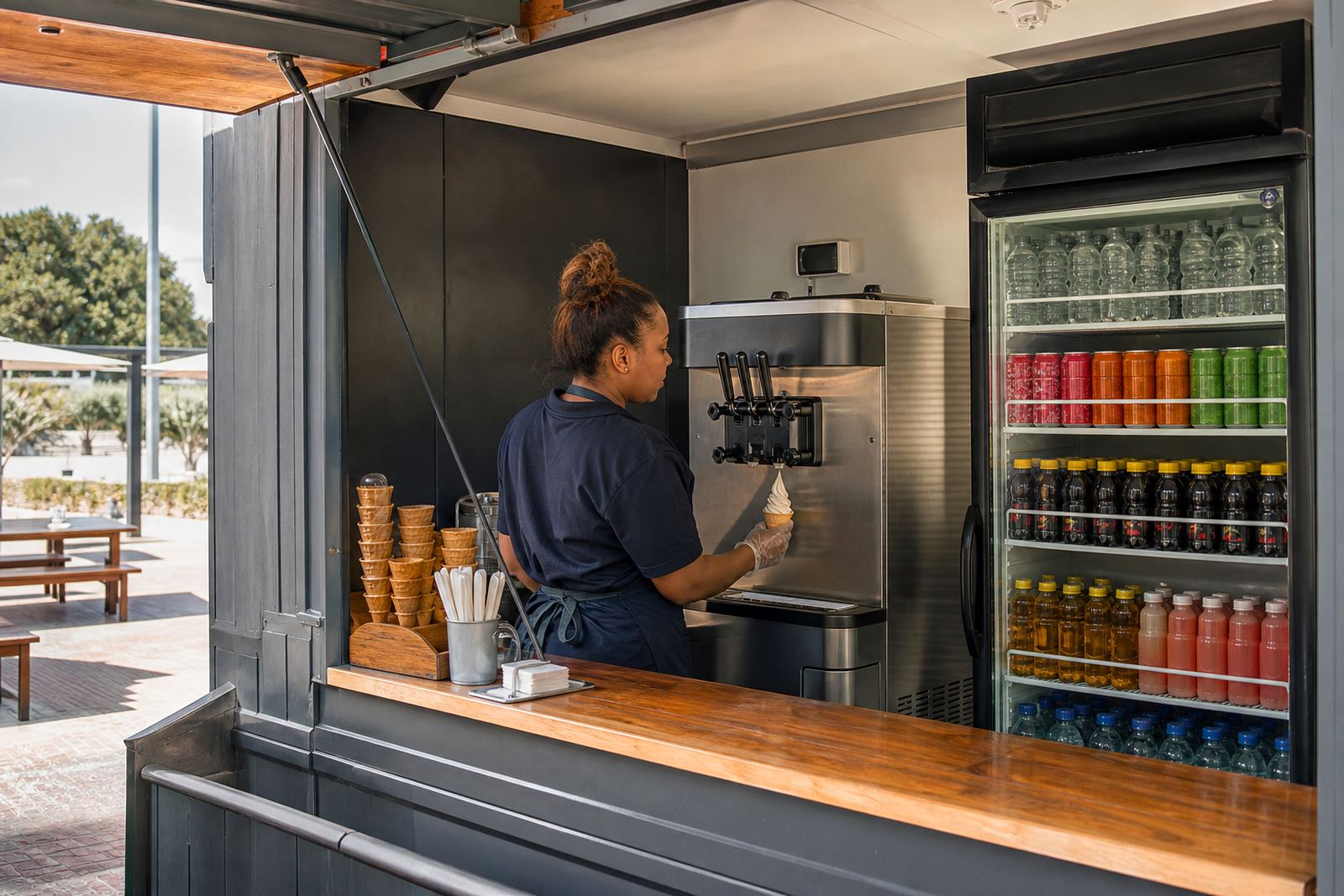
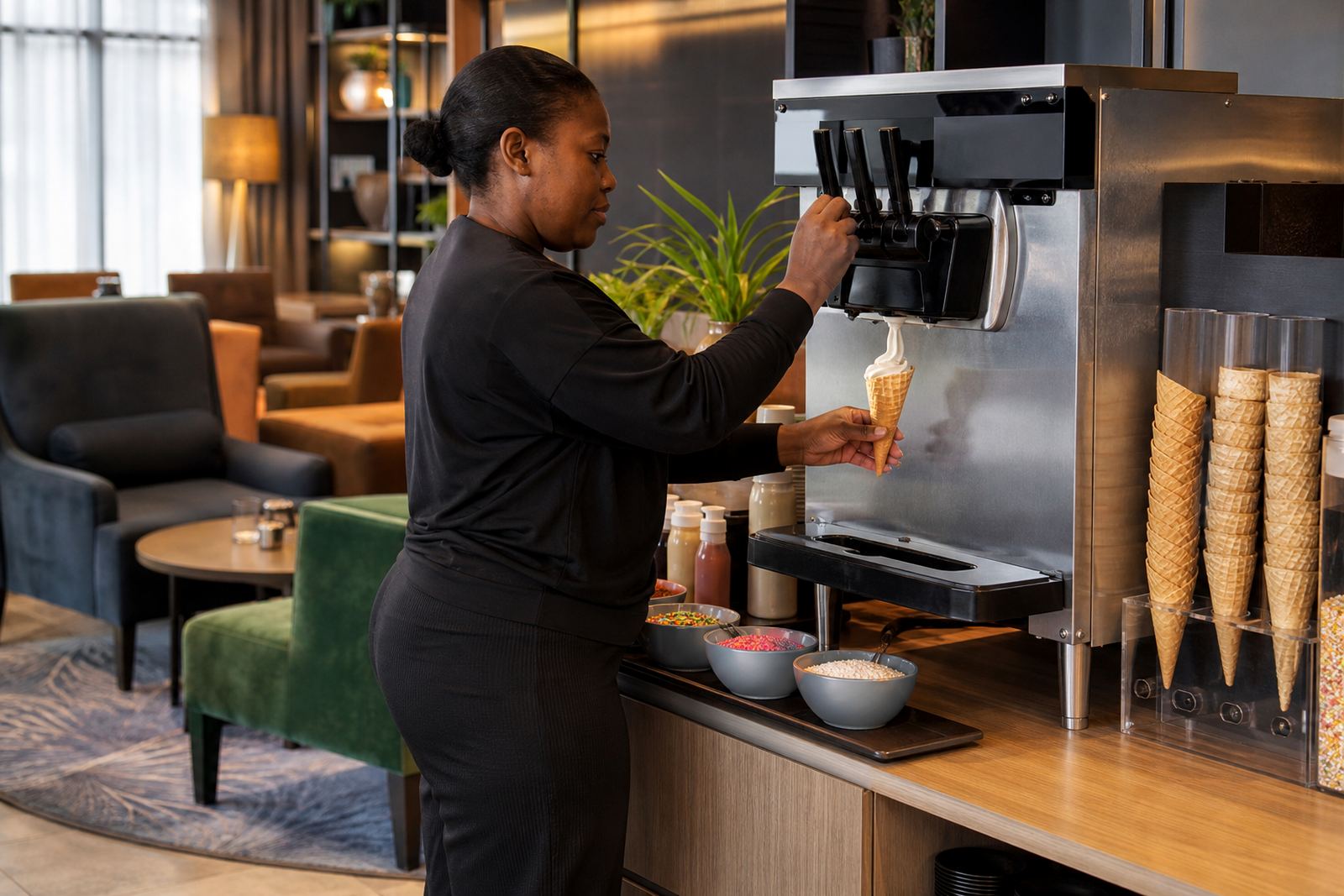
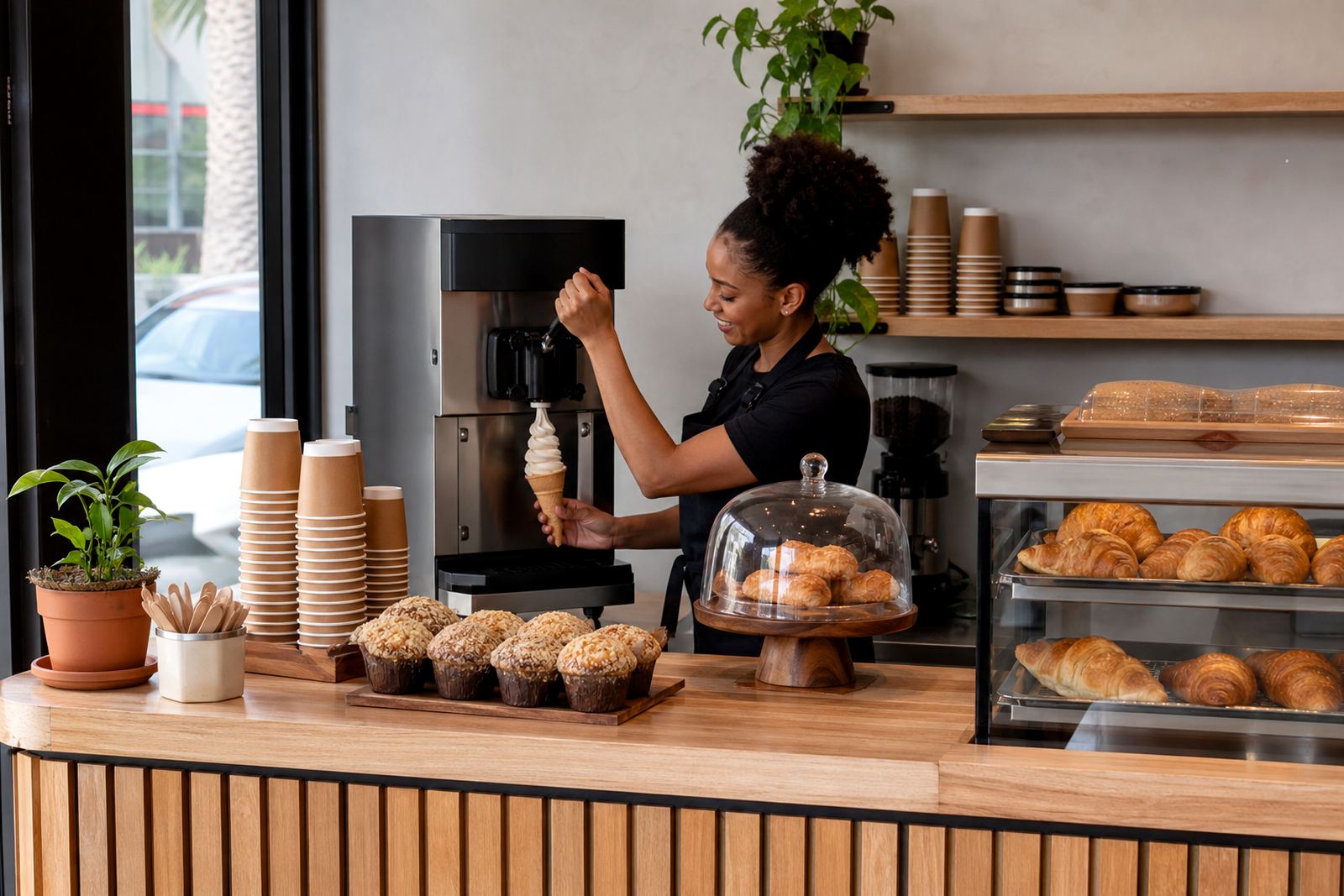
For many cafés, dessert sales are strongest when the item is quick to serve, easy to portion and simple for staff to learn. Soft-serve and frozen yoghurt fit that space well. A customer can order after lunch, with a cone for takeaway, or as a plated add-on with brownies, waffles and fruit. In busy areas like Durban, Umhlanga, Johannesburg and Cape Town, speed matters. A machine that gives a consistent serve in seconds can help keep the queue moving and lift average spend per customer.
The appeal is practical. A café does not need a large kitchen to sell frozen treats, and the product range can be kept tight. Most operators start with one flavour, then add a second flavour or a swirl once demand is proven. That keeps stock control manageable and reduces waste. It also helps in summer when footfall rises and in winter when you want a smaller, low-risk dessert offering that still pulls good margin.
Typical equipment set for a café counter
The right setup depends on your volume, your floor space and whether the dessert line will sit at the till, the display counter or a back-of-house prep area. A small café in Pietermaritzburg may only need a compact countertop machine, while a larger restaurant in Gqeberha or Pretoria may want a floor-standing unit with higher output.
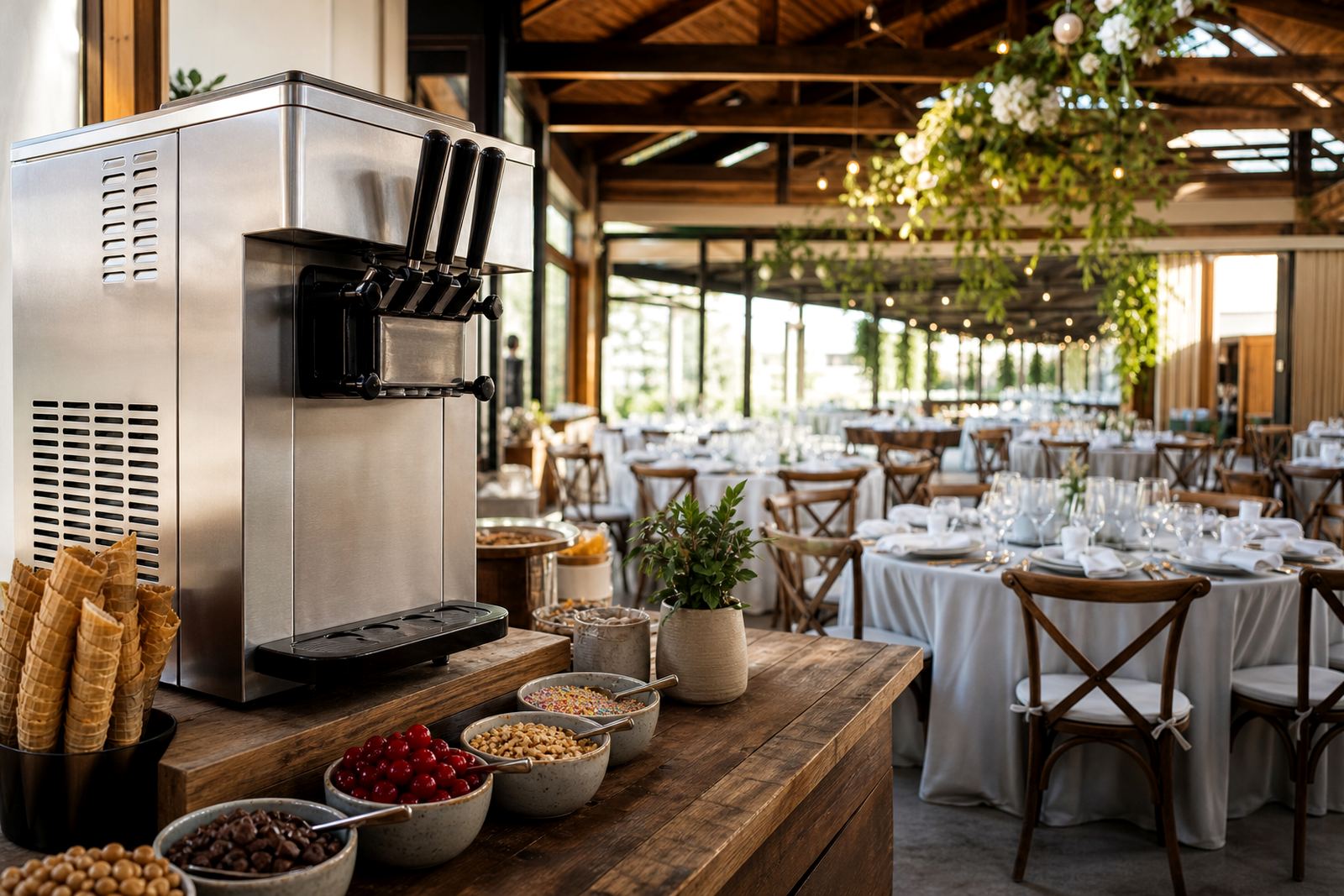
- 1 or 2 flavour soft-serve machine for cones, cups and plated desserts
- Frozen yoghurt machine where a lighter menu item suits your customer base
- Mix tubs and storage for dry or liquid mix, depending on the product chosen
- Cone holders, scoop tools and portion cups for fast service
- Basic sanitising supplies for daily cleaning and safe handling
- Voltage and plug planning for your site, especially where load-shedding backup is in place
Many cafés start with one machine, then add a second unit once they see steady trade. That can be a practical way to test a dessert line without overcommitting cash. If your shop already runs a coffee grinder, undercounter fridge and toaster, it is worth checking the electrical load before installation. A technician should confirm the supply, the plug position and the airflow around the machine.
How to plan the layout before installation
Good planning prevents the most common service issues. A frozen dessert machine needs space for air movement, easy access for cleaning and a route that does not block the till point. In coastal areas such as Durban and Cape Town, humidity can make poor ventilation a real problem, so the machine should not be wedged into a tight corner beside a hot oven or dishwasher. If the unit sits near the front counter, staff also need enough room to move between serving, topping and payment.
When planning the floor area, allow for daily cleaning and for the operator to remove and refit seals, hoppers and related parts without having to shift the whole machine. If your café has a narrow frontage or a shared prep zone, think about where cones, lids and mix are stored. A tidy flow reduces spillages and helps service stay quick during lunch rush. It also makes season prep simpler when your team needs to increase output for school holidays or weekend traffic.
- Keep the machine close to a washing point for routine cleaning
- Allow clear access to the rear panel for service checks
- Store cones and toppings within one step of the serving point
- Plan for backup power if your area is affected by load-shedding
- Check whether the landlord or centre management has rules for drainage and waste water
The mistakes that cost cafés time and money
Most problems come from buying a machine before the menu and space are properly thought through. A café may choose a unit that is too large for the counter, or pick a model that is easy to buy but hard to keep clean. Another common mistake is skipping operator training. Even a good machine can underperform if the team does not know how to calibrate mix, manage overrun, or carry out the daily clean correctly.
We often see cafés underestimate how much mix and cone stock they will use on a good weekend. That leads to sudden shortages and lost sales. The same happens when seals and parts are not replaced before they fail. A small drip can become a bigger breakdown fast, especially if the machine is being run hard in summer. It is better to budget for preventative maintenance than to wait for an emergency callout when the shop is full.
Another issue is under-ventilated sites. A machine that runs too hot will struggle to hold texture and can become a nuisance for staff. That is why site checkups, startup commissioning and regular service visits are worth doing early, not after the first fault.
What a café budget should allow for
Budgeting depends on whether you are opening a new dessert line or adding to an existing shop. A small café can start from around R12 000 to R35 000 for a basic setup if the machine choice is modest and the site is ready. Mid-range café installations often sit between R35 000 and R85 000 once you include better output, accessories, mix stock and initial servicing. Larger or higher-volume operations can spend more, especially if they need a second machine, site work or relocation.
It is wise to separate the purchase price from the running costs. Mix, cones, sanitising supplies and maintenance should all be part of the monthly picture. If your café is in a high footfall area like Springfield Park, Umhlanga or central Johannesburg, a stronger machine can pay for itself faster. If your trade is steadier and more seasonal, start smaller and leave room to grow.
Service planning should also be part of the budget. Preventive maintenance, deep clean service and season prep checks reduce downtime and help the machine last longer. That matters when your dessert line is tied to peak trading hours and you cannot afford a missed Friday afternoon.
Working with SnoCream on your café rollout
SnoCream supplies cafés across Durban, Springfield Park, Johannesburg, Pretoria, Cape Town, Gqeberha and Pietermaritzburg, with practical support from first enquiry through to after-sales service. The team can assist with machine installation, startup commissioning, operator training, breakdown repairs and site relocations. If you are fitting out a new counter or replacing older equipment, the aim is to keep the process clear and manageable.
That support is useful for owners who want a dessert line that is easy for staff to run on a busy day. Thandi Mkhize handles sales, Jason Pillay oversees technical work, Lerato Molefe manages customer support, and the wider team looks after logistics, service and commissioning. For many café owners, the value is not only in the machine but in knowing that technical help is there when trade gets busy or a part needs attention.
If you are planning a soft-serve or frozen yoghurt offer for your café, start with your space, your peak trading times and your target spend per customer. From there, it becomes much easier to choose the right machine and stock mix for your shop.