
What forecourt food outlets need from frozen dessert equipment
A forecourt customer wants speed. They stop for fuel, a coffee, a pie or a cold drink, and if dessert is part of the stop it must be ready in moments. That is why forecourts in Durban, Johannesburg, Pretoria, Cape Town and Gqeberha usually look for machines that are simple to operate, easy to rinse down and able to hold product quality through long trading hours.
For convenience stores and quick-serve counters, the best set-up is often one or two compact soft-serve machines with a clear serving point and storage for cones, tubs and mix. Where the site has stronger dessert trade, a frozen yoghurt unit can work well beside a soft-serve machine so the menu offers two clear choices without crowding the counter. The goal is not a complicated dessert bar, just a reliable add-on that sells well at petrol station pace.
- Self-serve counters need straightforward controls and clear operator instructions.
- Busy sites benefit from a machine that recovers temperature quickly after peak rushes.
- Night trade needs equipment that still runs well when staff numbers are reduced.
Typical machine set-up for a service station counter
Most forecourts do well with one of three basic set-ups. A single-flavour soft-serve machine works for smaller convenience stores and sites testing demand. A twin-flavour machine suits outlets that want vanilla and chocolate or one dairy option and one fruit-style frozen yoghurt. Larger forecourts with seating or a wider food offer may run a twin-flavour machine plus a small display freezer for cones and add-ons.
When planning the counter, think about power, drainage and cleaning space before you think about décor. Soft-serve machines need stable power and enough room for air flow around the unit. In some older service stations, the biggest issue is not the machine itself but the lack of space behind the counter for cleaning access and daily wiping down. If the site is in a coastal area like Durban, Gqeberha or Umhlanga, corrosion and humidity must also be considered in the equipment position.
- Allow clear access for opening panels, removing parts and sanitising at closing time.
- Keep the mix and cone storage close enough for quick service but out of splash zones.
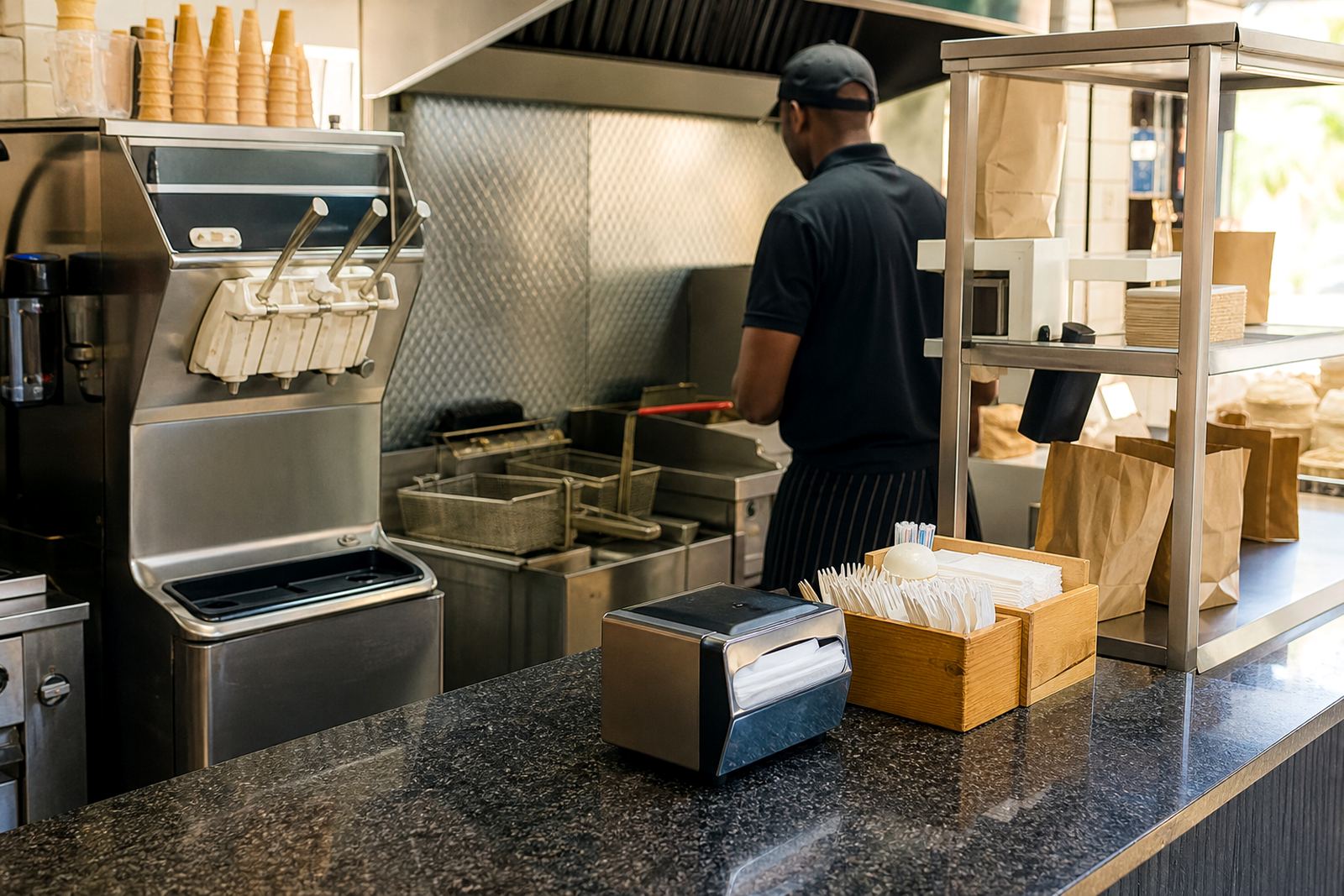
- Avoid placing the unit beside deep fryers or hot holding equipment, heat affects output and consistency.
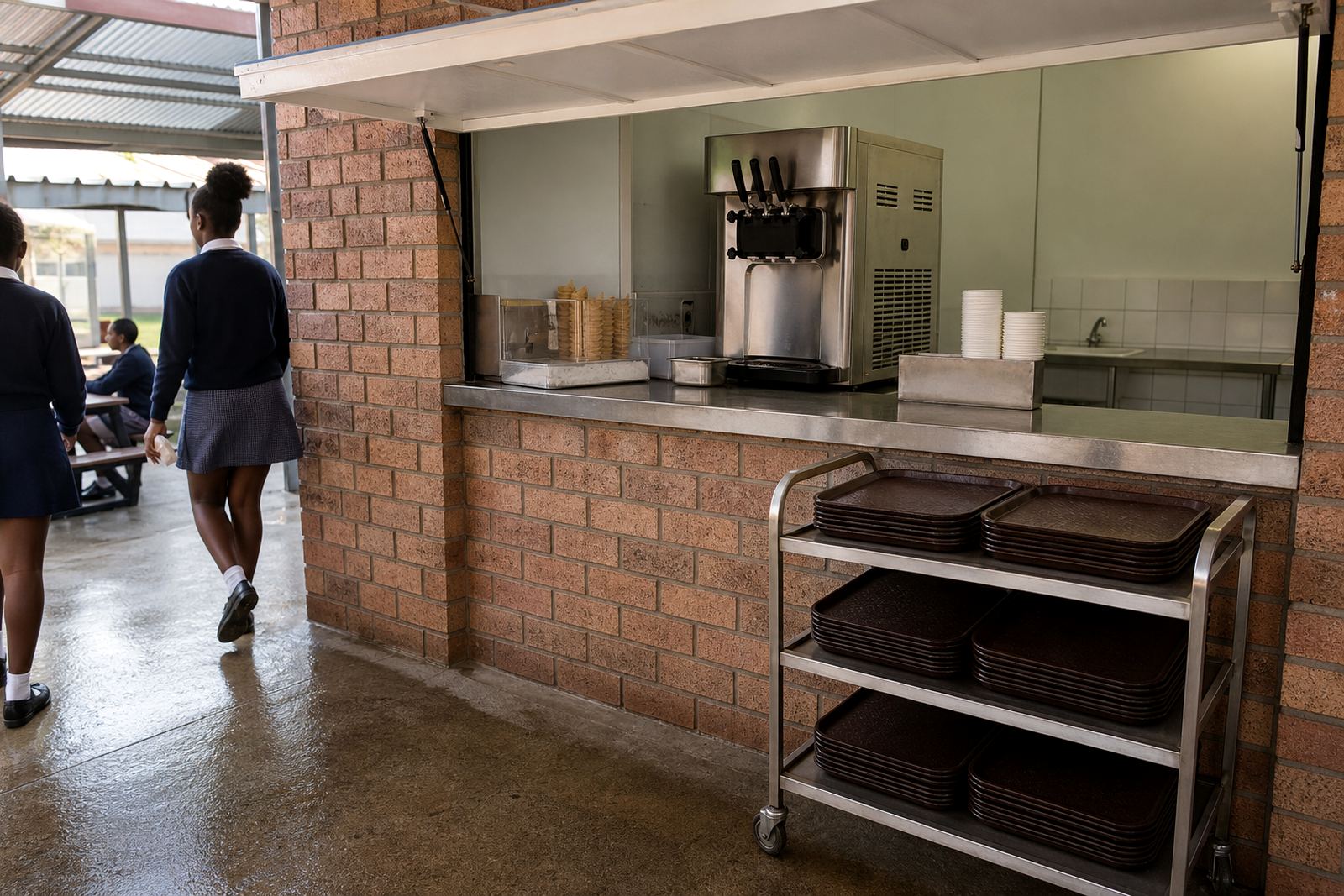
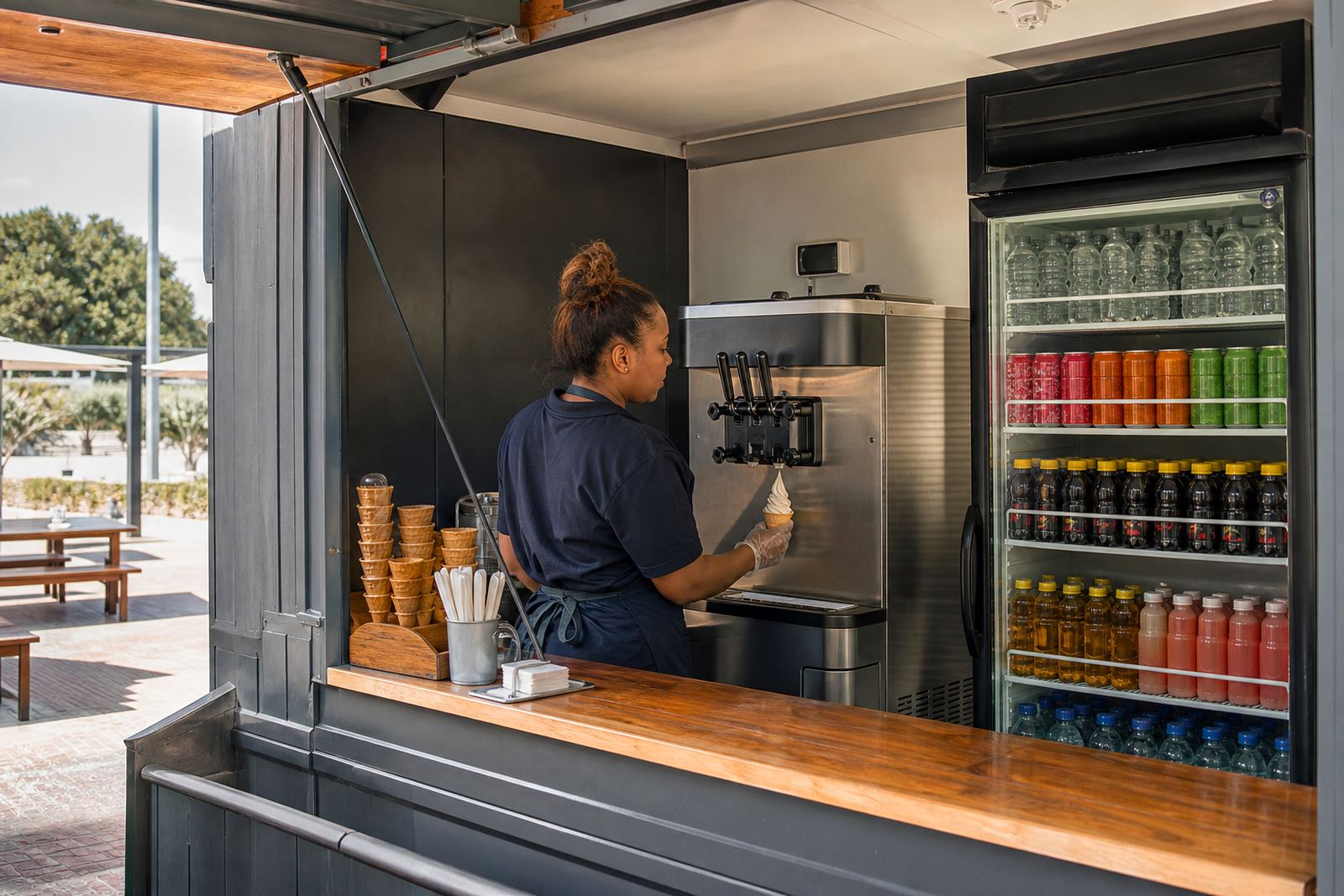
For some forecourts the best result comes from a simple line layout: machine, cone storage, topping shelf and payment point. That reduces mistakes and keeps the customer flow moving.
Planning the counter for speed, hygiene and load-shedding reality
Forecourts are judged on speed, cleanliness and consistency. If the frozen dessert area is tucked away, poorly lit or awkward to reach, staff will avoid using it during busy periods. A better layout gives the team a direct line from prep space to serving point, with enough room for a second person to help when queues build up on weekends and payday periods.
South African sites also need to plan for power interruptions. Load-shedding can affect peak trade at exactly the wrong time, so the machine choice and operating procedure should suit the site’s backup power setup. Ask whether the outlet can support the unit during outages, and whether the staff know how to manage product safely when power fluctuates. On coastal sites, a stable environment and regular servicing matter even more because salt air shortens the life of neglected parts.
- Keep the unit on a level surface to protect the mix flow and freezing performance.
- Build in a close-clean routine for nozzles, seals and drip areas every day.
- Train at least two staff members per shift so service does not depend on one person.
Common mistakes forecourt operators make
One common mistake is buying more capacity than the site can sell. A busy highway forecourt in Pretoria North may justify a larger footprint, but a smaller neighbourhood station in Pietermaritzburg often does better with a compact unit and a focused menu. Another mistake is underestimating cleaning time. Frozen dessert equipment is easy to run when staff are shown the right routine, but it still needs proper washdown, sanitising and seal checks.
Some operators also place too much trust in peak-season trade. Summer sales can be strong, yet the real value comes from steady year-round sales that fit with the rest of the forecourt basket. If the dessert offer only works when the weather is hot, the numbers can be disappointing. A smaller, well-run machine that is used daily is usually a better investment than a large unit that stands idle for long periods.
Other avoidable errors include using the wrong mix ratio, skipping preventative maintenance, and treating cones and toppings as afterthoughts. These small items affect customer experience more than many owners expect. When service is rushed or the product is too soft, the counter loses repeat business very quickly.
Budget ranges and what affects the price in Rand
For forecourts, budgeting should cover more than the machine itself. Installation, operator training, mix calibration, ongoing maintenance and spare parts all have to be part of the plan. A compact single-flavour set-up will usually cost less than a twin-flavour unit, while a larger outlet with higher throughput may need a stronger machine and better support planning.
As a working guide, forecourt dessert projects in South Africa can range from about R45 000 to R140 000 depending on machine size, output, and whether the site needs relocation work, extra fittings or a more detailed start-up setup. Running stock such as mix and cones is usually budgeted separately. Sites that want to test demand can start smaller and build up later, which helps keep cash flow manageable.
- Entry-level compact set-up: around R45 000 to R65 000.
- Mid-size twin-flavour set-up: around R65 000 to R95 000.
- Higher-throughput or multi-unit set-up: around R95 000 to R140 000.
The right spend depends on trading hours, expected volumes and how much help the forecourt team needs from day one. A well planned purchase normally saves more money than a cheaper unit that causes downtime and poor product quality.
How SnoCream supports forecourt rollouts
SnoCream works with forecourt teams that need practical support, not guesswork. That includes machine installation, startup commissioning, operator training, preventive maintenance, breakdown repairs, deep clean service, seal and parts, mix calibration, site relocations, phone support, sanitising supplies and season prep checks. For multi-site operators, it also helps to keep each location running the same way, from Springfield Park in Durban through to Johannesburg, Cape Town and Gqeberha.
Our team understands that forecourt trade is time-sensitive. A unit that is down at 4 pm on a Friday can cost more than a week of planned servicing. That is why planning, training and routine checks matter as much as the machine itself. With the right layout and stock control, a frozen dessert offer can add steady value without complicating the forecourt operation.
If your site wants an easy-run dessert counter with a simple product range and dependable support, we can help plan the right set-up for the space and the trading pattern.