What a takeaway shop needs from soft-serve
In a takeaway shop, soft-serve is not a side thought. It has to work alongside chips, burgers, pastries or deli items, and it must keep up when school traffic, lunch rushes and weekend trade all hit at once. The usual goal is simple: sell an extra cone or cup with very little labour and a short serving time.
For this type of site, the best setup is often one machine with a narrow footprint, a small toppings area and easy cleaning access. In Durban and other coastal areas, humidity can make cleaning and storage more demanding, so the equipment should be placed where airflow is good and staff can reach the back and sides without moving stock every day. If the shop is on municipal electricity with load-shedding in the mix, planning for backup power is worth doing early, not after the first outage.
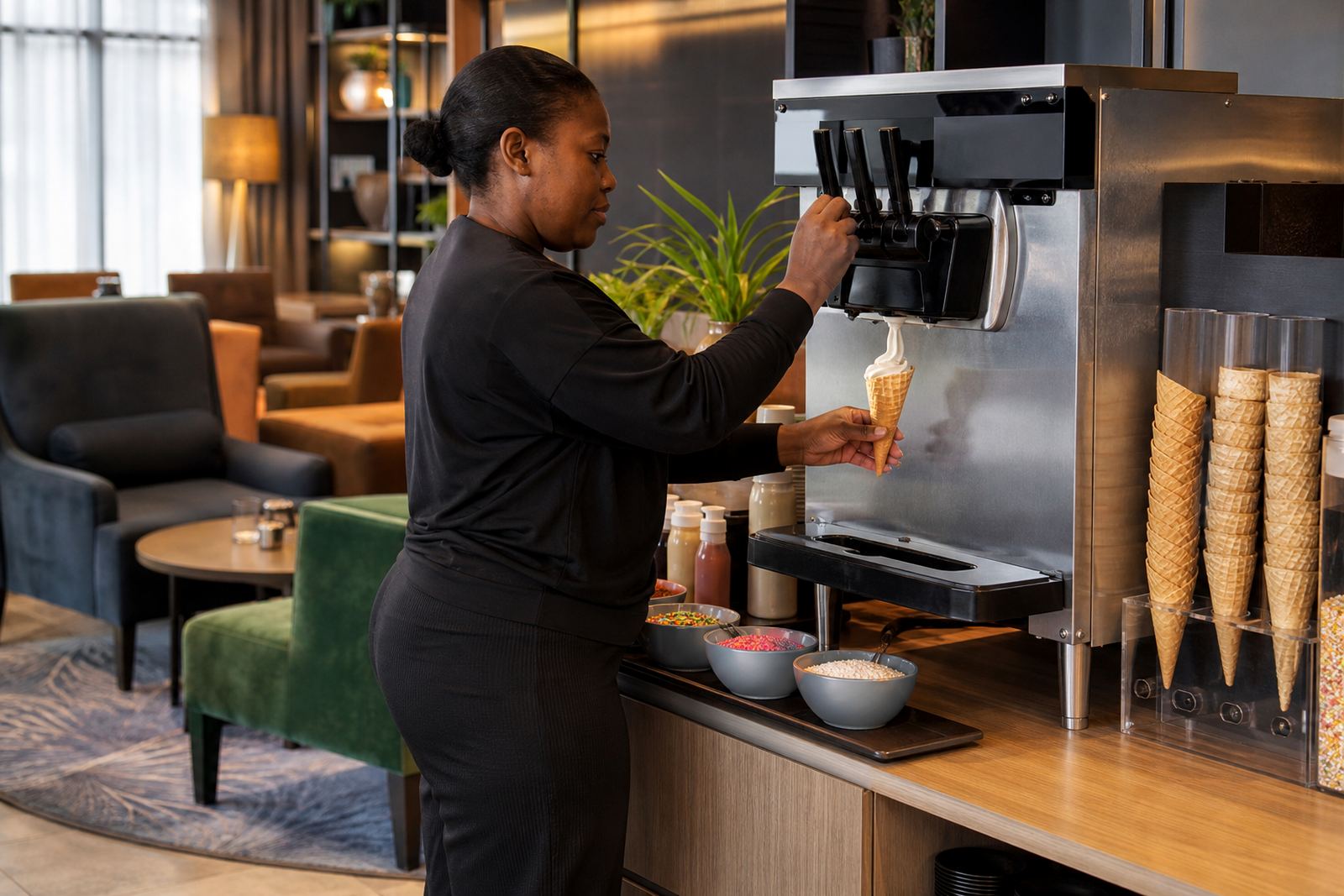
A takeaway counter usually needs speed more than variety. Too many flavours, toppings or steps can slow service and cause waste. The right balance is a machine that delivers a consistent product, a few popular cone choices and a clear serving process that new staff can learn quickly.
Typical equipment set for a fast add-on counter
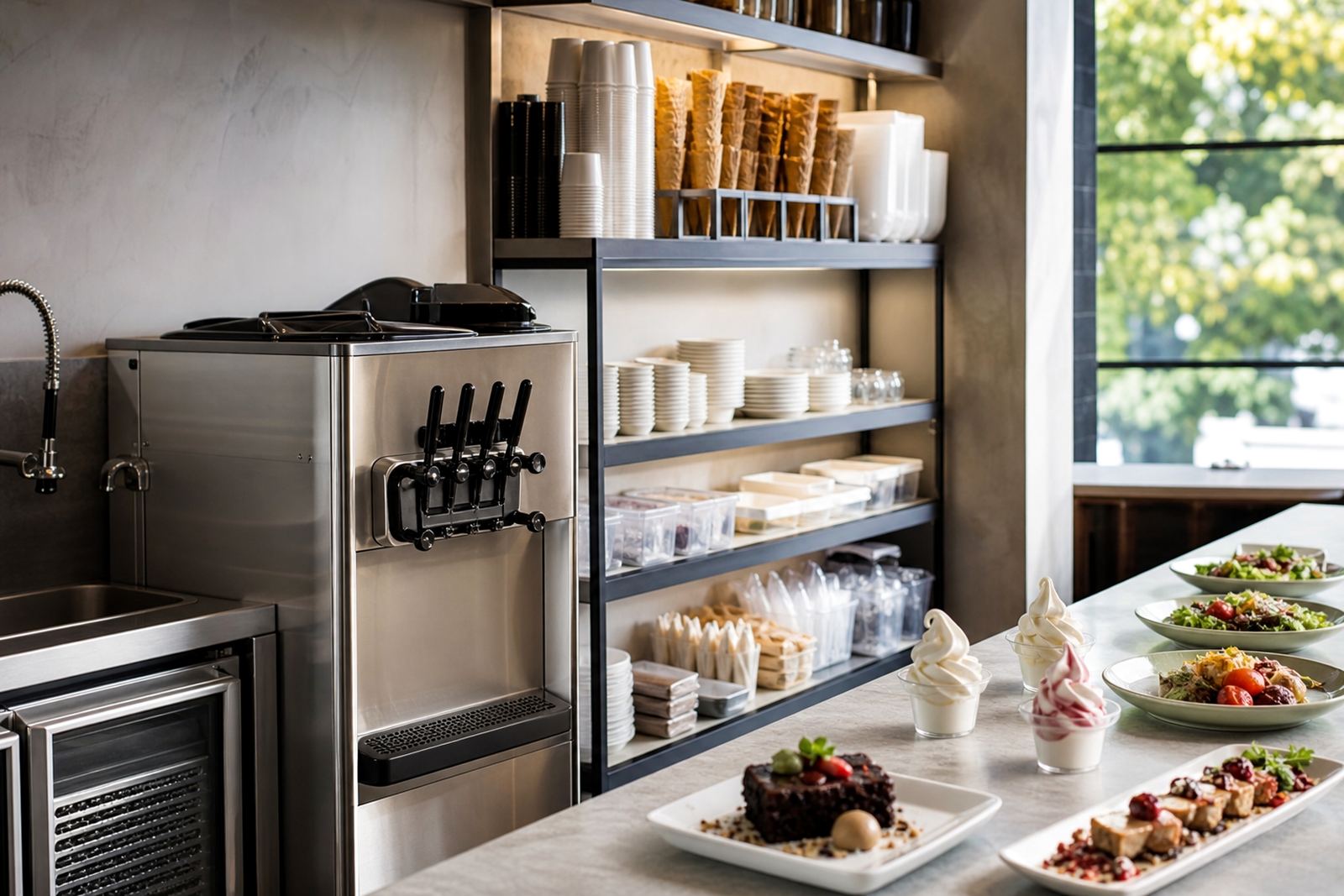
The equipment list changes with store size, but most takeaway setups in South Africa start with a practical core. The aim is to keep stock control simple and the serving line short. For many shops, one machine is enough at the start, with a second unit only when demand is proven and the counter has the space.
- Single-flavour or twin-flavour soft-serve machine, depending on menu and daily volume
- Small frozen yoghurt option where the shop wants a lighter dessert choice
- Dry storage for cones, cups, spoons and napkins near the point of sale
- Refrigerated storage for mix, toppings and sanitising supplies
- Clean water access and a hand wash point close to the machine area
- Basic signage showing cone, cup and topping options clearly
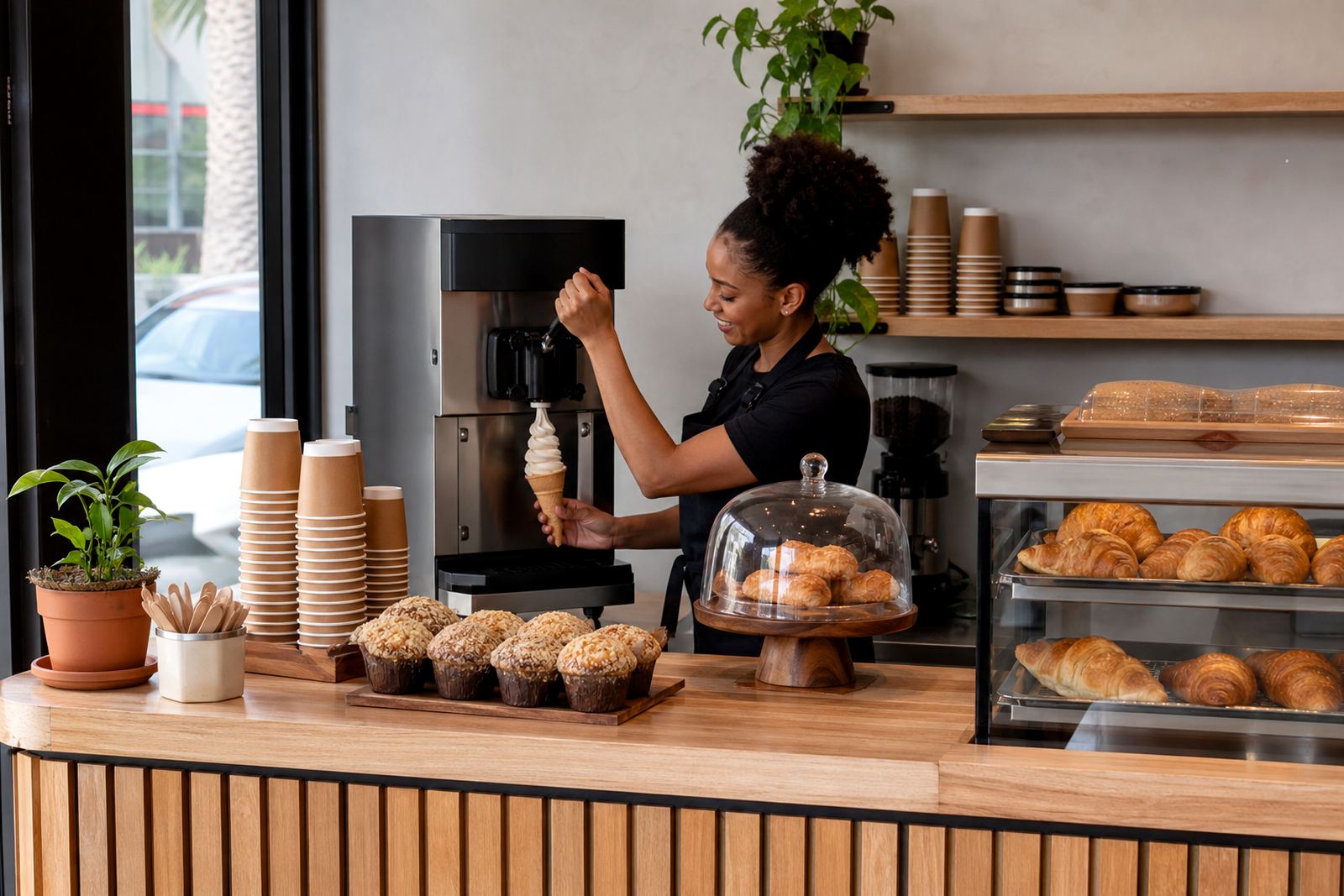
In restaurants that add takeaway dessert sales, the machine often sits near the till or pickup point. In kiosks, it is better to keep the machine against a wall with enough room for the operator to step aside and clean. A compact layout reduces mistakes and keeps the queue moving when two or three customers arrive together.
Layout planning that keeps the queue moving
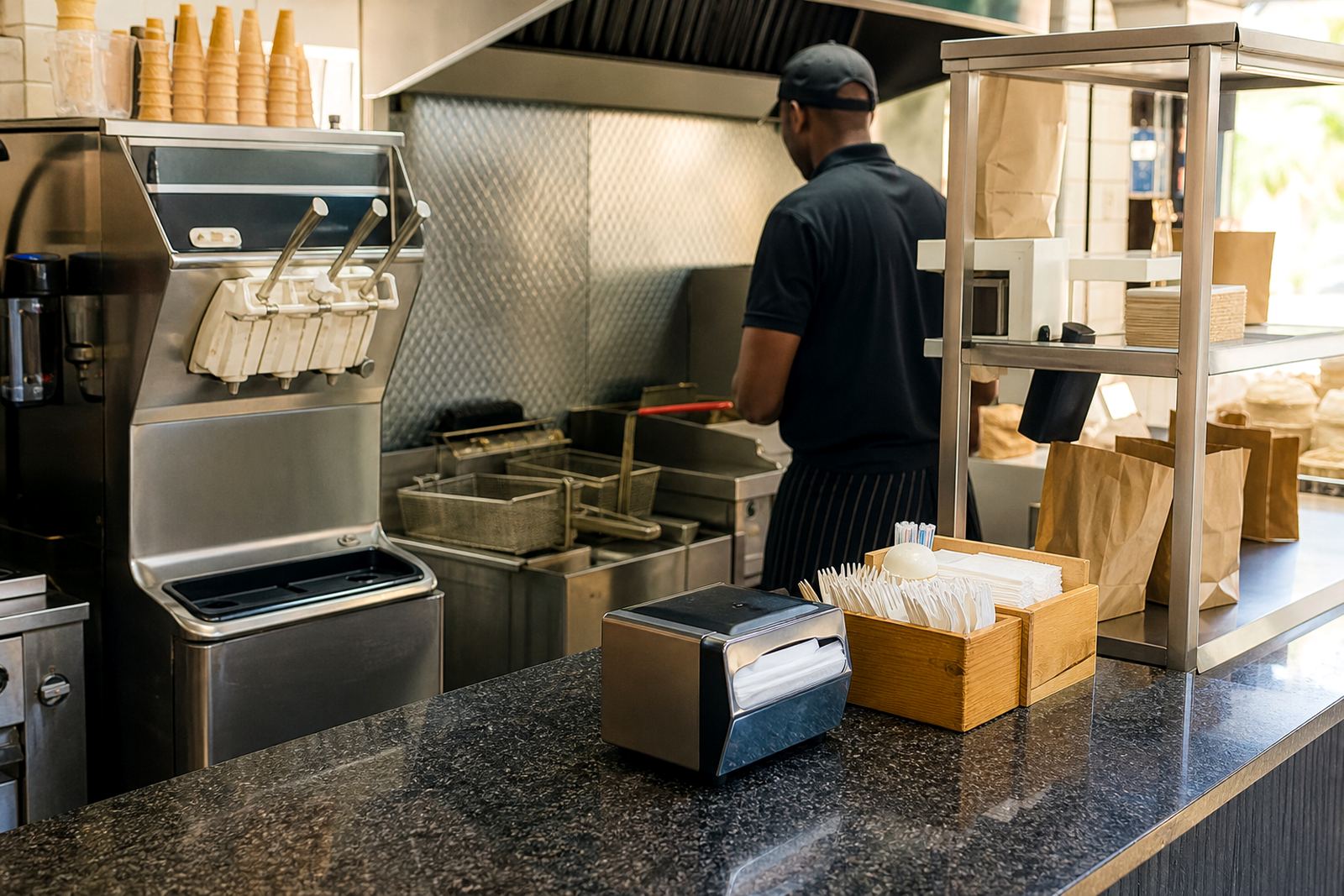
The layout should make the first sale easy, then the repeat sale even easier. If the product is visible from the counter, customers are more likely to add it after a meal or while waiting for another order. Put the machine where it can be seen, but not where heat from fryers or direct sunlight will affect the mix.
Allow enough working room for the operator to open the machine, clean around the spout and handle cones without knocking stock over. Many smaller stores underestimate side clearance and then struggle every time the machine needs a daily wash-down. A simple service path matters too, especially in busy sites where staff rotate between tills, packing and serving.
- Place the machine close to the sales point for impulse buys
- Keep cone stock within arm’s reach but away from moisture
- Leave space for cleaning buckets, cloths and sanitising supplies
- Avoid hot equipment beside the soft-serve unit
- Plan for a stable power point and easy access during service calls
Where the shop serves customers from a small counter window or hatch, the serving side should be uncluttered. A narrow, tidy counter looks faster and helps the customer feel the line is moving. That matters a lot in places like Pietermaritzburg, Johannesburg and Pretoria where takeaway trade can spike sharply over lunch and after sport fixtures.
Common mistakes that cost money later
One common mistake is buying a machine that is too large for the real trade. Bigger machines cost more to run, use more mix and can become wasteful if the shop only sells a few cones a day. Another mistake is ignoring cleaning time. If staff cannot clean the unit properly before closing, the product quality drops and breakdowns become more likely.
Some shops also underplan for stock. Cones, mixes and toppings need proper dry and cool storage, otherwise stock gets damaged in coastal humidity or crowded storerooms. It is also a mistake to place the machine where customers can reach too far across the counter or where staff have to twist around every time they serve. Those small movements slow down the whole shift.
For Durban and Gqeberha especially, heat and humidity can affect routine operation, so daily checks should include seals, temperature stability and the condition of the mix. If the machine is not calibrated correctly, the texture changes and complaints start very quickly. It is easier to prevent that than fix it later.
Budget ranges for a takeaway soft-serve setup
Budget depends on whether the shop wants a basic add-on item or a more visible dessert counter. In South Africa, a compact starter setup for a takeaway shop can begin at roughly R45 000 to R95 000, depending on machine type, installation work and the accessories needed. A busier site with a larger machine, better storage and commissioning support can range from about R95 000 to R180 000 or more.
That range usually includes the main machine, setup, training and initial planning. Ongoing costs should be considered as well, including mix, cones, sanitising supplies, preventative maintenance and occasional seal or parts replacement. If the store is in a shopping area with long trading hours, it is wise to budget for service support and a spare plan for peak season.
For owners comparing options, the cheapest machine is not always the best value. A better choice is one that holds temperature properly, is simple for staff to use, and can be serviced without long downtime. That is especially important for takeaway businesses where one broken machine can mean a full day of missed add-on sales.
How SnoCream supports takeaway stores
SnoCream works with cafes, kiosks and takeaway shops across Durban, Springfield Park, Umhlanga, Johannesburg, Pretoria, Cape Town, Gqeberha and Pietermaritzburg. The focus is on practical fit for the site, not just the machine itself. That includes installation, startup commissioning, operator training, preventive maintenance and breakdown repairs.
For a takeaway owner, the value lies in keeping the serving point steady during busy periods. Teams also support deep clean service, mix calibration, site relocations, season prep checks and phone support when the shop needs guidance between visits. If the store is setting up for school holidays, summer trade or weekend demand, having the right checks done early can save a lot of trouble later.
Whether the store is small or part of a growing chain, the aim is the same: simple add-on sales, consistent product and equipment that the staff can handle every day without fuss.