
What kiosk operators need from a frozen dessert setup
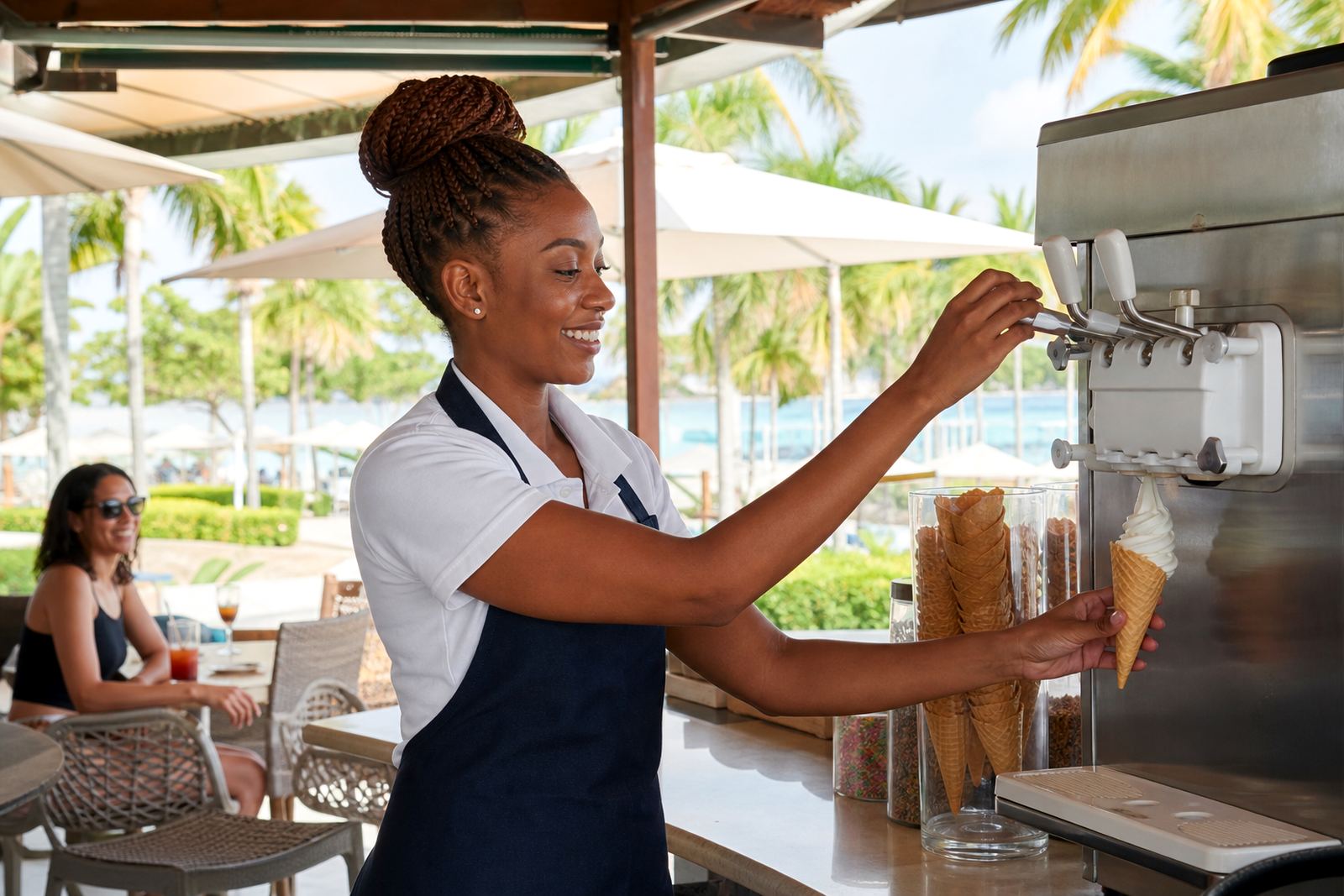
A kiosk usually has one goal, sell quickly from a small space without making the customer wait. That means your machine must recover fast between servings, your mix must stay consistent, and the counter layout should let one person work during busy lunch and weekend peaks. In Durban humidity and coastal air can also affect hygiene, so the finish and cleaning routine matter just as much as output.
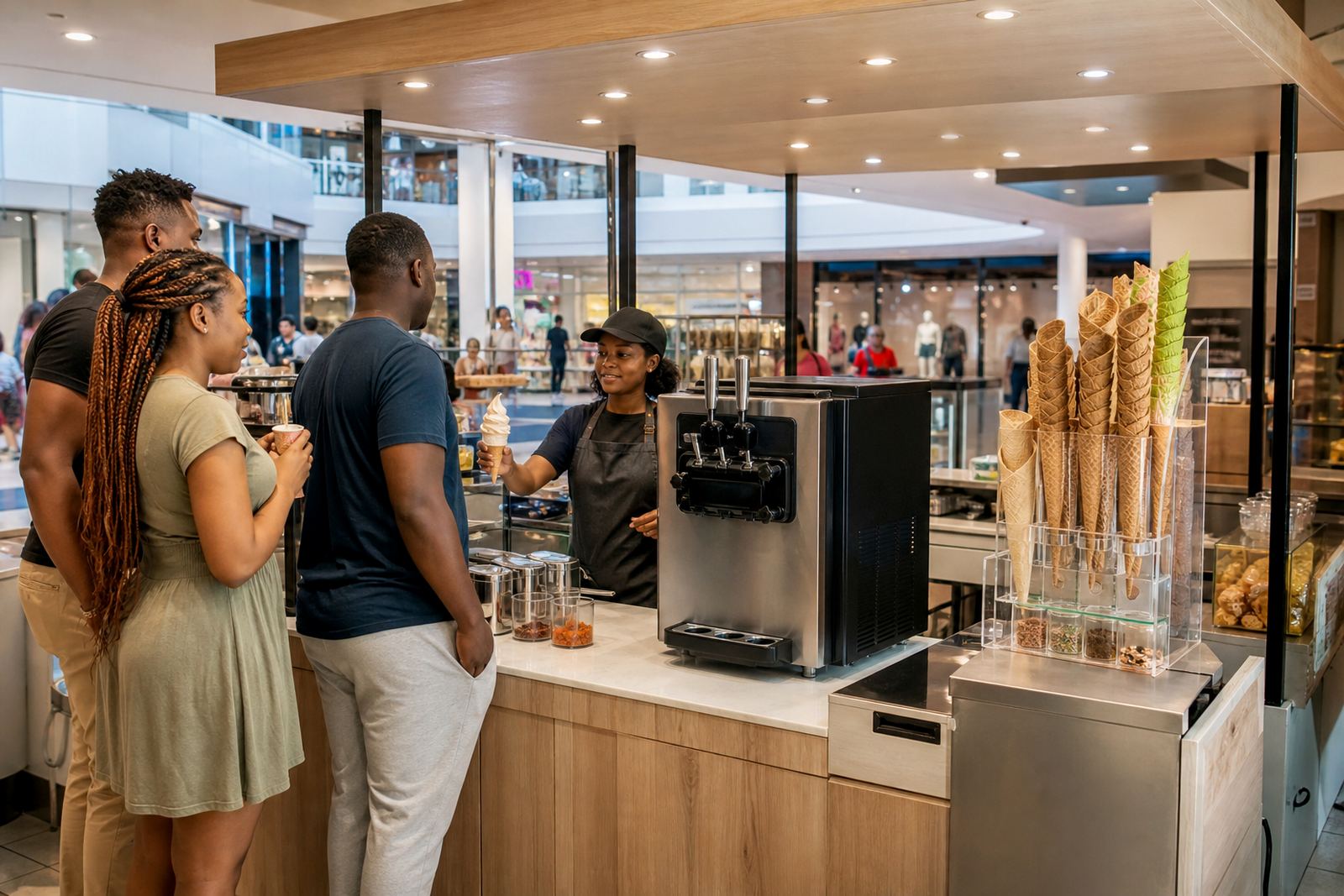
For most kiosk sites we look at serving speed, product visibility and how the queue flows around the counter. A well planned setup can handle school traffic, office crowds, holiday mall spikes and the late afternoon rush without needing a large back of house area.
- Single or twin flavour machine options for smaller footprints
- Counter height and service reach for quick handover
- Clear topping and cone storage close to the point of sale
- Space for sanitising supplies and daily rinse items
Typical equipment set for a compact kiosk
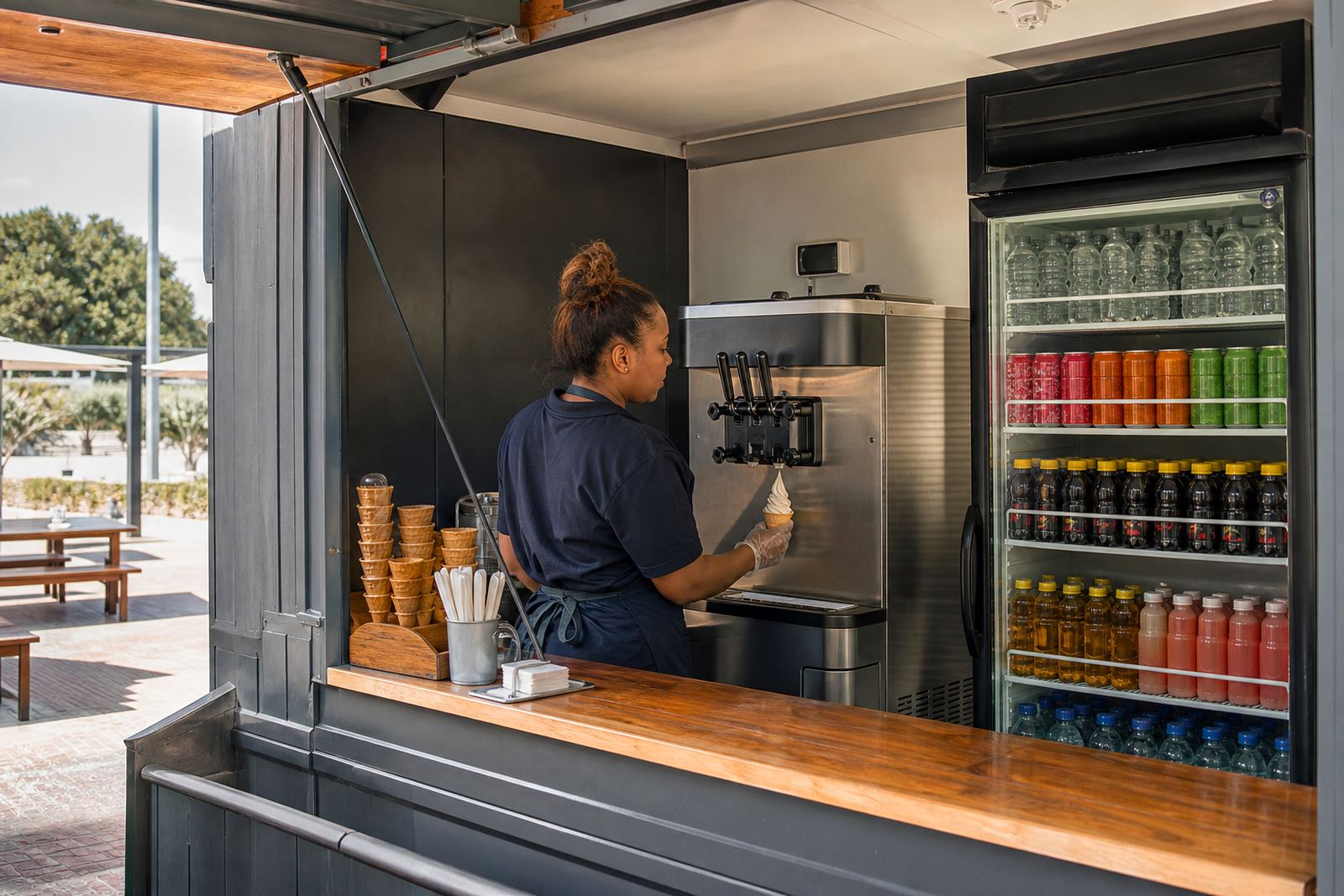
The right package depends on how many servings you expect per hour and whether you want soft serve only or a mixed yoghurt offering as well. A common kiosk set includes a compact soft serve machine, a freezer or cold holding space for mix, cone storage, topping containers and a small rinse point for cleaning between shifts. If you are trading in a mall or transport hub, it is worth planning for extra stock space because deliveries may be less frequent.
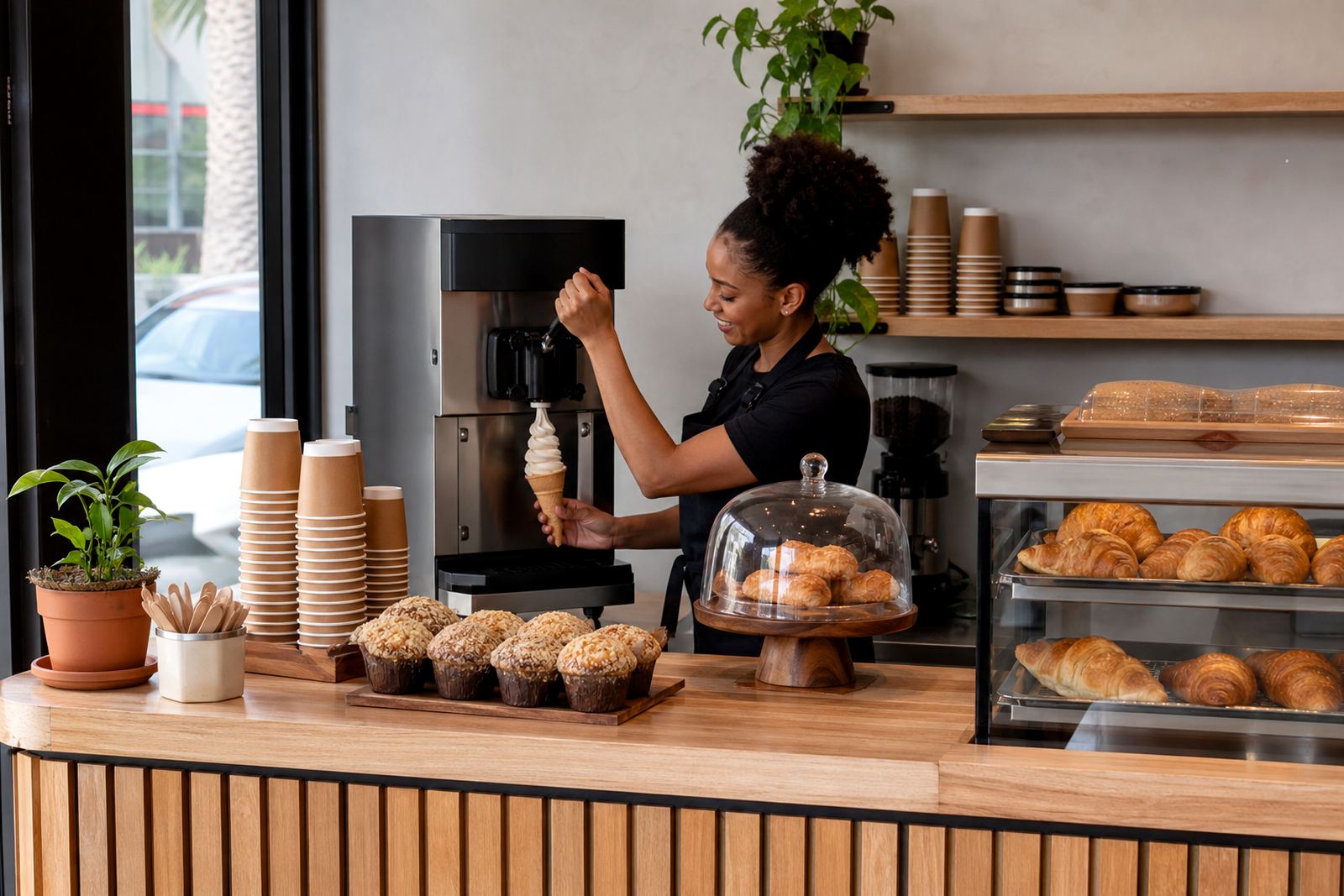
Operators in Johannesburg, Pretoria and Cape Town often choose a slightly larger counter than they first thought, because once cups, cones and spoons are added the working area fills up quickly. Better to plan the service side carefully from the start than cram everything in later.
- Soft serve machine or frozen yoghurt machine suited to kiosk throughput
- Mix containers, cones and serving cups
- Hand wash and sanitising supplies
- Small display for topping choices and flavour signage
- Backup storage for peak trading days and school holidays
Layout planning that keeps the queue moving
With kiosks, the layout must help one or two staff members work without crossing paths all the time. Keep the machine where it can be seen from the queue, but leave enough room for refills and cleaning. If the site is inside a mall or on a forecourt, check access for deliveries and where waste bins will sit so they do not block the serving face.
We also advise checking power points, floor drain access and ventilation before installation. Load shedding can affect trading hours, so it helps to know exactly what backup power the landlord allows and what your machine can tolerate during short interruptions. A tidy plan now saves a lot of frustration later on.
- Place the machine close to the serving edge, not deep inside the kiosk
- Keep cones and cups within arm reach
- Allow space for a small cleaning sink or rinse station if possible
- Plan cable routes so staff are not stepping over leads
Common mistakes we see in kiosk fit outs
The biggest mistake is choosing equipment only on price. A cheaper machine that slows down during a rush can cost more in lost sales than a better sized unit. Another common issue is underestimating how much space is needed for mix, cleaning tools and point of sale equipment, especially in small malls and roadside kiosks where every metre counts.
Some operators also forget about maintenance access. If a machine is pushed hard against a wall, it becomes harder to service seals, clear airflow gaps or carry out a proper deep clean. In a humid coastal climate, that can lead to trouble sooner than expected, so leave enough working space around the unit.
- Buying too small for the actual customer flow
- Ignoring cleaning access and airflow around the machine
- Not planning for mix storage and stock rotation
- Overcrowding the counter with too many toppings and containers
Budget ranges for kiosk owners in Rand
Budgets vary depending on whether you are starting from scratch or upgrading an existing kiosk. A simple entry level setup for a small site can begin in the lower tens of thousands, while a more active kiosk with a stronger machine, extra storage and a cleaner counter finish will sit higher. Once installation, training and initial stock are included, many operators find it useful to budget in stages rather than all at once.
As a practical guide, small kiosk setups may start around R35 000 to R70 000, while more complete solutions can move into the R80 000 to R150 000 range depending on equipment choice and site work. If you need site relocation, preventative maintenance or extra parts support, it is sensible to keep a reserve for service calls and season prep checks.
We often help customers in Durban, Pietermaritzburg, Gqeberha and inland cities compare a basic launch pack against a busier trading model. That makes it easier to match the spend to the foot traffic instead of guessing.
Support for kiosks after opening day
Once the kiosk is trading, ongoing support matters. Regular operator training, mix calibration and preventive maintenance help keep the texture consistent and reduce breakdowns during busy periods. If your site changes, for example when a mall remodels a passage or a forecourt kiosk shifts position, site relocation planning avoids delays and damaged parts.
Our team in Springfield Park supports enquiries from Durban, Umhlanga, Johannesburg, Pretoria, Cape Town and Gqeberha through the contact page enquiry form. That keeps the process simple for new kiosk owners and for established traders who need phone support, deep cleaning, seals, parts or a seasonal service before school holidays.
- Startup commissioning for new sites
- Breakdown repairs and seal replacements
- Deep clean service and sanitising supplies
- Season prep checks before peak trading periods