
Built for the lunch rush and weekend peaks
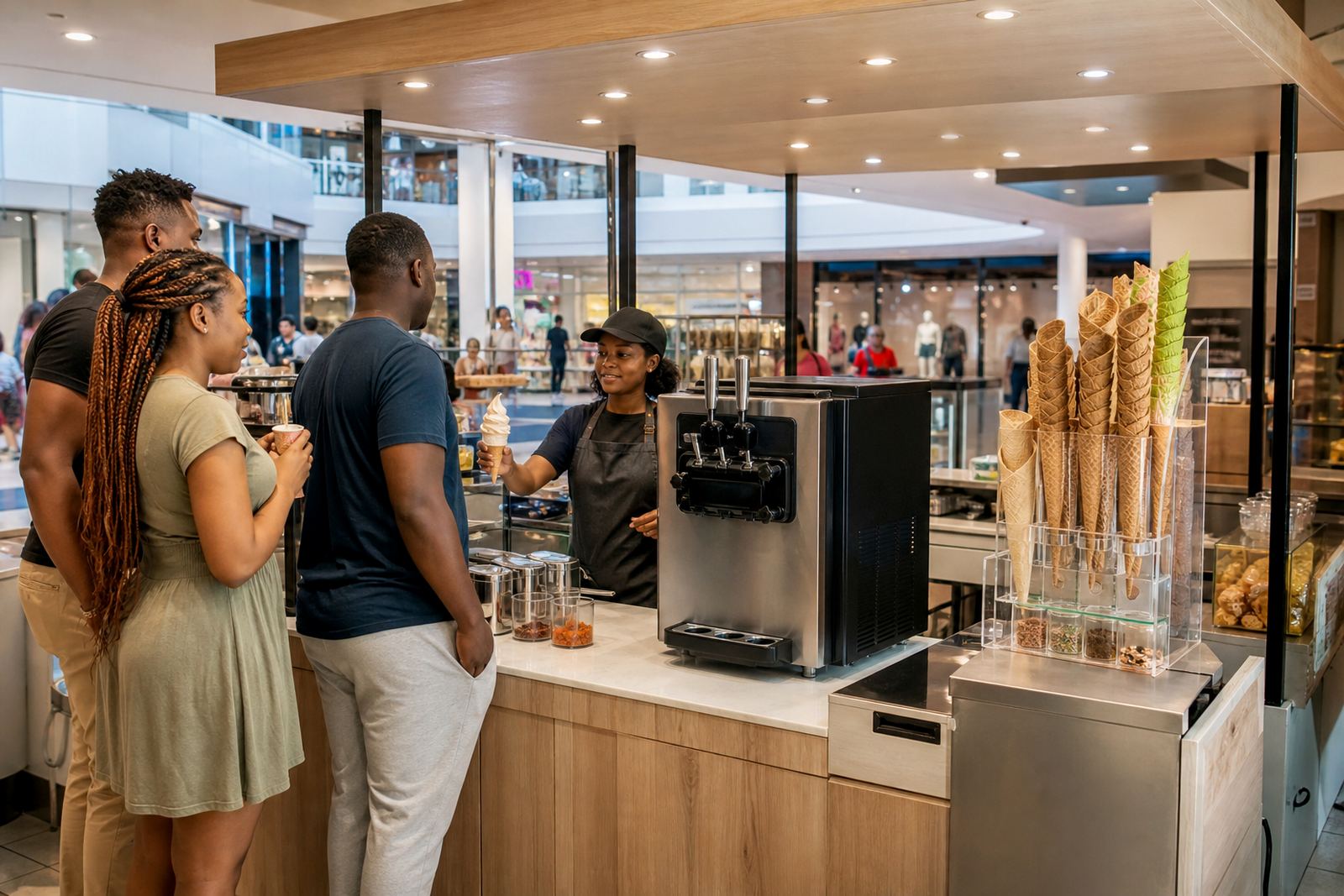
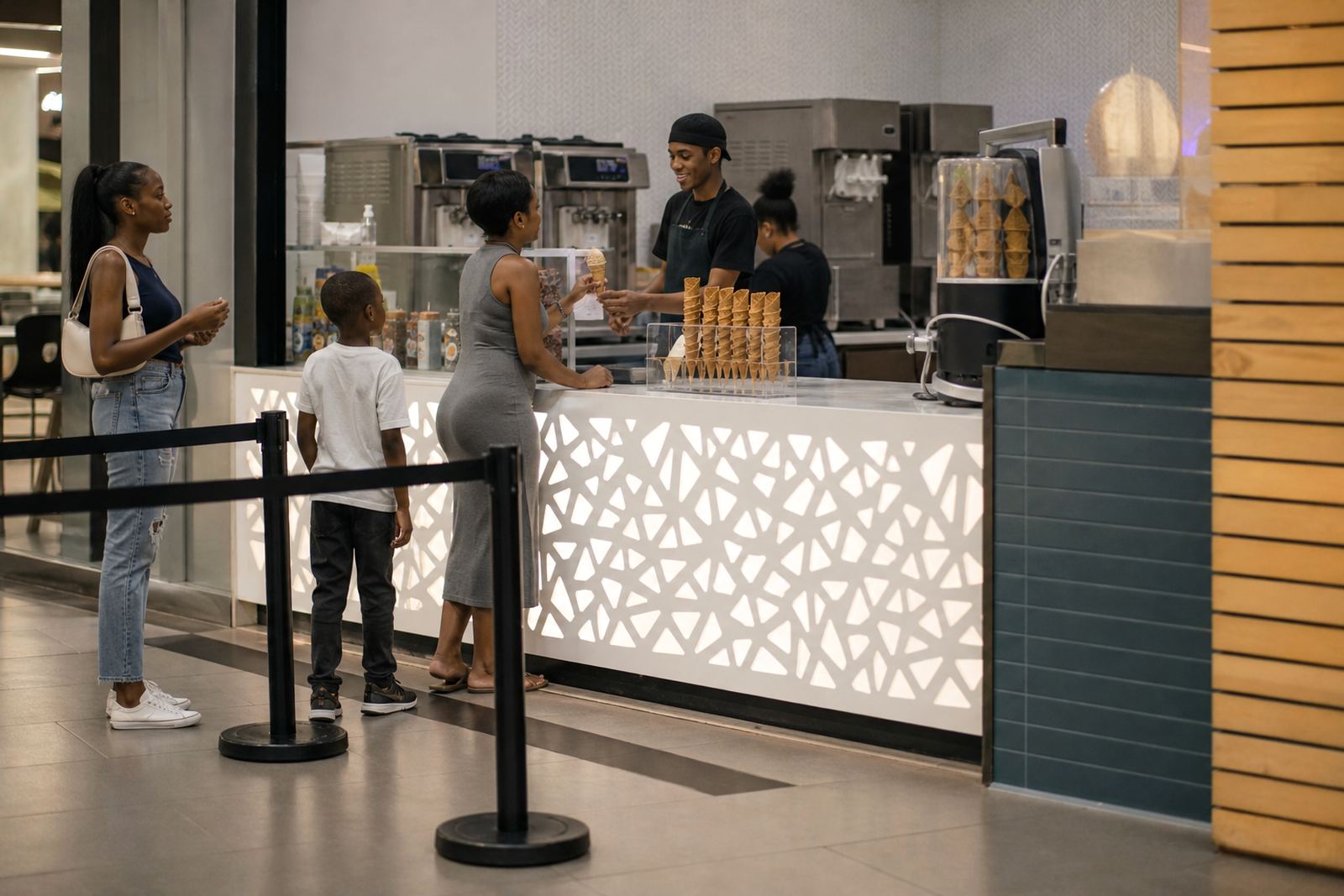
Food court counters have to deal with long queues, mixed customer flow and tight prep space. The usual challenge is not just making dessert, but making it quickly enough to keep service moving while still giving a steady portion every time. For that reason, food court operators usually look for equipment that is simple to run, easy to wipe down and able to cope with repeated use through the day.
At SnoCream, we supply soft-serve and frozen yoghurt machines for cafes, kiosks and restaurant counters in Durban, Johannesburg, Pretoria, Cape Town and Gqeberha. A typical food court setup needs dependable output, sensible storage for mixes and a layout that lets staff serve, clean and refill without crossing paths. That matters even more in busy centres where every minute of downtime affects the till.
- High-turnover servings for lunch and supper peaks
- Equipment that suits a compact counter footprint
- Easy access for cleaning, topping up and daily checks
Typical equipment for a food court dessert counter
The right setup depends on the menu, the available power and how many servings you expect at peak. Most food court operators start with one or two soft-serve or frozen yoghurt units, then add a simple cone and mix station with under-counter storage. If your site has strong foot traffic on weekends or school holidays, it is worth planning for capacity from the start instead of trying to patch it later.
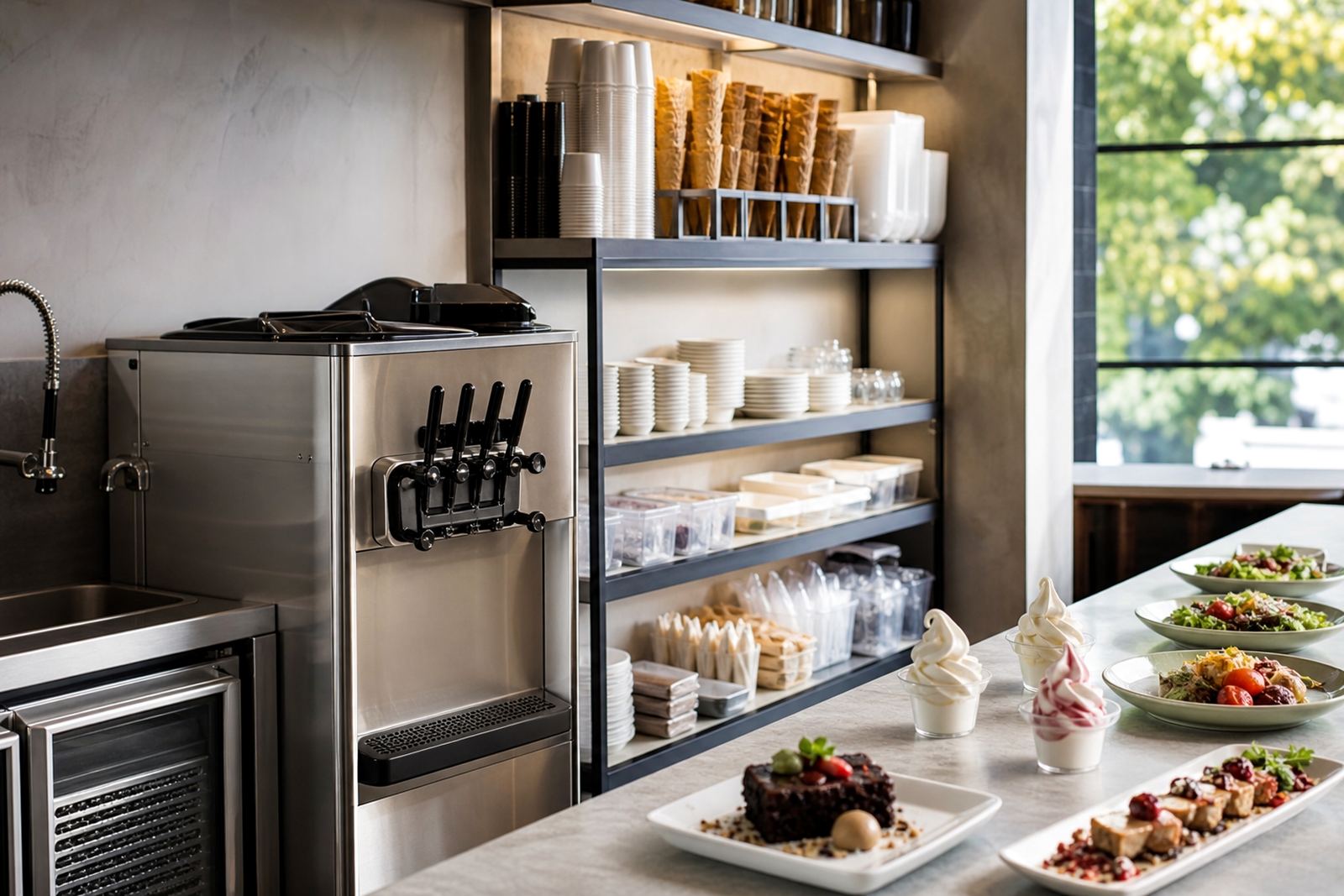
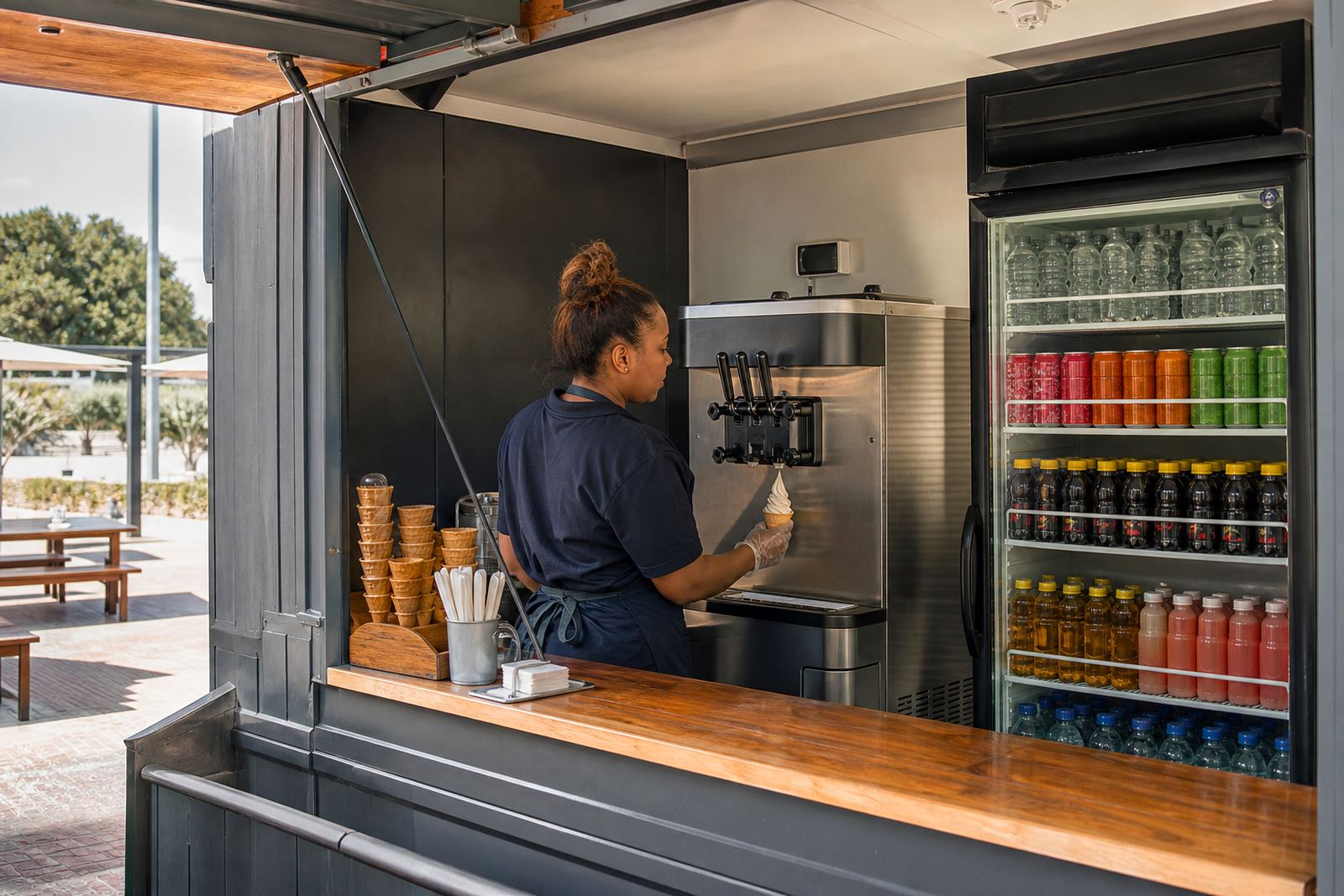
We help clients choose equipment that suits the space and the daily service pattern. In many food courts, a twin-flavour machine is enough for vanilla and one rotating flavour, while a separate frozen yoghurt unit works well where customers want a lighter option. Add clean cone storage, a scoop station for toppings and a small prep sink where the mall layout allows it.
- Soft-serve machine for standard dessert service
- Frozen yoghurt machine for lighter menu options
- Cones, dry mixes and sanitising supplies
- Mix calibration checks and operator guidance
Layout and planning for tight counter spaces
Food court counters are rarely generous on space, so layout planning makes a big difference. A good arrangement keeps the machine close to the service point, with ingredients, cones and cleaning items within arm’s reach but not cluttering the front. Staff should be able to serve a cone, wipe the nozzle and reload mix without stepping away from the counter for long.
Power and ventilation also need attention. Some centres offer stable supply, while others have load-shedding or shared electrical limits that need careful planning. If the site is exposed to coastal humidity in Durban or Gqeberha, regular maintenance becomes more important because moisture can affect seals and moving parts. For some sites, we also plan for site relocations when tenants move within the centre or change units.
- Keep the serving zone separate from the cleaning area
- Allow space for mix containers and back-up cones
- Check plug points, breaker capacity and airflow before install
- Plan for easy staff movement during peak trading
Common mistakes that slow service and raise costs
One of the biggest mistakes is choosing equipment only on purchase price and not on daily use. A cheaper unit that needs frequent attention can cost more in lost sales and repair callouts. Another common issue is underestimating cleaning time. In a food court, if deep cleaning takes too long, the machine may not be ready when the next rush starts.
We also see sites that buy too much variety too early. Too many flavours, cones or toppings can slow service and create waste. A tighter menu often sells better and is easier for staff to manage. When the machine is not calibrated properly, portion size drifts and stock control becomes harder. That leads to stockouts, overuse of mix and unhappy customers.
Food court operators should also avoid poor access for service work. If a unit is boxed into a corner, breakdown repairs take longer and routine checks become a headache. With a bit of forethought, the counter can stay tidy and the machine can still be serviced without disrupting the whole site.
Budget ranges for food court dessert setups
Budgets vary depending on whether you are opening a new kiosk, replacing older equipment or adding a second machine for peak demand. For a basic food court dessert counter, a practical starting point is often in the range of R45,000 to R120,000 for a compact setup with one machine, starter stock and essential accessories. A more active site with dual machines, spare parts and a fuller starter pack can move into the R130,000 to R280,000 range.
It is usually worth setting aside money for installation, operator training, preventive maintenance and season prep checks. That helps reduce the risk of early breakdowns and keeps service consistent when trading gets busy. We can also help with seals and parts, deep clean service and phone support so the site stays ready for daily trade.
- Entry-level counter setup: about R45,000 to R120,000
- Mid-size high-traffic setup: about R130,000 to R280,000
- Allow extra for maintenance, training and first stock
Support for food court operators across South Africa
SnoCream works with food court teams in Durban, Springfield Park, Umhlanga, Johannesburg, Pretoria, Cape Town, Gqeberha and Pietermaritzburg. Our team includes sales, technical and logistics support, so clients can get help with installation, startup commissioning, operator training and preventive maintenance from people who understand busy service sites. Sibusiso Naidoo leads the business from our base in Springfield Park, Durban.
If your food court site needs a reliable dessert offering that is easy to run and simple to keep clean, we can help you plan the right mix of equipment and consumables for the space. The goal is straightforward: steady output, fewer stoppages and a counter that is easy for staff to manage day after day. That is what keeps customers coming back for another cone, not just once but often.