

Start With One Service Routine, Not Ten Different Instructions
When a new hire walks into a busy café or kiosk, the fastest way to get them productive is to give them one clear service routine. Do not start with theory about the whole machine, the full menu and every possible fault. Begin with the steps they will use most often: greet the customer, check the cup size, dispense the correct portion, finish the cone neatly, and wipe the nozzle area between orders. That is enough for day one.
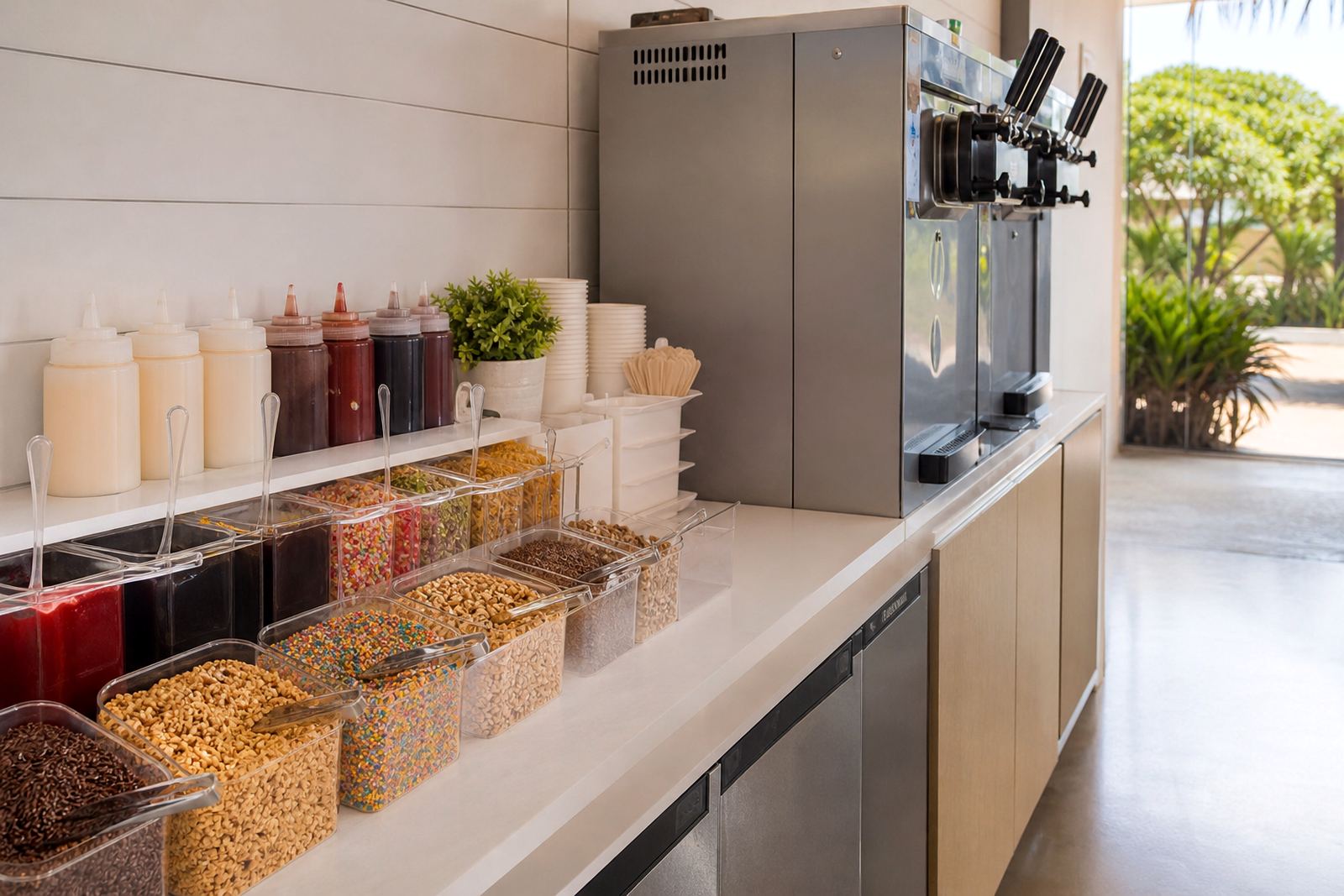
In Durban and other coastal towns, speed matters because soft-serve sells hardest during hot afternoons, school holidays and weekend rushes. If staff hesitate, the queue grows and the machine stays open too long. A simple routine helps them keep moving without guessing. Make it the same every time, whether the outlet is in Springfield Park, Umhlanga or a kiosk in a shopping centre.
Write the routine in plain language and pin it near the machine. Keep the steps short and numbered. If staff can follow the same sequence for every customer, they will make fewer mistakes and need less supervision.
Teach Portion Control Before Speed
New staff often think faster serving means pushing the lever as far as possible and filling the cup to the brim. That leads to waste, drips on the counter and unhappy customers when the portion looks uneven. Start with portion control first, speed second. Once they know what a proper cone or cup should look like, their pace will improve naturally.
Use a few actual examples from your own menu. Show them the difference between a single serve, a double, and a mixed swirl if your machine allows it. Let them practise with empty cups and cones before the shop opens. This builds muscle memory without pressure.
- Show the correct hold angle for cones so the first turn stays neat.
- Demonstrate when to stop dispensing before overflow starts.
- Explain how to read the customer order without repeating it three times.
- Teach them to keep the serving area dry and uncluttered.
It sounds basic, but these small habits are what keep service consistent. A well-trained new worker should be able to serve the same size portion at 10 am and 3 pm, even when the queue is long.
Cleaning Rules That Stop Problems Before They Start
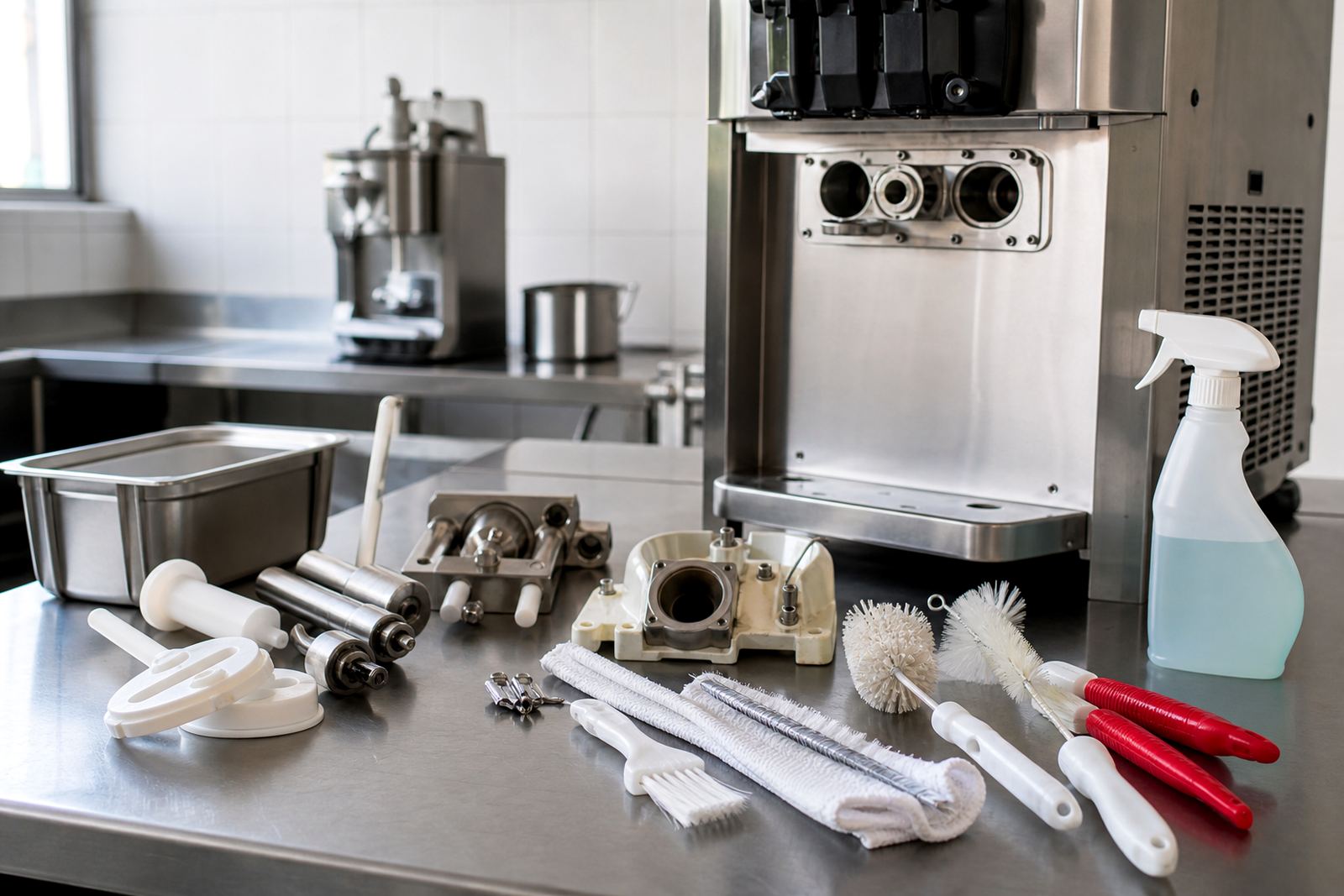
Cleaning is where many new staff make mistakes because they are scared of doing it wrong, or they rush and leave residue behind. The trick is to break cleaning into small jobs that happen at set times. Show them what must be wiped after every few serves, what must be rinsed at closing time, and what only a supervisor may strip down.
In humid coastal conditions, mix left sitting in warm air can set faster than people expect. That means nozzle surfaces, drip trays and nearby counters need attention through the day, not only at the end of trading. If staff learn this early, you reduce blockages, sticky handles and unpleasant smells. It also helps with hygiene inspections and keeps the machine looking cared for.
- After each rush, wipe the splash points and handles.
- At closing, rinse removable parts exactly as shown in the handover.
- Check seals and visible fittings for residue or leaks.
- Store sanitising supplies in one marked place for easy access.
Do not assume new staff know which cloth is for food contact areas and which one is for floors. Say it plainly. One cloth for the machine, one for the counter and one for spills. If needed, colour-code them.
Use a Five-Minute Handover at Every Shift Change
Many service mistakes happen during the handover, not during the actual shift. A new staff member arrives, the previous person leaves in a hurry, and no one mentions that the mix is running low or the drip tray needs emptying. A five-minute handover solves a lot of trouble.
Use a fixed handover list so the person coming in gets the same information every time. It does not need to be formal. It just needs to be complete. In a busy restaurant or kiosk, this saves time and prevents awkward gaps where nobody is sure who last cleaned what.
A practical handover should cover stock, machine condition, customer flow and any odd noises or temperature changes. If the machine is not performing as usual, the next shift must know before the rush starts. That is especially useful when load-shedding is part of the week and the unit has just come back on line.
Keep the list near the till or prep counter so nobody has to look for it. Once the team gets used to it, the handover becomes second nature and takes less than five minutes.
Train With Real Shifts, Not Only Demonstrations
People learn faster when they practise during a real trading period with someone beside them. A demo in a quiet room is useful, but it does not show what happens when three customers ask for different toppings while someone else wants a cone for takeaway. Let new staff shadow a seasoned team member during an actual shift, then swap roles once they have watched the process.
For the first few shifts, keep the training focused. Do not overload them with stock ordering, menu upselling and repair details on the same day. Give them one or two goals per shift. For example: today they learn the serving pattern, tomorrow they learn closing clean-down, and on the third shift they learn basic problem spotting. That is enough to build confidence without confusion.
It also helps to let them repeat the same task several times in a row. Repetition makes the routine stick, and staff stop needing reminders for every serve. A little patientce at the start saves time later.
Build a Quick Reference Sheet for Common Issues
New staff do not need a full technical manual on the counter. They need a short guide that tells them what to do when something looks wrong. If the mix looks too thin, the cone is soft, or the machine sounds different, they should know whether to pause serving, call a supervisor or continue with caution. This keeps small problems from becoming costly breakdowns.
Make the reference sheet simple and visible. Use clear language and short actions. In a Springfield Park or Pietermaritzburg outlet, that sheet may be the difference between a smooth lunch rush and a machine left running badly for two hours.
- If the product is not holding shape, check the mix setting first.
- If the nozzle area is sticky, stop and clean before serving again.
- If there is an unusual sound, report it immediately.
- If the machine was off for load-shedding, follow the restart check before trading.
This is also where a contact pathway matters. Staff should know who to notify internally and how to record the issue, so service support can respond quickly if needed.
A Durban Example: One Busy Kiosk, Three Shifts, Fewer Mistakes
A kiosk in Durban serving school traffic, office lunches and evening footfall usually cannot afford long training periods. The best results come from a short, practical plan. On day one, the new counter staff member learns serving order and cleaning points. On day two, they practise closing duties and stock checks. By day three, they are handling normal service with light supervision.
That approach works because it matches the pace of the business. The team does not waste time on complicated theory, and the machine stays cleaner because every person follows the same routine. It also makes relievers easier to slot in during sick leave or busy holiday periods. When the rules are simple, people remember them.
For South African businesses, the goal is not perfection on the first shift. The goal is reliable service, tidy equipment and staff who know what to do when the queue starts moving. With the right routine, new staff become useful fast, and customers notice the difference.