Leaving mix in the machine overnight
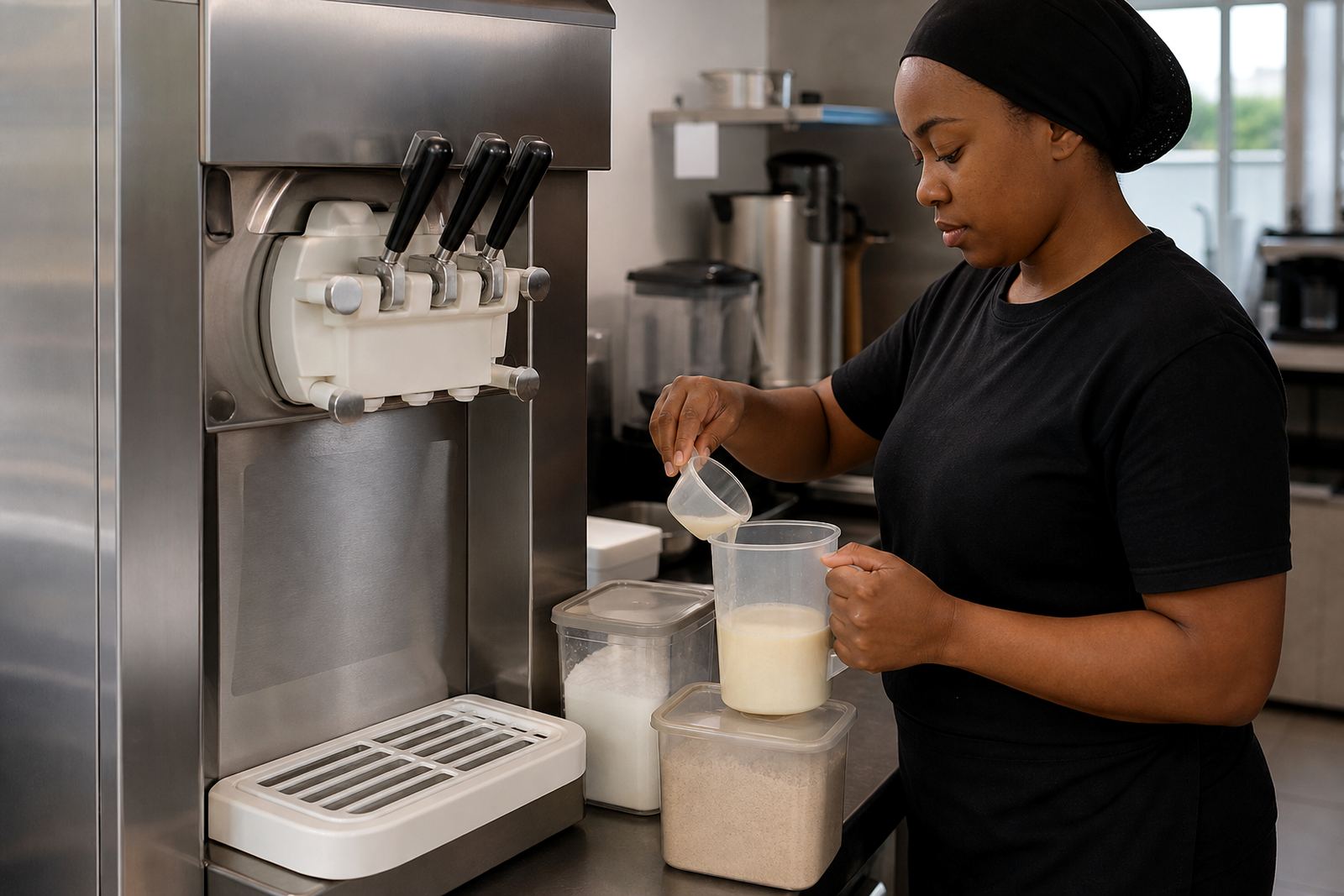
The most common mistake is simple: staff switch off and walk away with mix still inside the hopper and freezing cylinders. That residue warms up, separates and becomes a breeding ground for bacteria, especially in Durban’s humidity where heat hangs around long after closing. By morning, the machine may smell off and the first servings can come out watery or grainy.
Any machine that has not been set up for overnight holding should be emptied, washed and sanitised at close. Even where holding is allowed, the process must be followed properly and the product checked before service starts. A quick rinse is not enough, and it can leave a film that builds up over time.
Using water that is too hot or too cold
Another mistake is guessing the wash temperature. Water that is too hot can damage seals and soften certain parts, while cold water can leave fat and sugar behind on the walls of the cylinder. If that film stays in place, the next batch clings to it and the machine starts showing inconsistent texture.
For cleaning, follow the right sequence for each part. Warm water helps loosen residue, then sanitiser should be mixed at the correct strength and left in contact for the required time. In a restaurant or kiosk, it is worth setting a written cleaning order next to the sink so a new staff member does not improvise.
- Use warm water for the first rinse, not boiling water.
- Check sanitiser dilution with a measuring jug.
- Do not dry parts with a cloth that sheds fluff.
Forgetting seals, O-rings and small hidden parts
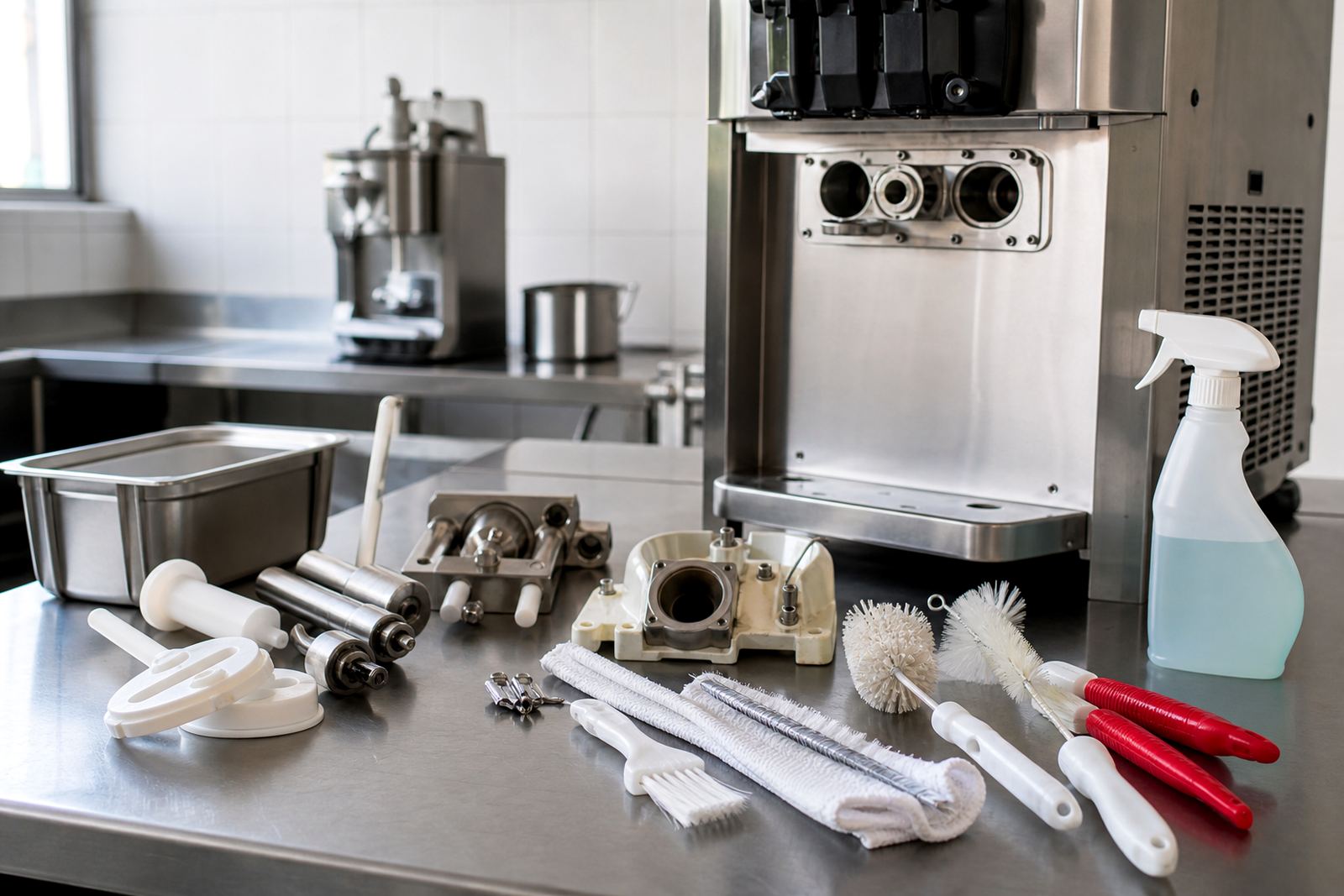
People often focus on the visible parts and miss the small components that do most of the sealing work. A worn O-ring, a split seal or a loose scraper can let product seep into places you cannot see. Once that happens, cleaning becomes harder and the risk of breakdowns rises fast.
These parts should be removed, inspected and cleaned every day, not just when there is a problem. If a seal looks flat, sticky or cracked, replace it before the next trading rush. Preventive care costs far less than an emergency callout on a Saturday afternoon in Pietermaritzburg or a holiday week in Cape Town.
Rushing the sanitising step before service starts
Many operators sanitise too quickly because they want to start serving. That usually means the machine is filled and drained before the chemical has had time to work. The result is a false sense of cleanliness, and customers may notice an odd taste or smell in the first few cones.
Let the sanitiser stay in contact for the full recommended time, then drain properly. After that, inspect the spout, hopper lid and draw handles again. If any part is still slimy or has residue on it, the machine was not fully cleaned. It’s a small delay that protects hygiene and product quality.
- Time the sanitising step instead of guessing.
- Check that all visible residue is gone before refilling.
- Run a small test serving and discard the first portion if needed.
Cleaning the machine but not the surrounding work area
A spotless machine can still be surrounded by dirty counters, sticky drip trays and dusty storage shelves. That creates cross-contamination, particularly in kiosks where the serving area is close to toppings, cups and payment points. If the floor is wet or the bin is open, the machine is working in poor conditions even if its internal parts are clean.
The whole serving zone needs attention: counter tops, drip trays, scoops, scoop holders and the floor around the unit. In coastal towns like Gqeberha, salt and moisture can also settle on nearby metal fittings and speed up wear. Good routine cleaning means the full station, not only the machine body.
Ignoring power cuts, warm-ups and daily checks
Load-shedding changes the way cleaning should be done. If a machine loses power during service and sits warm for too long, product can spoil inside faster than people expect. Some operators clean in a hurry after power returns and skip the normal inspection, which can leave them with trapped residue or a unit that is not freezing correctly.
Before opening each day, check for unusual noise, slow freezing, leaks and any build-up around the delivery area. After cleaning, make sure the machine restarts properly and the product consistency is right before serving customers. If something feels off, do not force it into service. A short phone support call or a quick technical check is better than losing a full day trading.
In Springfield Park, we often see machines that are clean on the outside but struggling because a small cleaning miss turned into a mechanical fault. The pattern is the same in busy sites from Johannesburg to Umhlanga: cleaning must be done the same way every time, or the machine will show the gap.
Training one person only and hoping the routine sticks
The last mistake is leaving cleaning knowledge with one experienced staff member. If that person is off sick or on leave, the routine changes immediately and quality drops. A café or kiosk needs a simple cleaning checklist that every shift can follow, even during a busy Friday night or a school holiday rush.
Good training covers the full sequence: emptying, dismantling, washing, sanitising, drying, reassembly and final checks. It should also explain where the machine stops and where the operator begins, because poor handling can undo a proper clean in minutes. When a team knows the routine, the machine lasts longer and the product stays consistent.
For multi-site operators, the same standard should be used in Durban, Pretoria and Cape Town so customers get the same serving experience everywhere. Consistency is not luck, it comes from repeatable cleaning habits and proper support when a machine needs attention.