Why the supply check matters before the unit arrives
Soft-serve and frozen yoghurt machines are not plug it in and hope for the best appliances. They need a stable supply, enough space around the machine, and a water point nearby if you are doing regular cleaning on site. If those basics are not sorted, the first trading day can turn into a scramble with tripped breakers, long cleaning delays and product spoilage.
For cafes, kiosks and restaurants, the main goal is simple: make sure the machine can run consistently during busy periods. In Durban, Johannesburg or Cape Town, the load on a site can change during lunch, school break or weekend rush. A unit that runs well for an hour but struggles later in the day is not good enough for customer service or stock control.
What power the site should have ready
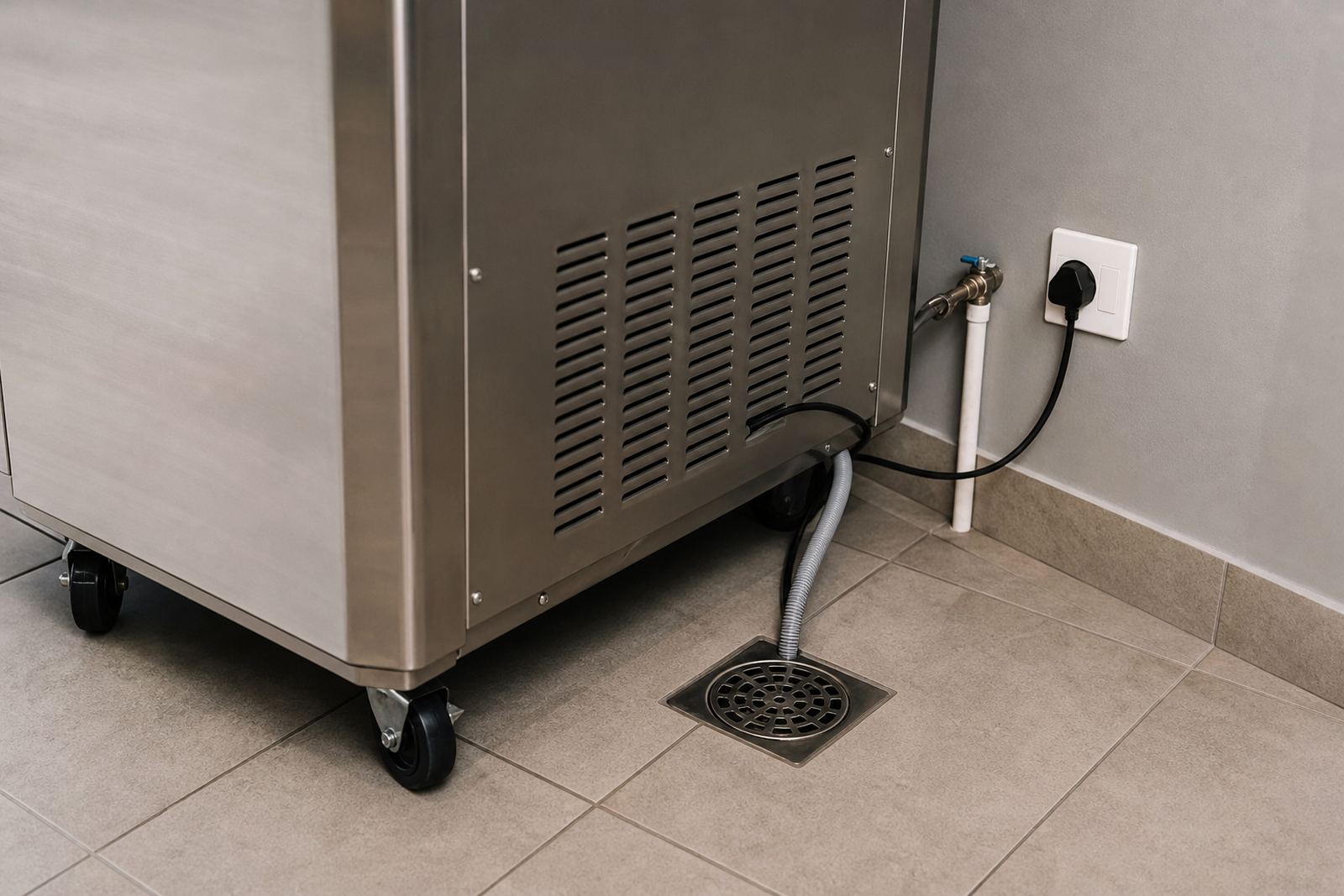
Every site should be checked by a qualified electrician before installation day. The exact electrical load depends on the model and how many machines are being fitted, but the site must have a supply that can handle the starting load and the ongoing running load without overloads. Do not rely on a loose adapter, a shared extension lead, or a circuit already carrying too many appliances.
- Dedicated circuit where possible, so the machine is not sharing power with kettles, fridges and grills.
- Correct plug point and breaker size for the unit being installed.
- Stable voltage, especially in areas where power dips happen during peak demand or load-shedding recovery.
- Enough clearance at the wall for safe access to switches and cables.
If your business runs on a generator or inverter, test it before the machine goes live. Some sites in Pietermaritzburg and the wider KZN area have backup power, but the backup must be able to handle the machine without frequent dropouts. If the power keeps cycling on and off, the mix can warm up and the product quality will suffer.
Water requirements for cleaning and hygiene
Even when the machine itself is not water-cooled, you still need water nearby for cleaning, rinsing and daily hygiene. A proper wash routine is essential for food safety and for keeping the machine in good condition. In a busy café or kiosk, staff should not have to walk across the shop with buckets or makehift containers every time the unit needs a rinse.
Water quality matters as well. Hard water can leave scale build-up on fittings and surfaces, while coastal humidity can make metal parts and seals wear faster if cleaning is inconsistent. In Durban and Umhlanga, where the air carries more moisture, regular wipe-downs and drying after cleaning help reduce corrosion and sticky residue.
- Access to clean running water for washing parts and sanitising contact surfaces.
- A sink or wash-up point close enough for efficient cleaning.
- Drip trays, cloths and sanitising supplies kept within reach.
- Clear process for draining rinse water without spilling across customer areas.
For most sites, the biggest issue is not lack of water, it is poor positioning. If the machine is tucked into a corner with no cleaning access, staff will work around the problem for a while then the standard slips. That is when breakdowns and hygiene issues start to show up.
Drainage and waste water should not be an afterthought
Cleaning water has to go somewhere. If the site has no proper drainage plan, water ends up on the floor, under counters or in buckets that are emptied too late. That is not ideal in a customer area, and it can also create a slip hazard for staff.
Before installation, check whether the site has a floor drain, a nearby sink, or another approved waste water point. In some shopping centre kiosks the rules are stricter and all water movement needs to follow centre management requirements. It is better to confirm this early than to find out on the morning of installation that the chosen spot is not allowed.
A simple rule helps: if the cleaning process creates water, the machine should be placed where that water can be removed quickly and safely. A tidy back-of-house setup also makes the operator’s job easier, especially during a rush when there is no time to mop around the machine after each clean.
Space, heat and airflow around the machine
Power and water are only part of the picture. The machine also needs enough breathing room. Heat builds up quickly in tight spaces, and if vents are blocked the unit works harder than it should. That affects product texture and can shorten the life of internal parts.
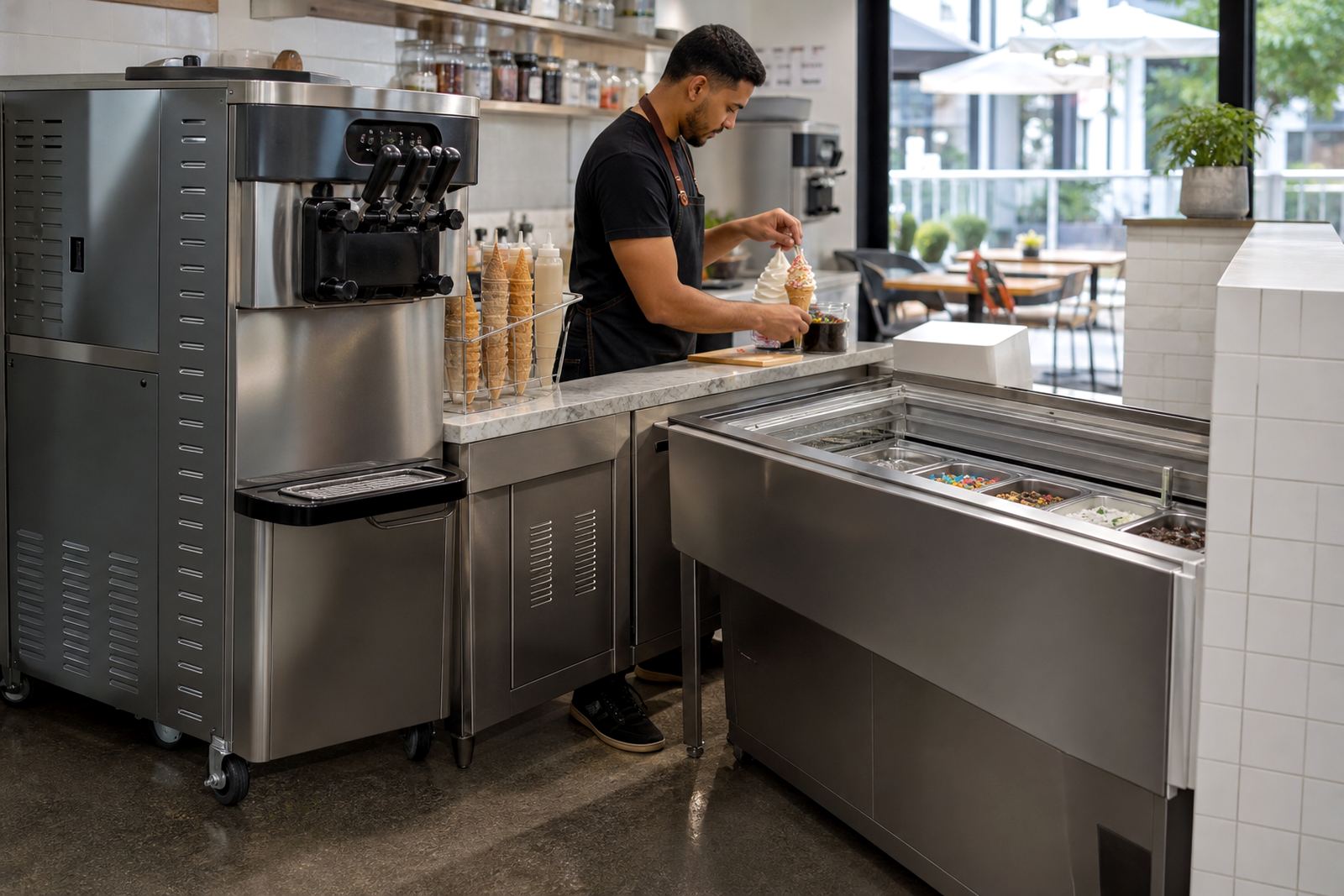
Leave enough space behind and beside the machine for cleaning, servicing and cable access. If the unit is installed against a wall with no gap, it becomes harder to check seals, remove panels or clean around the base. In coastal areas, where moisture and salt in the air can be a factor, good airflow helps prevent condensation from sitting around fittings.
For small kiosks in malls or transport hubs, the best layout is usually the one that allows staff to move without bumping into the machine or its power cable. It may seem like a small detail, but it makes a difference when the queue is long and the store is short staffed.
A Durban example: what a café should check first
Take a café in Springfield Park or Umhlanga planning to add soft-serve to its menu. Before installation, the owner should check the breaker panel, confirm the plug point location, measure counter space, and decide where the cleaning water will go. If the site relies on backup power during load-shedding, that backup should be tested under real conditions before opening day.
One common mistake is fitting the machine first and trying to sort plumbing and power later. That usually leads to extra cost and lost trading time. A better approach is to map the site properly, then prepare the electricity, water point and waste water route before the unit arrives. It saves time and keeps the first day calm, which is important when you are already training staff and learning the product flow.
For businesses in Johannesburg, Pretoria or Cape Town, the same approach applies. Different towns have different site rules and utility quirks, but the basic principle stays the same: prepare the site properly and the machine will be easier to run from day one.
What to have ready before installation day
A short pre-installation checklist is often enough to prevent delays. Keep the basics together and confirm them with the electrician, site manager or centre management before the team arrives.
- Electrical supply checked and approved by a qualified electrician.
- Plug point in the correct position with enough clearance.
- Water access for cleaning and sanitising.
- Drainage or waste water plan in place.
- Clear space for servicing, airflow and daily operation.
- Backup power plan tested where relevant.
- Cleaning materials and operator access ready for the first shift.
When the site is prepared properly, installation is quicker, commissioning is smoother and the team can focus on selling product rather than fixing avoidable problems. That preparation is often the difference between a machine that starts earning on day one and a machine that keeps waiting for one more site adjustment.