
Start With Portion Control At The Machine
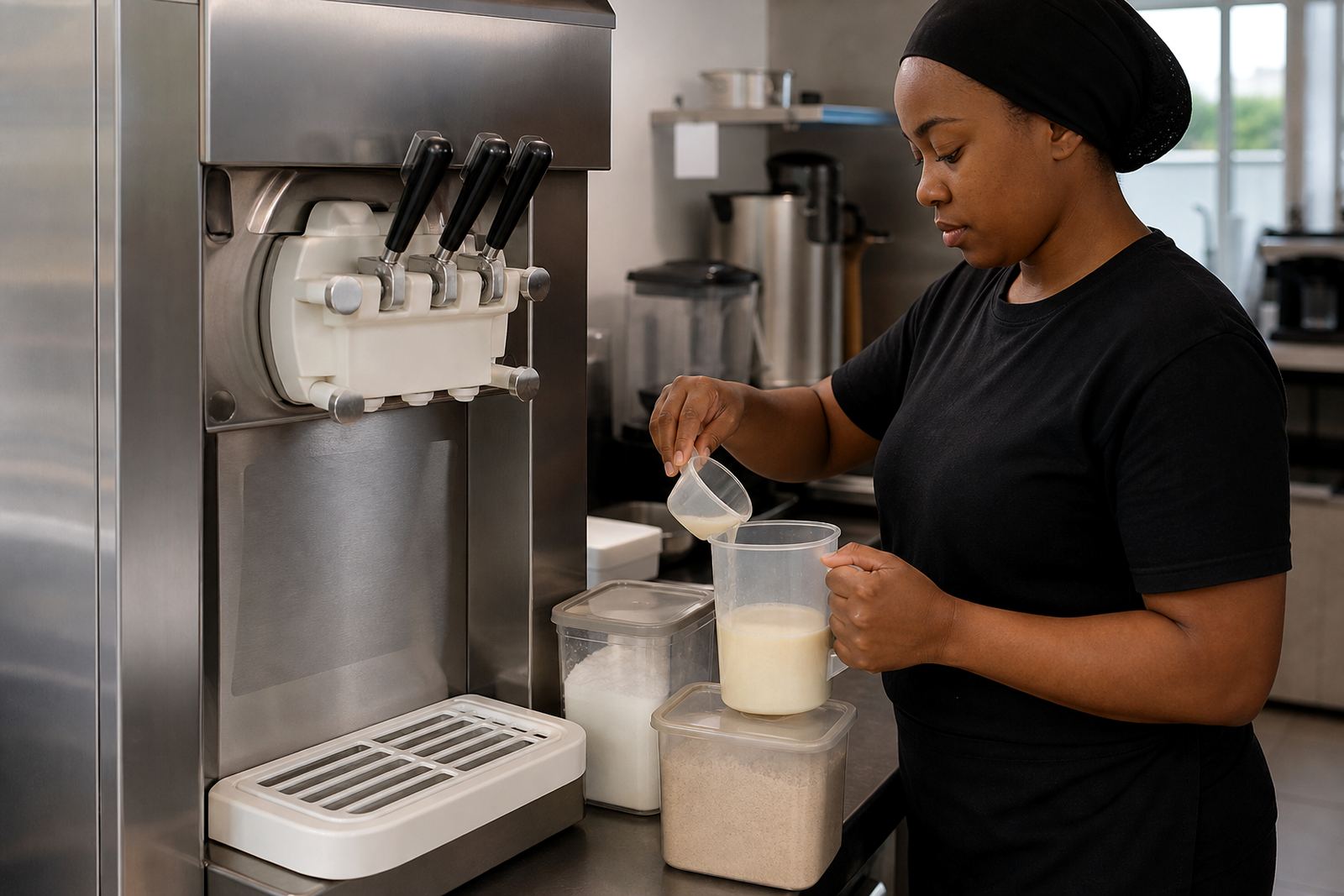
Overfilling is one of the easiest ways to lose product. When the hopper is filled past the correct line, mix can spill during refills, foam too much, or sit too long in the chamber without being used. That means more waste and a weaker texture at serving time. A good rule is to train staff to check fill levels before the rush and again after each busy spell, not after the machine starts struggling.
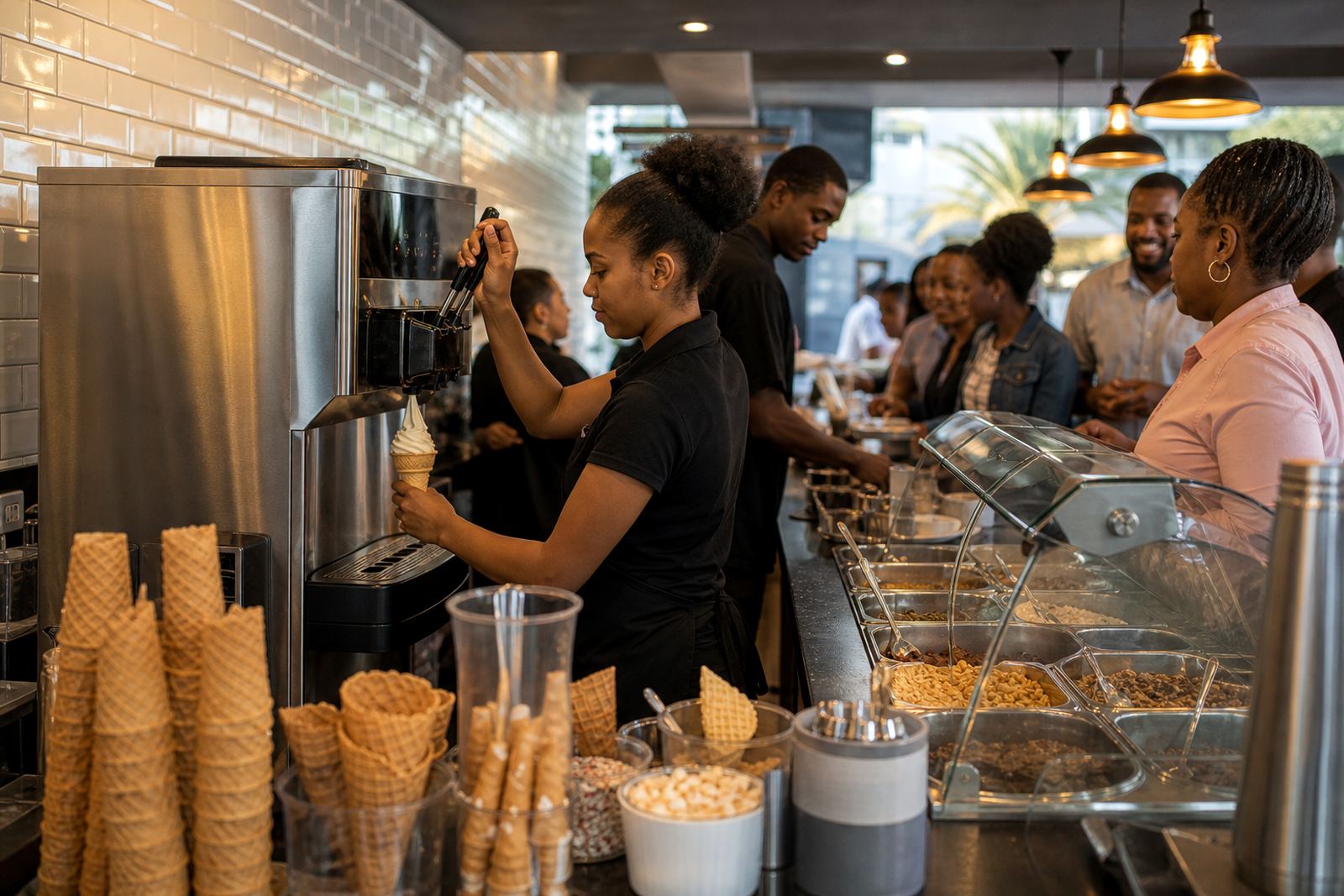
In busy cafés and kiosks, especially where one person is serving cones and another is taking payment, the machine can be left unchecked for too long. Clear portion rules help. If you know how many serves you get from a standard batch, it becomes much easier to forecast stock and reduce oversupply. This is also where mix calibration matters, because a machine that is set too rich or too thin will use ingredients faster than it should.
- Mark the correct fill line clearly on the hopper.
- Use the same ladle or measuring jug for every refill.
- Record how many servings come from each batch.
- Check consistency before peak trading starts.
Keep Frozen Mix Fresh From Delivery To Serve
Mix spoilage often begins before the product reaches the machine. In South Africa, delivery delays, traffic and load shedding can all affect how frozen or chilled stock behaves. If a product is left too long in a warm receiving area, even for 20 minutes, the quality drops and the risk of spoilage rises. For coastal sites like Durban and Gqeberha, humidity can also shorten holding times if storage is not managed properly.
The safest approach is simple stock rotation. Use older tubs first, keep lids sealed, and store new deliveries away from direct sun or kitchen heat. If your site has limited freezer space, do smaller, more frequent orders rather than overbuying for the week. That reduces the chance of expired stock and helps protect cash flow too.
- Rotate stock by date, not by convenience.
- Keep storage doors closed as much as possible.
- Never leave opened mix exposed near the prep counter.
- Separate clean stock from returns or damaged packs.
Train Staff To Stop Waste Before It Starts
Most waste comes from inconsistent habits. One team member may top up too early, another may over pour cones, and someone else may clean a part the wrong way and damage a seal. Training does not need to be complicated. It should focus on repeatable steps that protect product, time and equipment.
A short startup routine works well in kiosks and restaurants. Before service, staff should check temperature, confirm mix level, inspect nozzles, and test the first serve. During service, they should watch for drips, uneven dispensing or air gaps in the product. After service, they should clean the working parts properly so residue does not build up and spoil the next batch.
- Assign one person to open and one person to close the station.
- Use a checklist for startup and shut down.
- Show staff how to spot early signs of overrun problems.
- Replace worn seals before they start leaking product.
Plan For Power Cuts And Slow Trading Days
Load shedding can turn a well-run dessert station into a waste problem if there is no plan. When power fails, product can soften in the hopper, then refreeze unevenly once supply returns. That affects texture and often leads to cleaning out product that should have been sold. The same risk applies on slow weekdays when a machine is left running too long for a handful of sales.
Where possible, align machine use with trading patterns. If a site in Pretoria or Cape Town only gets a strong lunch rush and weekend trade, running the unit all day may not make sense. Better scheduling means less idle product, lower electricity use and fewer cleanouts. If your business relies on frozen treats through the summer, seasonal prep checks are worth doing before the first hot spell arrives.
- Match machine run times to actual foot traffic.
- Have a clear power failure procedure for staff.
- Check whether product can be held safely during a short outage.
- Book season prep before the first busy weekend.
Reduce Prep Waste At The Counter
Prep waste often hides in the small things: half-used cones left open, spills on the counter, and product scraped from the rim because the dispenser was not set right. In a compact kiosk, every square metre matters. If the prep zone is crowded, staff move faster and waste more. The fix is usually organisation, not more product.
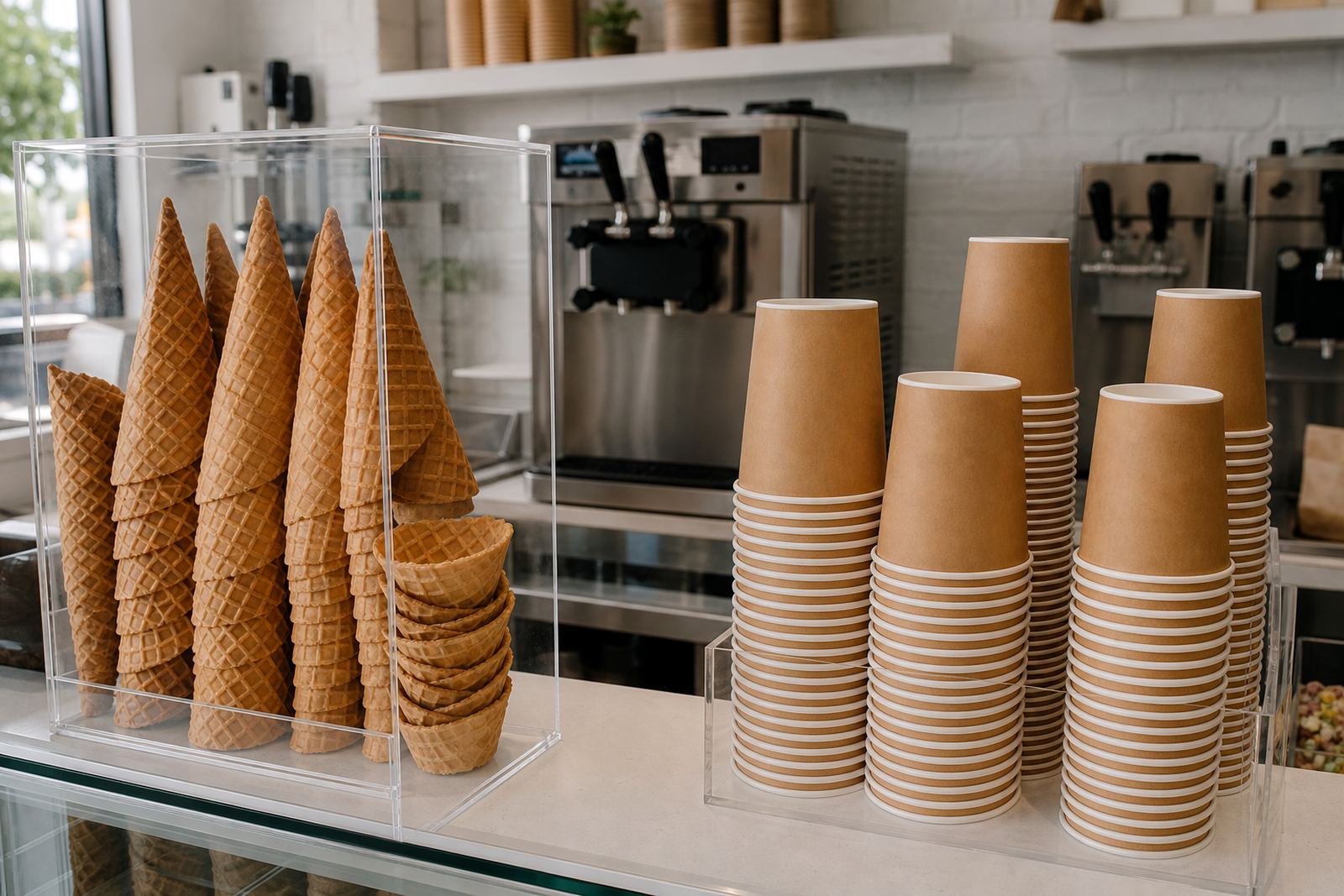
Keep cones dry, clean and sealed until needed. Store toppings, cups and serving tools within easy reach so staff are not walking back and forth across the floor. A tidy layout helps prevent dropped stock and keeps surfaces cleaner for longer. It also makes it easier to notice when a machine is running drippy or slow, which often points to a service issue.
- Store cones upright in a dry place.
- Use small containers for high-use toppings.
- Wipe spills immediately so they do not draw insects.
- Keep serving tools close to the machine, not across the room.
Use Servicing To Protect Product Yield
When a machine is not maintained, it starts wasting product in ways that are easy to miss. A worn seal, blocked nozzle, or poor calibration can all increase overrun or cause leakage. That means more mix used for fewer servings. Regular preventive maintenance is one of the simplest ways to keep yield steady and protect margins.
Sites across Durban, Johannesburg and Gqeberha often call for help only after a unit starts underperforming, but by then product has already been lost. A better approach is to schedule deep cleans, seal and parts checks, and mix calibration before the busy period. If you relocate a site, commission the machine again so the settings suit the new trading conditions and power supply. That small step can save a lot of stock over time.
At a café in Umhlanga, for example, a machine that was left slightly out of calibration was producing soft-serve that looked fine but used more mix per serve. Once the settings were corrected and the staff retrained, the owner noticed steadier portions, fewer drips and less product going into the drain. It was a minor adjustment, but it made a real difference to daily waste.