What you save, and what you spend, on each serve
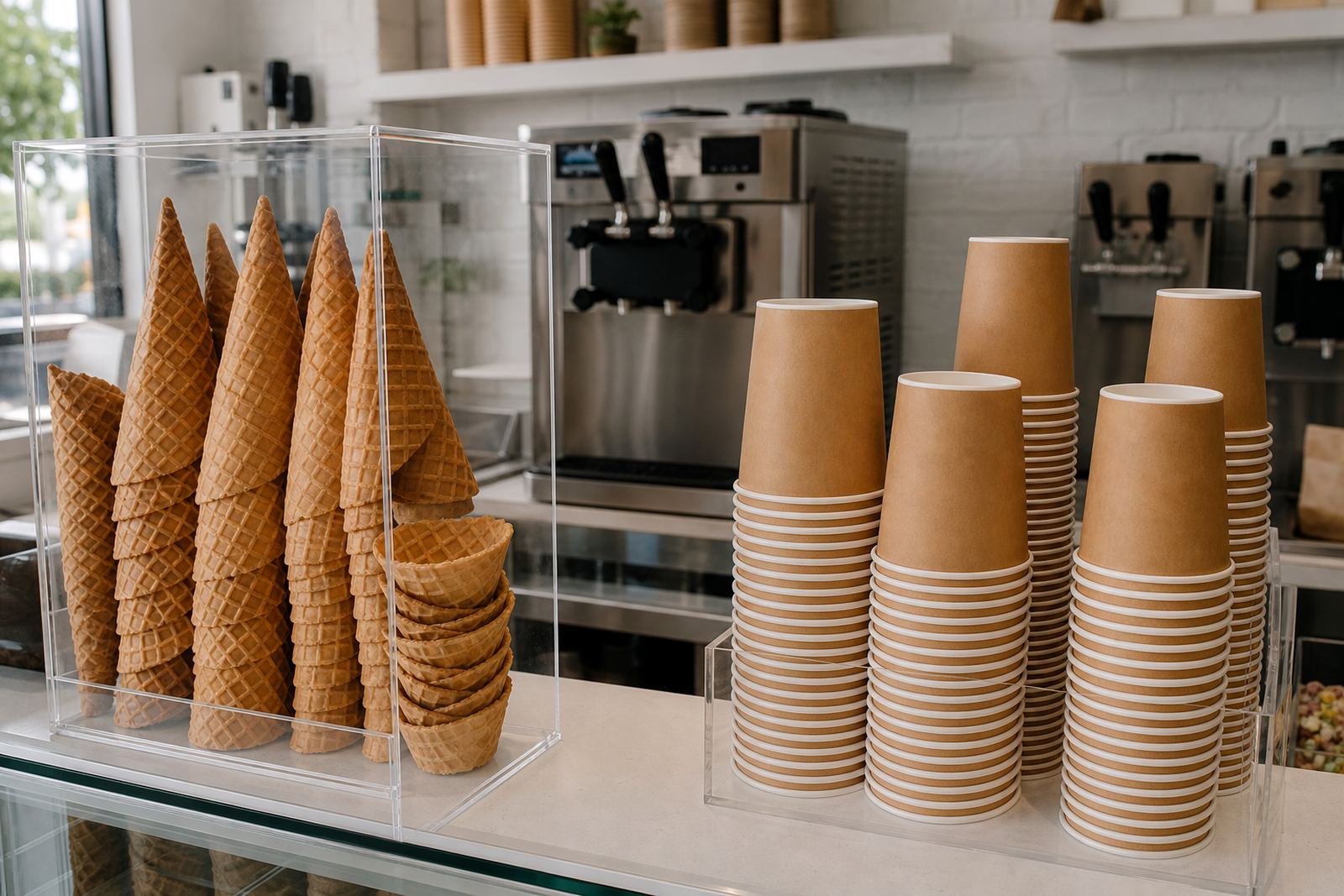
When a café or kiosk compares cones and cups, the first question is usually cost per serve. A cone often costs less than a cup and lid combination, but the real picture includes breakage, spillage, portion control and how many toppings you want to offer.
Cups give you more control. If you are serving frozen yoghurt with fruit, sauces or crushed biscuits, a cup is easier to standardise. Cones can be cheaper and quicker for plain soft-serve, but they work best when the product is served immediately and the customer is moving.
- Cones usually reduce packaging cost per portion
- Cups make topping control easier and neater
- Lids help with takeaways, but they add cost
- Heavy topping menus often suit cups better
In Durban, where foot traffic can jump from quiet to busy in minutes, many operators use both. That way they can keep a fast cone option for walk-in trade and cups for customers who want a slower dessert or need to carry it away.
Speed of service matters more than most owners think
At peak times, speed can matter as much as margin. A cone is quicker to hand over because there is one less packaging step. That makes it useful for school traffic, beachfront trade and quick-service kiosks where the queue has to keep moving.
Cups take a little longer, but not by much if your counter is set up properly. If your staff can portion, add toppings and close the lid without turning away from the customer, the slower format may still be worth it. The issue is less about the container and more about workflow.
For operators in places like Springfield Park or Umhlanga, the busy spell is often short and intense. A small delay per order can build up quickly, so it helps to choose a format that matches your serving rhythm and not just your menu photos.
- Cones suit high-throughput counters
- Cups suit custom orders and takeaway trade
- Tray and topping layout affects speed more than staff size
- Short queues can absorb the extra seconds for cups
Weather, travel and the KwaZulu-Natal reality
South African weather changes the best format. In hot coastal conditions, soft-serve in a cone can start to soften before the customer leaves the shop. Cups handle heat better because they catch drips and give the customer a place to set the dessert down while adding toppings.
Humidity in Durban can also affect how dry cones feel in storage. If cones are not packed and stored properly, they can pick up moisture and lose that crisp bite. Cups are less sensitive to coastal humidity, which is one reason many seaside operators keep them on hand for the summer rush.
There is also the issue of travel. Customers taking treats into a car, taxi or office often prefer cups because they spill less. That matters in city centres, at malls and at family spots where one child may finish slowly while another is already done.
How menu style changes the right container
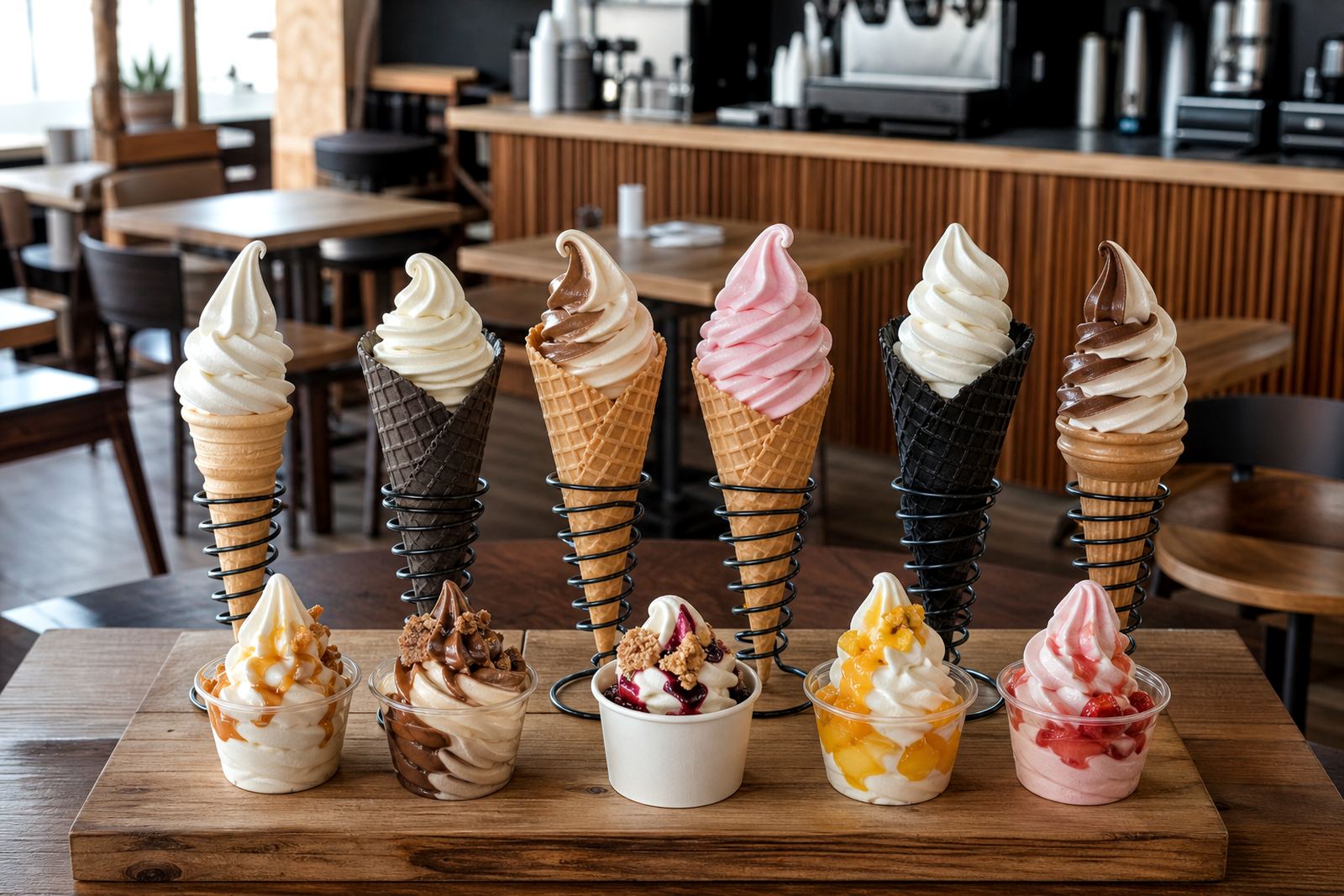
Your product range should decide the vessel, not the other way round. Plain vanilla soft-serve or a simple swirl with one sauce works very well in a cone. If you are building a dessert with multiple textures, cups give you more room and better stability.
Frozen yoghurt often performs better in cups because customers expect fruit, nuts and sauces. Cones are still useful for simple self-serve counters, especially where the focus is on speed and low wastage. If your business wants to keep the menu tight, one container can be enough. If you are aiming for upsells, both formats help.
- Simple soft-serve pairs well with cones
- Layered frozen yoghurt works better in cups
- More toppings usually means more cup sales
- Limited-menu kiosks can keep stocking lean with cones only
Restaurants often use cups because they plate more neatly and fit table service. Kiosks and takeaway spots tend to favour cones because the customer sees the product being made and gets it faster.
Stock control, waste and the hidden costs
Margins are not only about the price of the cone or cup. You also need to count waste. A cone that cracks, gets dropped or sits too long in the sun becomes a loss. A cup that is overfilled or used with too much sauce can push costs up just as quickly.
Good stock control starts with portion calibration. If the machine output is consistent, your serving size stays steady and your costing improves. That is especially important for seasonal trade in places like Pietermaritzburg and Gqeberha, where footfall can rise sharply during holidays and long weekends.
Many operators find that a mixed system gives the best balance. Use cones for standard serves and cups for premium orders, takeaway or topping-heavy desserts. That way you protect speed without forcing every customer into the same format.
A practical choice for one Durban counter
Picture a small Durban counter serving office staff at lunch and families after 4 pm. The first group wants speed. The second group wants toppings, lids and a treat that can travel. In that setting, cones would handle the rush, while cups would protect the afternoon trade.
That is why many local businesses do not choose one format forever. They choose the one that fits the day part. On hot weekends, cups may carry more of the load. On weekday lunch trade, cones can keep the queue moving and reduce packaging spend.
If you are planning your frozen menu, start with your busiest hour, not your quietest one. Then work backwards from service speed, storage space and the type of customer walking through the door.
The best format is the one that helps you serve quickly, price properly and keep the product looking good from the machine to the customer’s hand.