
When the machine stalls, the queue starts costing money
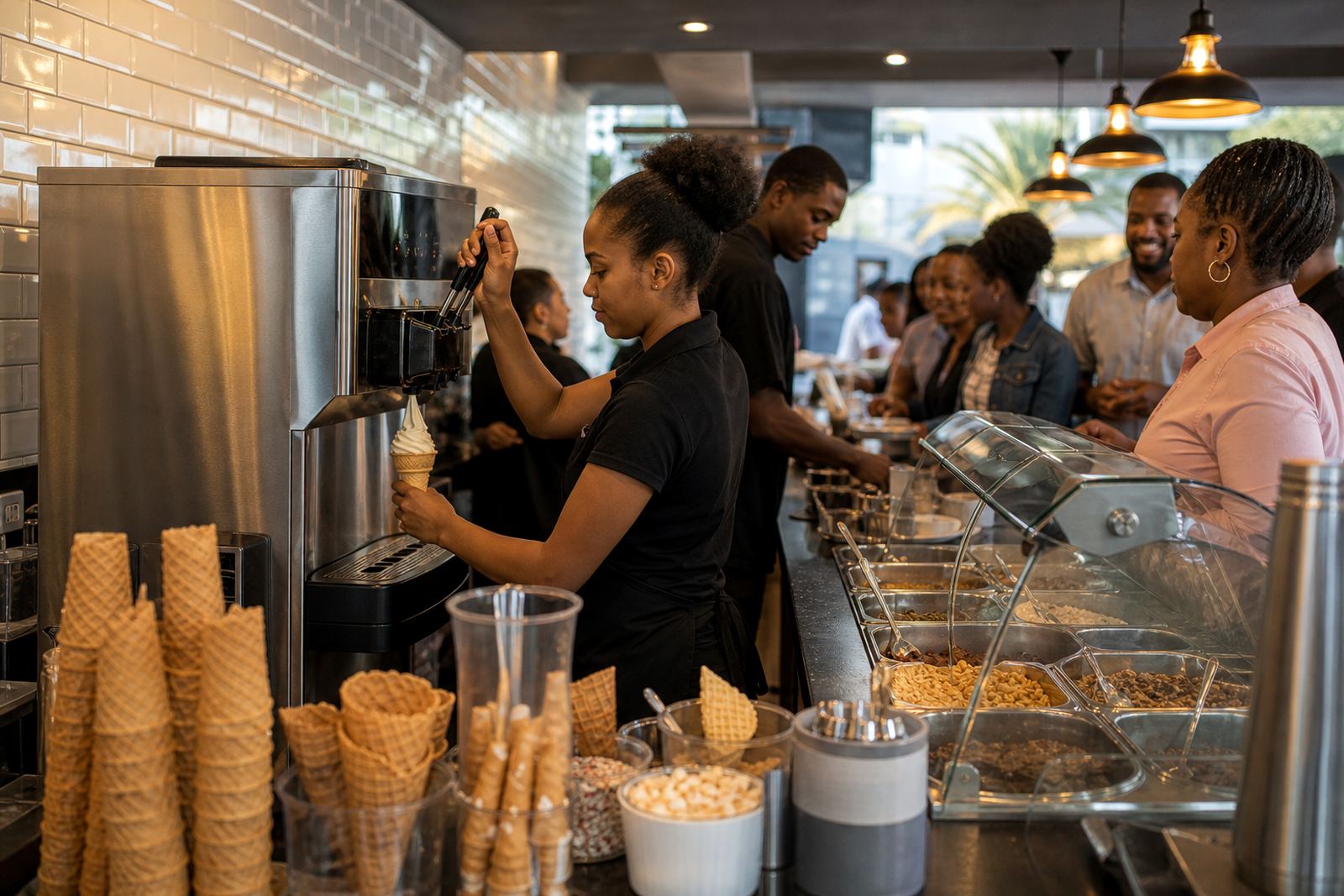
Soft-serve and frozen yoghurt are impulse products. People order them because they can see the machine, hear the motor and watch the swirl hit the cone. If the machine is slow to freeze, drips too much or stops mid-service, that impulse gets lost and the queue starts moving away. In Durban, where trade can swing sharply between weekday quiet and weekend rushes, a machine that is down for even an hour can affect the whole day’s takings.
For owners, reliability is not only about avoiding a breakdown. It is about keeping a consistent draw rate, holding the right mix temperature and serving clean product at the same texture from morning to closing. A machine that struggles with pressure or airflow often creates small losses first, then larger ones later. That is why proper installation and regular checks matter from day one, not after the first fault appears.
Consistency keeps customers coming back
Customers remember the first cone and the last one. If the mix is too soft on Tuesday and too icy on Thursday, trust drops quickly. Repeat sales come from product that looks the same, tastes the same and serves the same way every time. For a kiosk in Springfield Park or a restaurant in Umhlanga, that consistency can become part of the reason customers return after school runs, beach days or shopping trips.
Machine reliability supports that consistency in practical ways:
- It keeps overrun and serving texture within a steady range.
- It reduces product waste from partial cycles and failed batches.
- It helps staff work faster during peak periods without guesswork.
- It keeps hygiene tighter because the team is not fighting leaks or residue.
When the product is steady, staff can focus on upselling cones, toppings and second servings rather than apologising to the next customer in line.
South African operating conditions are not gentle on equipment
Frozen dessert equipment in South Africa faces real-world pressure that many owners underestimate. Load-shedding can interrupt production. Coastal humidity in places like Durban and Gqeberha can affect storage areas and seals. Dust, heat and crowded prep spaces in Johannesburg and Pretoria can shorten the life of parts if the machine is not cleaned and maintained properly. Even a small change in voltage or ventilation can show up later as weak freezing or uneven output.
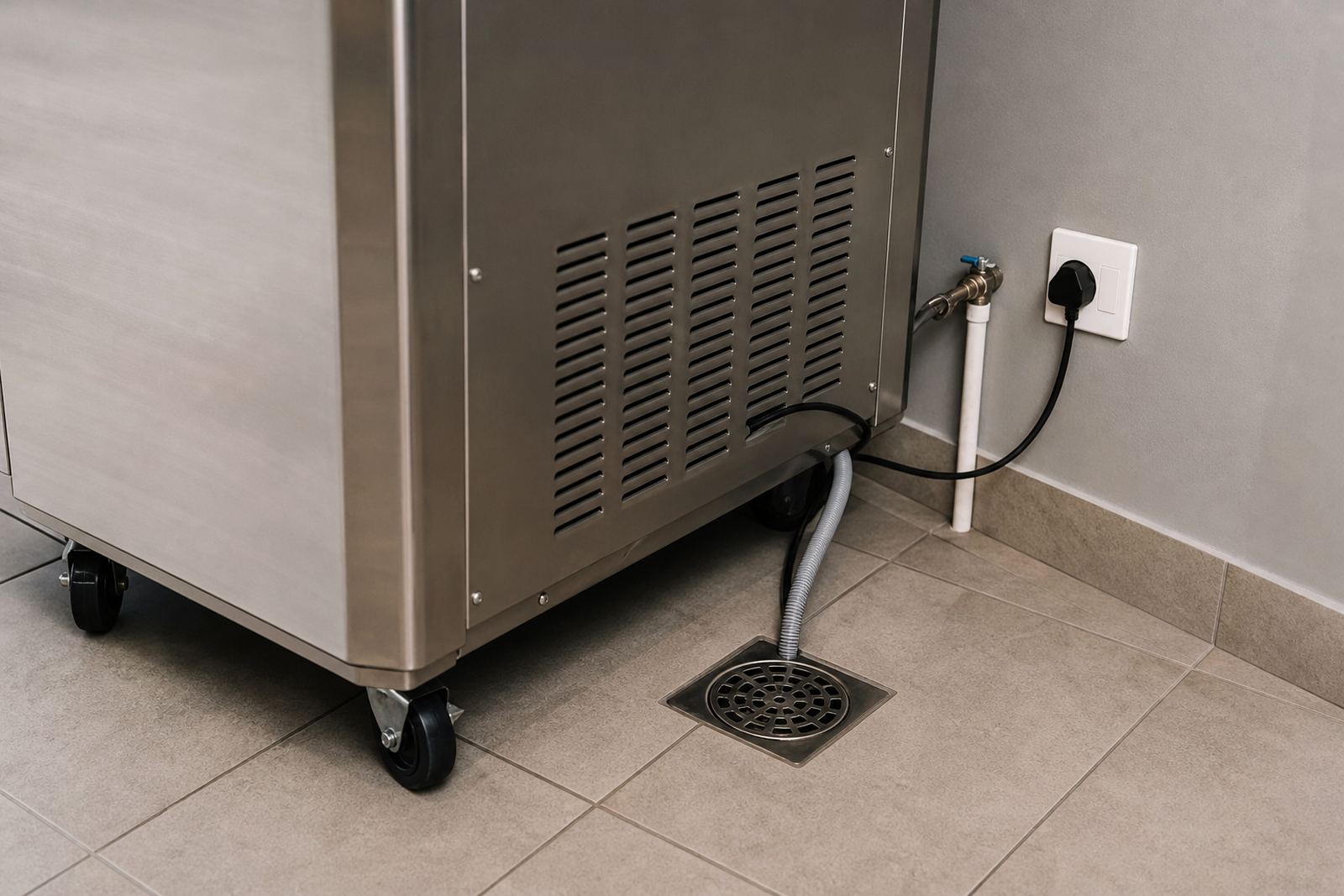
That is why dependable equipment needs more than a sales brochure. It needs correct siting, enough airflow around the cabinet, stable power, and operators who know what normal sounds and readings look like. A machine should not be pushed into a corner beside a hot oven or placed where staff will block the vents during service. Those small decisions add up fast.
Common reliability risks include:
- Poor ventilation around the machine body.
- Inconsistent cleaning and sanitising routines.
- Incorrect mix ratios that strain the freezing system.
- Delayed response to warning lights, leaks or unusual noise.
What regular maintenance really protects
Preventive maintenance is not a nice-to-have. It protects the parts that do the hardest work every day, including seals, drive components, valves and freezing systems. If those parts are left too long between inspections, service starts to slip. The machine may still run, but it will use more time to freeze, produce a softer result or begin leaking around worn seals. That is when a small job turns into a service call during trading hours.
For operators across Durban, Pietermaritzburg, Cape Town and the inland centres, a maintenance plan keeps the machine ready for peak periods, school holidays and month-end foot traffic. It also gives teams a clear rhythm for deep cleaning, seal replacement and calibration so nobody is guessing when the next check is due.
- Better temperature control and product consistency.
- Fewer breakdowns during rush periods.
- Longer life for high-wear parts.
- Cleaner operation and easier compliance with food hygiene standards.
Training staff to spot problems early
Many service interruptions start with small warning signs that staff notice before the machine fails completely. A slower dispense, air in the line, unusual vibration, a drippy nozzle or a change in texture can all point to a problem that needs attention. If the team is trained well, they report the issue early and avoid losing a full trading session. If they are not trained, they often keep running the machine until the fault gets worse.
A proper startup commissioning process should include practical operator training, not just a quick handover. Staff need to know how to clean, prime, calibrate mix, check seals and shut the unit down correctly after service. They also need a simple call path for support when something looks off. In busy restaurants and kiosks, that one step can save a day’s sales.
Useful training topics include:
- Daily cleaning and sanitising steps.
- How to read normal machine sounds and product flow.
- What to do during a load-shedding interruption.
- How to prepare the machine for a busy weekend or holiday period.
A Durban example: small fault, big lesson
A kiosk in Springfield Park started seeing slower draw speed during afternoon trade. The team thought it was only the warm weather. By the next day, the product was too soft and the machine had begun leaking around a worn seal. Because the fault was reported early, the operator avoided a full shutdown, the seal was replaced, the mix was recalibrated and the unit was back in service before the weekend rush. It was a small issue, but it could have become a full trading loss if left alone.
That is the real value of reliability. It is not just about having a machine that switches on. It is about having equipment, support and routine care that protect your sales when customers are already standing at the counter. For cafes, kiosks and restaurants, dependable service is part of the menu.
At SnoCream, our focus is on keeping machines ready through installation, commissioning, training, maintenance, repairs and season prep checks so operators can serve with confidence, even when trading conditions are tough.