
Start with the customer you already serve
Before you buy anything, look at who already walks through the door. In a Durban café near Springfield Park, for example, soft-serve often sells well with families, school holiday traffic and weekend visitors, while frozen yoghurt pulls in customers who want a lighter option or a custom bowl with fruit, granola and sauces. If your current menu is mostly cones and sundaes, frozen yoghurt gives you a second reason for people to stop and spend.
The main question is not whether frozen yoghurt is popular, it is whether your location can support another cold product line without slowing service. A kiosk in a mall walkway may need quick serve and a tight topping range. A restaurant in Pietermaritzburg might have more room for seated desserts and longer decision times. Match the product to the way people queue, pay and leave.
- Check your busiest trading hours and how many extra servings you can handle.
- Think about whether customers want grab-and-go cups or plated desserts.
- Compare your current average ticket with the price point frozen yoghurt could support.
- Look at local buying habits, especially in coastal towns where cooler desserts sell well most months.
Choose equipment that fits the pace of trade
Frozen yoghurt machines are not simply a copy of soft-serve units. The mix behaves differently, and your team needs stable temperature control, correct overrun and a machine that can cope with regular use. If you are already serving soft-serve, it is tempting to add the cheapest option available, but that can create uneven texture, blockages and slow recovery during a lunch rush.
In South African conditions, power interruptions and voltage swings can affect any cold equipment, so planning matters. If your site in Johannesburg or Cape Town has load-shedding backup, confirm what the machine needs during start-up and steady running. A unit that works fine in a showroom may struggle in a hot kiosk with open doors and high foot traffic. Pay attention to air flow, drainage and where the machine will sit during service and after hours.
- Allow enough counter space for scooping, topping and payment.
- Make sure the machine can be cleaned without moving heavy fittings every day.
- Check if the mix tank and hopper size suits your expected volume.
- Plan for backup power if your area gets regular outages or dips.
Get the mix and texture right from day one
Frozen yoghurt customers notice texture immediately. If it comes out too soft, too sour or icy, repeat sales drop fast. That is why mix calibration matters. The recipe must suit your machine, your local temperature and the way your staff serves it. In warm coastal humidity, product can soften quicker at the counter, so serving speed and holding time are just as important as the batch itself.
Do not treat the first month as a casual trial. Test a few flavour bases, check how they flow through the machine and measure how they hold over a full trading day. If you are offering both soft-serve and frozen yoghurt, keep the instructions clear so staff do not mix up cleaning steps or pouring methods. A small error in ratio can waste product and affect consistency for the whole day.
- Use the right mix for the machine, not a close substitute.
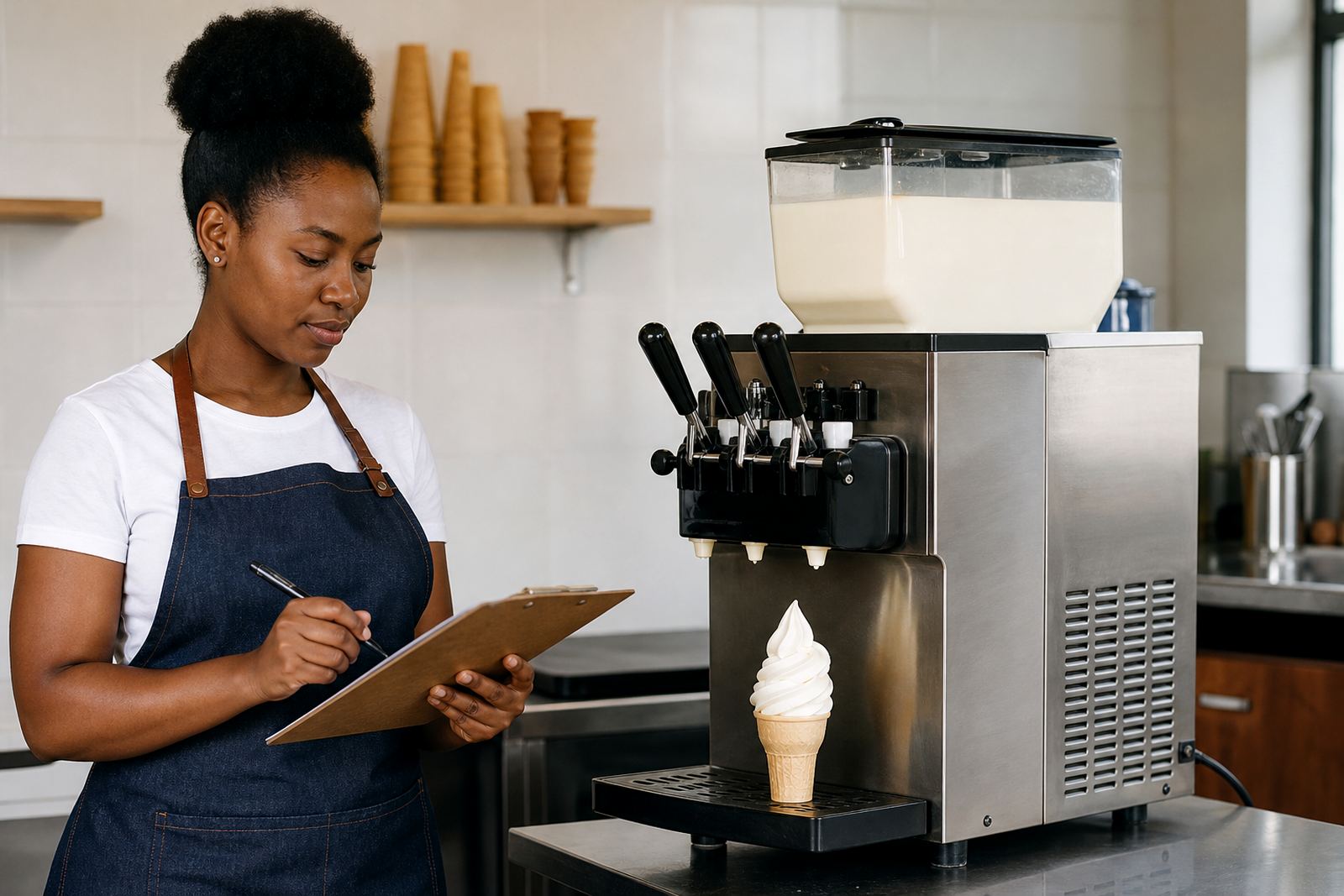
- Record serving texture at opening, midday and closing.
- Keep a note of which flavours move fastest and which sit too long.
- Set a standard scoop or portion size so every serving looks the same.
Set up a menu that does not slow the queue
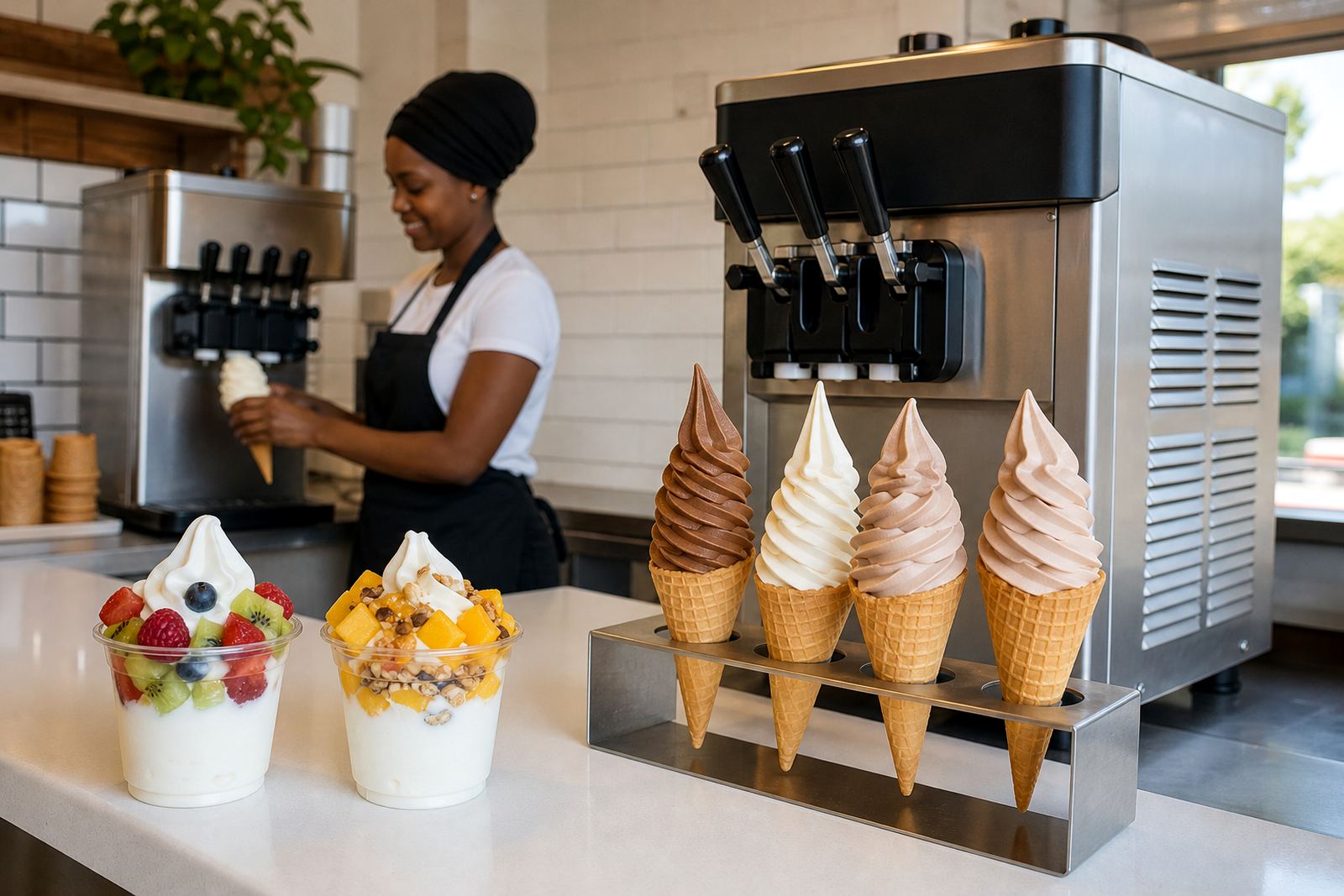
The best frozen yoghurt offer is usually the one customers can understand in under 10 seconds. If the menu is too long, your line slows and people start leaving. Keep the base choice simple, then add a short list of toppings that work well with South African tastes such as fresh fruit, nuts, biscuit crumbs, chocolate pieces and a fruit sauce. Too many jars, bowls and labels will make service messy.
Think about profit per serving rather than just the selling price. A cup with one base, one fruit topping and one crunchy add-on can be quick to build and still give you a healthy margin. In a Cape Town restaurant near a tourist area, a slightly higher priced dessert may work. In a township kiosk or school-adjacent site, a smaller portion at a lower price might turn faster. Know your numbers before you print the board.
- Keep topping choices limited enough for speed but varied enough for repeat visits.
- Price each add-on clearly so staff do not improvise at the till.
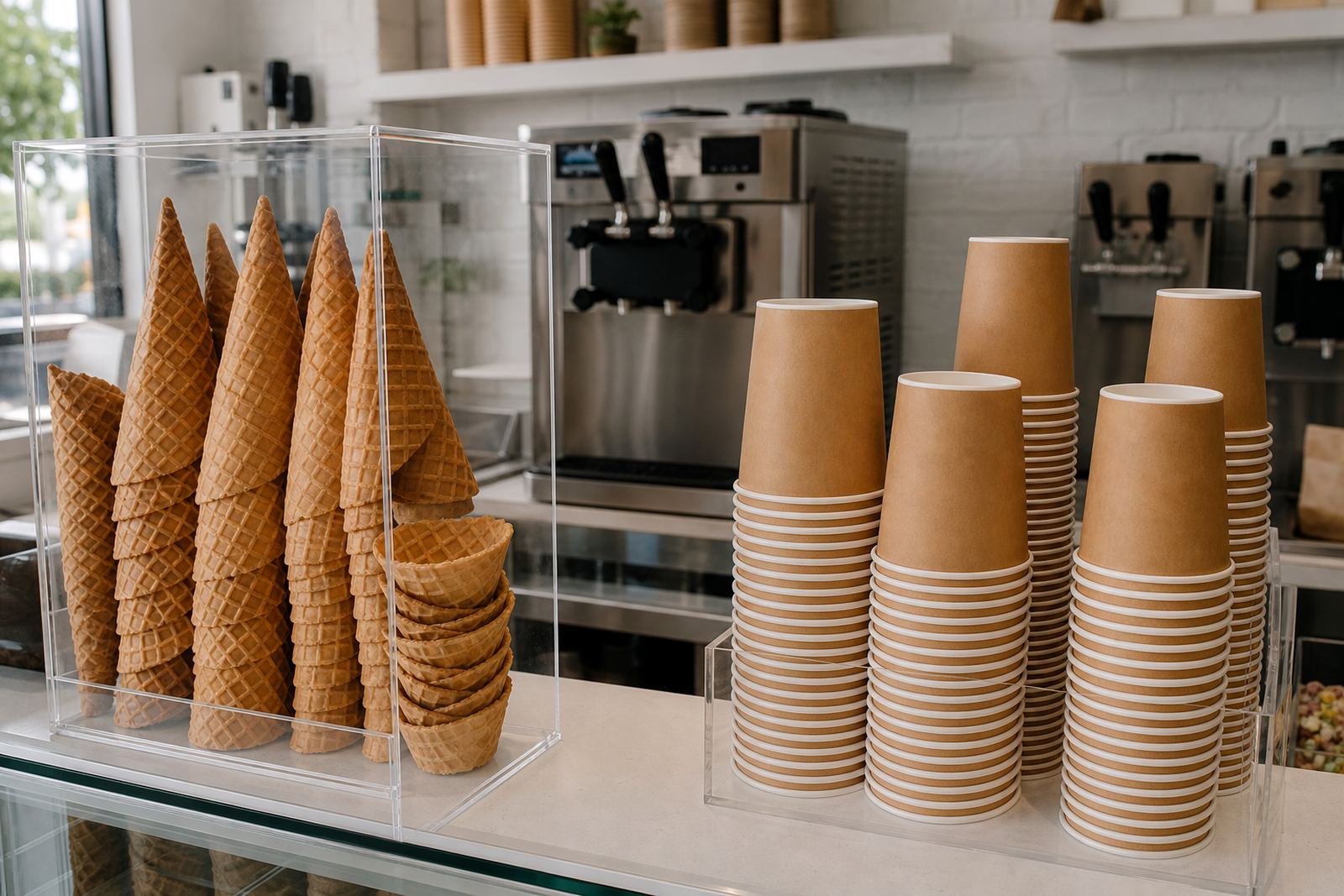
- Use containers and spoons that suit the portion size you want to sell.
- Place toppings in the order staff will use them, not by looks alone.
Train staff on hygiene and speed together
Frozen yoghurt only works well when staff can serve quickly and keep the area clean. That means more than a basic product demo. Operators should know when to top up mix, how to wipe spills, how to sanitise contact points and what to do if the machine starts running warm. If one person is not confident, the whole counter slows down and the product quality slips.
Training should cover the full shift, not only the first hour. A kiosk in Durban can look perfect at opening and then get messy by late afternoon when the rush starts. Staff need a routine for wiping handles, checking lids, rotating stock and dealing with drips before they reach the floor. Clear rules also help when you hire casual staff over holiday periods, which is when many dessert businesses make their best trade.
- Show every operator the correct start-up and shut-down routine.
- Assign one person to topping control and one to machine monitoring during busy periods.
- Set a cleaning schedule for counters, nozzles and surrounding surfaces.
- Keep sanitising supplies close to the machine, not stored in another room.
Budget for maintenance, not just the purchase
Adding frozen yoghurt is a capital decision, but the ongoing running costs matter just as much. You need to budget for regular servicing, seals and parts, deep cleaning, preventive maintenance and the odd breakdown repair. If the machine goes out of service on a Friday afternoon, you lose more than one day of sales. You can lose the trust of customers who expected the item to be there.
Site relocations and seasonal prep checks also matter if you trade at events or shift between premises. A mobile setup in Gqeberha or a seasonal beachside point may need different care from a fixed café counter. In Durban, salt air and humidity can be hard on equipment, so protect exposed parts and do not leave cleaning too late. A little maintenance done on time is cheaper than a major repair done in a hurry.
It also helps to keep a simple record of faults, cleaning dates and service visits. That makes it easier to spot repeated issues before they become expensive. When a business adds frozen yoghurt the right way, it should improve turnover without creating avoidable downtime and admin.