
Start with the machine around you, not just the machine
Before anyone switches on the unit, take a slow look at the whole serving point. Check that the machine has clear space around the vents, the floor is dry, and the power supply is stable. In Durban and other coastal towns, humidity can build up overnight, so it is worth checking for condensation on plugs, panels and nearby surfaces. That small habit helps prevent faults that start with damp air and end with a service call.
Look at the mix area too. The product should be chilled and within date, cones should be clean and dry, and sanitising supplies must be ready. If the counter opens at 9am in Springfield Park or a mall kiosk in Johannesburg, the team should not be searching for wipes while customers are already at the queue. A tidy start sets the pace for the shift, and it usually shows in the first few servings.
- Make sure the machine is level and has room for airflow
- Check that the power point, isolator and cable are in good condition
- Confirm that the mix, cones and cleaning cloths are on hand
- Remove any overnight water, spillages or dust around the base
Check the sanitation step before product goes in
Every opening routine should begin with sanitation. Even if the machine was cleaned properly the night before, a quick morning rinse and sanitation check helps keep the first product safe and presentable. This is especially important for cafes and restaurants that serve soft-serve after breakfast trade, because the machine may have sat idle for several hours.
Use the correct sanitising solution, follow the contact time, then rinse if required by your procedure. Do not guess the strength. Too weak and it is not doing the job, too strong and it can affect taste or create unnecessary residue. Lerato in customer support hears the same problem often from busy counters: someone is in a rush, mixes the solution by eye, then wonders why the first cone tastes off. A measured routine avoids that.
- Wash hands and put on clean gloves if your store uses them
- Sanitise all product contact parts as required by your process
- Check that drip trays, nozzles and splash guards are clean
- Wipe the outside surfaces and control area before switch-on
Inspect the mix before it reaches the hopper
Soft-serve and frozen yoghurt mix should be ready to pour, not half-prepared. Open the pack or container and check the smell, colour and texture first. If anything seems separated, watery or unusually thick, do not push it into the machine and hope for the best. A bad batch can waste product and slow down the opening rush.
For stores using a high turnover, mix calibration matters. The machine must dispense the texture the customer expects, whether it is a cone in Pietermaritzburg on a hot afternoon or a dessert cup in Cape Town on a busy weekend. If your product is too soft, it runs. Too firm, and the machine works harder than it should. A steady, well-mixed product is easier on the equipment and gives a better finish on the counter.
- Check expiry dates and batch details
- Stir or blend the mix according to the product instructions
- Confirm the mix is cold before loading
- Use the same measuring method every day
Power up and watch the first cycle closely
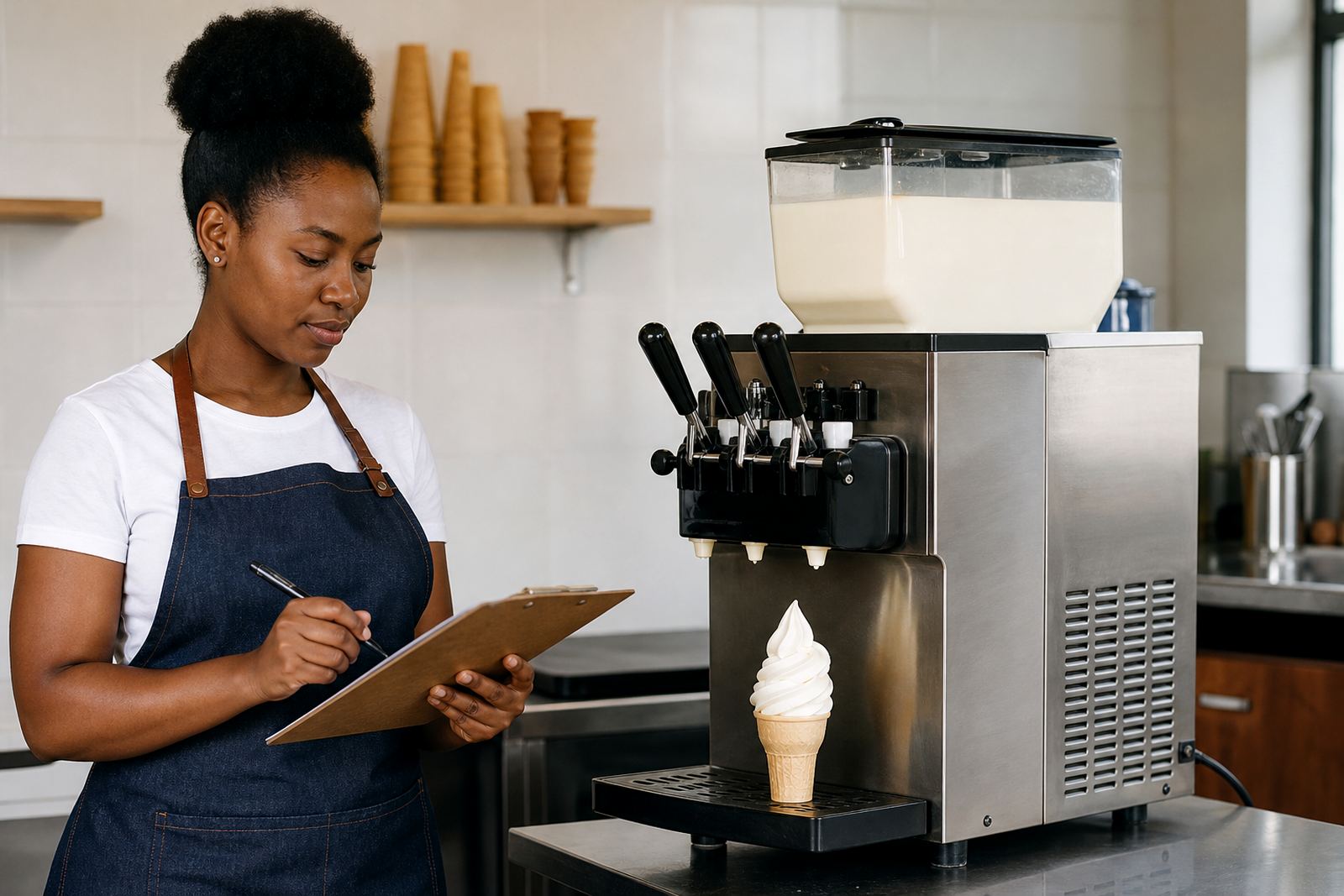
Once the sanitation and product checks are done, switch on the machine and stay nearby for the first cycle. Listen for unusual noise, check for error lights and make sure the compressor, beater and freezing action start as expected. On many sites, the first sign of a problem is not a breakdown, it is a delay or a sound that is slightly off. Catch it early and the rest of the day usually goes more smoothly.
In areas where load-shedding or brief power interruptions are part of trading life, a morning power check matters even more. After an outage, let the machine settle properly before loading product. If a unit has been moved overnight for a site relocation, or the store had maintenance work done, give it extra attention at start-up. Jason on technical calls sees that a rushed restart is one of the common causes of avoidable faults.
- Confirm lights, switches and displays are responding normally
- Listen for scraping, knocking or cycling that sounds different
- Check that product is freezing to the right consistency
- Keep the first few cones under observation before full service starts
Set the serving point up for fast, clean work
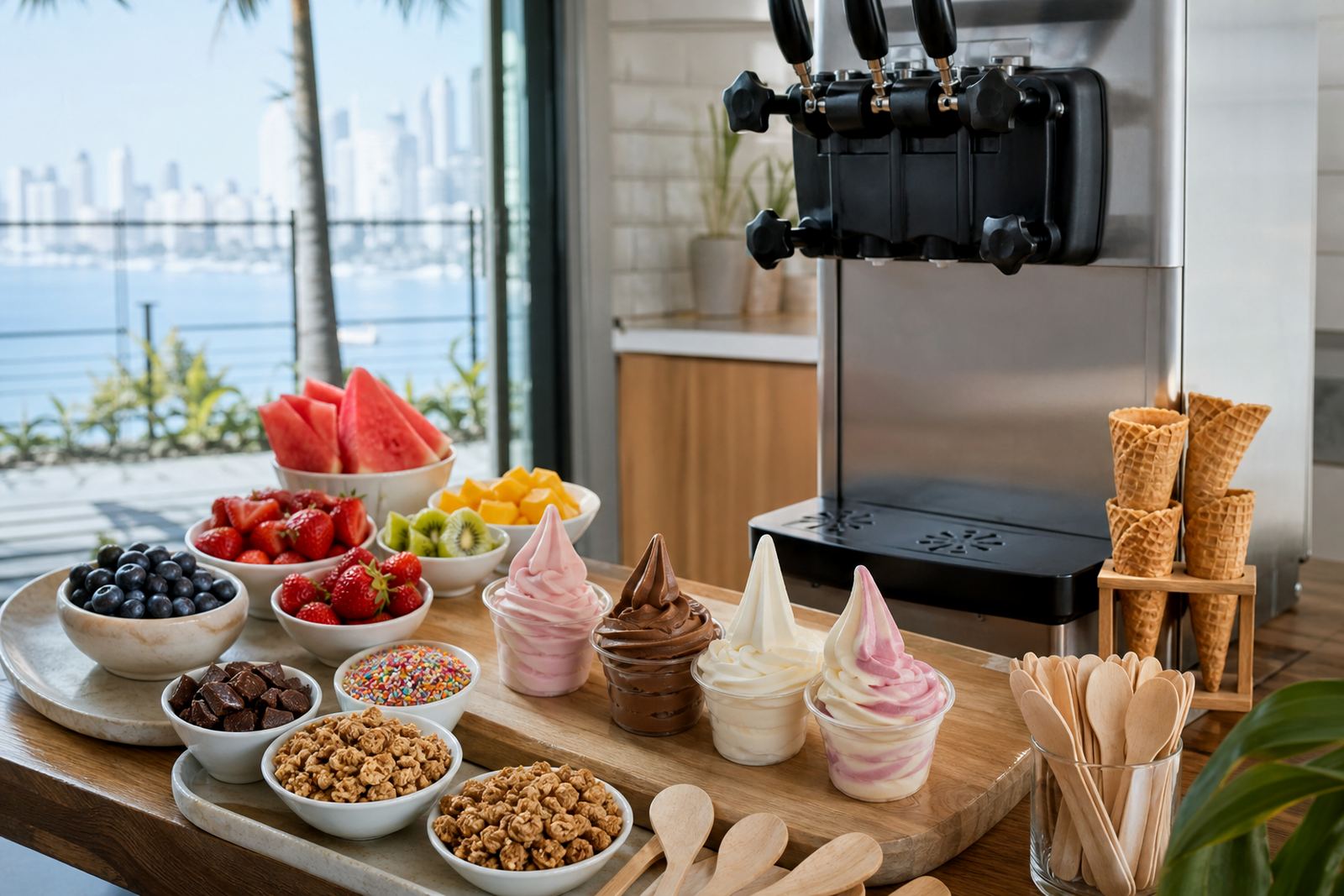
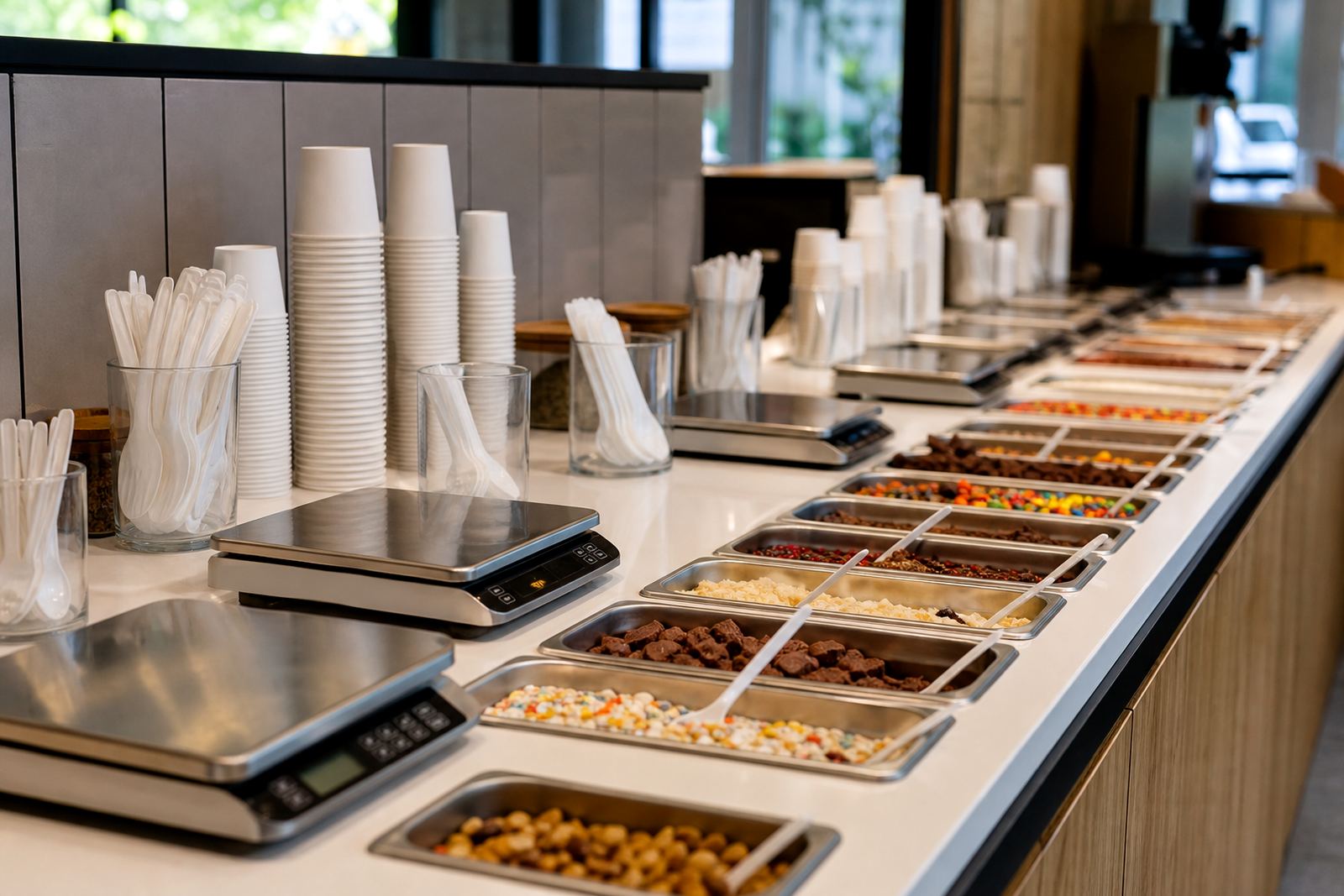
A tidy opening area helps the team serve faster and keeps the machine cleaner through the day. Place cones, cups, toppings and wipes within reach. Keep a small waste bin close to the machine so drips and used napkins do not pile up on the counter. If the shop is in a mall or kiosk with limited space, every extra movement slows the line and increases mess.
Staff should also know who is doing what before the first customer arrives. One person can handle the machine, another can prep orders or manage payment, and a third can watch the queue during a rush. That is not overkill, it is simple planning. When the team is clear on the morning pattern, the opening period feels calmer and customers are served quicker.
- Stock cones, cups, spoons and napkins before opening
- Keep cleaning cloths and sanitiser within easy reach
- Clear the counter of unrelated items
- Assign one person to monitor the first hour of trade
Close the gap between opening checks and daily maintenance
A daily opening checklist is not a replacement for preventive maintenance, but it does show early warning signs. If the machine needs frequent topping up, struggles to freeze, leaks at the seals or takes too long to come right, note it straight away. Small faults often grow quietly. A seal issue today can become a breakdown next week if nobody writes it down.
Keep a simple logbook or shift note with time, product batch, any odd sounds and the condition of the first servings. That record helps a technician diagnose the problem faster if a callout is needed. It also helps managers in Durban, Johannesburg or Gqeberha spot a pattern across busy weekends, public holidays and hotter months. Good records save time and reduce waste, plain and simple.
If your team is new, use the same checklist every day for at least the first few weeks. Consistency is what turns a checklist into a habit. Once the process is familiar, the opening routine takes only a few minutes and can prevent a lot of avoidable stress later in the day.