
Start With The Right Counter Layout
The counter is more than a place to stand a machine. It has to guide the customer flow from cup selection to topping choice to payment, without bottlenecks. In busy spots like Springfield Park, Umhlanga or a mall kiosk in Johannesburg, the best layout keeps people moving and stops queues from backing up into the main serving area.
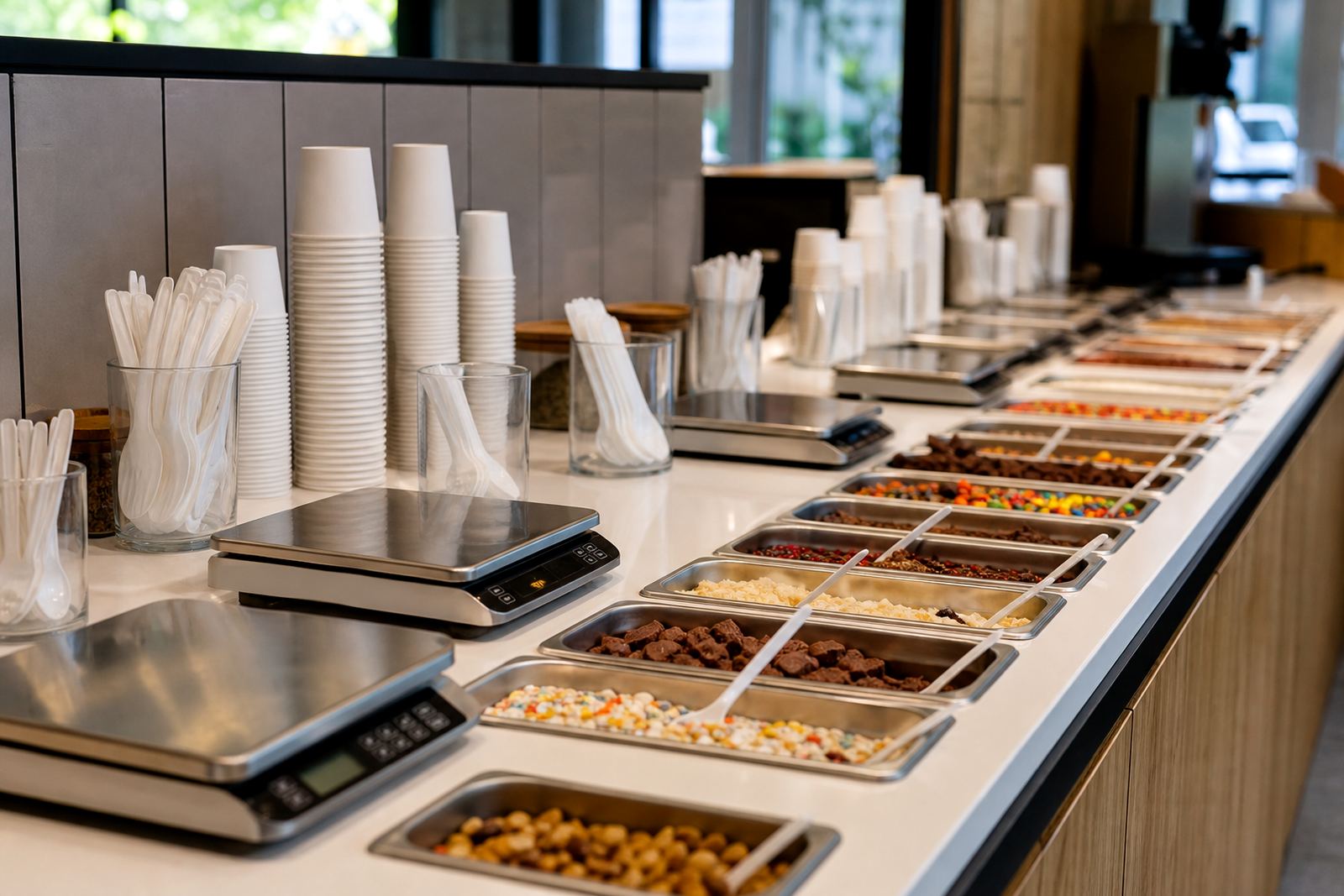
Leave enough space around the unit for staff to step in quickly, especially when you are topping up mix, clearing spills or changing a canister. A self-serve section works best when the equipment, toppings and waste bin all sit within easy reach. If the customer has to stretch across the counter or ask for help with every step, the service slows down and the appeal drops.
Think about the surface as well. It should handle frequent wiping, sugar spills and moisture from chilled containers. In coastal towns like Durban and Gqeberha, humidity can make surfaces slick and packaging soft, so the counter needs practical finishes and clear drainage for any melted product or cleaning water.
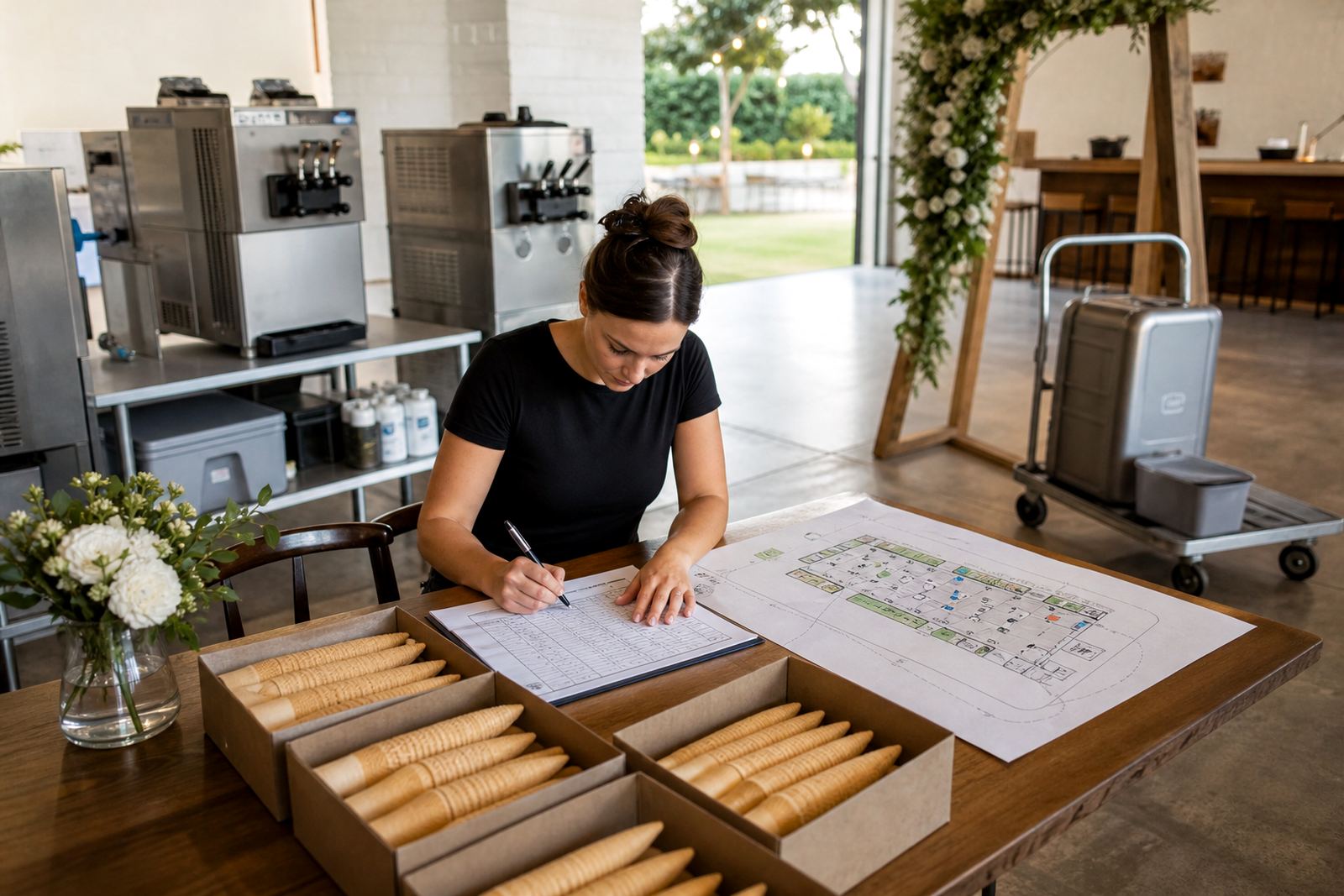
Choose Capacity Based On Real Foot Traffic
A common mistake is buying a machine for peak dreams instead of peak trading reality. A kiosk near a school, cinema or promenade may need a different output to a restaurant that serves frozen yoghurt mainly after lunch and supper. Daily volume, serving speed and peak hour demand should decide the size of the setup.
Ask how many cups you expect to sell in a busy hour, not just across the day. If the machine is undersized, the product can soften too quickly or run low during the rush. If it is oversized, power use climbs and stock movement becomes harder to manage. A good fit keeps the product consistent and avoids wasted mix.
- Match the machine output to your busiest hour, not your quietest.
- Keep enough chilled storage for mix, cones and toppings near the counter.
- Allow for school holidays, pay weekends and December trade.
- Check if the venue can handle the electrical load before installation.
For larger venues in Pretoria or Cape Town, a second machine or a separate topping station can work better than trying to push one counter beyond its natural capacity.
Plan For Power, Heat And Load-Shedding
Frozen yoghurt equipment depends on stable power and sensible room temperatures. Heat from ovens, grills or direct sun can affect performance, especially if the counter sits near a window or in a partially open kiosk. In South Africa, load-shedding also needs to be part of the plan from day one, because a frozen dessert counter cannot rely on perfect supply.
Make sure the site has proper electrical capacity and that the machine is installed where airflow is decent. Poor ventilation can make the system work harder and increase wear. If the venue uses backup power, confirm that the changeover is smooth and that the machine can recover without forcing product quality down. When the power flicks on and off, staff need a clear restart routine so the counter does not lose a whole service period.
It also helps to keep the product area away from the hottest parts of the kitchen. Even a small rise in ambient temperature can change dispensing consistency and make the finish less appealing. A little planning here saves a lot of frustration later.
Keep The Menu Short But Well Managed
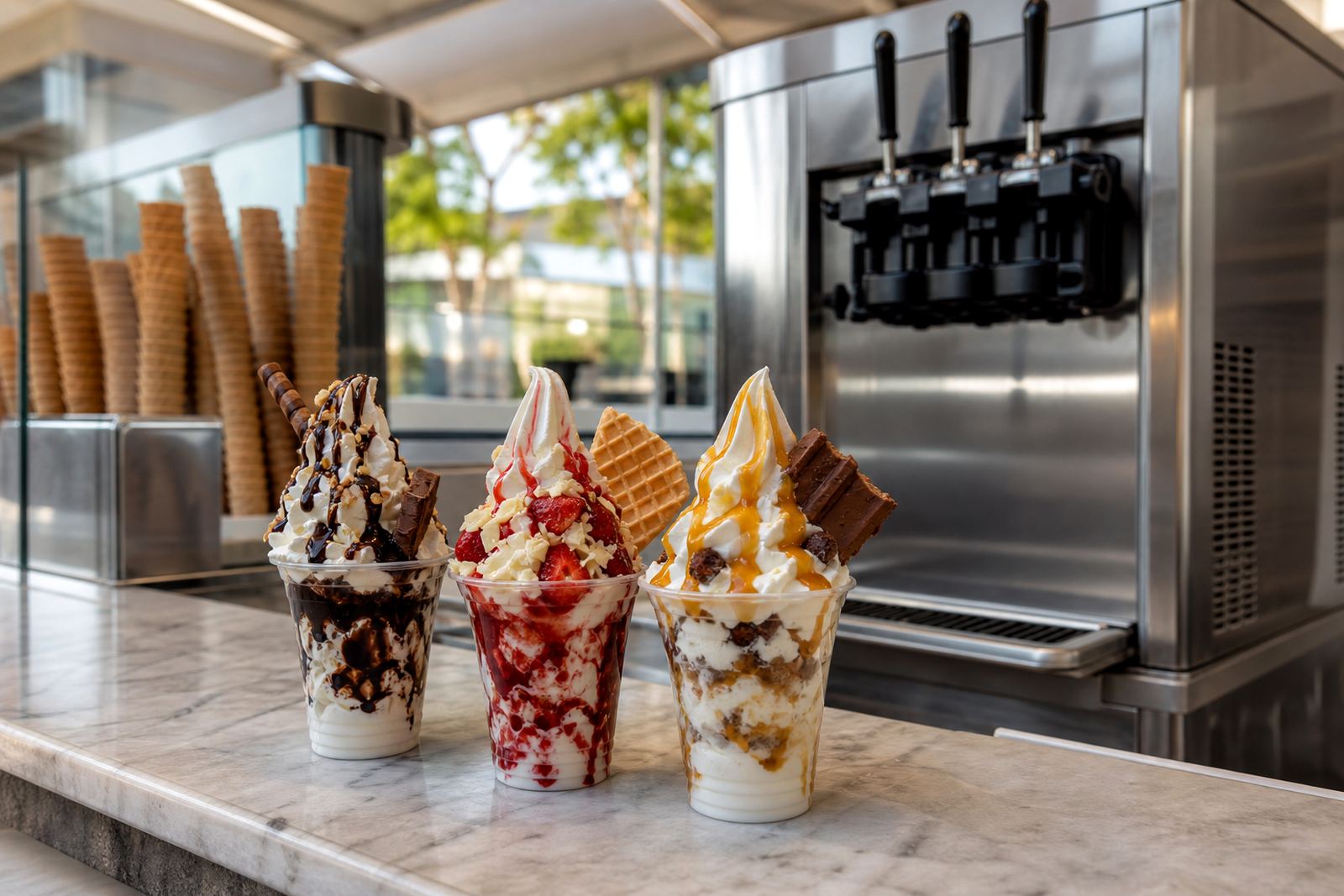
A self-serve counter does not need a long list to feel complete. In fact, too many options can slow the line and create waste. Start with a few core mix flavours, a clean cone offer and a topping range that turns stock quickly. The best mix is one that matches the people walking through the door every day, not a long list that looks impressive but moves slowly.
For cafes and restaurants, the sweet spot is usually a simple choice set that is easy to explain to first-time customers. That includes a clear base price, a fair topping rule and obvious portion cues. If people understand what they are paying for, they serve themselves faster and the till moves without confusion.
- Use flavour names customers recognise immediately.
- Keep topping jars labelled and easy to reach.
- Separate crunchy toppings from soft ones so they stay fresh.
- Rotate slower items before they start to stale or clump.
In a busy Durban location, for example, a short summer menu with two or three flavours and a neat topping bar often performs better than a crowded display. Simpler service also makes stock control easier for the person opening the counter each morning.
Cleaning And Hygiene Cannot Be Treated As Afterthoughts
A self-serve counter lives or dies on cleanliness. Customers notice sticky handles, drips on the drip tray and dust near the topping jars. More importantly, regular cleaning protects the product and helps the team meet local health requirements. A good routine should cover opening checks, mid-shift wipe downs and full end-of-day cleaning.
Staff need to know which parts are cleaned between services and which parts require deeper attention after trading. Mix lines, seals, nozzles and contact surfaces should be checked properly, not only when something goes wrong. If the venue runs seven days a week, this discipline matters even more because residue builds up quickly under pressure.
- Wipe the counter before opening and again during the shift.
- Empty waste and rinse spill areas before they become sticky.
- Sanitise high-touch points such as handles and scoops.
- Schedule a deep clean before school holidays and busy season weekends.
In humid coastal areas, moisture can linger longer than expected so the end-of-day clean has to be thorough. A small lapse can show up as odour, inconsistent texture or a poor customer impression the next morning.
Train Staff To Serve Consistently
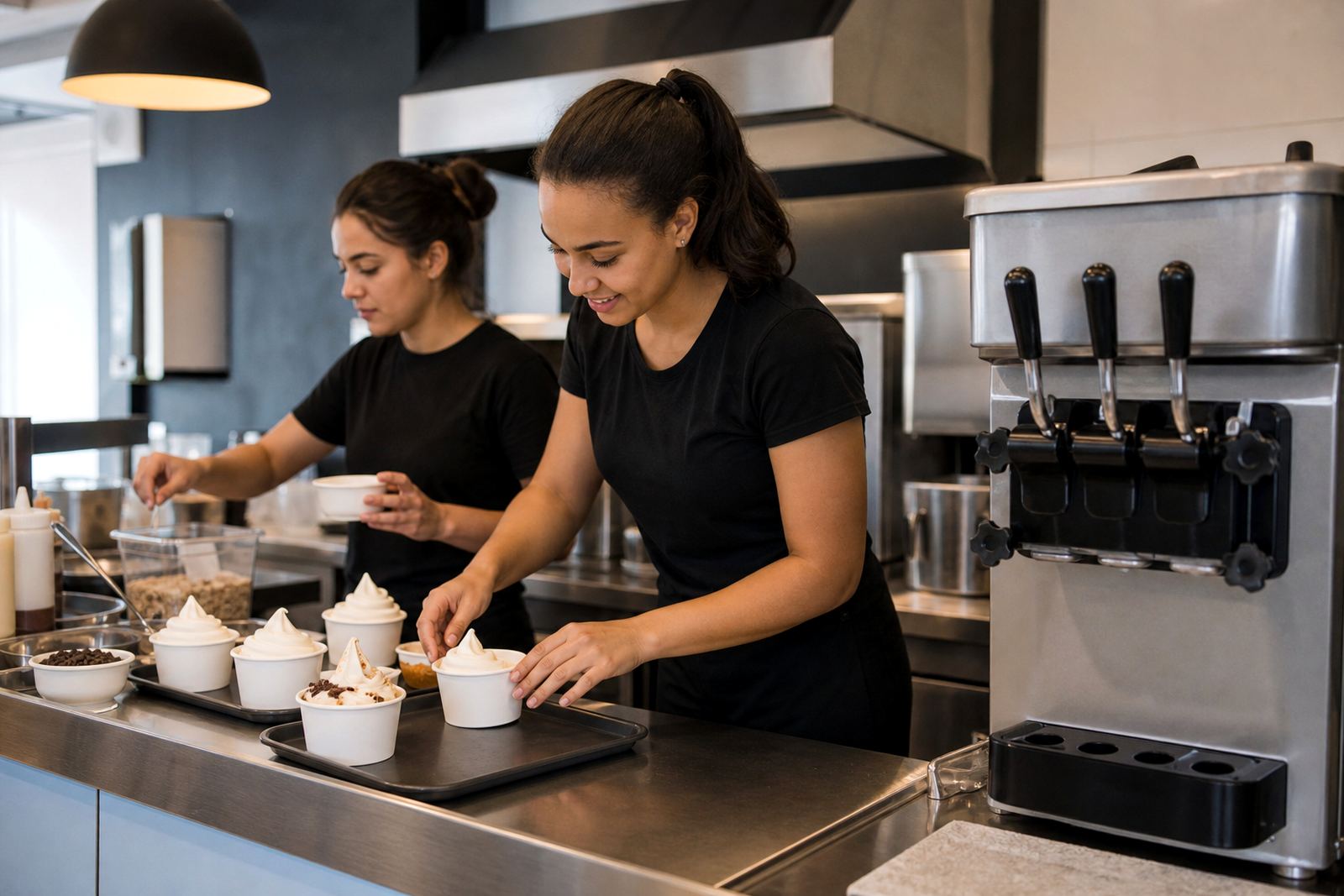
Even the best equipment will struggle if the operator is unsure. A self-serve counter needs practical staff training, not just a quick handover. The team should know how to start up the unit, check product texture, handle topping refills and respond when the machine gives trouble during a rush.
Training should also cover customer flow. Staff must be able to guide first-time users, explain portioning and step in when someone spills or overfills a cup. That matters in locations like Pietermaritzburg or Gqeberha where family trade can be strong on weekends and younger customers may need more guidance.
Good training includes the unglamorous parts too: what to do after a power interruption, how to log a fault and when to stop service instead of forcing the machine to run badly. A calm team protects the product and the day’s takings. It also cuts down on avoidable callouts.
When a venue treats the counter as a proper sales station rather than a side add-on, the results are usually better. The service feels smoother, the product stays consistent and customers come back because they know what to expect.