
Start with one person, one job during the rush
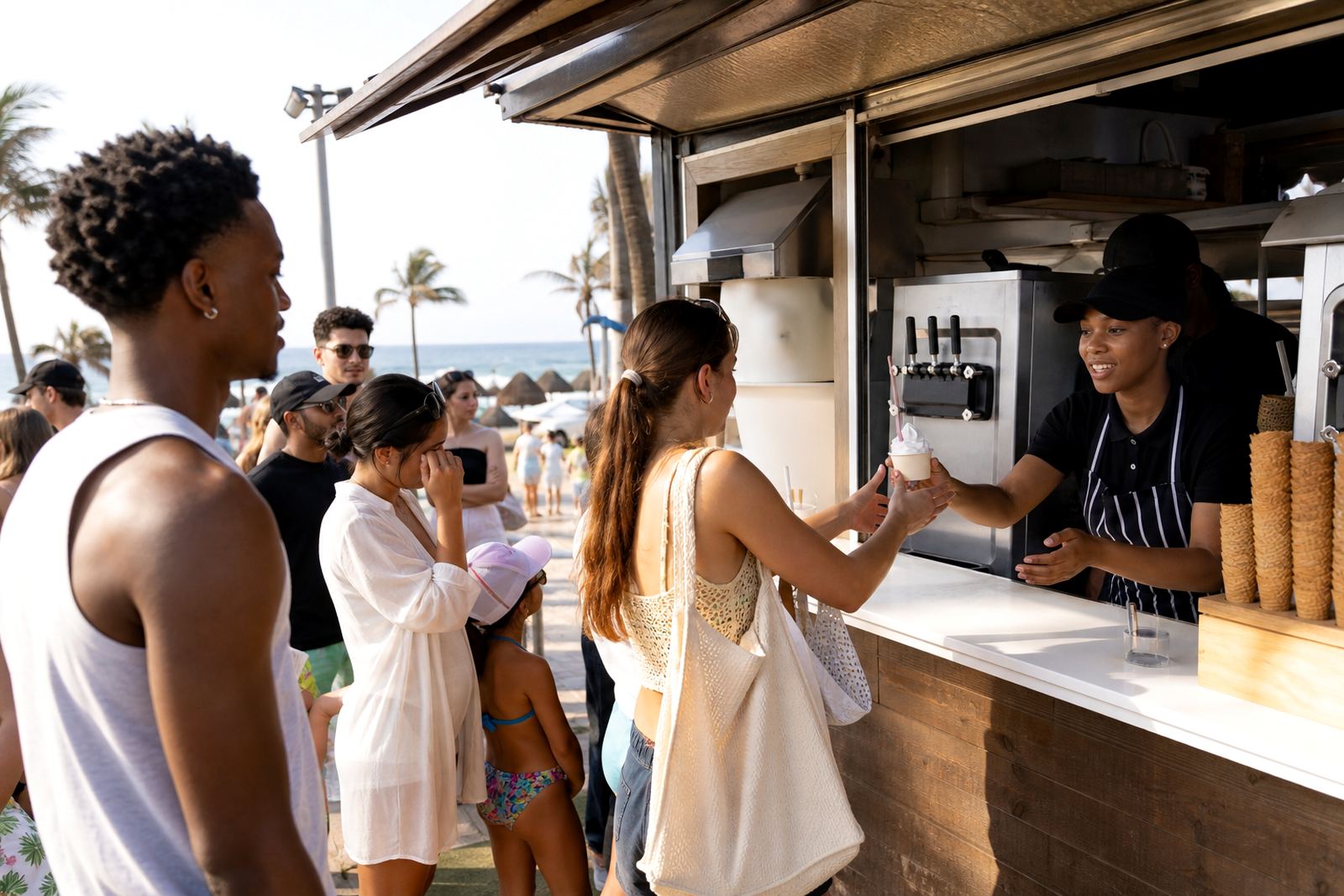
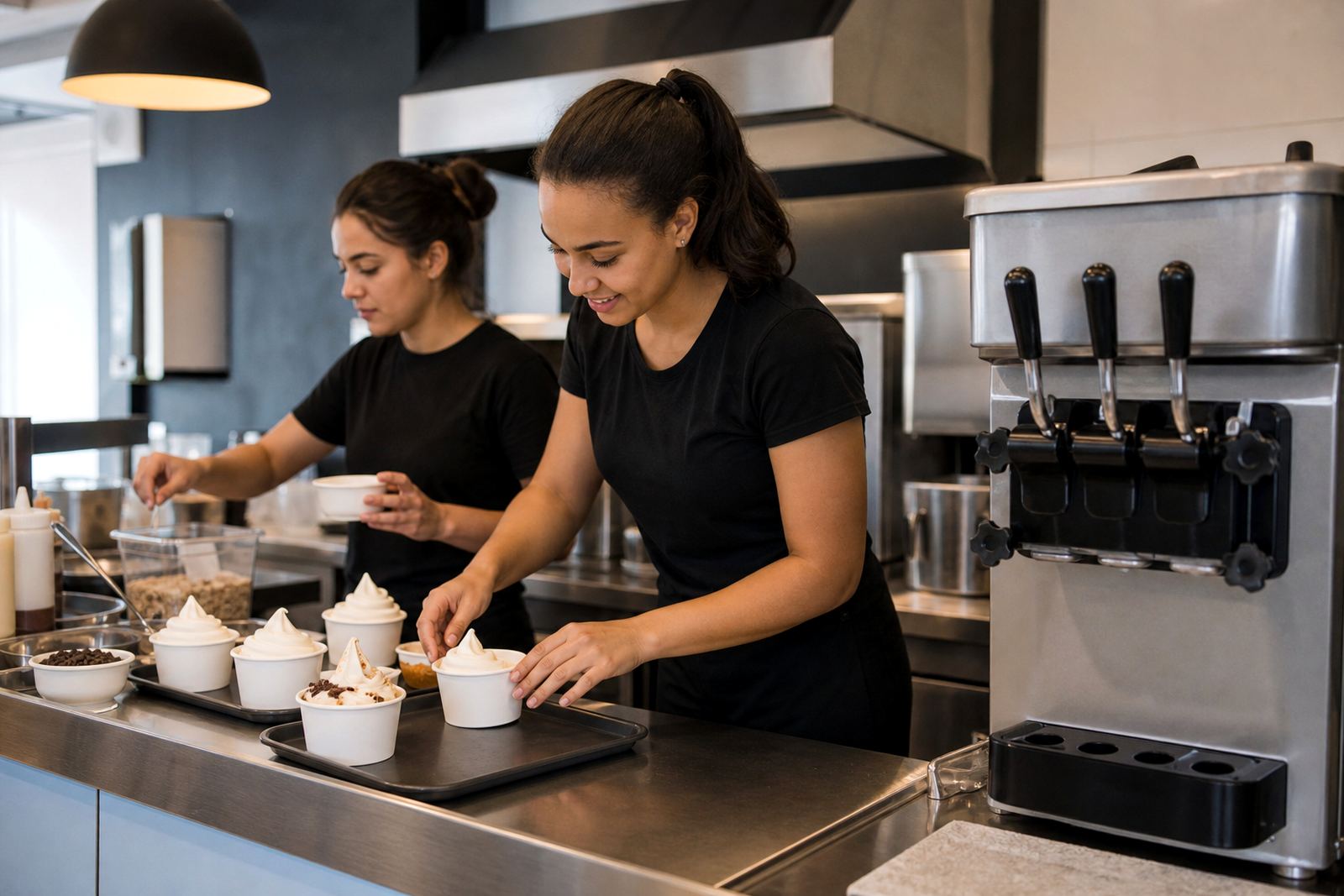
Peak hour service works best when everyone knows their lane. In a cafe or kiosk, the biggest delay is often not the machine but staff switching between tasks while customers are waiting. Assign one person to order taking, one to serving, one to stock top-ups and one to cash handling if the volume justifies it. If the team is small, it is better to have fewer roles done properly than to have everyone trying to do everything.
For soft-serve and frozen yoghurt service, this matters even more because the product has a short serving window. A cone that sits too long starts to lose shape, and a cup that is not finished quickly can slow the next order. Keep the person on the machine focused on portion control, topping off product and calling out when the mix is running low.
- Place one staff member nearest the machine during busy periods.
- Keep payment and packing duties away from the serving point if possible.
- Use simple hand signals or a short call system for stock refills.
- Rotate staff every 45 to 60 minutes if the queue is long and the heat is high.
Prep the machine before the queue builds
The best rush periods are won before the first customer arrives. If your machine has not been checked, cleaned and calibrated, you will lose time once the line starts moving. Check mix levels, seals, drip trays, air filters and temperature settings before opening. In Durban, where humidity can be high, product consistency can shift quickly if the room is warm or the ventilation is poor.
For branches that rely on frozen yoghurt or soft-serve through a long afternoon, startup commissioning and season prep checks make a real difference. Set up before the main rush, not during it. If load-shedding has affected the store, make sure the unit has had enough time to recover to the correct holding temperature before trading resumes.
- Prime the machine early enough to get stable product flow.
- Keep extra mix chilled and measured for quick refill.
- Check that cones, spoons and cups are within arm’s reach.
- Test that the first serve is clean, even and correctly portioned.
Train for speed without cutting corners
Fast service is useful only if the product is right. Staff training should cover the basics of portion size, hygienic handling, topping order and how to keep the serving area tidy during a rush. A new employee may be able to take money quickly but still slow down the line if they do not know how to fill a cone neatly or identify a mix issue early.
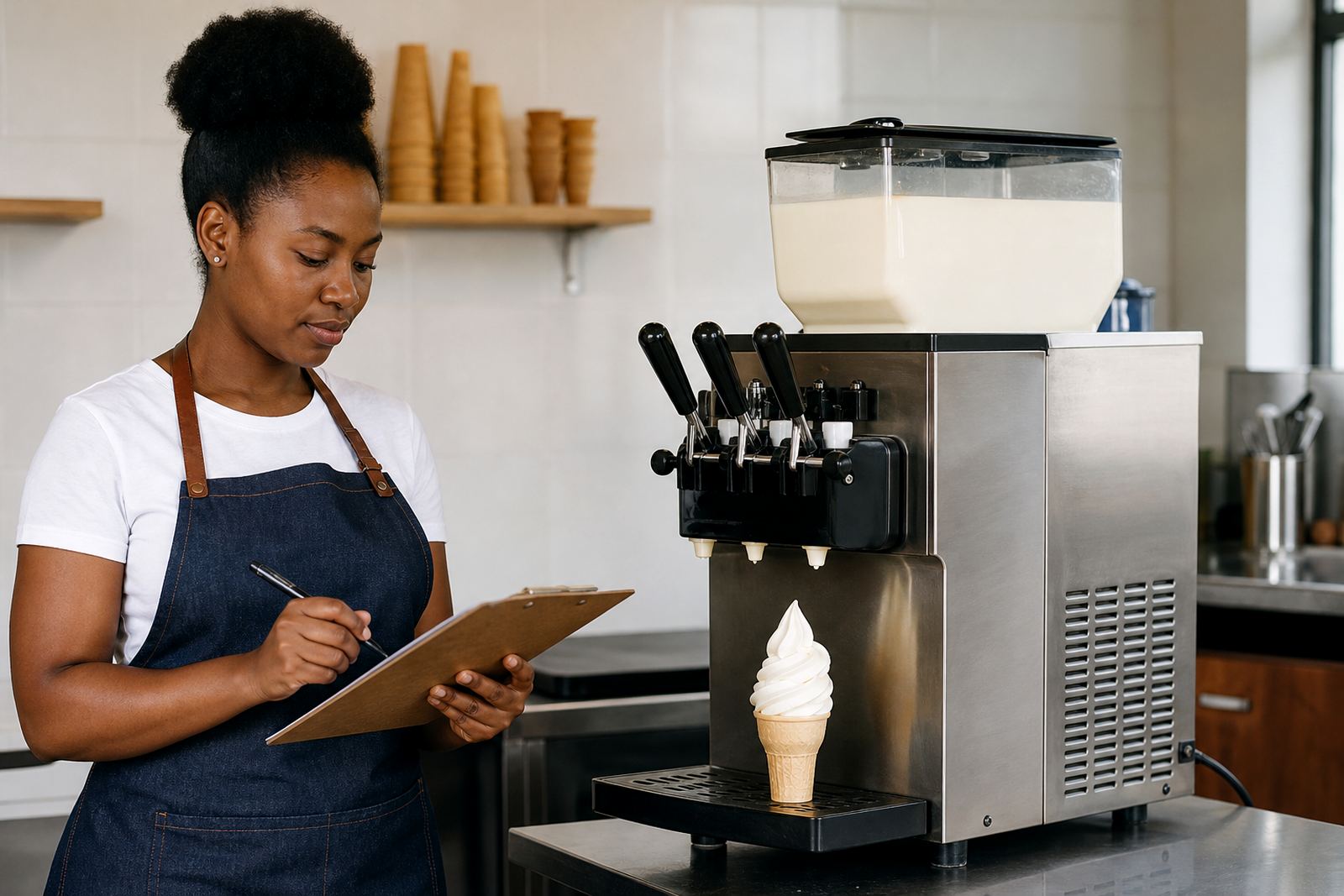
Operator training should also include what to do when the machine behaves differently, such as softer output, uneven flow or a small leak at the seal. A trained operator can spot a small issue before it becomes a breakdown repair. That saves time, money and a lot of frustrated customers at 12:30 on a Friday.
- Show staff the correct fill level for cups and cones.
- Teach a simple cleaning routine for spills and sticky surfaces.
- Explain when to call for phone support instead of guessing.
- Make sure every shift knows where sanitising supplies are kept.
Build a rush kit that lives near the counter
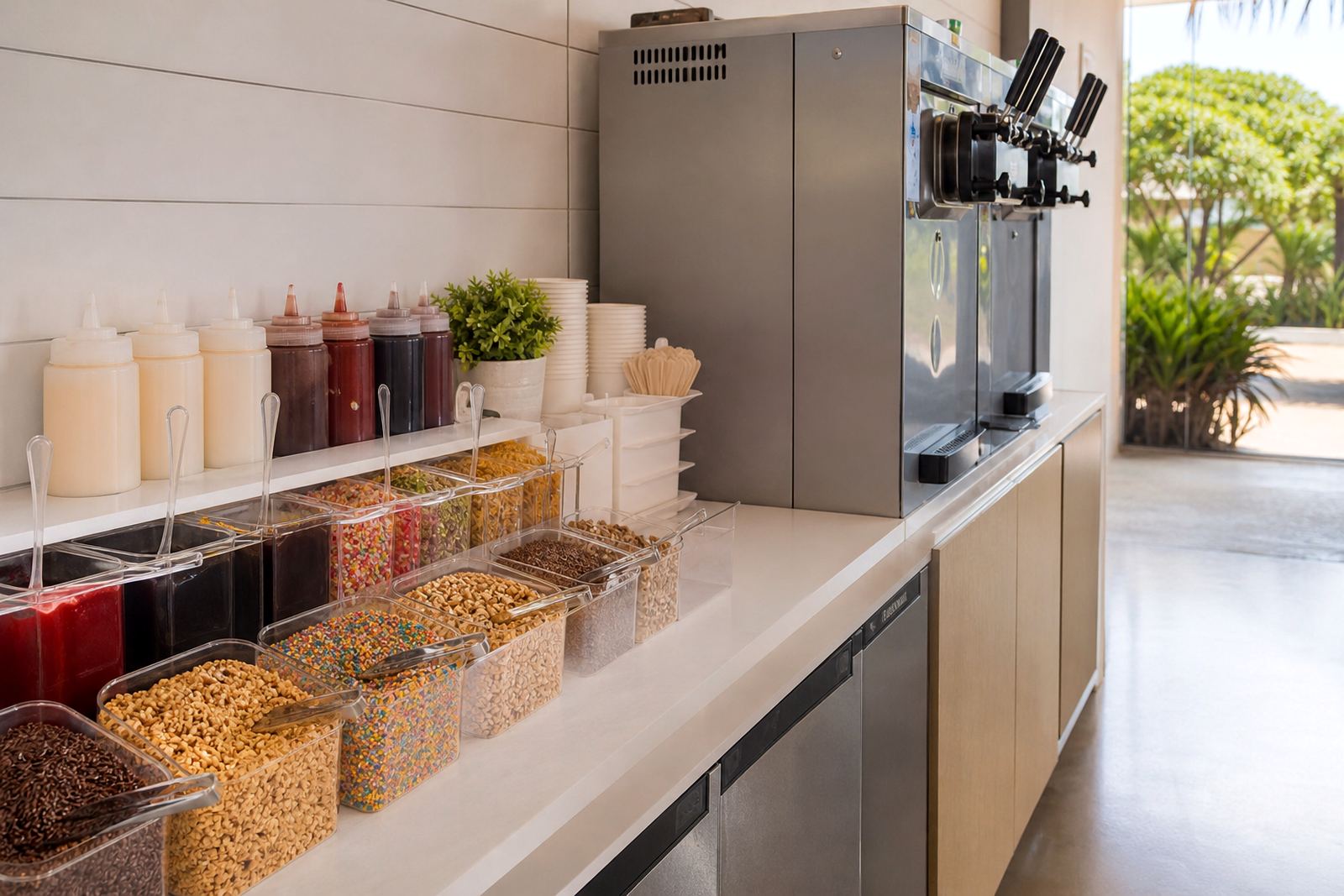
Speed depends on easy access. A rush kit is simply the items your team uses most during busy periods, kept in one spot and checked daily. This can include cones, napkins, cups, toppings, cleaning cloths, gloves and spare spoons. If the items are spread across the kitchen or stored in a back room, service slows down the moment the queue grows.
At a kiosk in Springfield Park or a restaurant in Pietermaritzburg, the layout may be tight. In those spaces, neat storage is not a luxury, it is the difference between a smooth rush and a bottleneck. Keep the station organised so a staff member can restock without crossing in front of customers or blocking the till.
- Store dry goods in sealed containers to protect them from dust and moisture.
- Keep the top three most used items at waist height.
- Use labels for flavour mixes, cones and cleaning stock.
- Restock before the stock looks low, not after it runs out.
Plan staffing around local trading patterns
There is no single rush pattern across South Africa. A Durban beachfront kiosk can peak at different times from a Johannesburg mall or a Cape Town promenade shop. School holidays, lunch breaks, weekend foot traffic and weather all change your labour needs. On hot days, dessert sales can surge very quickly and then drop just as fast once the sun goes down or the rain starts.
Use your own sales patterns to decide when to add a second server or bring in part time help. If your team is always stretched between 1 pm and 3 pm, do not wait for a complaint before changing the roster. The point is to match people to demand, not to keep the same staffing plan every day because it worked in winter.
- Track sales by hour for at least four weeks.
- Note hot days, rain days and school holiday spikes.
- Schedule stronger teams for your known pressure windows.
- Keep one trained relief person available for sudden call-ins.
Use maintenance to protect your peak hour plan
A machine that is serviced regularly helps the team stay calm when things get busy. Preventive maintenance, deep clean service and seal and parts work are not only technical tasks, they are staffing tools. If the unit is prone to delays, the team has to compensate by working harder and the queue gets longer. That is when mistakes happen and customer service starts to slip.
For sites across Durban, Johannesburg, Pretoria, Cape Town and Gqeberha, seasonal maintenance should be part of the trading calendar. Before a long holiday period or a hot spell, check for wear, test the output and make sure the machine is ready for continuous use. A few hours spent on care can save a whole weekend of weak service. It also keeps staff from having to improvise under pressure, which is never ideal.
SnoCream supports cafes, kiosks and restaurants with machine installation, mix calibration, deep cleaning, breakdown repairs, site relocations and sanitising supplies. When the equipment is set up properly and the team knows their roles, peak hour becomes manageable instead of chaotic.