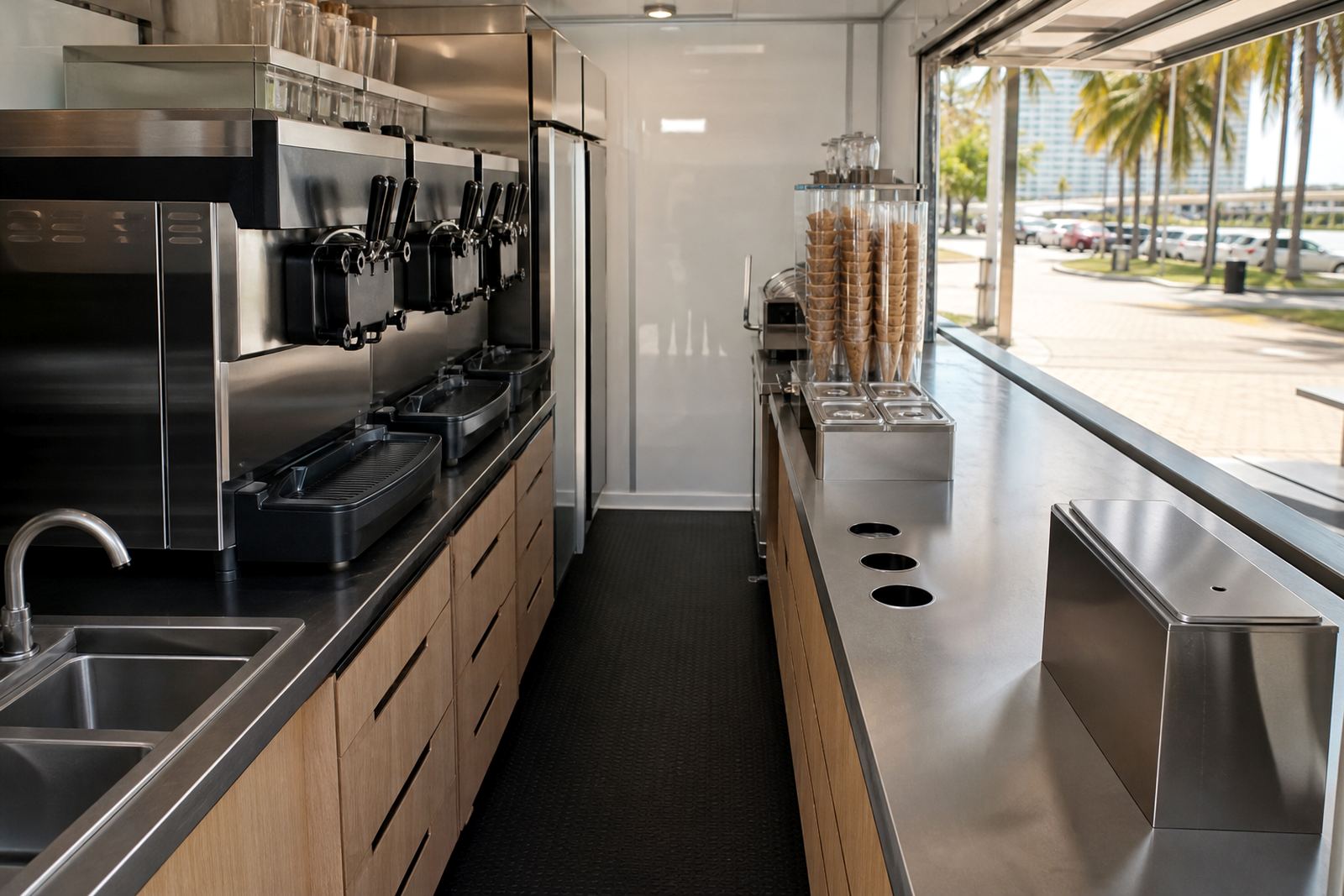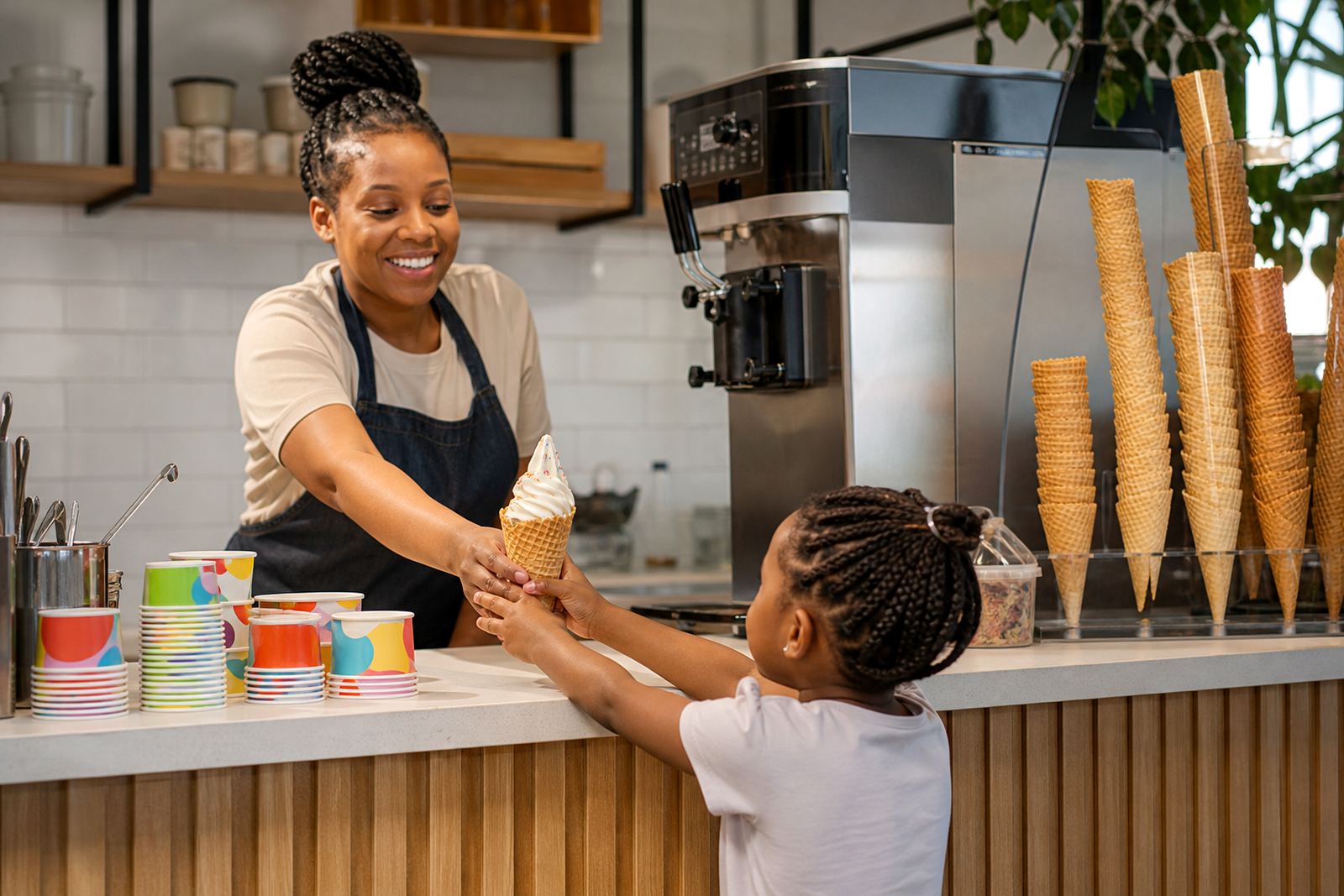

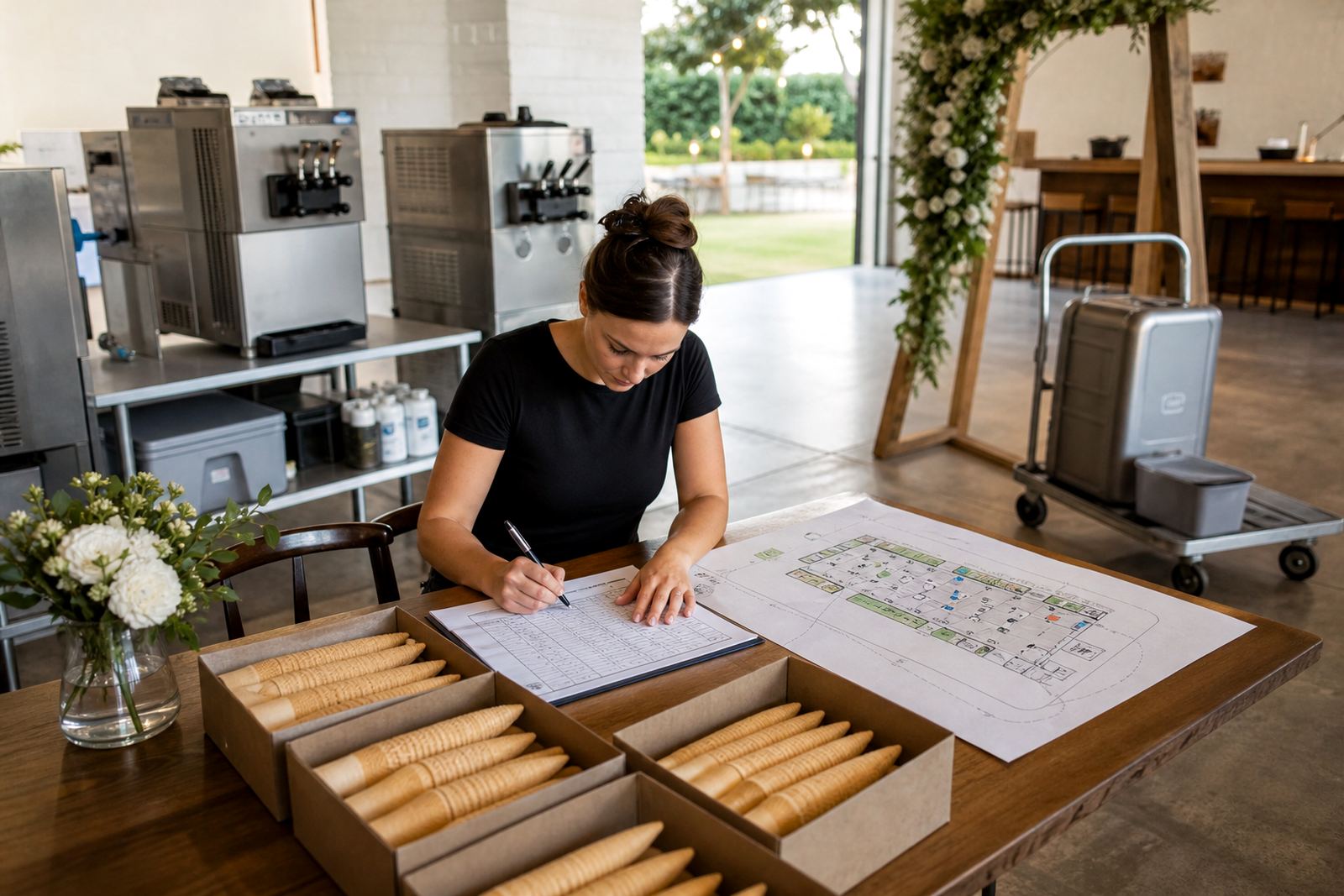
Start With the Event Format, Not the Machine
Before you book anything, map the event properly. A school fundraiser in Pietermaritzburg, a wedding in Umhlanga, and a busy corporate day in Durban all need different output, different staffing and different serving plans. The machine should match the crowd size and the service window, not just the menu idea.
Ask how many servings you need per hour, whether the dessert is a main attraction or just one option, and how long the equipment must run without long breaks. For a short event, consistency matters more than variety. If the queue is expected to build quickly, one well planned station is better than two underused units.
- Estimate total guests and the busiest serving period.
- Check if dessert is served once, or across several time slots.
- Decide whether you need one flavour, two flavours, or a swirl option.
- Confirm who is running the station and who is restocking cones and mix.
Check Power, Water and the Venue Rules Early
Event equipment can be simple to use, but it still needs the right site conditions. In many venues across KwaZulu-Natal and Gauteng, the main issue is not the machine itself, but the plug point, cable run and backup power. Load-shedding can also affect timing, so it helps to know whether the venue has generator support or a stable alternative supply.
Some locations have strict rules about water use, drainage, access times and where food service can happen. If your event is in a function room, courtyard or marquee, check whether the surface is level and whether there is enough ventilation. Coastal humidity in Durban can also affect serving conditions, so plan for covered storage and a dry prep area.
- Confirm the available power supply and plug type before delivery.
- Ask where the machine will stand and whether the floor is level.
- Check if the venue allows food prep, cleaning water and waste disposal on site.
- Plan for shade or indoor placement if the weather is warm or damp.
Match the Mix, Cones and Stock to Guest Numbers
Short-term hire works best when the consumables are counted carefully. A machine can be perfectly suited to the event, but if the mix runs out or you have too few cones, service will slow down fast. For a children’s party, staff often underestimate how many second helpings will be requested. For a corporate function, the issue is usually timing because guests arrive in waves.
It helps to agree on a serving estimate per person and then add a small buffer. Also decide whether you need standard cones, wafer cones, cups or a mix of serving options. If your guests are likely to stand and mingle, cups may be easier than cones. If the event is outdoors, keep stock covered and away from direct sun so it stays in good condition.
- Count the number of expected servings, then add extra for repeat orders.
- Choose the serving style that suits the event layout.
- Keep mix, cones and toppings close to the machine to avoid delays.
- Store supplies in a cool, dry place before service starts.
Plan the Staff Side So Service Stays Smooth
Even a reliable machine needs a clear operator. For small events, one trained person may be enough if the queue is light and the layout is simple. For busier functions, it is better to have one person handling the machine and another managing orders, payments or toppings. That split keeps the service moving and reduces mistakes.
Training should cover startup, basic operation, cleaning between batches, and what to do if the machine signals a fault. At events, small issues can spread quickly if no one knows how to respond. A simple checklist at the station also helps. It should show how to load mix, where to place cones, when to top up supplies, and who to call if something needs attention.
- Assign one person to operation and one to guest flow where possible.
- Keep a printed checklist at the station for quick reference.
- Make sure the team knows the serving order and hygiene steps.
- Have one contact person responsible for decisions on the day.
Build in Time for Setup, Testing and Breakdown
Short-term hire is never just about the hours the public sees. You need time for delivery, positioning, setup, startup commissioning and a quick test run before guests arrive. If the event starts at 10:00, the last thing you want is to be still adjusting the machine at 09:45. Build the schedule backwards and allow for traffic, venue access delays and load-in rules.
After the event, there should also be enough time for a proper deep clean and safe pack down. That is especially important if the machine has been used hard throughout the day. If the event is in a restaurant or kiosk setting in Durban, Johannesburg or Cape Town, ask in advance whether the unit will be moved the same day or collected later. Site relocations need planning, not a rushed handover.
A practical event timeline usually includes:
- Delivery and placement before guests arrive.
- Startup check and product test before service begins.
- Top-up and restock times during the event.
- Breakdown and cleaning after service closes.
A Durban Example: Beachfront Trade Day With Tight Timing
Take a beachfront trade day in Durban as an example. The organiser expects steady foot traffic from late morning to mid-afternoon, with some gaps and then a rush after lunch. The venue has limited parking, shared access and warm weather. In that case, the plan needs to be simple: one machine, enough mix for the full day, covered stock, and a trained operator who can manage the station without constant supervision.
The organiser should also confirm where the machine can be plugged in, who has access to the storage room, and whether the site allows sanitising supplies to be kept on hand. If the day runs longer than planned, there should be a backup quantity of mix and cones. Small details like this prevent service from stalling when the crowd picks up.
That is the kind of practical preparation that makes a short-term hire worth it. You do not need overcomplicated equipment. You need the right capacity, the right support, and a clean handover from setup to service to pack down.