1. Put the serving point where the queue naturally forms
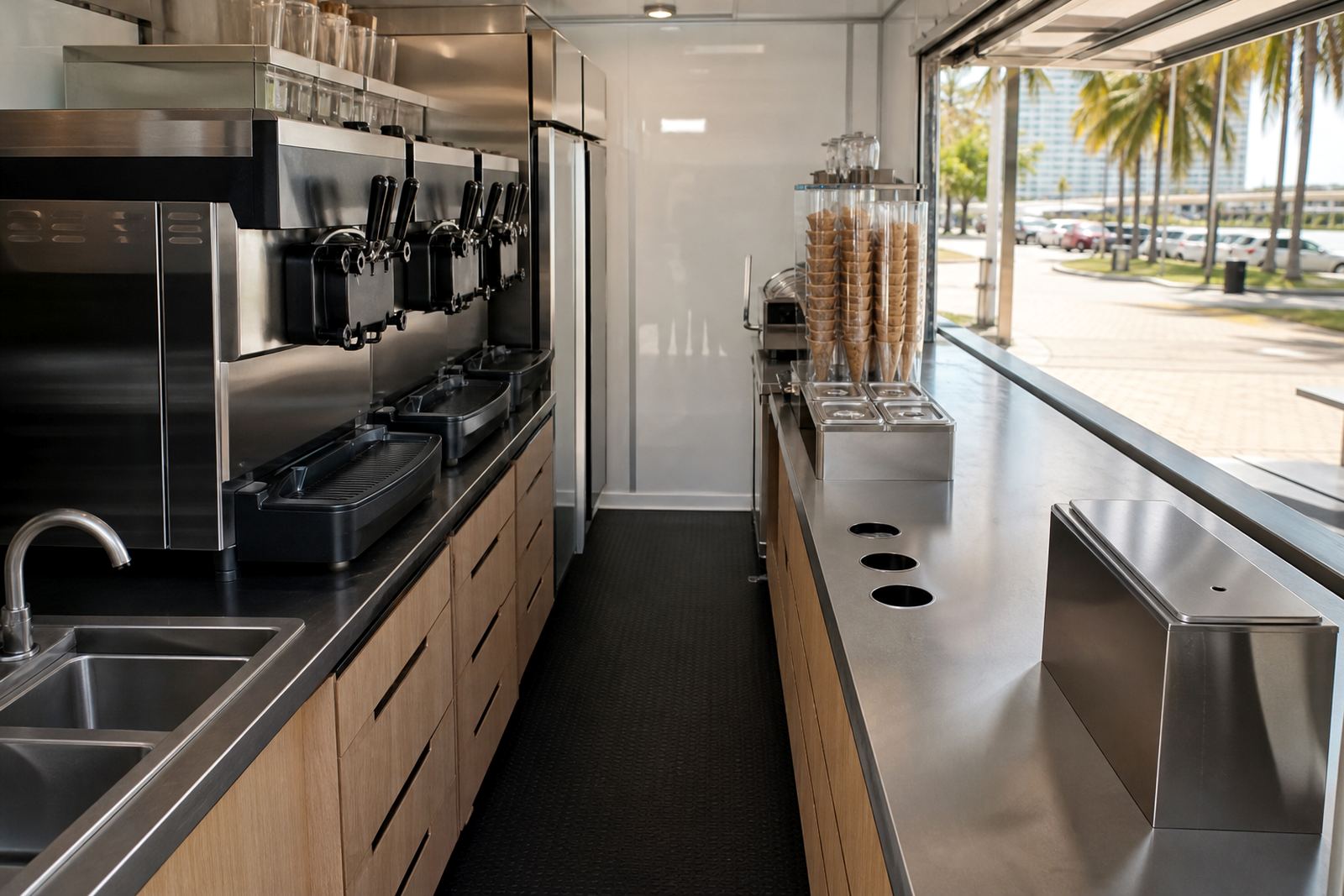
In a kiosk, the biggest layout mistake is forcing staff to turn, reach and walk for every order. The serving point should face the direction people already approach from, whether that is a mall passage in Durban, a forecourt in Pretoria or a beachfront promenade in Gqeberha. If customers can see the product, the mix and the cone stack straight away, the sale starts faster and the line stays calmer.
Keep the till, topping area and handing-over point within one short step of each other. That way one person can take payment, prepare the cone and pass it over without crossing behind another worker. In peak hours, that kind of flow matters more than adding extra fittings.
- Face the counter to foot traffic, not into a wall or corner.
- Leave space for one customer to pay and the next to wait without blocking the walkway.
- Keep the most popular flavour closest to the service handover point.
2. Give the machine breathing room for heat, cleaning and power checks
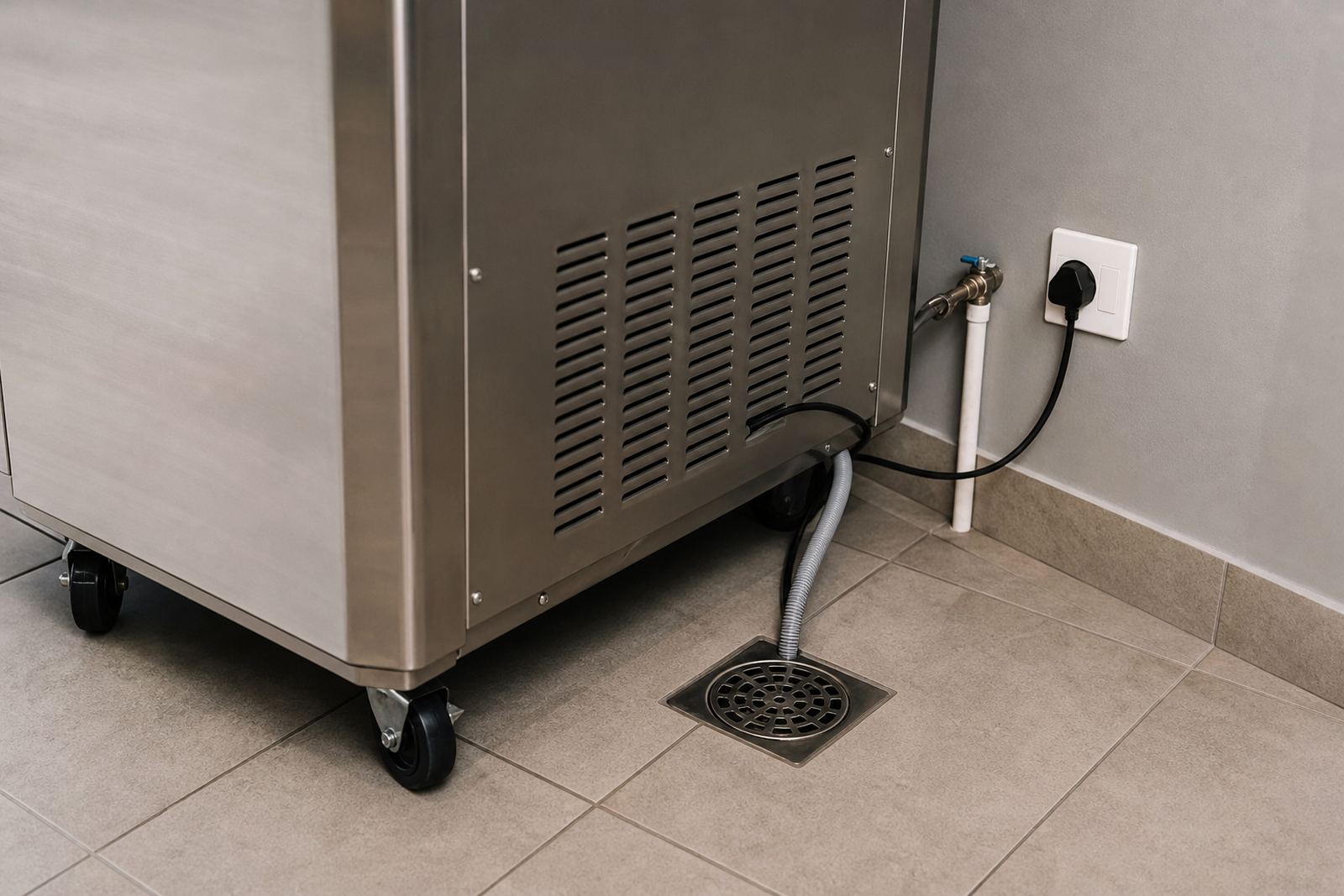
Soft-serve and frozen yoghurt machines need a layout that allows for airflow, regular wiping and quick access during load-shedding or when a breaker trips. If a machine is jammed against a wall it can trap heat, make cleaning harder and slow down daily checks. In Durban, where humidity and warm coastal air are part of daily life, this matters even more because moisture can build up around fittings and surfaces.
Allow enough clearance so a technician or trained operator can open panels, check seals and get to the rear of the machine without moving half the kiosk. If your site uses a backup power setup, plan the cable route early so it does not cross the customer path or sit where water and syrup can splash onto it.
- Leave access at the back and sides for cleaning and service.
- Keep sockets and switches in a dry spot, away from wash water.
- Set the machine on a level base so the mix feeds properly and the cabinet stays steady.
3. Store cones, cups and spoons where hands can reach them fast
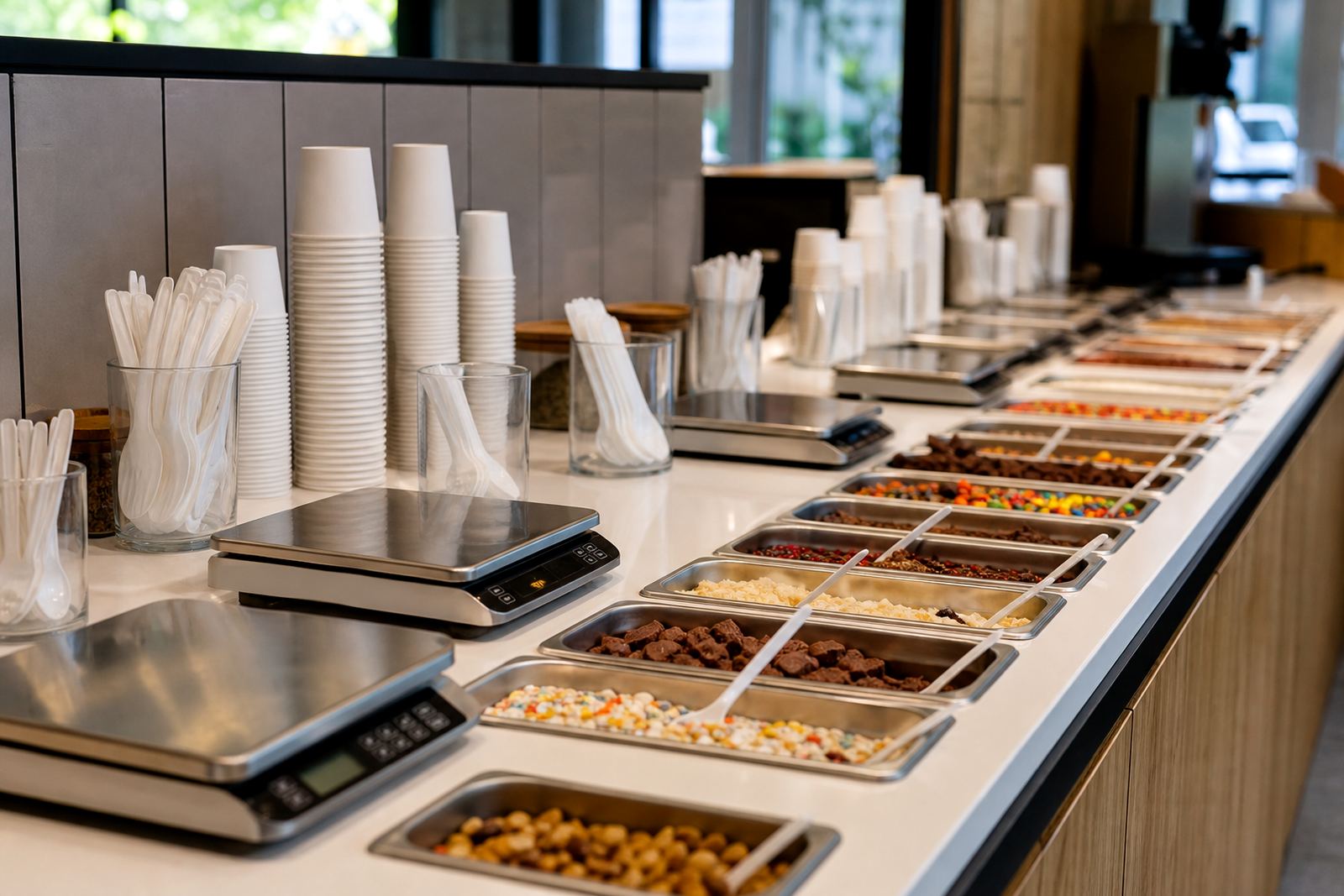
Slow service often starts with poor storage. If cones are kept too far from the machine or cups are in a low cupboard behind a fridge, every order takes longer than it should. The best kiosk layouts place dry stock within one or two arm movements of the serving area. That helps during lunch rushes, after school peaks and weekend traffic when the queue builds quickly.
Use vertical space properly. A narrow shelf above counter height can hold cones, napkins and sanitising supplies without crowding the worktop. Keep open packs covered, especially in coastal areas where moisture can soften cones and affect crunch. Where there is a lot of dust from nearby traffic or construction, closed containers are better than open trays.
- Keep cones in a dry, covered holder near the handover point.
- Place spoons, napkins and sanitiser in a fixed spot every day.
- Use labelled containers so new staff do not waste time searching.
4. Build one clean path for product, waste and washing
A kiosk works better when clean and dirty tasks do not mix. Mix bags, cups and cones should move into the serving area through one clear route. Used cups, drips and wiping cloths should leave through another. When these paths cross, counters get messy and staff spend too much time correcting small spills. In a tight space, even a small bottle neck can slow the whole operation.
For centres with strict hygiene checks, a clear wash-up point and a tidy waste bin position also make inspections easier. Municipal rules and site managers usually want waste contained, surfaces easy to wipe and no puddles around the service area. That is not just about compliance, it also keeps the kiosk looking ready for customers all day.
- Keep bins close enough for staff, but not visible from the main serving angle.
- Separate clean stock from used cloths and dirty utensils.
- Use easy-wipe surfaces where drips are likely to land.
5. Design for one-person shifts and two-person rushes
Many kiosks run with one operator most of the time and add a second person only when trade picks up. The layout should work for both. That means the main operator can reach payment, machine controls, stock and cleaning items without leaving the counter. It also means a second staff member can step in without standing in the way of the first.
At busy sites in Johannesburg or Cape Town, this can be the difference between serving ten people smoothly or letting the queue drift away. A sensible layout creates a natural lead position and a support position. The lead handles orders and machine output, while the support person restocks cones, wipes surfaces and manages the line.
- Give each person a clear role position during peak hours.
- Keep the second worker behind the first, not beside the customer path.
- Make sure both can see the queue and the product display.
6. Use local site realities to guide the final set-up
No two kiosks work the same way. A store in a mall in Umhlanga has different foot traffic and cleaning needs from a roadside kiosk in Pietermaritzburg or a beachfront stand in Cape Town. The layout should match the site, the weather and the load on the machine. If the kiosk sits near the sea, salt air and humidity can affect fittings and stock storage. If the site depends on power during load-shedding, plan for easy shutdown and restart rather than a cramped scramble.
For new setups, it is worth testing the path from stock arrival to final handover before the first busy weekend. That is when small layout faults show up. SnoCream works with cafes, kiosks and restaurants across South Africa, so the same machine can perform well in very different spaces when the flow is planned properly.
A simple layout often outperforms a crowded one. Keep the service path short, the cleaning path separate and the machine easy to reach. That way the kiosk stays quick, tidy and ready for the next rush.