
Start With One Base, Then Build Small Variations
The easiest way to expand a dessert menu is to keep the base the same and change the finish. One soft-serve or frozen yoghurt mix can support several sundae lines if you treat toppings like building blocks. That keeps stock simpler for a cafe in Durban, a kiosk in Pretoria or a restaurant in Cape Town where storage space is tight and the rush comes all at once.
Choose one or two base flavours that hold shape well in warm weather. Vanilla is still the safest seller because it pairs with fruit, syrup and biscuit toppings. A second flavour like chocolate or plain frozen yoghurt gives customers a clear choice without adding pressure on the machine operator. When the base is steady, the upsell comes from the extras.
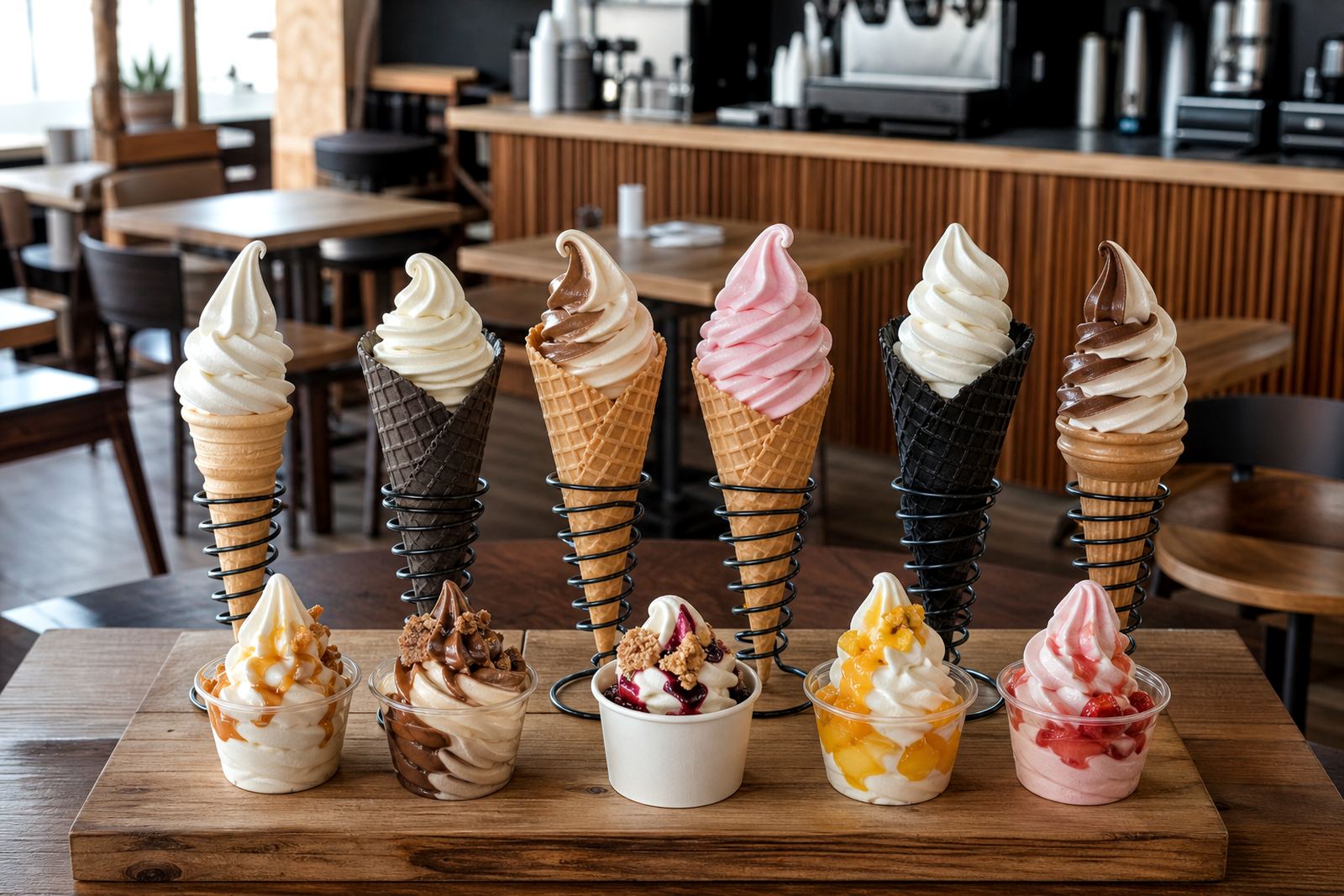
For smaller operations, it helps to think in sets. One sundae can be fruit led, one can be chocolate led, and one can be a local favourite with caramel and biscuit crumbs. You can keep the same cup size, the same spoon and the same finishing routine. That makes service quicker and the portion cost easier to track.
Three Sundae Lines That Sell Without Fussy Prep
Customers often want something familiar, not complicated. A short list of sundae builds can cover most orders and still feel varied. The trick is to use ingredients you already stock for waffles, cakes or milkshakes, so there is less waste at the end of a slow day.
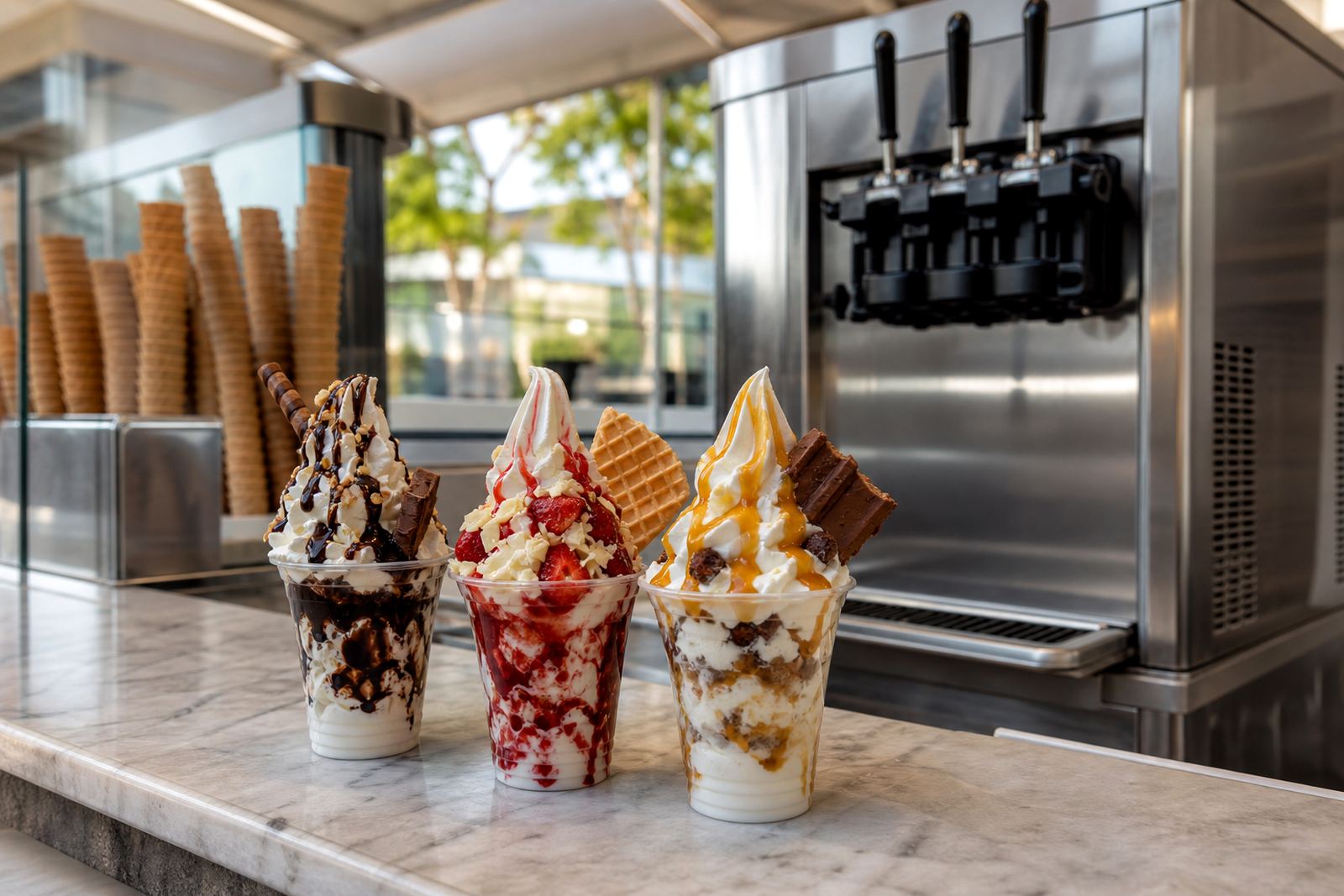
- Fruit and yoghurt sundae: frozen yoghurt, sliced banana, strawberries or canned peach pieces, plus a light fruit sauce.
- Classic chocolate sundae: vanilla soft-serve, chocolate syrup, chopped nuts or biscuit crumb, and a wafer or cone shard.
- Caramel crunch sundae: plain or vanilla base, caramel sauce, crushed biscuits, and a small sprinkle of toasted coconut.
- Seasonal sundae: rotate toppings using what is available and priced well, such as granola in winter or mango in summer.
In practice, this means you can serve a full dessert range with only a few topping containers. A well planned sundae line also helps during school holidays and weekend trading when queues build quickly and customers want something sweet without waiting long.
Use Familiar Ingredients To Keep Costs Under Control
Menu expansion should never feel like a gamble. If a topping cannot move across two or three items, it is often not worth carrying. The best sundae ingredients are the ones that can also work on pancakes, coffees, cakes or yoghurt cups. That way the stock turns faster and you are not left with odd half packs on the shelf.
For South African operators, the best value often comes from ingredients that stay stable in storage and are easy to portion. Biscuits, sauces, dried fruit, nuts and cone pieces all stretch well. Fresh fruit should be chosen carefully too, because Durban humidity and coastal heat can shorten shelf life if you are not rotating properly. A clean cold chain and quick prep make a real difference.
- Keep a written portion guide for each topping.
- Buy ingredients in sizes that match your weekly trade, not just the cheapest bulk pack.
- Use clear containers so staff can see stock levels at a glance.
- Check expiry dates before the weekend rush, not after.
Small controls like these reduce waste and protect margin. Even one extra topping added the wrong way can turn a profitable sundae into a noisy cost item.
Build A Menu That Works In Durban Heat And Inland Cold
Frozen desserts sell differently from one town to another. In Durban and along the coast, customers lean toward lighter, colder options and simple fruit flavours. In Johannesburg or Pretoria, richer chocolate and caramel combinations can move well through cooler months. Cape Town and Gqeberha often see mixed demand depending on season and foot traffic.
That is why a flexible sundae menu works better than a long static one. A kiosk near a school or transport node may need fast items that can be assembled in under a minute. A cafe with seating can add a more detailed finish, but the ingredients should still be recognisable and easy to train on. If staff can make it correctly after one demonstration, the menu is practical enough.
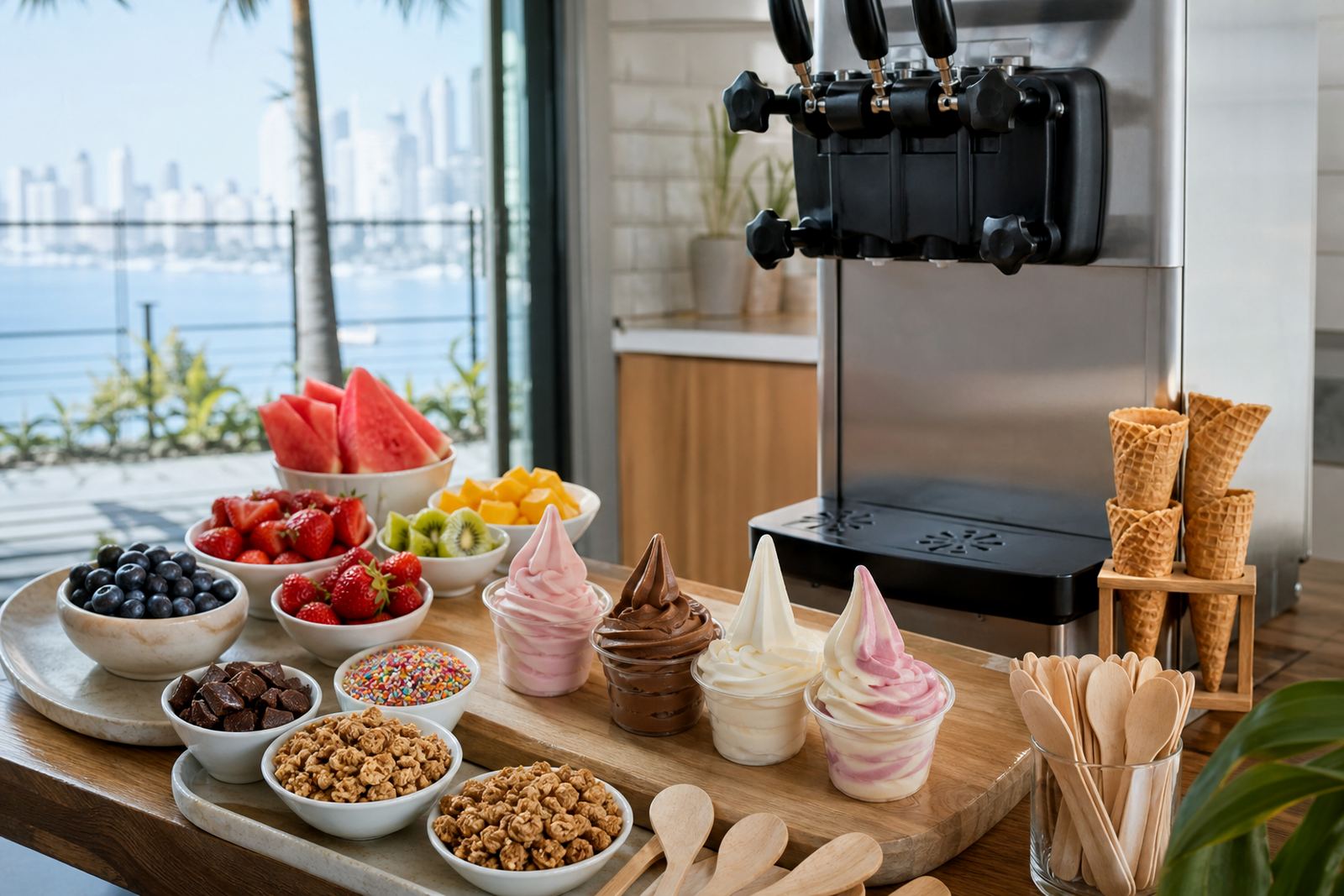
At SnoCream, many operators pair soft-serve and frozen yoghurt machines with a simple topping station, then adjust the sundae list by location. A store in Springfield Park might keep a weekday menu lean, while a busy Pietermaritzburg family outlet adds one or two extra combinations for weekend trade.
Training Staff To Serve Consistent Portions
Good sundae sales depend on consistency. If one staff member uses too much sauce and another uses too little, the customer experience changes and margins slip. Operators should set a clear build order: cup, base, sauce, topping, finish. That routine helps new staff work faster and reduces errors during load-shedding recovery or peak trade times when the team is under pressure.
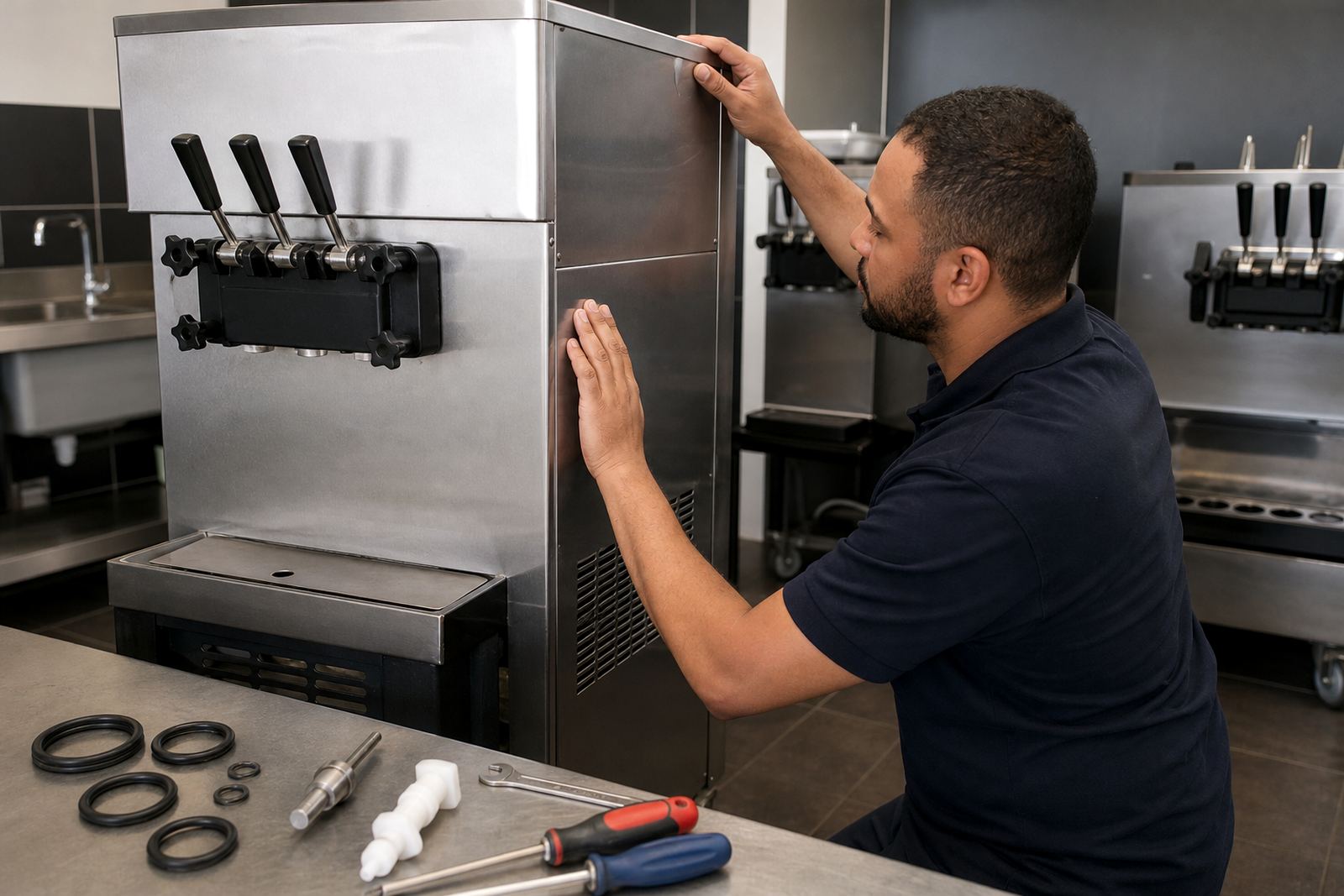
Operator training should cover more than machine use. Staff must know how to clean nozzles, recognise the right serving texture and handle mix calibration properly. A machine that is too soft or too stiff will affect the appearance of the sundae and the holding quality in the cup. Preventive maintenance also matters, because breakdowns on a Friday afternoon can cost the whole weekend trade.
- Use standard serving scoops or pumps for every topping.
- Keep a photo guide of the approved sundae builds behind the counter.
- Train staff to close lids and return ingredients to cold storage quickly.
- Do a short opening check each day before the first order goes out.
Consistency builds trust. Customers are more likely to return when the first sundae looks like the second one they bought two weeks later.
A Local Example From A Busy Durban Counter
A family cafe in Durban wanted a simple dessert addition that would not slow its lunch service. The owner did not want a complicated pastry program or a freezer full of half-used stock. The answer was a compact sundae menu built around vanilla soft-serve, plain frozen yoghurt, strawberry pieces, caramel sauce and biscuit crumb. The team introduced three names on the board and kept the build time under one minute per order.
Because the cafe was close to the coast, the team had to watch storage temperatures closely and keep the topping station neat through the afternoon. The result was better dessert sales with less waste. Customers who came for coffee started adding a sundae for the table, and the staff could still manage the queue during the school run.
That example shows the point clearly. You do not need a large menu to make more dessert sales. You need a few reliable combinations, a steady machine and a team that knows how to serve them without fuss.