

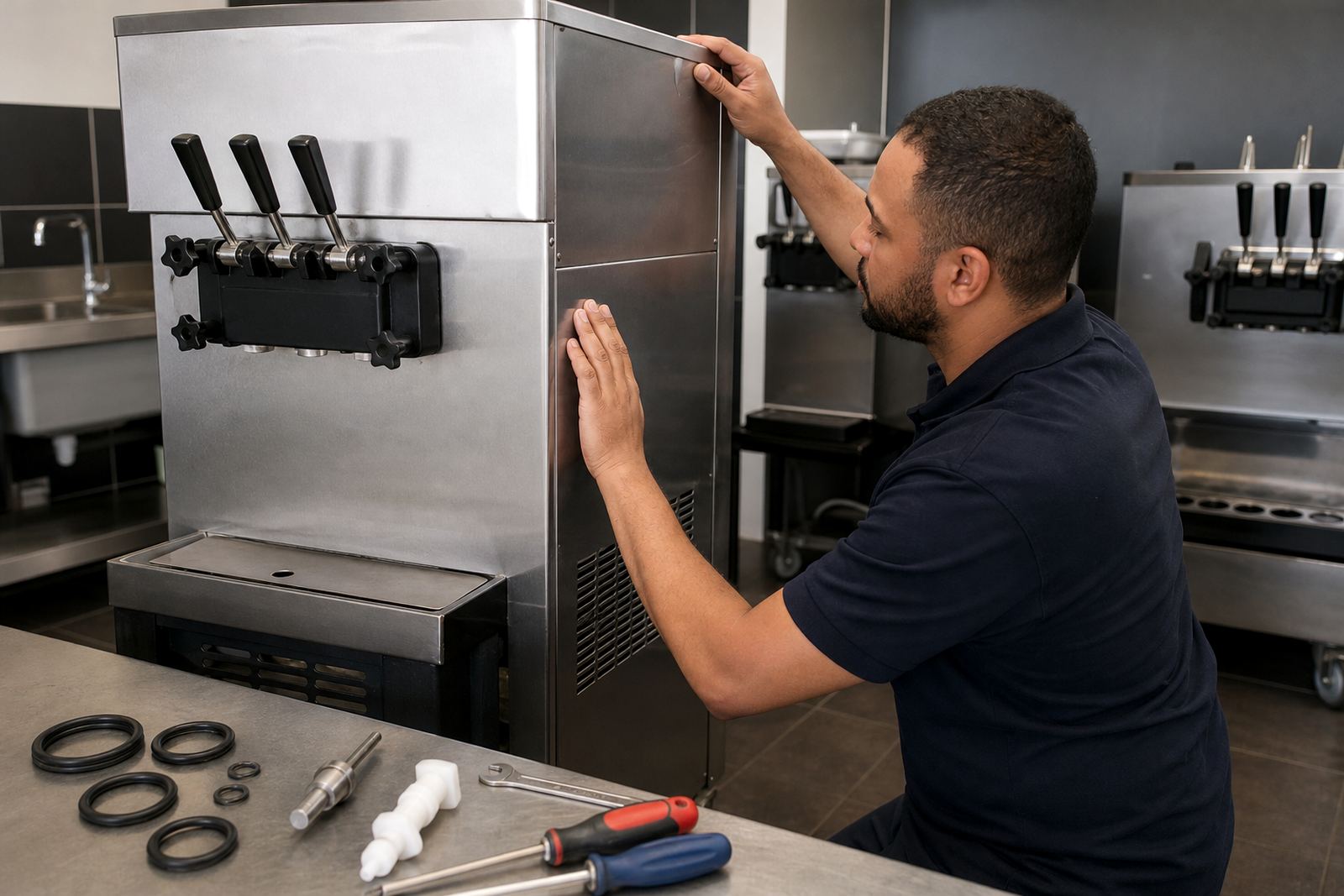
Watch the product before you watch the clock
Most owners wait until a machine stops pulling properly or starts leaking mix before they call for help. By then, a simple seal change or calibration check can become a bigger repair and a missed trading day. In busy cafes and kiosks across Durban, Johannesburg and Cape Town, the first sign is often not a breakdown but a change in the product itself.
If the soft-serve comes out too soft, grainy or uneven, the machine is telling you something. The same applies when frozen yoghurt starts to run warmer than normal, or when the first few cones of the day look fine and the next few do not. Those shifts point to wear, dirty parts, air flow problems or mix settings that need attention.
Temperature changes are a clear warning
A machine that cannot hold product at the right temperature will always cost more to run. If the mix takes longer to freeze, if the product slumps in the cone, or if the machine seems to work harder than usual, it is time for inspection. On coastal sites like Durban and Gqeberha, humid air can make cleaning and sealing problems show up faster, especially in kitchens with heavy foot traffic.
Load-shedding also adds pressure. When power cuts are frequent, machines that are switched on and off often need closer checks on settings, seals and start-up performance. A unit that was fine last month may need a service sooner than planned if it has been through repeated interruptions.
- Product takes longer to freeze than normal
- Soft-serve is too soft or starts collapsing quickly
- Frozen yoghurt has a watery or icy finish
- The machine cycles on and off more often than usual
Noise, vibration and slow output should not be ignored
A healthy machine should sound steady. New knocking, grinding or a louder motor usually means a part is wearing or something is out of alignment. Vibration can point to loose fittings, worn components or a machine sitting unevenly on the floor. That matters in kiosks and restaurants where the counter gets bumped during service and cleaning.
Slow output is another practical sign. If staff are waiting too long for product recovery between servings, the machine is struggling to keep up with demand. That can be caused by blocked airflow, old seals, poor mix preparation or a part that is no longer doing its job properly. It is better to catch that early than deal with a full shutdown on a Saturday afternoon.
Pay attention to leaks, residue and sticky seals
Mix around the base, a wet drip tray or sticky residue near the draw area usually means seals are wearing out or parts need cleaning and reassembly. In our climate, dust and sugar build-up can settle into small gaps and cause bigger problems if left too long. Once residue starts to collect, hygiene becomes harder to maintain and the machine works harder than it should.
This is where a deep clean service or seal and parts replacement can save time and money. A proper inspection will check the moving parts, fittings and sanitation points, then reset the machine so it can run cleanly again. Small leaks may not look serious on the day, but they often become repeat faults if no one traces the cause.
- Drips or wet patches beneath the machine
- Build-up around handles, hoppers or draw points
- Sticky seals that no longer close cleanly
- Unusual smells after normal cleaning
When staff training needs a refresher
Not every fault is mechanical. Some machines need service because the operator is fighting the unit rather than using it correctly. Wrong mix ratios, poor sanitising habits and missed daily checks can all create the same symptoms as a faulty part. That is why operator training matters just as much as repairs, especially in busy sites with several staff members rotating through the same machine.
If the machine is being topped up too soon, left uncleaned between shifts, or started up without the correct prep, the stress adds up. A short training refresh can prevent repeated callouts and help staff spot warning signs early. In many cases, the right routine is what keeps a machine reliable through school holidays, month-end rushes and hot weather trading.
Build service checks around trading pressure, not guesswork
The best time to service a machine is before the trouble starts, not after sales have been lost. For many businesses, that means planning checks before peak season, after a power outage, or once a machine has been running hard for several months. Sites in Springfield Park, Umhlanga, Pietermaritzburg and other busy trade areas often need a practical maintenance schedule tied to footfall and temperature changes rather than a fixed date on the calendar.
A sensible service plan can include preventive maintenance, mix calibration, startup commissioning after a site move, and season prep checks before the first hot spell. If a machine has been relocated, used in a new store layout or exposed to dust during renovations, it should be inspected before the next busy period. That is the easiest way to avoid unexpected downtime and keep the product steady day after day.
For cafes, kiosks and restaurants across South Africa, the rule is simple: if the machine starts sounding different, running warmer or serving uneven product, book a check while it is still trading. A small fix today is usually cheaper than a closed counter tomorrow.