
Why mix storage matters before the first batch is poured
Soft-serve and frozen yoghurt mix is a dairy based product, so it needs the same careful handling you would give milk, cream or custard. If the mix warms up too much, sits open for too long, or is stored next to strong smelling food, the end result can be thin, dull or slightly off in flavour. That is a quick way to lose repeat customers.
In Durban, where humidity is high and delivery trucks can sit in traffic near Springfield Park or along the N2, temperature control becomes even more important. A sealed carton that travels in a warm vehicle for too long can arrive in poor condition even before it reaches the freezer. The goal is simple: keep the cold chain steady from delivery to service, and use stock in the order it arrives.
Set the storage temperature and keep it steady
Always follow the storage instructions on the mix pack, because some products arrive as liquid concentrate while others are dry premix. For chilled liquid mix, the storage area must stay cold and consistent. For dry mix, the space must be cool, dry and protected from pests, steam and direct sunlight. In both cases, sudden temperature swings are a problem.
Do not store mix near oven doors, dishwashers, hot water geysers or back doors that open all day. Even a few degrees of extra heat can shorten shelf life and affect performance in the machine. If your outlet uses a chest freezer or a walk in cold room, check that the unit is not overpacked and that air can move around the stock. Overpacked storage often causes one side to freeze harder than the other, which is not ideal.
- Keep liquid mix at the recommended chilled temperature from delivery to use.
- Store dry mix in a clean, dry store room away from steam and sunlight.
- Record the temperature at the start of trading and again at close.
- Do not leave opened containers standing out on the counter for long periods.
Use clear rotation so older stock is used first
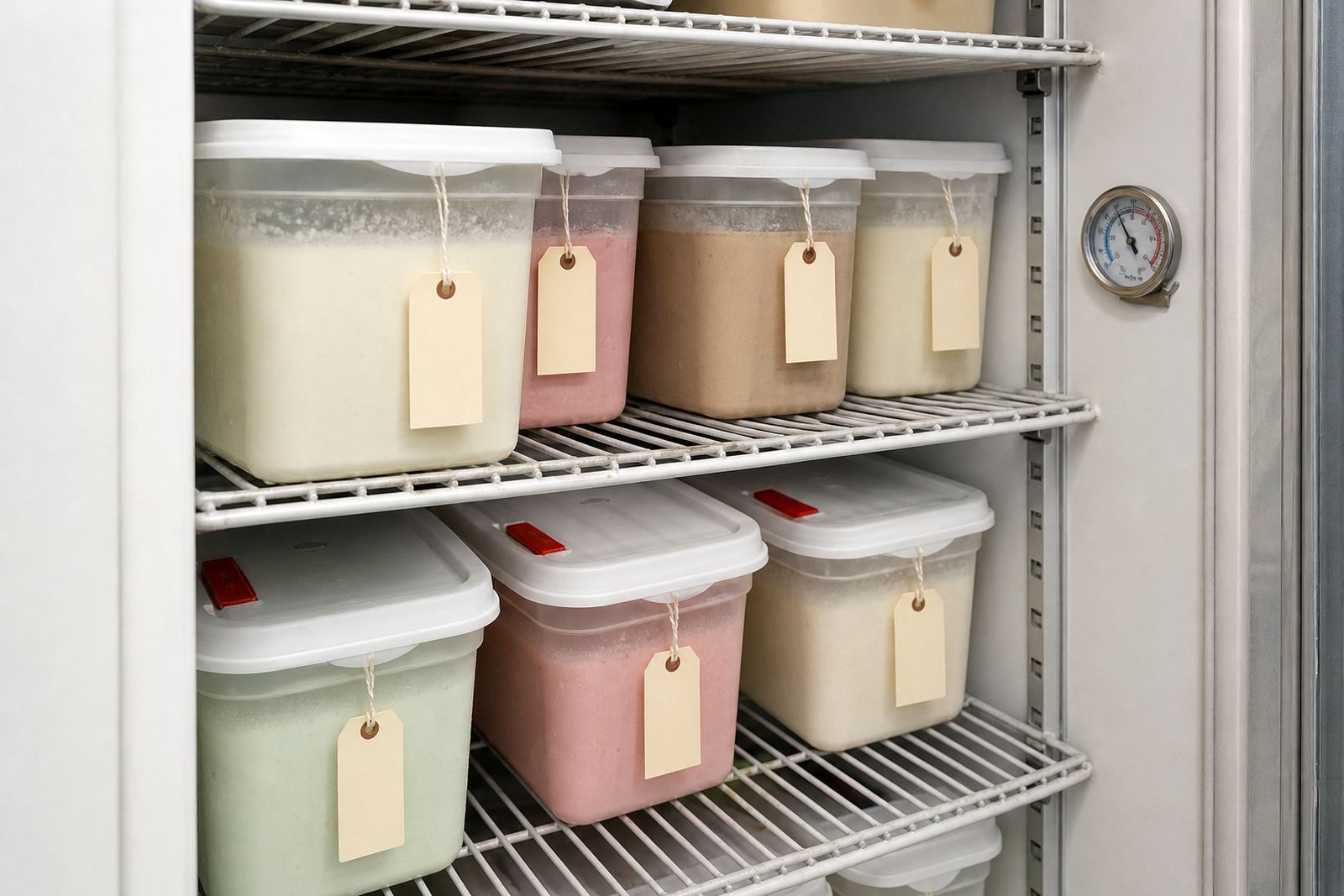
Rotation is one of the easiest habits to get right, yet many sites skip it when things get busy. Use the oldest stock first and mark every carton or bag with the delivery date, opening date and use by date. That way staff do not have to guess, and nothing gets hidden behind newer deliveries.
At a kiosk in a busy shopping centre, stock can turn quickly during school holidays and weekend trading, then slow down during quieter weeks. If new deliveries are stacked in front of older cartons, the older mix is often forgotten until it is too late. A simple shelf plan solves that. Put newly received stock at the back and move older stock to the front. It sounds basic, but it saves money and reduces waste.
- Label every batch as soon as it is received.
- Keep one shelf for current use and another for reserve stock.
- Check dates weekly, not only when someone spots a problem.
- Remove damaged cartons or bulging packs straight away.
Prevent cross contamination in small prep areas
Mix storage should be treated as part of the food prep area, not just as a box on a shelf. Containers, scoops and measuring jugs must stay clean and dry. If a lid is cracked or a pouch has been opened poorly, transfer the contents only if your process allows it and the receiving container is sanitised first. Never top up an old container with fresh product unless your procedure is clear and controlled.
In a restaurant kitchen, the biggest risks often come from busy staff moving between raw food prep, dishes and dessert service. Keep mix away from raw meats, strong cleaning chemicals and open waste bins. Damp cloths should not be stored on top of cartons. If the store room smells of bleach, onions or fish, the mix may pick up those odours quicker than you think. That is not what customers want in a vanilla cone.
Plan for load shedding, delivery delays and power cuts
South African businesses have to plan for load shedding, transport delays and hot weather. If your outlet depends on a fridge or freezer, there should be a simple backup plan for keeping stock safe during outages. Know which unit is on backup power, how long the backup will last, and which products must be moved first if an outage goes on longer than expected.
For Durban and coastal areas, high humidity can make packaging soft and labels peel off. Inland branches in Johannesburg or Pretoria may deal with dry air and bigger temperature swings between morning and afternoon. The storage method is the same, but the risks change. Review delivery schedules during summer, especially if stock arrives late in the day. A carton sitting in a warm receiving bay for one hour too long can become a problem before the machine even sees it.
- Keep a simple outage checklist near the storage area.
- Know which stock must be used first after an interruption.
- Do not refreeze product that has warmed beyond safe limits.
- Train at least two staff members on emergency storage steps.
Keep the machine room and store room ready for service
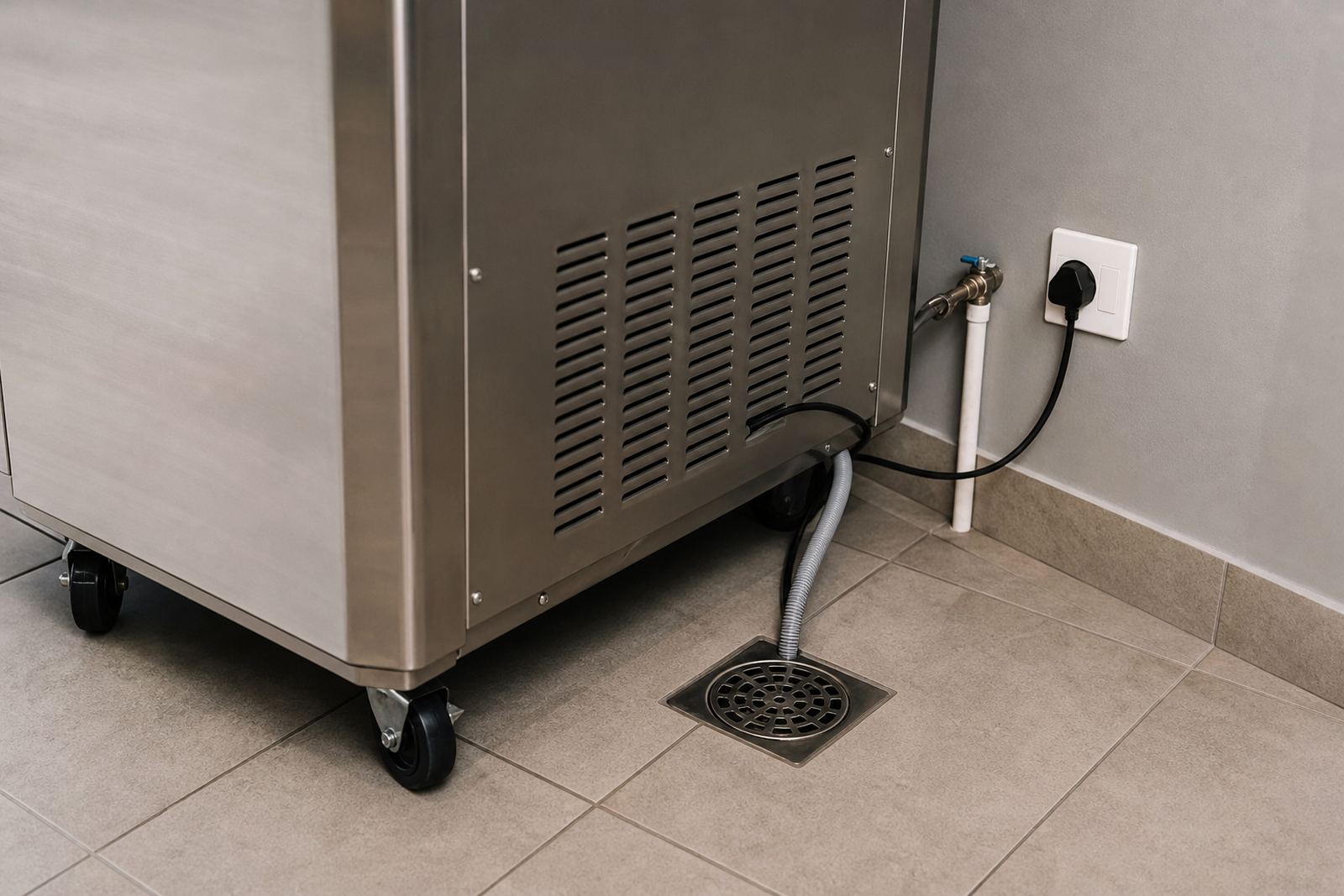
Good storage is linked to good machine care. If the room is dirty, cluttered or hard to access, staff will rush and make mistakes. Leave enough space around the machine for cleaning, ventilation and maintenance. Keep spare cones, sanitising supplies and sealed mix in clearly marked places so operators do not have to dig through boxes during a rush. A neat store room also makes it easier for technicians to inspect fittings, seals and supply lines during routine service.
Before peak season, check that stock levels match trading patterns. A seaside site in Gqeberha may trade differently from a fast moving café in Umhlanga, and winter turnover in Pietermaritzburg can be slower than summer sales in Cape Town. When storage is planned around real trading patterns, there is less waste and fewer panic orders. That gives staff time to focus on service instead of chasing missing ingredients.
What a simple daily storage routine should look like
A good routine does not need to be complicated. It just needs to be done every day, by the same method, even when the shop is busy. Start with a quick check of temperatures, stock condition and dates. Then confirm that everything opened the previous day was closed properly and placed back in the correct spot. Finally, make sure the area is clean before the next delivery or morning service begins.
If your team follows the same routine each shift, the quality of the frozen dessert stays more consistent. Customers may not see the storage room, but they will notice if the mix tastes better, machines run more smoothly and the product holds its shape in the cone. That is the kind of detail that keeps a dessert counter dependable, not just busy.
- Check temperatures before opening and again at close.
- Inspect packaging for leaks, swelling or damage.
- Return opened stock to the correct shelf immediately.
- Wipe spills as soon as they happen so they do not become a safety issue.
Mix storage is not a side task. It is part of daily service, and when it is handled properly the whole operation runs better.