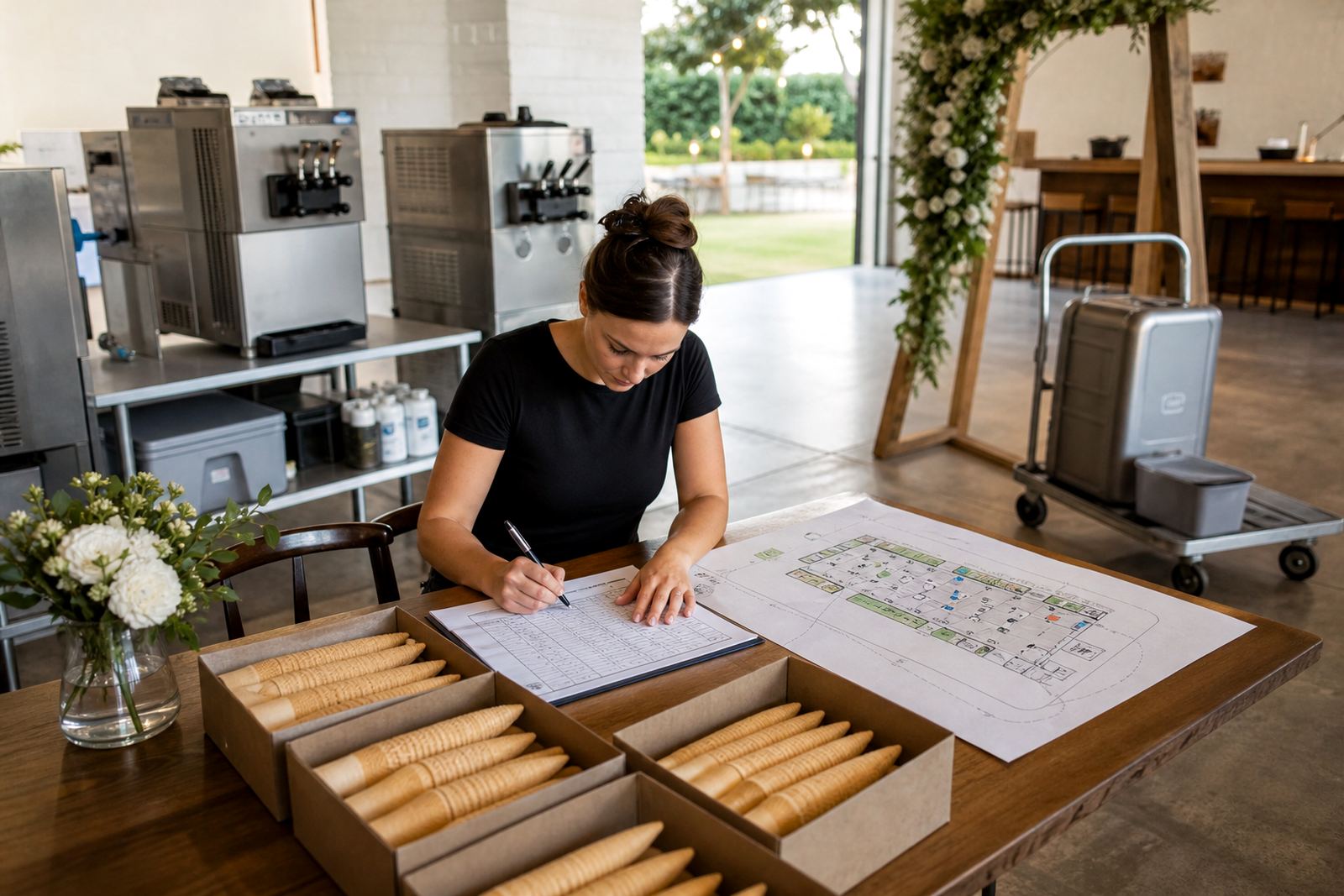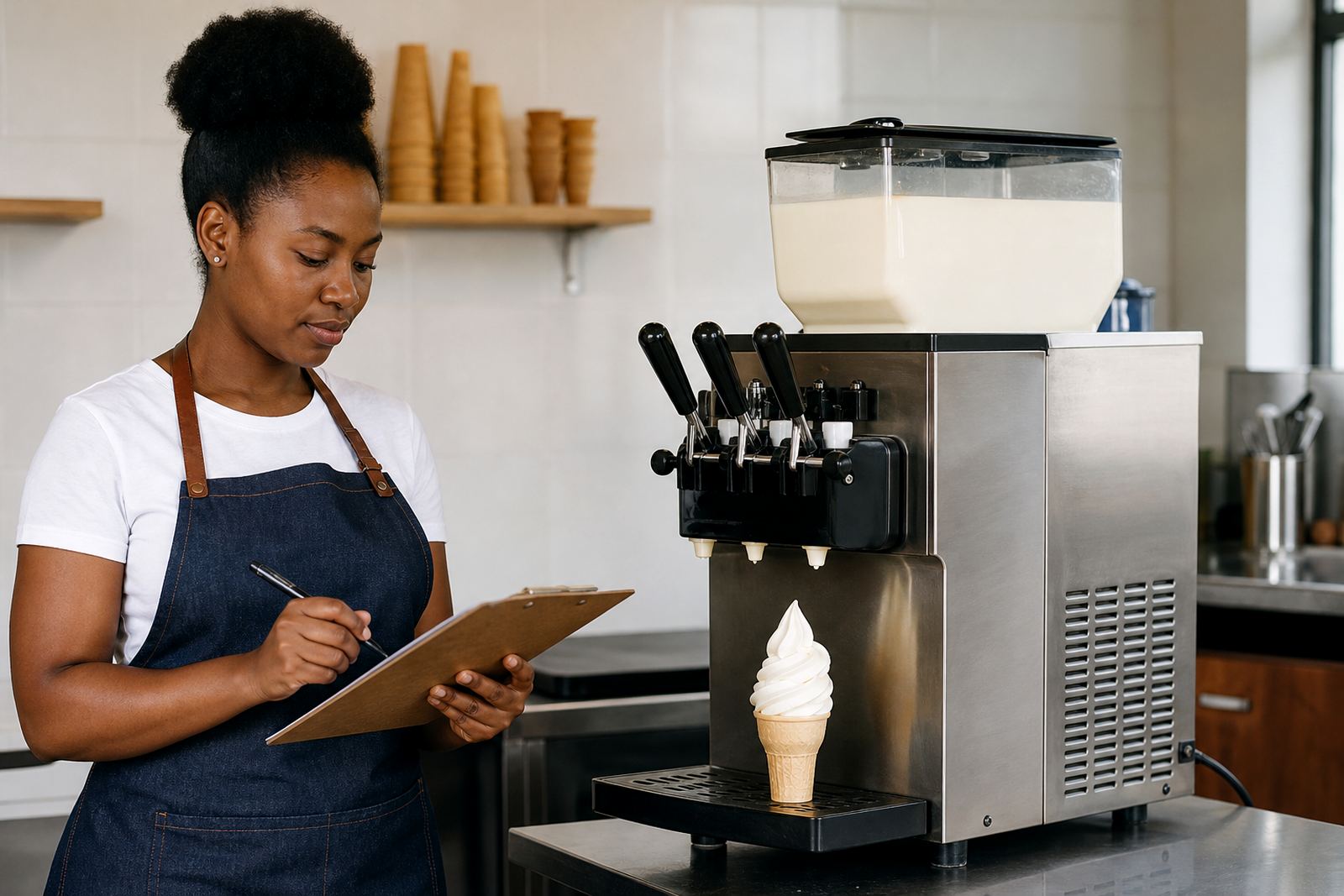


What a good scoop should look and feel like
Good texture is not just about taste. It affects how the product holds its shape in a cone, how it fills cups, and how long it stays consistent during a busy lunch run. In a cafe or kiosk, the right draw should feel smooth, hold its peak, and not collapse into a watery puddle within minutes.
When the mix, machine settings, and service routine are all aligned, the product should come out evenly aerated with a clean mouthfeel. If your frozen yoghurt looks shiny, slumps fast, or gives a crunchy ice feel, something in the chain is off. That can be the mix, the machine, or the handling on site.
The most useful habit is to judge product at the point of sale, not only in the machine. A cup that looks fine in the cylinder but melts too fast on a tray tells you the issue may be temperature, overrun, or a warmer service room.
Mix ratios that are too weak or too strong
One of the most common reasons for poor texture is incorrect mix calibration. If the product is too weak, it freezes unevenly and can turn icy. If it is too thick or too rich, the machine may struggle to whip it properly and the result can be heavy, dense or lumpy.
Frozen yoghurt and soft-serve mixes are made to work within a specific ratio. Adding too much water or using a scoop-and-pour approach can change the fat, sugar and solids balance. That balance matters because it controls how the product freezes and how it holds air.
For operators, the safest approach is to measure carefully every time. Do not guess by colour or smell. If your site has different staff on different shifts, one person should be responsible for mix prep and should keep the same method every day.
- Measure liquid and powder exactly as instructed by the supplier.
- Mix fully before filling the hopper or cylinder.
- Keep a record of any change in texture after a new batch is opened.
- If a product suddenly changes, check the batch before blaming the machine.
Temperature swings in Durban heat and coastal humidity
South African weather has a direct impact on frozen dessert service. In Durban, Springfield Park, Umhlanga and coastal stores in Gqeberha, high humidity and warm ambient temperatures can make machines work harder. A prep area near an open door, oven or sunny window can also affect the final draw.
If the room is hot, the machine may not recover quickly after peak service. Product can soften in the barrel, especially if the unit is being opened often or if the condenser area is dusty. Warm air around the machine also means the product on the nozzle can loosen faster and drip.
During summer trading, check that the machine has enough breathing space around it. Keep the rear and side vents clear. In smaller kiosks, moving the unit even a few centimetres away from a heat source can improve consistency more than you would expect.
Power interruptions and voltage dips during load-shedding can also disturb freezing cycles. If the machine restarts under load or the settings are not checked after an outage, texture often changes before the operator notices anything wrong.
Air, overrun and why product can turn icy
Soft-serve depends on the correct amount of air being whipped into the mix. Too much air can make the product look full but feel weak, thin and quick to melt. Too little air can leave it heavy, compact and less appealing. Either way, the final texture will not match what customers expect.
Ice crystals usually point to freezing problems, slow recovery, or mix that has been sitting too long. If the product is held for extended periods without proper turnover, moisture can separate and freeze unevenly. That creates the rough, icy feel people complain about first.
Watch for these service signs:
- Product starts smoothly then becomes watery after a few servings.
- Texture changes between the first and last hour of trade.
- The draw looks good but breaks down quickly in the cup.
- One flavour is fine while another is inconsistent.
If only one side of a twin machine is affected, the issue may be isolated to that cylinder, beater, or setting rather than the full unit.
Cleaning lapses that show up as grainy texture
Deep clean service matters because dried mix, milk residue and sanitiser left in the wrong place can affect flow and freezing. A machine that is not cleaned properly may start producing grainy or stale-tasting product. In some cases the first clue is not flavour but texture.
Seals and parts also wear over time. If air leaks into the system or product escapes around a worn seal, the machine may not hold the right pressure or consistency. That can cause soft spots, poor draw and unpredictable output during a rush.
Keep an eye on the hopper, dasher area, drip tray and nozzle. If staff rinse only the visible parts and skip the internal service routine, the machine can still look neat while the product quality drops. A proper clean should be scheduled, not left to whoever is on shift that day.
- Follow a fixed cleaning routine after closing.
- Use sanitising supplies that suit the machine and food contact parts.
- Check seals and moving parts during each service.
- Book a deep clean before problems become visible to customers.
What a Pietermaritzburg kiosk can learn from a bad Friday rush
A kiosk in Pietermaritzburg was seeing repeated complaints that the frozen yoghurt was fine in the morning but too soft by late afternoon. The staff thought the mix was the only issue, but the real problem was a combination of a warm prep room, inconsistent batch mixing and delayed cleaning after the lunch peak. Once the team changed the prep routine and had the machine checked, the texture steadied up and wastage dropped.
That kind of issue is common across busy sites in Johannesburg, Pretoria and Cape Town too. The pattern is usually the same: a machine is working, but not working under the same conditions every day. Small changes add up. A slightly warmer room, a rushed refill, or a missed rinse can be enough to change the product.
When texture goes wrong, start with the simple checks first. Confirm the mix, check the room temperature, inspect the machine settings and make sure the cleaning routine has not slipped. Most problems are fixable before they become expensive. But if the issue keeps returning, it is better to have the machine checked properly than keep adjusting by guesswork.
The fastest way to keep texture steady through the week
Stable texture comes from repeatable habits. Keep one standard for mix prep, one standard for cleaning, and one standard for startup checks. That makes it easier for supervisors and operators to spot when something changes. It also helps when a different staff member is on duty after load-shedding or a late delivery.
For operators who trade from cafes, kiosks and restaurants, the goal is not to overcomplicate things. It is to keep the product consistent from Monday to Sunday, whether you are serving a small lunchtime crowd or a full weekend queue. A few minutes of inspection can save a whole day of poor sales.
If the machine still gives a soft, icy or uneven result after the basics are checked, the problem may be mechanical. In that case, a proper inspection, mix calibration or part replacement is the right next step. Waiting usually makes the batch quality worse, not better.
Reliable texture is what keeps customers coming back. Once they notice the same smooth result every time, they are more likely to order again and recommend the stop to someone else.