Start With The Holiday Traffic Pattern, Not A Guess
Before you order extra mix or call in more staff, work out when families actually arrive. In many South African towns the pattern is clear: later mornings, steady afternoons, and a stronger push on weekends, payday periods and rainy days when parents want an easy treat stop. A kiosk near a cinema, a cafe close to a play area, or a restaurant on a retail strip will all see different peaks.
Look at the last school break and compare it with normal trading. Did you run out of cones first, or did the mix go low before the end of the day? Did queues build after 2 pm, or was the pressure mainly during lunchtime? Those small details help you plan the right prep and avoid overbuying stock that sits too long in warm weather.
For Durban and the coast, remember humidity can affect storage and service times. In Pretoria or Johannesburg, the issue may be strong afternoon demand after sporting events and shopping trips. One planning sheet for each site is often enough to spot the pattern.
Build A Stock List That Covers The Real Rush
Holiday trading is not only about more volume. It is about the right stock in the right quantities. Frozen yoghurt and soft-serve do best when the mix, cones and toppings are in balance. A venue that has enough cones but runs short on mix will still lose sales, and the opposite is true as well.
- Count average daily servings from the last four weeks.
- Increase core stock by a sensible margin, then watch actual sell-through in the first few days.
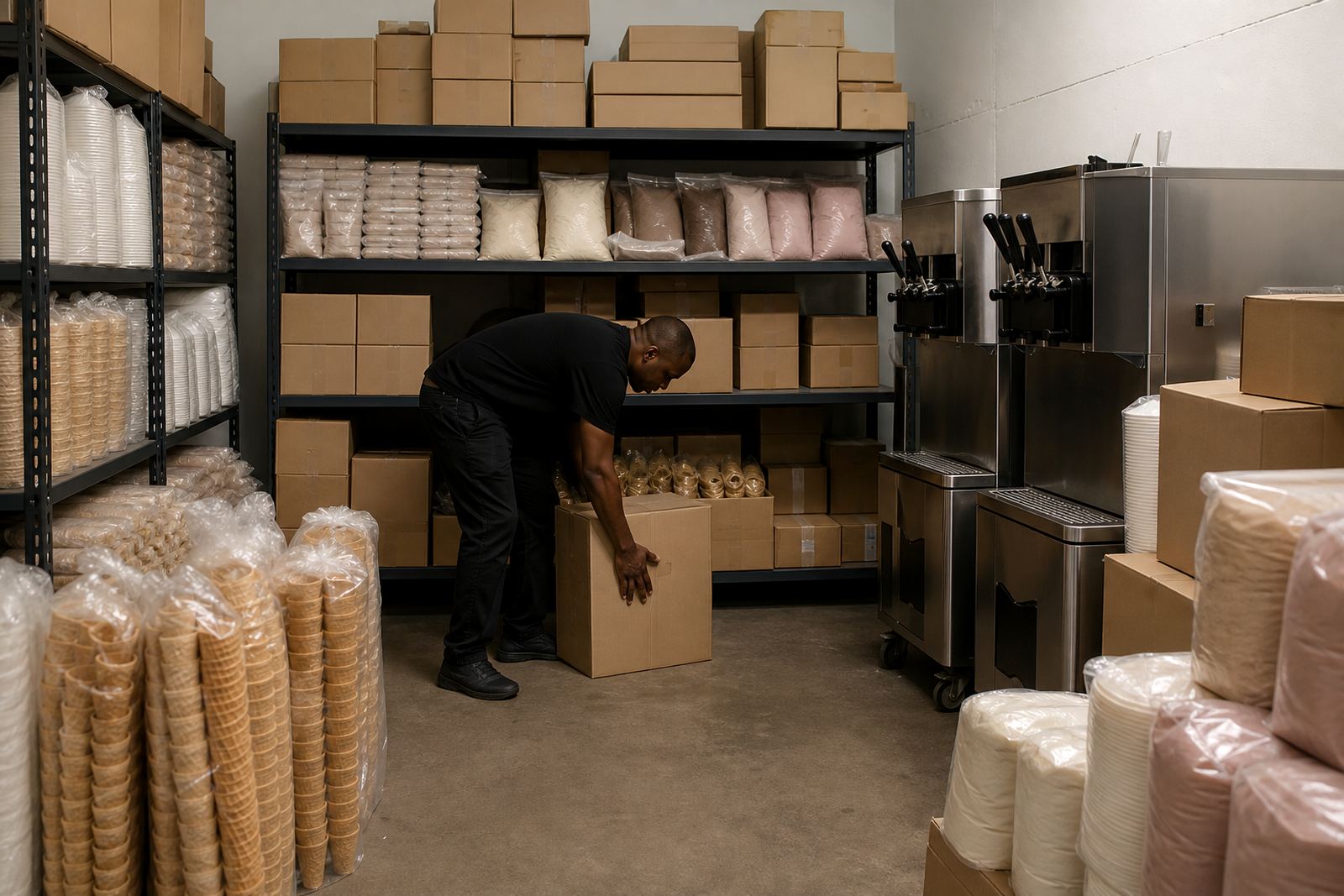
- Keep a separate count for cones, cups, spoons, toppings and sanitising supplies.
- Store dry stock off the floor and away from heat, especially in coastal areas.
- Use older stock first so you do not carry surplus into the next term.
If your venue offers both soft-serve and frozen yoghurt, keep both options visible. Families with children often want a quick first choice, then a second round with a different flavour. A clean, simple menu moves faster than a crowded one.
Plan Staffing Around Service Speed, Not Just Headcount
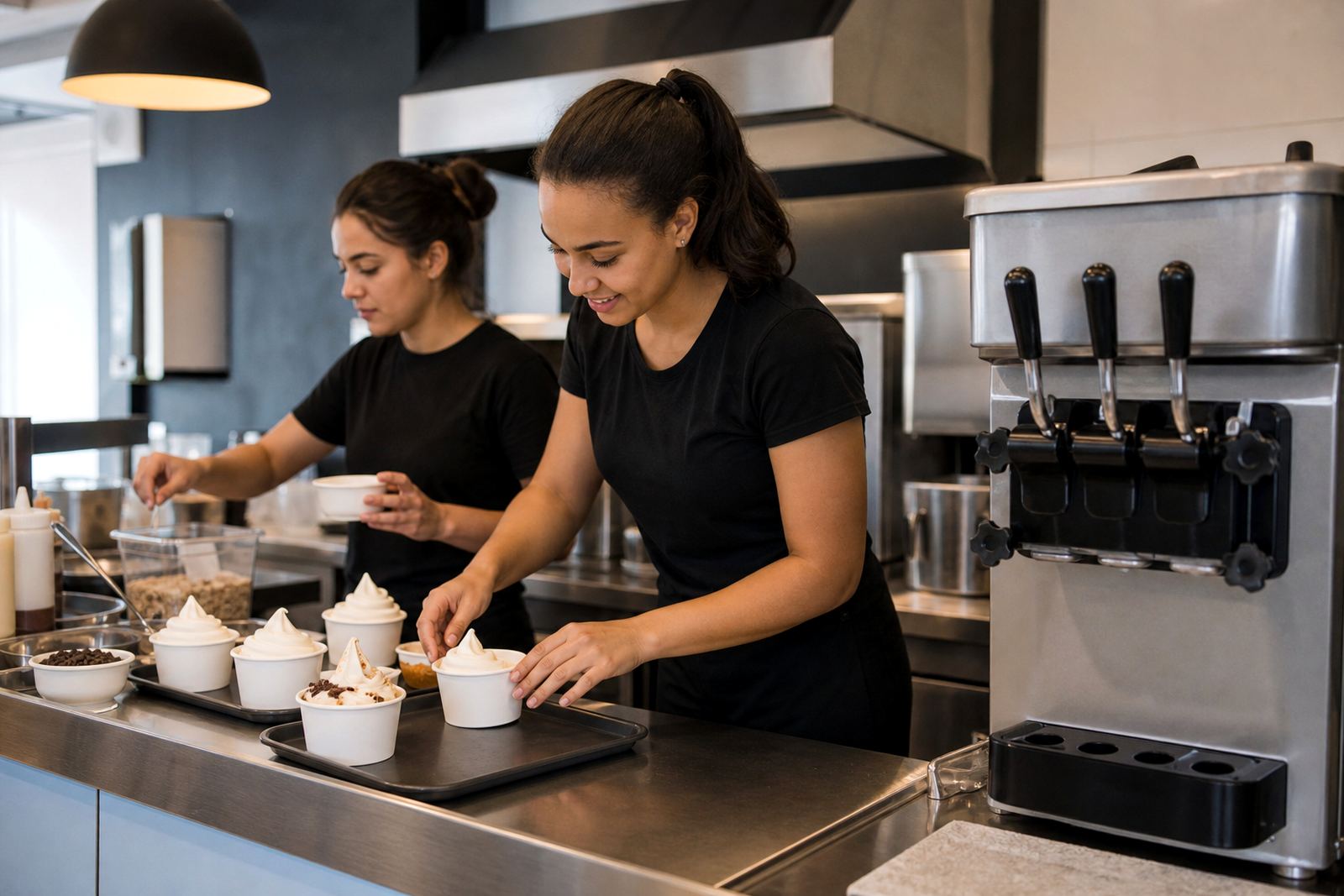
More people on the floor only helps if they know what to do during a rush. Holiday periods need a clear split of tasks: one person handling the machine, one taking payments, one managing toppings or handover, and someone watching the queue and cleaning spillages. If the same person must do all four jobs, service slows down very quickly.
Short refresher training before the break can save a lot of stress. Show staff how to read the machine correctly, how to spot a weak draw, and how to keep the service area neat when the queue is building. It also helps to assign one person to stock checks at set times, rather than waiting until something runs out.
- Set opening tasks before the first customer arrives.
- Nominate one person to manage counts and refill points.
- Keep a standby plan for lunch rushes and weekend spikes.
- Teach new staff the basics of cleaning, sanitising and portion control.
- Make sure everyone knows who to call if the machine starts acting up.
In busy family venues, speed and consistency matter more than fancy extras. Customers return when they get the same product, the same portion, and a short wait even on the busiest day.
Check The Machine Before The Rush Starts
School holiday trading is not the time to discover a worn seal or a weak refrigeration cycle. A machine that has been standing idle, or one that has been working hard through the winter, should be checked well before the first holiday weekend. That includes startup checks, mix calibration, cleaning, seals and general wear on moving parts.
Load-shedding also needs to be considered. If your site is affected, make sure the team knows the restart process and how long the unit should stabilise before serving again. A generator or backup power plan is useful, but only if the machine and support systems can handle the change without confusing staff. At coastal sites, salty air and moisture can shorten the life of neglected components, so a simple preventive inspection can make a real difference.
Many operators also forget the service area itself. Check that there is enough space to work safely, that drainage is clear, and that sanitising supplies are on hand for the full holiday run. If the machine has been moved between sites, or the layout has changed, ask for proper installation and commissioning before trading gets busy.
Keep The Menu Simple But Strong
Families on school break usually want quick choices. You do not need a long list of flavours to do well. What matters is a menu that is easy to understand, visible from the counter, and stocked with combinations that sell fast. If your site has space, a small seasonal add-on can help, but avoid items that slow service or require too much preparation.
Good holiday menu planning often means using what moves most efficiently. Keep your best-selling mixes on hand, make sure cones are not stored where they pick up moisture, and trim back any slow sellers until the busy period passes. This keeps waste down and helps the team focus on speed.
- Lead with your top two flavours or mixes.
- Offer one or two simple add-ons instead of too many choices.
- Use clear pricing so parents can decide quickly.
- Place the most popular items at eye level.
- Review what sold each day and adjust the next order.
A well-run holiday menu should feel easy for the customer and easy for the team. That usually means fewer steps, clearer portions, and less time spent explaining options at the counter.
Use One Example To Shape The Whole Break
Take a Durban kiosk near Springfield Park as an example. On a normal week, trade may be steady with short lunch peaks. Once schools break, the pattern can change fast. Parents stop on the way to outings, grandparents bring children in after shopping, and the queue can stretch when the weather turns hot. A smart operator will increase mix, bring in extra cones, schedule a midday stock check, and make sure one staff member is ready to handle cleaning and refill work without pulling the whole team off the counter.
The same logic applies in Johannesburg, Pretoria, Cape Town and Gqeberha. The exact traffic may differ, but the approach is the same: check the numbers, keep the machine in good order, and make the service line easy to manage. That is how holiday trading stays profitable instead of turning into a scramble.
A Final Check Before Opening Day
The best school holiday prep is practical and boring in the best possible way. Stock is counted, staff know their jobs, the machine has been tested, and you have a clear plan if demand jumps suddenly. A quick review two or three days before the break is still worth doing, because little issues have a habit of showing up at the worst time.
If your venue needs installation, startup commissioning, training, maintenance, repairs, deep cleaning, seal and parts support, mix calibration, site relocation help, phone support, sanitising supplies or season prep checks, sort that out before the rush begins. A few hours of preparation can save a full day of lost sales. That is especially true when families are ready to spend and the queue is already forming.