
Start With the Trade Pattern, Not the Topping
Before you buy a machine, work out when customers are most likely to order frozen treats. A kiosk near a beach, school or taxi route will trade differently from a café in an office park, and that affects your serving speed, stock levels and how many flavours you need. In Durban, for example, weekend foot traffic can be strong while weekday trade may peak after school or late afternoon. If you guess wrong, you either run out too early or stand with idle mix at closing time.
Keep the menu simple at the start. One soft-serve option or one frozen yoghurt base is often enough, with 3 to 4 toppings that are easy to store and count. That makes it easier to train staff, control waste and learn what your customers actually buy. A new dessert line should earn its place quickly, so watch sales for the first 4 to 6 weeks and adjust from there.
- Choose a product that fits your busiest trading hours.
- Keep the first menu short and easy to explain.
- Track daily sales by flavour, cone and topping.
- Review wastage at the end of each week.
Choose Equipment That Matches Your Volume and Space
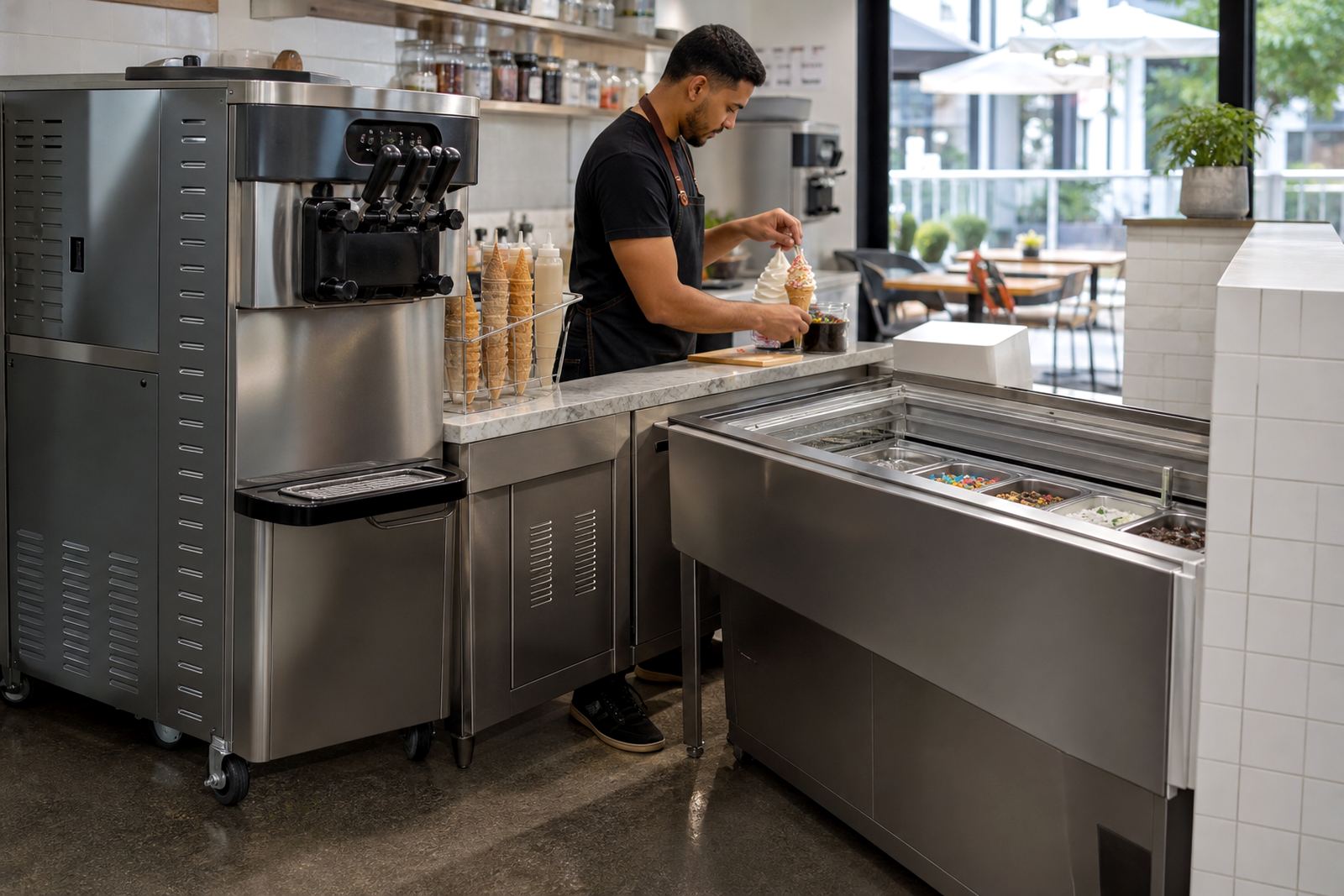
Machine choice should be based on footfall, counter space and the kind of service you want to give. A small café in Pietermaritzburg may only need one compact unit, while a busy promenade site in Cape Town or a family restaurant in Johannesburg may need more capacity to avoid queues. Measure your space properly, including door width, service counter height and where staff will stand to work. In tight shops, a poor layout can slow everything down.
Ask practical questions before installation. Will the machine sit on a level floor? Is there enough ventilation around the compressor? Do you have the correct power supply and backup plan for load-shedding? If your site faces coastal humidity, check how often seals, storage and hygiene routines will need attention. A machine that is easy to clean and simple to operate is often the better choice for a first-time operator.
- Measure the available counter and floor space first.
- Check power supply, plug points and load-shedding planning.
- Allow space for cleaning access and product handling.
- Plan for the busiest service period, not only average trade.
Make the Mix Work for South African Conditions
Your mix choice affects texture, yield and how forgiving the machine is during service. Good mix should hold consistency through a busy session and still serve well when the weather turns hot and demand jumps. Durban humidity, summer heat in Pretoria, and dry winter trade in Johannesburg all behave differently, so the product has to stay stable across changing conditions. That is why mix calibration matters from day one.
Set a simple stock process. Keep dry stock off the floor, rotate using first in, first out, and label open containers clearly. If your team handles cones, cups and toppings together, organise them so there is no cross-contamination. Hygiene is not only about compliance, it protects customer trust and reduces returns. A clean, consistent product is what gets people to come back for another cone next week.
- Store mix in a clean, dry place away from heat and moisture.
- Calibrate the machine before peak trading starts.
- Label opened stock and rotate it in order.
- Keep cones, toppings and serving tools neatly separated.
Train the First Team to Serve Fast and Clean
Good equipment still depends on good operators. The first team should know how to start the machine, check the product texture, serve a standard portion and shut down correctly at the end of the day. If you have staff rotation, train more than one person so the business does not depend on a single operator. That is especially useful for restaurants and kiosks that trade over weekends and public holidays.
Set a written routine for opening, service and closing. The more ordinary the routine becomes, the fewer mistakes you will see. Training should cover cleaning, sanitising supplies, how to spot early signs of trouble and when to ask for technical support. A quick phone call can prevent a small issue becoming a lost trading day. It also helps if the team knows what to do during a power cut or after a spike in demand.
- Teach start-up, serving and shutdown step by step.
- Train more than one operator per site.
- Keep a short cleaning checklist at the machine.
- Agree who handles faults, stock and end-of-day checks.
Budget for the Real Costs, Not Just the Machine
The machine is only one part of the launch cost. You also need mix, cones, toppings, cleaning materials, maintenance, and possibly site changes for power or water access. If you are opening in a centre or a municipal area, check the local rules around food handling, waste and signage before you commit to stock. In some locations the smallest hidden cost is not the machine itself, but the time spent fixing avoidable problems after opening.
Build a basic monthly view before launch. Estimate daily servings, average selling price, expected waste and repair allowance. Then compare that to your busiest and quietest trading days. If the numbers only work when every day is perfect, the plan needs adjusting. A good frozen dessert menu should support the business even when trade is uneven or the weather changes unexpectedly.
For a site in Springfield Park serving nearby offices and family customers, the best launch might be one compact machine, a short cone range and a clean counter setup. For a higher-volume restaurant in Gqeberha, the same menu could need a larger unit, more mix on hand and tighter shift planning. Same product, different operation.
Put Maintenance Into the Routine from Week One
Maintenance should start on day one, not after the first breakdown. Daily cleaning, seal checks and regular deep clean service keep the machine working properly and protect product quality. If a machine sits unused for long periods, or if it is moved between sites, have it checked before the next trading run. Site relocations often expose issues that were not visible before, especially with power, drainage and counter fit.
Keep a simple service file for each machine with dates, cleaning notes, parts replaced and any faults reported. That record helps when something goes wrong and gives the technician a clear history to work from. It also makes season prep easier before school holidays, Christmas trade or a summer rush. If the machine starts making unusual noise or the texture changes, sort it early instead of waiting for a full stop.
A dessert menu is easiest to grow when the operation is tidy, the staff are confident and the equipment is looked after. Start small, learn from the first month and improve in steps. That approach suits new kiosks, cafés and restaurants across South Africa, from Durban to Cape Town, because it keeps risk manageable while giving customers a product they will ask for again.