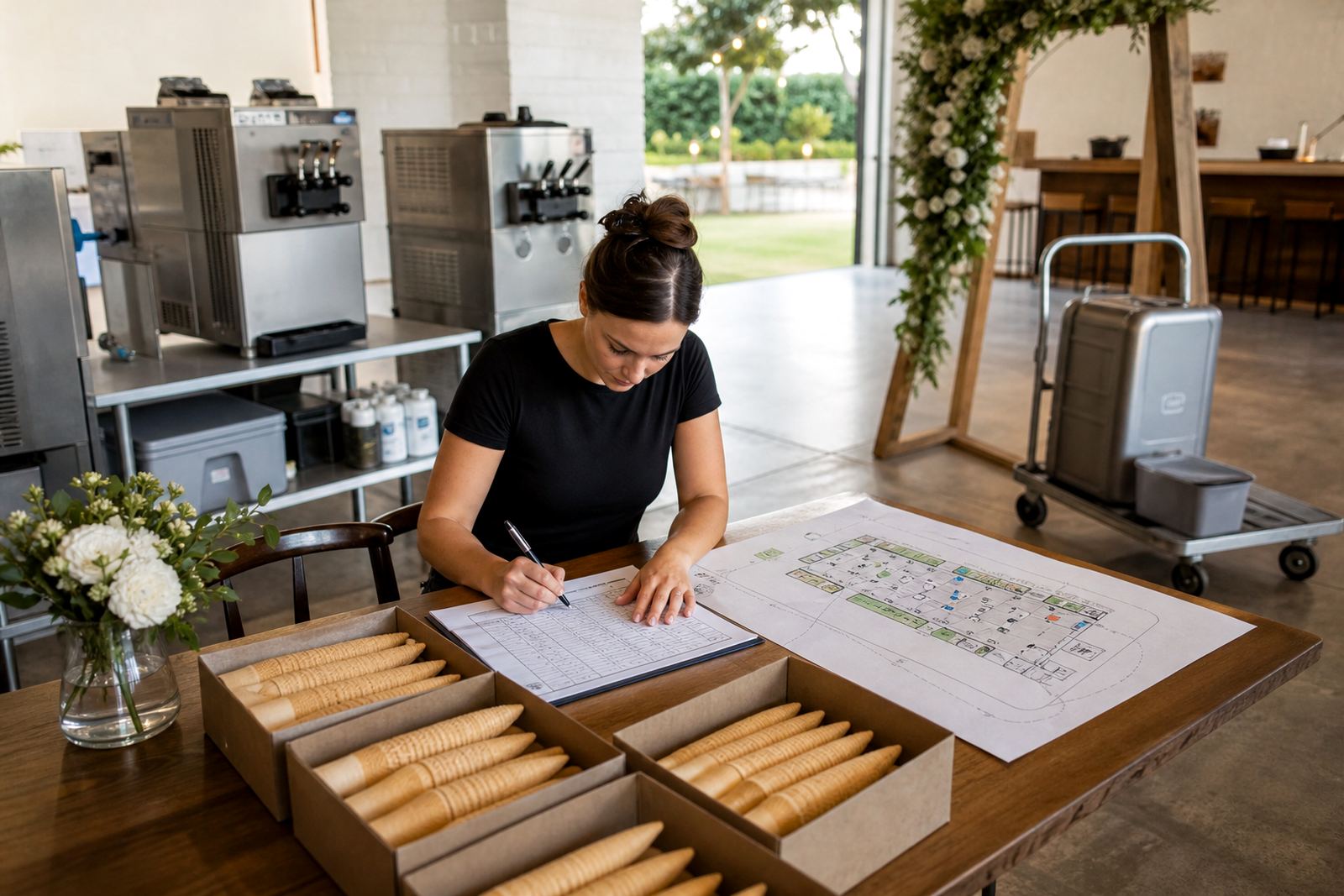

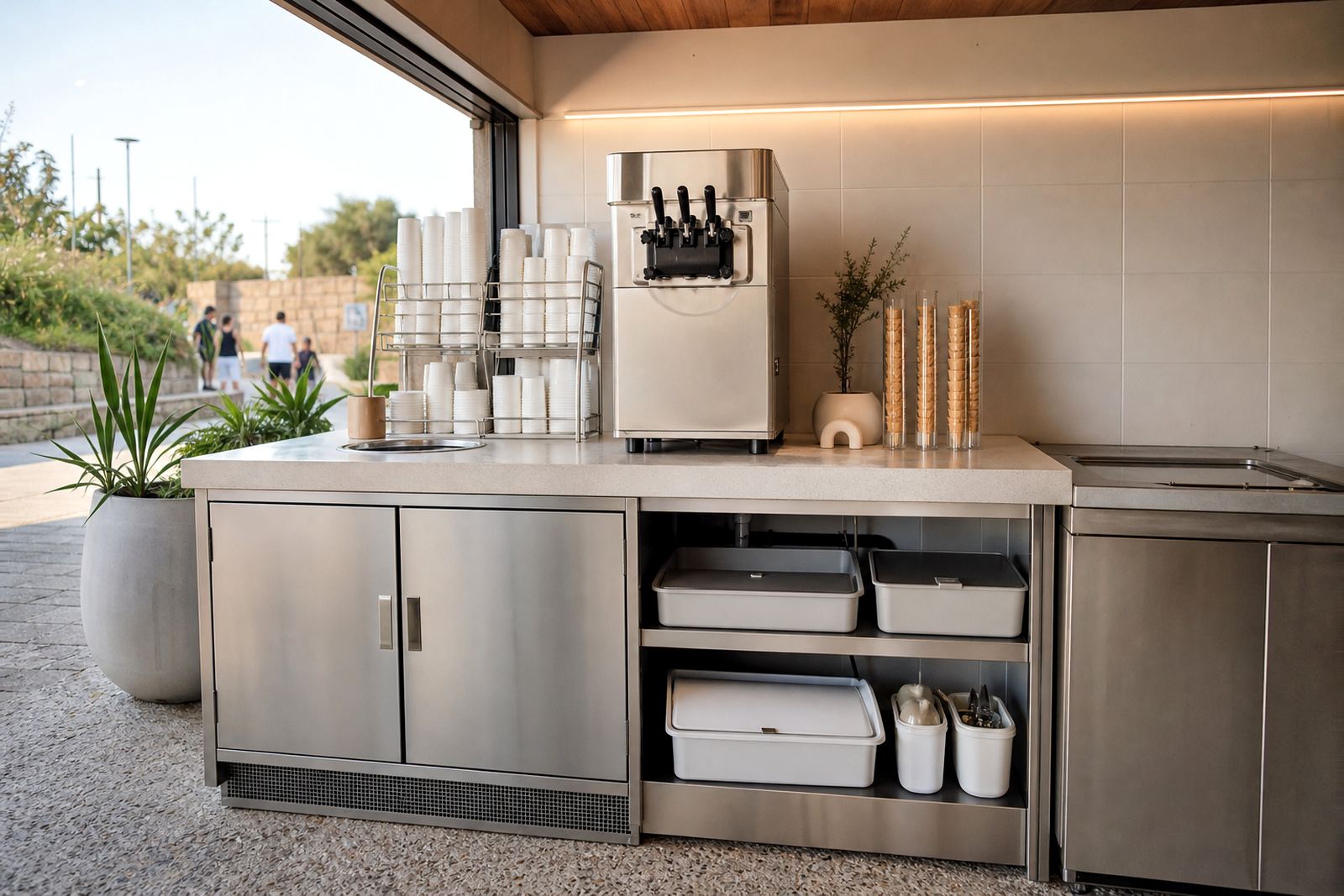
Make the counter work harder than the floor space
In many South African cafes and kiosks, counter space is tighter than storage space and every square metre has to earn its keep. That is where soft-serve and frozen yoghurt equipment can outperform larger dessert displays, because one compact unit can serve a high number of portions without taking over the front of house. The trick is to position the machine where it supports the queue, not blocks it.
A machine placed close to the till and cone stock makes service faster and reduces hand movement. Staff can take an order, dispense, add toppings and complete payment without walking back and forth. On a busy Friday afternoon in Durban or a Saturday in Pretoria, that saved movement becomes extra sales. It also helps during load-shedding if your workflow has already been planned around shorter service windows and backup power checks.
Small counters also benefit from clear customer flow. If the first customer sees the menu board, the machine and the topping station in one glance, they are more likely to order dessert before leaving. A neat setup makes the product look intentional, not squeezed in as an afterthought.
Choose a menu that sells fast and uses space well
The best compact dessert counters do not try to offer everything. They focus on a short menu that can be produced quickly and kept consistent through the day. Soft-serve, frozen yoghurt, cones and a few toppings can already carry strong turnover if the pricing is sensible and the portioning is controlled.
For smaller operators in Durban, Pietermaritzburg or Gqeberha, a simple menu also helps with training and stock control. Staff do not need a long list of steps to remember, and product waste stays low. That matters when mix deliveries, sugar stock and cones all have to be managed from limited storage.
- Keep one or two base flavours that move quickly
- Offer one or two premium add-ons such as sprinkles, sauce or fruit
- Use cones and cups that are easy to stack behind the counter
- Set portion guides so every serve is the same size
- Review slow sellers monthly and remove what is not paying its way
A short menu also makes it easier to respond to school traffic, lunch rushes and weekend family trade. The counter stays tidy, the queue moves and the customer sees value rather than clutter.
Why layout matters more than square metres
Counter layout affects sales more than many owners realise. If the machine is tucked too far behind the till or the toppings are across the room, service slows down and staff lose momentum. For a small site, the best layout keeps every movement within a short reach.
There should be a clear line from storage to machine to serve point. Mix containers must be easy to access, cones should be within arm’s reach and cleaning items need a place of their own. In humid coastal areas such as Umhlanga or Cape Town, this matters even more because damp storage can affect cones and dry goods if they are left open too long.
When space is limited, vertical storage helps. Shelving above the prep area, under-counter bins and slim cupboards can free up the surface for the work that actually makes money. The aim is to keep the counter open enough for service but structured enough that every item has a fixed place.
Equipment reliability keeps the tills moving
Compact counters depend on reliable machines because there is no spare space for delays. If a unit stops during the lunch rush, the lost sales are felt immediately. That is why startup commissioning, preventative maintenance and breakdown repairs are worth planning from the start rather than waiting until the first fault appears.
In South African conditions, the machine has to cope with power interruptions, warm afternoons and busy seasonal trade. A proper installation should account for ventilation, access for cleaning and a stable electrical supply. Where municipal trading rules apply, the counter layout should also leave enough room for safe customer movement and cleaning around the unit.
- Book seasonal checks before school holidays and December trade
- Inspect seals and worn parts before they start causing leaks
- Keep sanitising supplies on site for daily cleaning
- Check mix calibration so servings stay consistent
- Use phone support early when a fault starts, not after it grows
A machine that runs cleanly and dispenses consistently gives the operator confidence. That confidence shows at the counter, because staff serve faster and customers trust what they are buying.
A Durban example: small footprint, steady dessert trade
Take a small counter in Springfield Park, with lunch traffic from nearby workshops and steady takeaway trade from office staff. The space is not large, but it can still support a strong dessert line if the operator keeps the setup simple. One soft-serve or frozen yoghurt machine, a compact topping shelf, cone storage and a clear price board are enough to start driving repeat sales.
On warm days, customers are often looking for something cold, affordable and quick. If the service point is neat and the queue moves fast, dessert becomes an easy add-on after lunch. That is where compact counters work well. They do not need a full kitchen extension, only a sensible flow that lets staff produce and serve without interruption.
We often see the same pattern in Johannesburg, Cape Town and Gqeberha too. The site that treats dessert as part of the main sales rhythm, rather than a separate effort, usually gets better turnover from the same floor space.
Small counter habits that protect profit
Once the layout is in place, daily habits determine whether the counter keeps earning. The aim is to protect speed, hygiene and stock control. When those three stay tight, the unit can carry its weight even in a small shopfront or kiosk.
Operators should train staff to work the same way each shift. That means using the same portion sizes, the same cleaning routine and the same restocking rhythm. It also means logging any faults early, especially after power cuts or busy weekends when the machine may need a deeper clean.
- Open and close with a fixed checklist
- Rinse and sanitise at the same time each day
- Keep cones, cups and napkins in one set place
- Watch stock levels before the weekend rush
- Plan site relocations carefully so the machine is not damaged in transit
When a small counter is organised properly, it can sell dessert all day without needing a big footprint. That is the real advantage. Less wasted motion, less spoilage and more chances for each customer to say yes to a treat.