
Why portion control matters more than most owners think
When a serving size drifts by even a little, the effect adds up fast. In a busy Durban kiosk or a weekend café in Johannesburg, an extra spoon of mix or an overfilled cone on every third sale can quietly cut into profit. That is why portion control is not just about discipline, it is part of daily cost control.
With frozen yoghurt and soft-serve, the selling price often looks generous to the customer, but your true margin depends on how much product goes into each serve, how much wastage happens during start-up and cleaning, and whether staff are following the same method every shift. If one operator pours a 5 litre mix batch too full and another serves light, your numbers become hard to trust.
A simple standard serving can also help with customer expectations. People come back when they know what they are getting. If a cone looks different every time, some customers feel short changed while others assume you are being inconsistent. That affects repeat trade more than many owners realise.
Set a serving standard that staff can actually follow
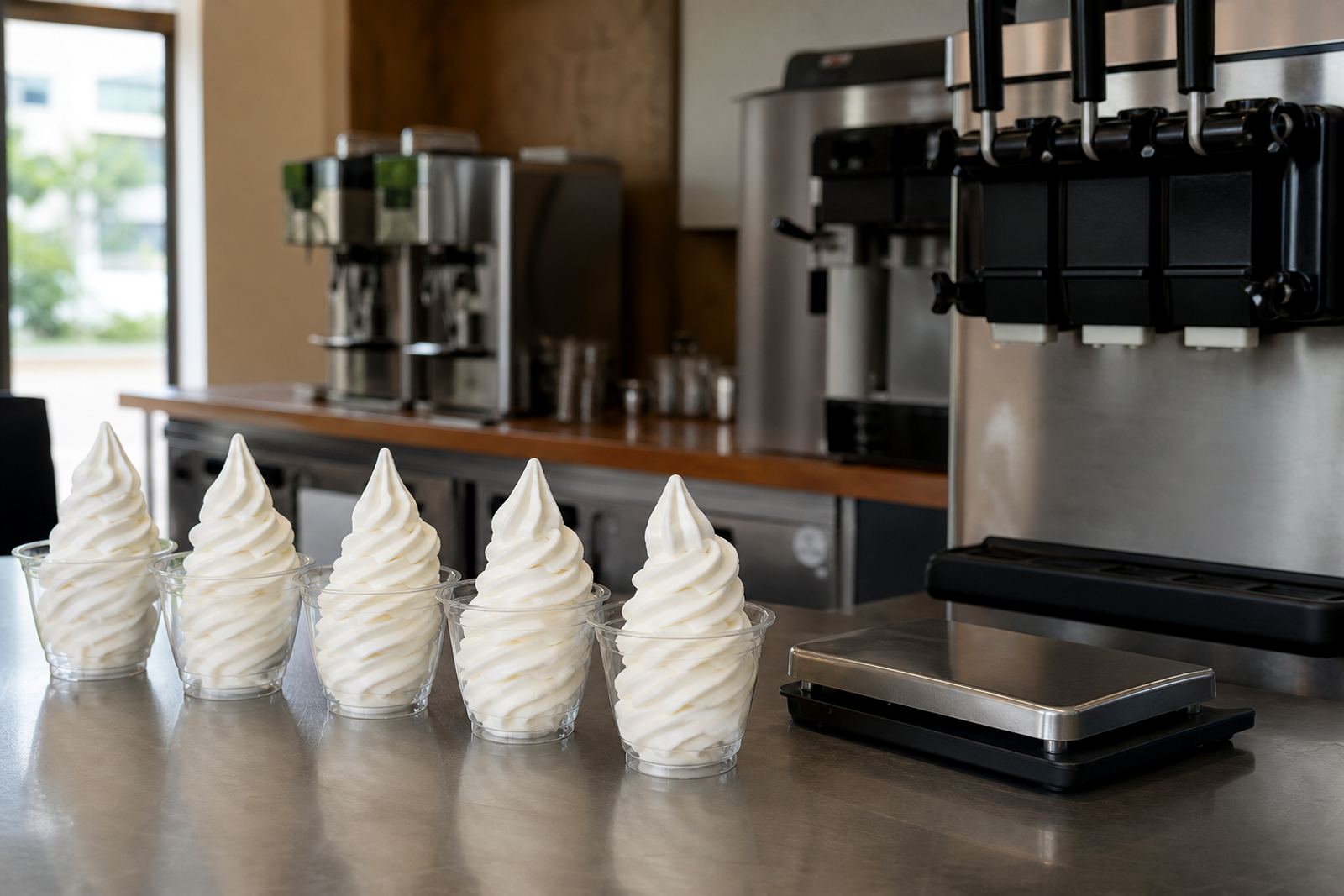
Start with one clear serving size for each product and write it down. Do not leave it to memory. A 100 ml serve for a kiddies cup, a standard cone fill to a marked line, and a set portion of topping are all easier to manage when they are visible at the counter.
Use practical tools that suit a South African service point, not kitchen theory. In Springfield Park, one operator can serve from a chilled unit all day, while another site in Pietermaritzburg may deal with heat, power interruptions and quicker stock movement. The standard should still stay the same.
- Choose one cup size for each menu item and label it clearly.
- Mark the fill level on cups or cones where possible.
- Use one scoop or ladle for toppings and keep it dedicated to that item.
- Train every new staff member on the same portion rules on day one.
- Check portions during busy periods, not only in quiet hours.
It also helps to post a short serving guide near the machine. Keep it plain and direct. If the instruction is too wordy, staff will ignore it when the queue builds.
Use machine settings and calibration to keep output even
Even with good staff, the machine has to do its part. Soft-serve and frozen yoghurt output can change if the mix ratio, temperature or draw speed is not right. A machine that is not calibrated properly may produce serves that are too soft one day and too heavy the next. That makes portion control harder and can waste mix.
Regular mix calibration is worth doing, especially after a service call, a site relocation or a change in weather. Coastal humidity in Durban can affect storage conditions more than a dry inland site, while a busy Cape Town outlet may run long trading hours with different demand peaks. The point is to keep the machine set to a stable result, not chase one-off adjustments.
Good habits at the machine level include:
- Checking the mix consistency before trading starts.
- Watching the first few serves after a clean or restart.
- Making sure the hopper level stays within the recommended range.
- Keeping the nozzle area clean so product flows evenly.
- Recording any changes in texture or yield straight away.
If a team notices that one batch fills more cups than the last batch, that is usually a sign to review calibration or operator technique. Small corrections early can save a lot of product by month end.
Build portion control into menu design and pricing
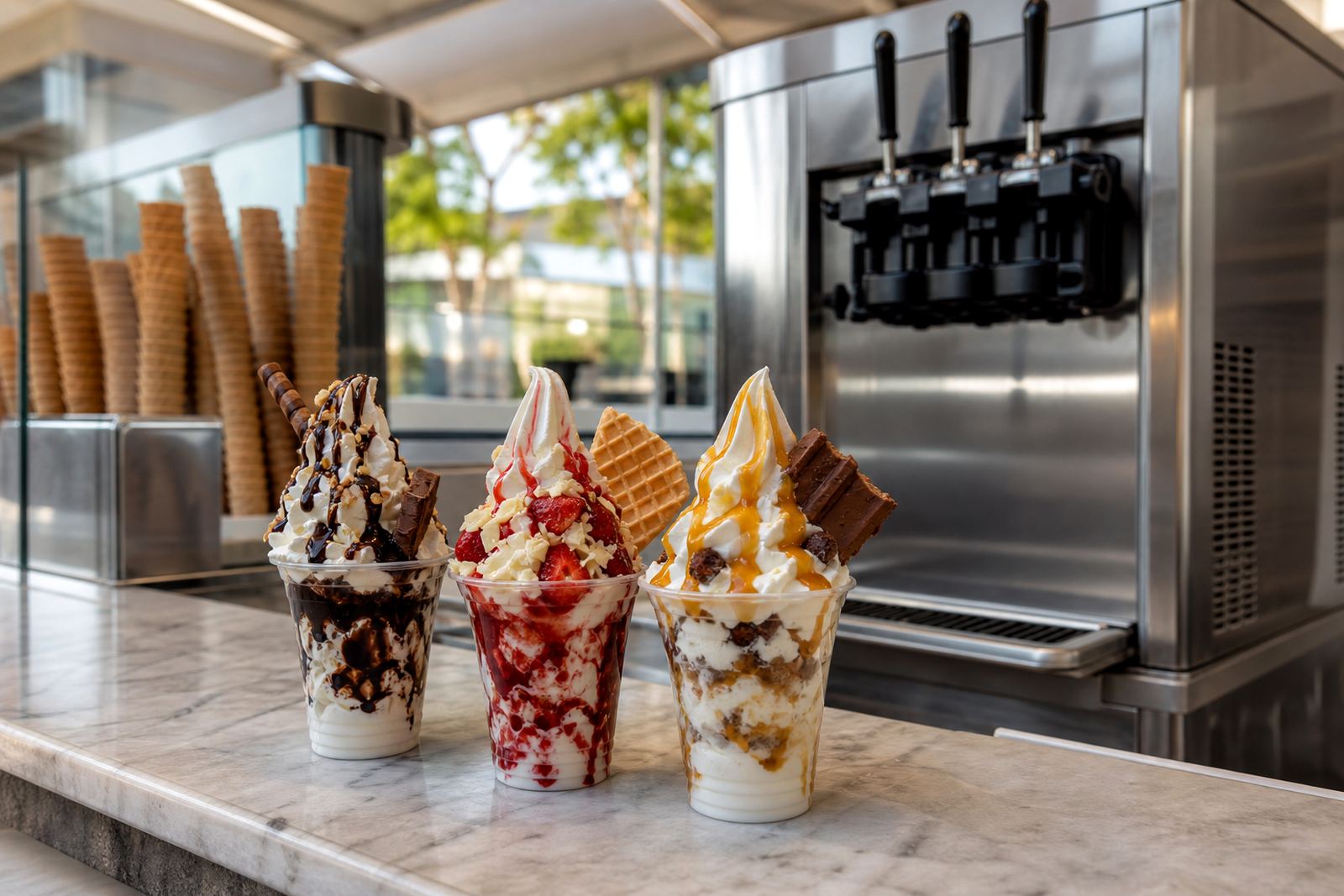
Menu design can help you manage serving size without making the customer feel restricted. Instead of offering too many random combinations, build a small set of clear sizes and keep the recipe for each one fixed. This works well in kiosks at malls, cafés near schools, and restaurants that want a fast dessert add-on.
A good menu should tell the staff exactly how much mix, cone or topping belongs on each item. If you sell a waffle-style cone with soft-serve, for example, the cone size, the number of swirls and the topping line should all be the same every time. That gives you better control over your cost per serve and helps with stock planning.
- Limit the number of serve sizes so stock is easier to track.
- Price premium toppings separately if they push up cost.
- Set a standard recipe for each dessert build.
- Use combo pricing carefully so margins do not disappear.
- Review prices after electricity, dairy or cone costs move up.
In some towns the first instinct is to compete on price alone. That can work for a while, but if portion sizes are too generous the business ends up selling busy hours for very little return. It is better to keep the portion stable and price it correctly from the start.
Train staff to serve the same way on every shift
Portion control lives or dies with staff training. A machine can be reliable, but if one employee piles on toppings and another serves light, the business still loses. The best results come when the team understands why the serving size matters, not just what the instruction says.
Keep training practical. Show the correct cone fill, the right topping amount and the expected finish for each product. Then let the person practise while someone checks the result. A short check at the start of a shift is better than a correction after 200 serves.
It also helps to assign one person as the shift checker. That person can spot when serving size starts drifting during a rush, or when a new casual worker needs a quick reminder. This is especially useful in seasonal trade, when staff change more often and turnover can be high.
For busy sites in Gqeberha or Pretoria, where trading patterns can swing between quiet weekday periods and sharp weekend peaks, a simple control routine keeps the product line steady. When everyone follows the same method, the till figures become easier to trust and stock ordering gets cleaner too.
Track wastage so you can see where profit is leaking
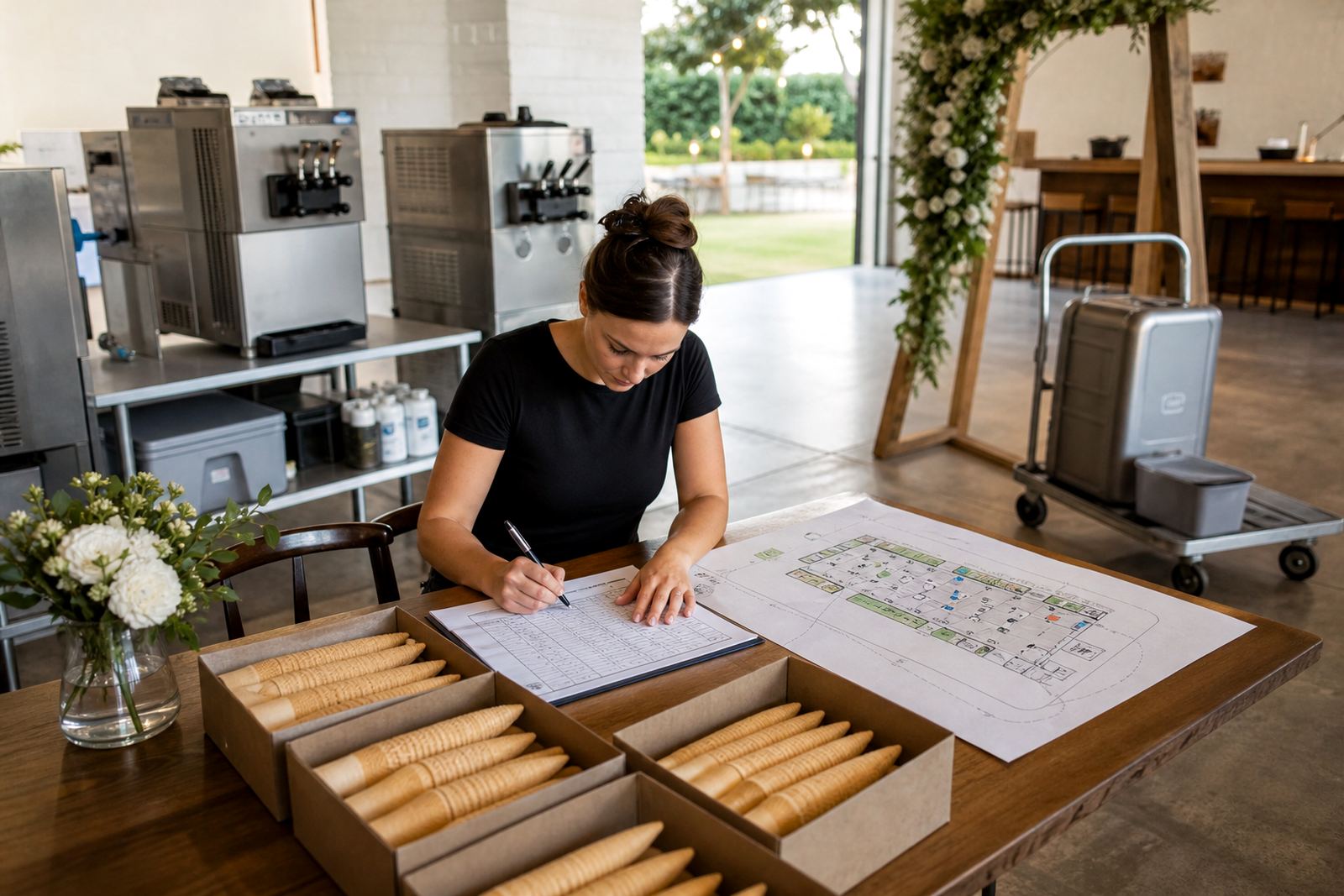
Portion control is stronger when it is backed by records. You do not need a complicated system. A notebook, a daily sheet or a basic stock count can show where mix is being overused, where cones are breaking, and where product is being discarded after cleaning or downtime.
Look at three numbers each week: how much mix was used, how many serves went out, and how much wastage was recorded. If those numbers do not line up, you can start asking the right questions. Was the machine over-dispensing? Did staff top up serves too high? Was there unnecessary product left in the hopper at close? That kind of detail matters.
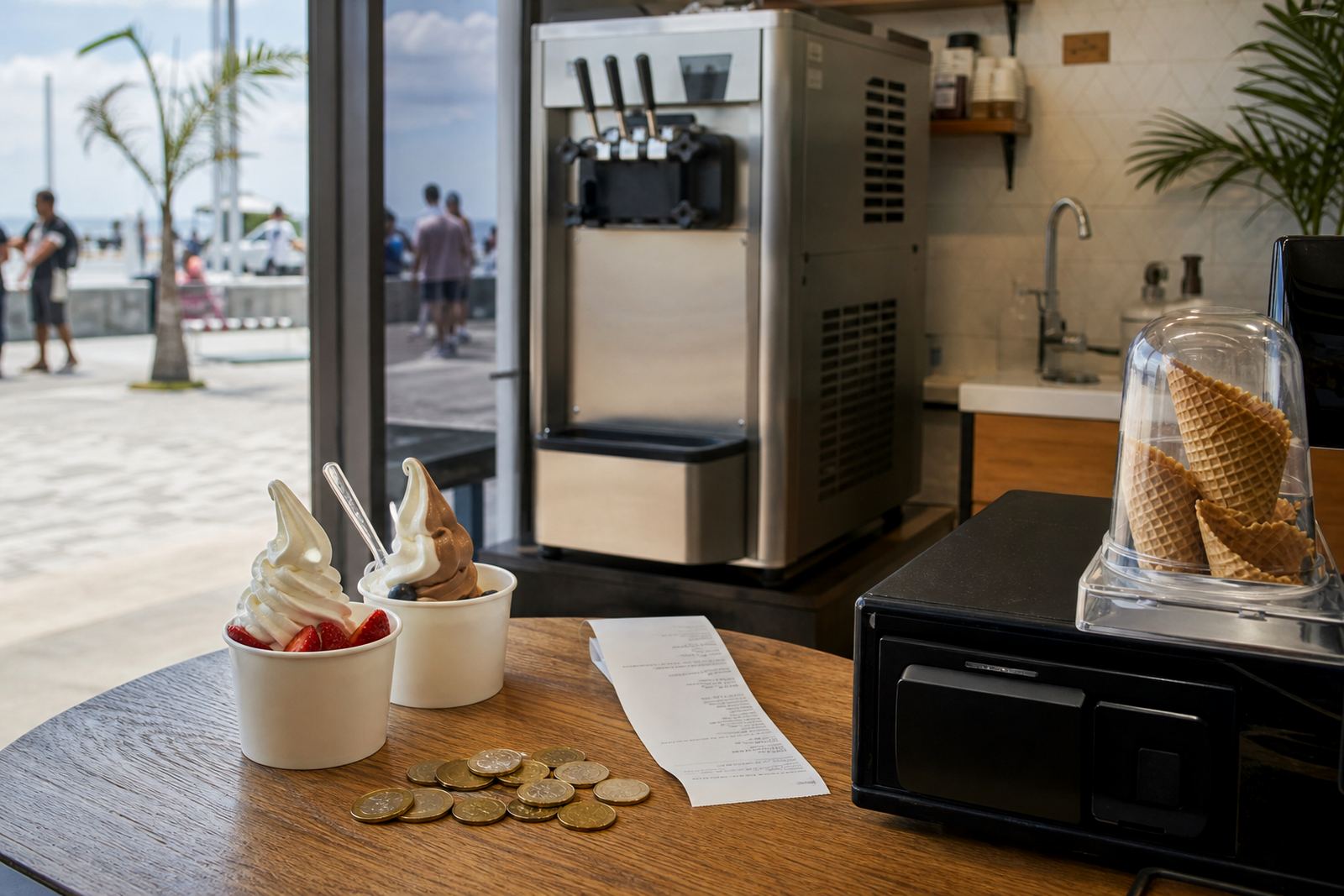
For a local example, a kiosk in Springfield Park may handle school traffic, lunch buyers and weekend family trade in the same machine. If portion size slips by just 10 ml per serve, the loss can be enough to affect monthly rent money or maintenance budgets. That is why the best operators keep checking, even when trade looks normal.
Make portion control part of daily service, not a one-off fix
The strongest businesses treat portion control as a daily habit. They check the machine, brief the staff, count stock properly and keep the menu simple enough to manage. That way the margins stay steadier and the customer gets the same product every time.
If your outlet is opening a new site, moving premises or preparing for the warmer months, it is worth reviewing portion sizes before trade starts. A proper startup check, operator training and preventive maintenance can save a lot of trouble later. In a dessert business, consistency is not just a nice extra. It is part of how you protect profit while keeping customers coming back.