Start with the space you actually have
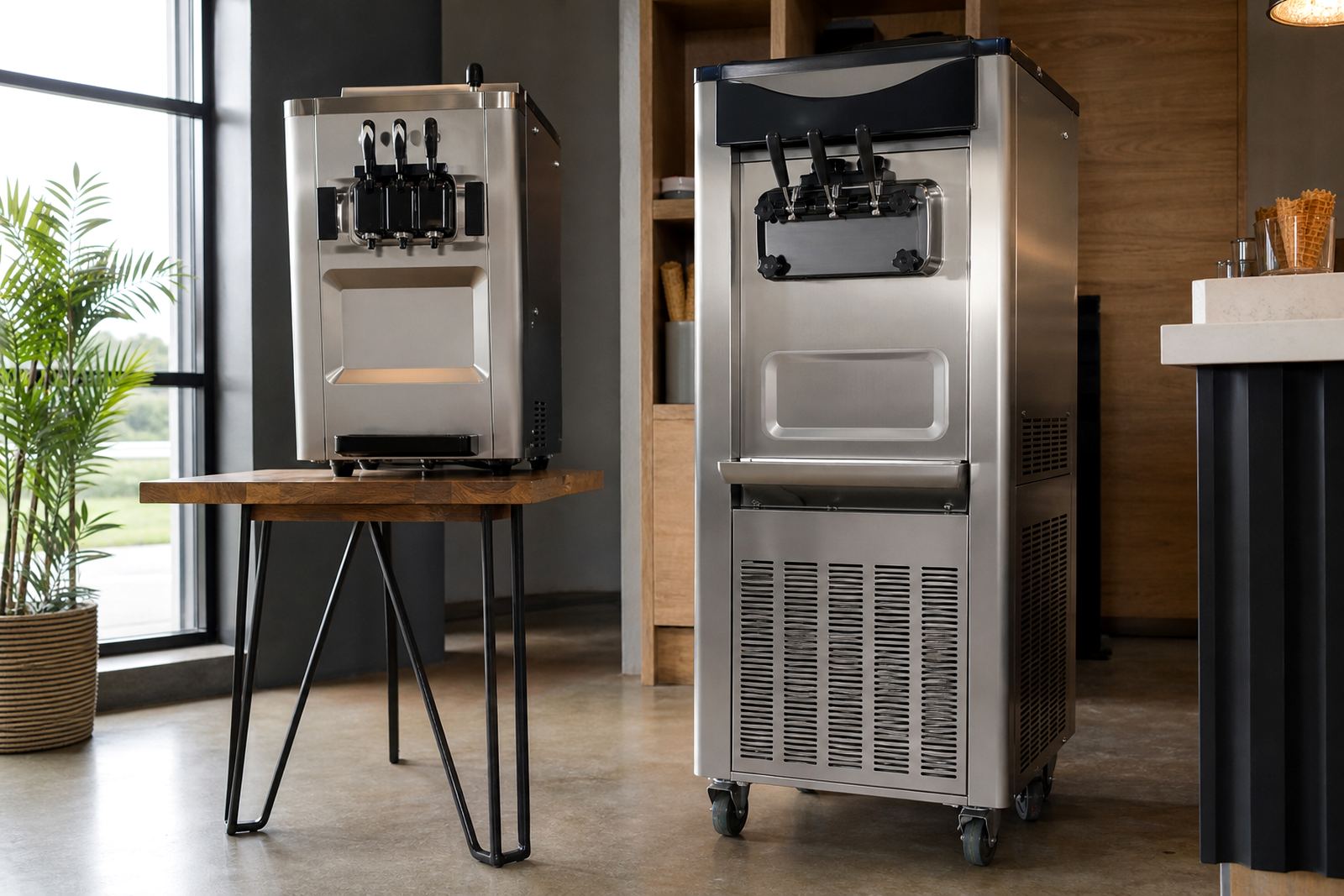
Before you look at prices, measure the counter, prep area and storage space. A small café in Durban city or a kiosk in Umhlanga may only have room for one machine, a toppings tray and a freezer, so every centimetre counts. Allow for ventilation at the sides and back, easy access for cleaning, and a safe path for staff to load cones and mix. If the machine sits too close to a wall or hot oven it can overwork in summer, especially in coastal humidity.
Think about where customers will queue and where your team will stand to serve. A tidy layout helps you move fast during the lunch rush and keeps the service point clean. If you are in a centre with municipal trade rules or strict landlord conditions, make sure the planned position allows easy cleaning and no mess on customer walkways.
- Measure width, depth and height before ordering
- Leave room for airflow and daily cleaning
- Keep the machine close to power and wash-up points
- Plan for customer queue space and safe staff movement
Match the machine to your daily trade
For a first-time buyer, the best machine is the one that matches your volume. A small café serving after-school treats and weekend families may do well with one compact soft-serve unit. A restaurant with dessert orders after every meal may need higher output and quicker recovery between servings. The same applies to frozen yoghurt, where topping choices and portion control matter as much as the machine itself.
Ask how many cones or cups you expect to sell on a normal day, and what happens during school holidays, month-end and the hot season. In Johannesburg and Pretoria, trade can spike in dry hot spells. In Cape Town and Gqeberha, summer foot traffic can stay strong for longer periods. Choose a machine that can handle your busiest hour without making staff rush or wait too long between servings.
- Estimate average daily servings and peak-hour servings
- Choose a unit that can keep up during busy periods
- Check if you need one flavour, two flavours, or a mix of both
- Ask about ease of use for new staff and casual workers
Build a simple stock range first
Your stock range should be easy to manage, easy to explain and easy to sell. Start with a plain base mix, one or two flavour options, cones, cups and a small set of toppings. If your menu becomes too broad too quickly, stock turns messy and wastage climbs. A clean, simple range is easier for small teams to control and helps you see what customers really buy.
Mix choice matters because it affects texture, sweetness and how well the product holds during service. Cones should be strong enough to carry a proper serve without breaking, and cups should suit takeaway orders. In busy branches around Springfield Park or Pietermaritzburg, the right pack sizes can save storage space and reduce counting mistakes. Keep backup stock for school holidays, rain days and unexpected busy weekends.
- One base mix to start, with one or two flavour options
- Standard cones for walk-in sales
- Cups for takeaway and delivery
- Small topping range that is easy to replenish
Plan for power, cleaning and load-shedding
Frozen dessert equipment needs stable power and proper cleaning. In South Africa, load-shedding and voltage dips can interrupt trade, so it helps to plan the machine location around your backup power setup and the rest of your kitchen load. If you run other appliances on the same circuit, check the total draw before installation. A machine that is easy to switch off and protect during outages saves wear over time.
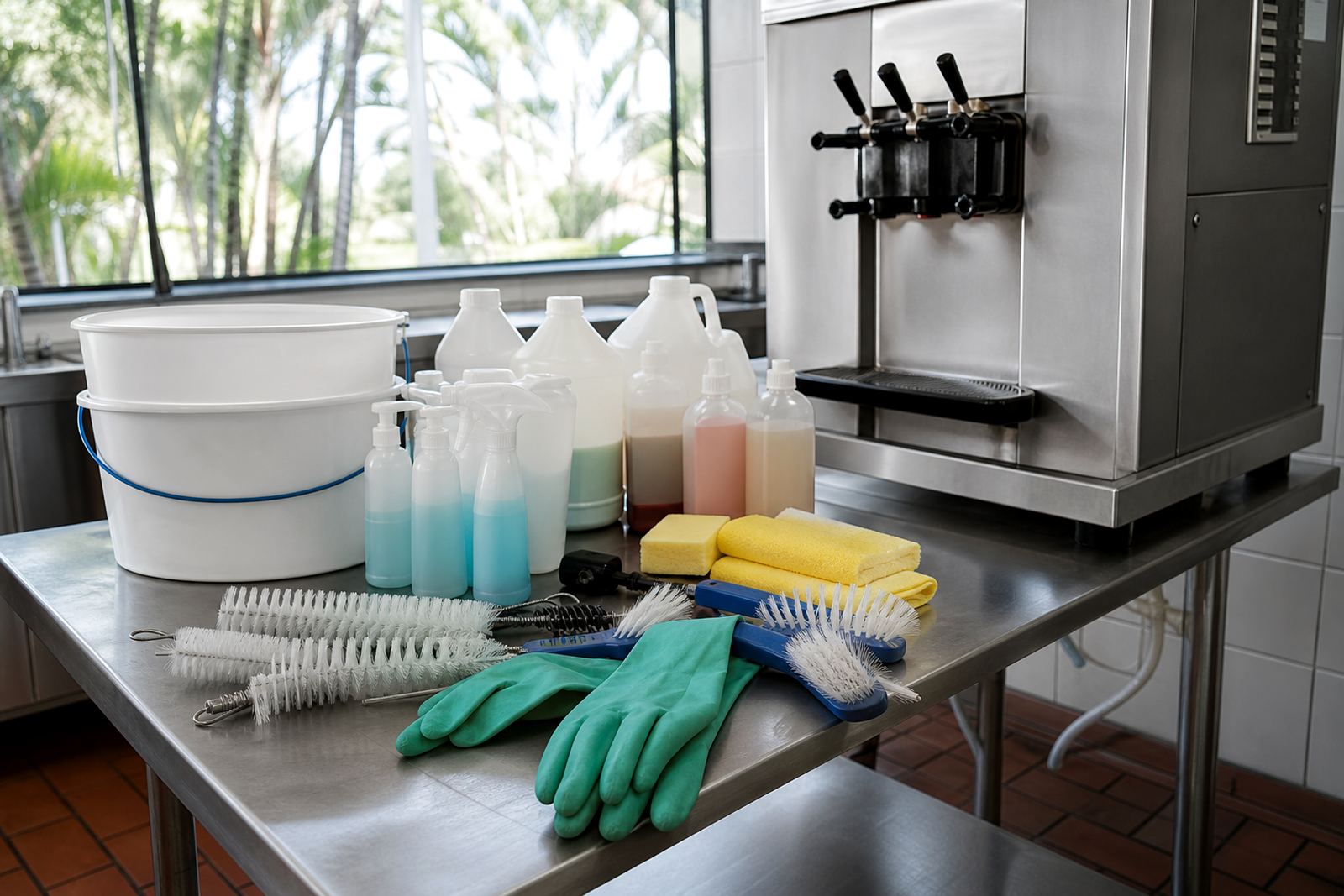
Cleaning should be simple enough to fit into a normal shift. Daily wash routines, sanitising and a proper deep clean keep the product tasting right and reduce breakdown risk. In coastal areas, salty air and moisture can affect fittings and seals, so routine checks matter. A small café does not need a complicated process, just a consistent one that staff can follow every day.
- Check circuit capacity before installation
- Keep a plan for outages and restart times
- Use daily cleaning steps that staff can repeat easily
- Schedule regular seal checks and deep cleans
Train staff before the first rush
Even a good machine will struggle if the team does not know how to use it properly. Operator training should cover filling, serving, basic cleaning, mix calibration and how to spot early warning signs. A new café often relies on part-time staff or family members, so keep the process written down and easy to follow. That way the product stays consistent whether the owner is on site or not.
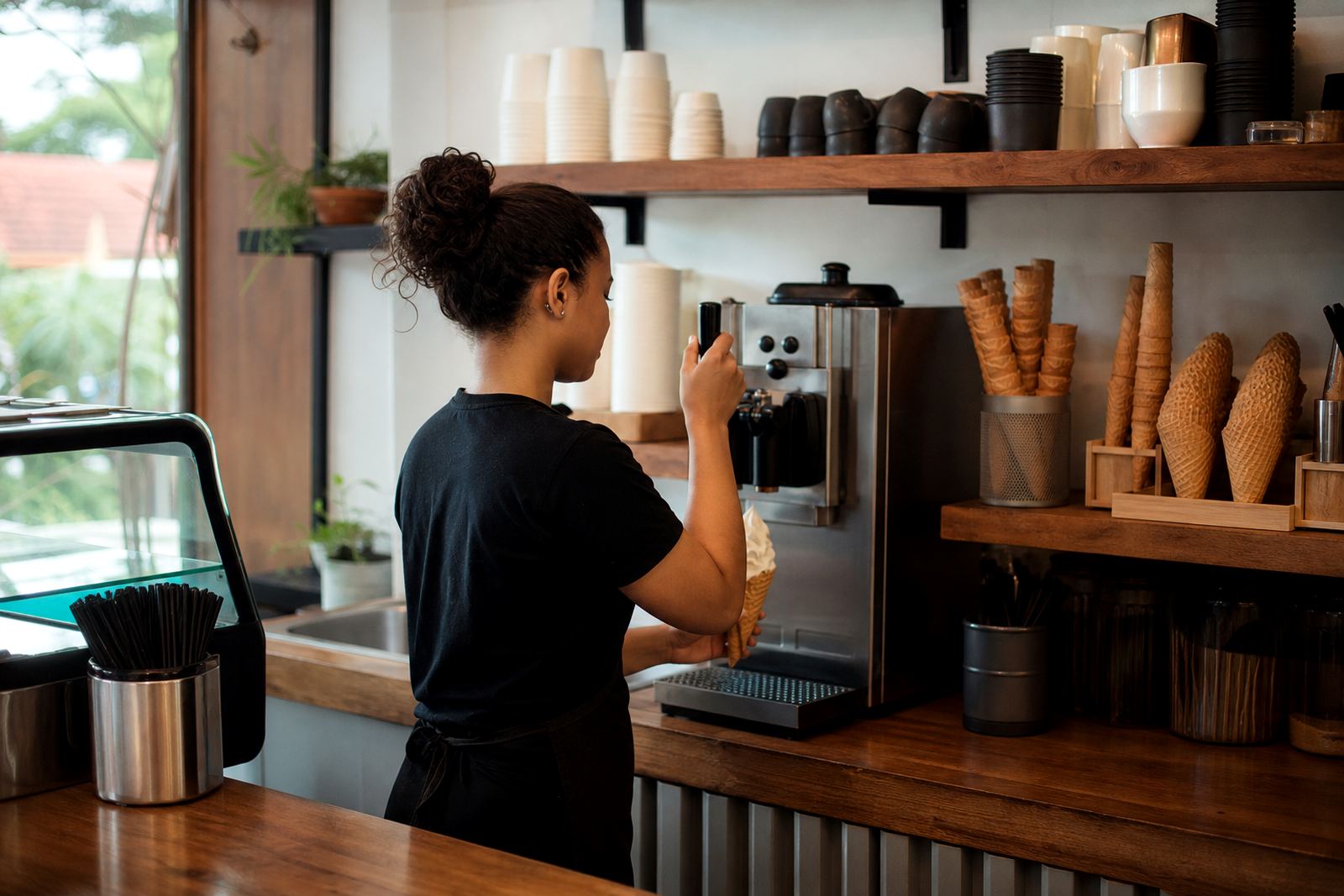
Training should also cover customer handling. Staff need to know how to portion correctly, when to change stock, and what to do if the machine alarms or stops working. If you are opening in a centre, on a school route or near a busy taxi rank, speed matters. The quicker the team can serve, the better your queue and the cleaner your counter stays.
- Show every staff member the full start-up and shut-down routine
- Keep a short cleaning checklist near the machine
- Teach portion control for cones and cups
- Make sure someone knows who to call for phone support
Use a simple buying checklist before you order
Before you place an order, check the basics one more time. Confirm your available space, your expected sales, your power supply and the stock you want to carry in the first month. It also helps to think about future growth. A café in Durban may start with one unit and later add a second machine or a bigger mix range once trade settles. Starting with the right setup now is cheaper than changing it after the rush begins.
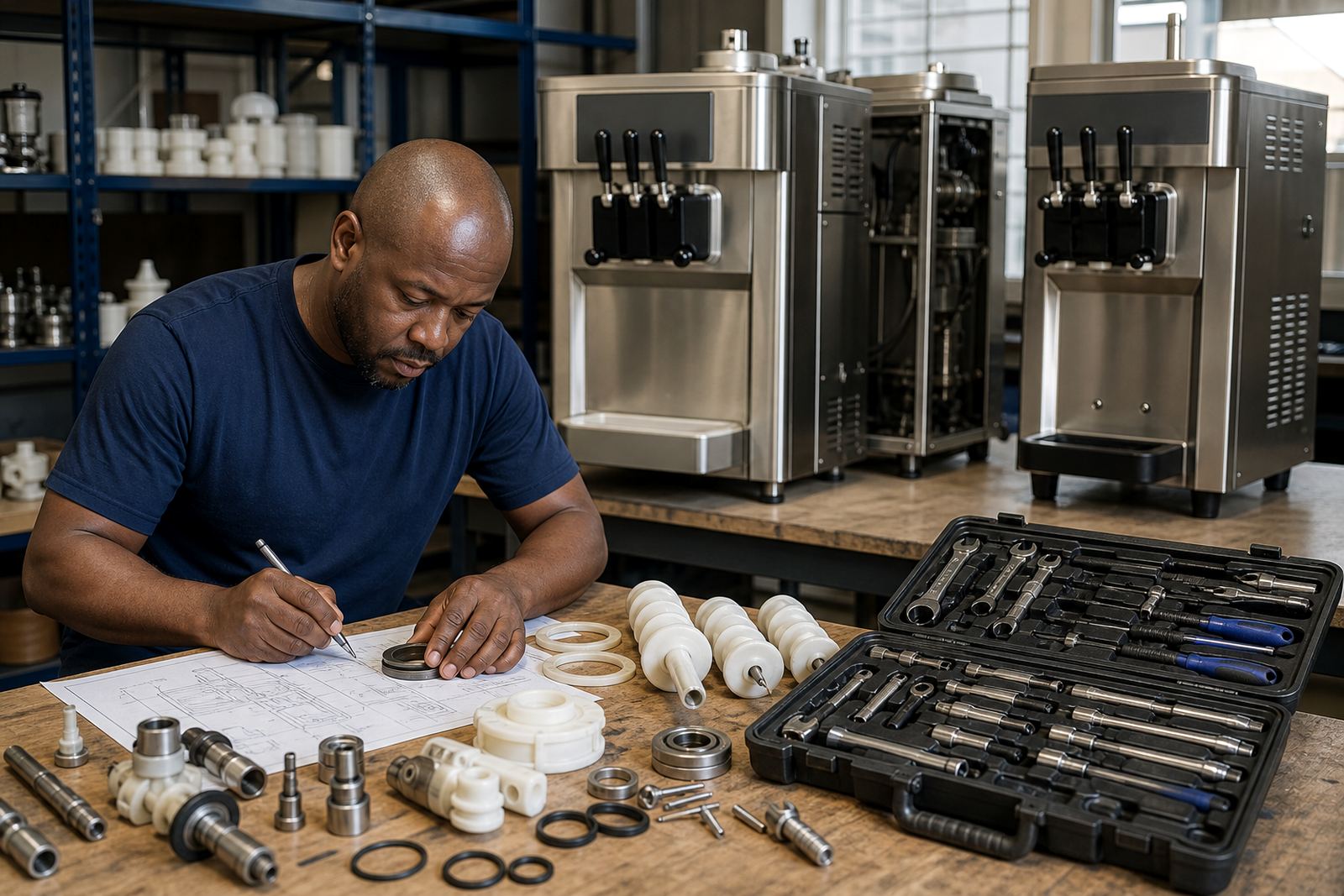
For small cafés, the safest approach is a practical one: buy for the trade you have, not the trade you hope for next year. If you need installation, startup commissioning, preventive maintenance or later site relocation, line those services up early so opening day goes smoother than a last-minute scramble.
- Space measured and power checked
- Machine type chosen for expected daily servings
- Mix, cones and cups selected for the first order
- Cleaning routine and training in place
- Support plan ready for repairs, parts and seasonal checks
A small café can keep it simple and still sell well
The best frozen dessert setup for a small café is the one that is easy to run, easy to clean and easy to restock. Keep the menu focused, the equipment reliable and the team trained. That gives customers a consistent product and gives you a better grip on costs, especially in the first few months of trade.
If you are setting up in Durban, Johannesburg, Pretoria, Cape Town, Gqeberha or Pietermaritzburg, a practical plan will save time and reduce stress. With the right machine, a sensible stock range and regular maintenance, your frozen dessert counter can become a steady part of the business year-round.