
Set a service interval that suits your trade volume
A service plan should match how hard the machine works. A kiosk selling all day in summer will need tighter checks than a café that runs only after lunch and on weekends. As a starting point, inspect the machine weekly, clean daily, and book a full preventive service every 3 to 6 months depending on output, location and product type.
Coastal sites in Durban, Umhlanga and Gqeberha often need closer attention because humidity and salt air can affect seals, fasteners and cabinet surfaces. Inland sites in Johannesburg and Pretoria may face more dust, which can build up around vents and switches. If your machine sits near an open door, gas braai area or bakery line, shorten the interval.
- Daily: rinse, sanitise and check product temperature
- Weekly: inspect seals, beater parts and hopper cleanliness
- Monthly: check drive parts, airflow and mix calibration
- Quarterly: schedule a full preventive service and deep clean
Daily checks before service begins
Good preventive care starts before the first cone is served. A simple opening check helps you catch small issues before they become breakdowns. It also helps staff notice changes in texture, speed or noise that point to wear or blocked flow.
Use the same routine every day so nothing gets missed, especially when shifts change or the shop is busy. If you run on a generator or have had load-shedding overnight, let the machine stabilise properly before serving. Voltage swings can affect freezing and motor performance.
- Confirm the machine is level and the floor around it is dry
- Check for unusual noise, vibration or flashing fault lights
- Look at the mix level and make sure it is fresh
- Inspect hopper lids, handles and dispense points for residue
- Test the first product for texture, air content and temperature
If the first serve looks soft, icy or too airy, stop and check the mix setting before trading continues. A small fault at opening time often becomes a big complaint by mid-morning.
What to inspect during a proper preventive service
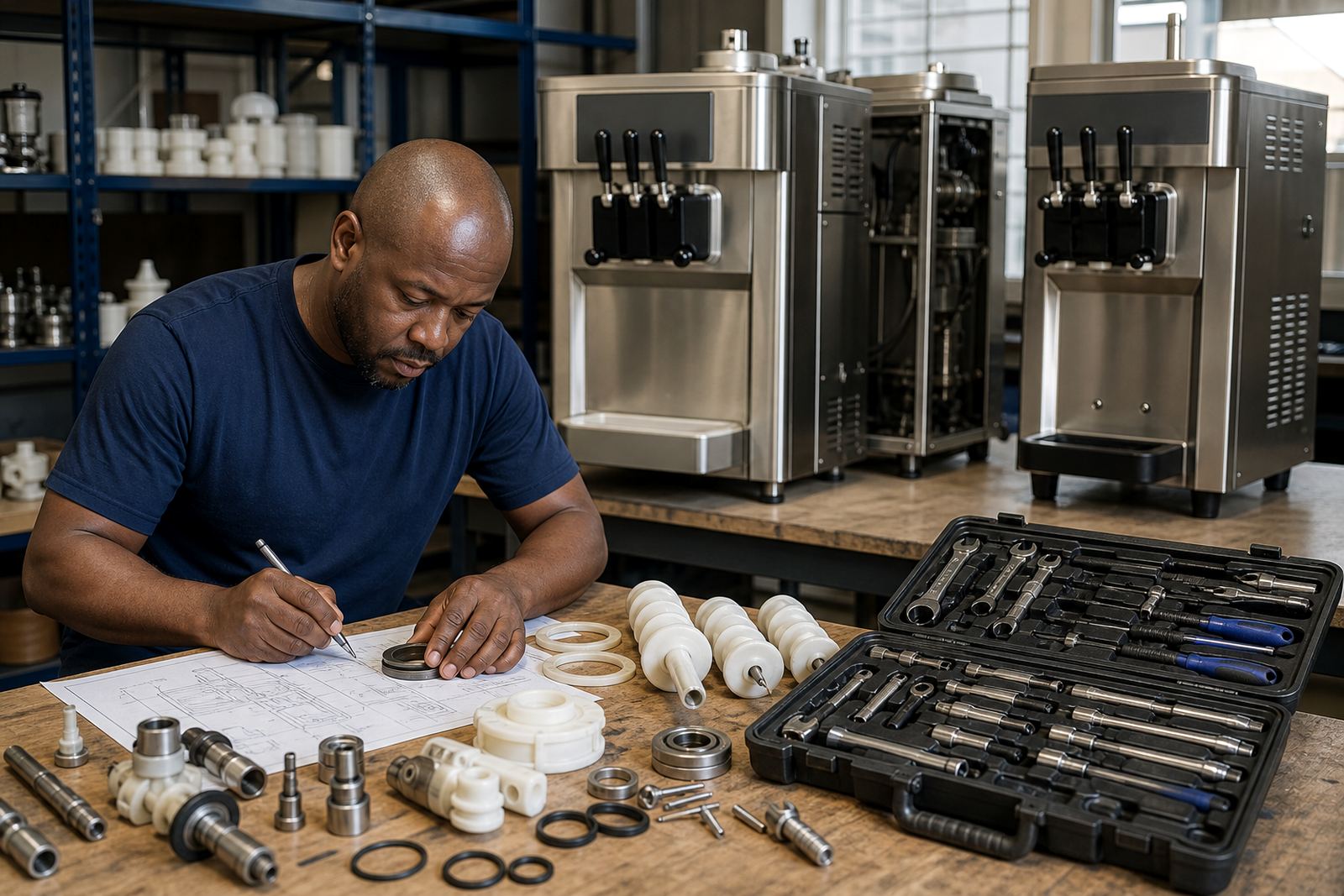
A full service goes beyond a quick wipe-down. The main aim is to keep product quality consistent and protect the parts that wear out from heat, cleaning chemicals and regular use. This is where a trained technician can spot early damage and replace parts before they fail during a rush.
The key inspection points are simple, but they must be done carefully. Pay attention to seals, moving parts, temperature control and the condition of internal surfaces. On machines that run hard in restaurants and kiosks, even a small nick in a seal can cause leaks, poor freezing or air ingress.
- Door seals and product seals for cracks, flattening or leaks
- Scraper blades, beaters and auger parts for wear or scoring
- O-rings, gaskets and bushings for hardening or swelling
- Electrical connections, switches and control settings
- Condenser areas, vents and fans for dust or blocked airflow
- Dispense handles and springs for smooth action and return
Also check the cabinet and base for corrosion, loose panels and signs of product drips. In coastal locations, salt moisture can speed up surface wear, so a clean dry finish matters more than people think.
Common wear items and when to replace them
Some parts are meant to be serviced often and replaced on schedule. Waiting until they fail can lead to product waste, customer complaints and extra downtime. It is better to keep a small stock of wear items on hand, especially for busy sites or multi-site operations.
The parts below are usually the first to show wear, depending on cleaning method, use levels and product mix. If staff use the wrong brush, leave sanitiser sitting too long, or force fittings during cleaning, those parts will wear faster.
- Door and product seals
- O-rings and gaskets
- Scraper blades and beater seals
- Drive couplings and bushings
- Dispense springs, handles and small fittings
- Filters and airflow components where fitted
As a rule, replace parts at the first sign of cracking, flattening, swelling or repeated leaks. A part that costs little can save a full service call and a lost trading day.
Mix calibration and product quality checks
Preventive servicing is not only about mechanical parts. Mix settings, temperature and draw consistency all affect the final product. If the machine is overrun or underfrozen, customers will notice straight away and the issue often points back to setup rather than the mix itself.
Check the following after cleaning, after any service, and whenever product texture changes. Keep records per machine so you can compare weekday trade with weekend volume, and spot patterns after season changes in Durban or winter shifts in Cape Town.
- Draw temperature and hold temperature
- Mix ratio and preparation method
- Consistency of first serve and later serves
- Air content, flavour balance and product finish
- Recovery time between serves during peak trade
If you change mix brand, cone size or serving style, recalibrate before a busy period starts. That one step prevents waste and keeps the machine easier to manage for staff on the floor.
Cleaning, sanitising and shutdown care
Deep cleaning is part of preventive servicing, but daily cleaning still does most of the work. Machines that are cleaned properly last longer, smell better and hold product quality more consistently. Poor cleaning leaves residue in corners, seals and tubes, which then hardens and becomes harder to remove later.
When shutting down for the night or for a slow period, follow a fixed routine. This is especially useful when a site closes before midnight, or when trading is interrupted by load-shedding. A clean shutdown helps the next opening go faster and safer.
- Empty product according to your house procedure
- Wash, rinse and sanitise all food-contact parts
- Let parts dry fully before refitting
- Wipe cabinet surfaces and drip trays dry
- Store sanitising supplies in a clean, labelled place
Do not rush the drying stage. Fitting wet parts can dilute sanitiser and encourage smell or residue build-up. In humid areas, allow extra drying time if needed.
A simple service record for managers and owners
Keep a written service log for every machine. It does not need to be complicated, but it should be clear enough for a manager in Pretoria, a site supervisor in Springfield Park or a branch owner in Cape Town to see what was done and when. Good records make it easier to plan spares, order parts and arrange site visits before peak season.
Your log should include the date, the machine location, the work carried out and any parts replaced. Add notes on product texture, unusual sounds and any load-shedding or power issues that affected the machine. If several branches use the same mix, comparing records can show which site needs extra attention first.
- Date of service
- Machine location and serial reference
- Parts inspected and replaced
- Cleaning and sanitising completed
- Comments on performance after service
At SnoCream, preventive servicing helps keep machines ready for daily trade, season prep and busy weekend demand. When you need support, use the enquiry form on our contact page and our team can assist with scheduling, training, maintenance and repairs across South Africa.