
What Every Operator Must Know Before First Use
Before a staff member works alone on a soft-serve or frozen yoghurt machine, they must understand the controls, the product flow and the cleaning routine. That includes knowing which switch does what, how to check the mix level, and what normal product texture looks like during service. A good operator also knows when not to force the machine to keep going, especially during warm coastal afternoons or when load-shedding has affected the cold chain.
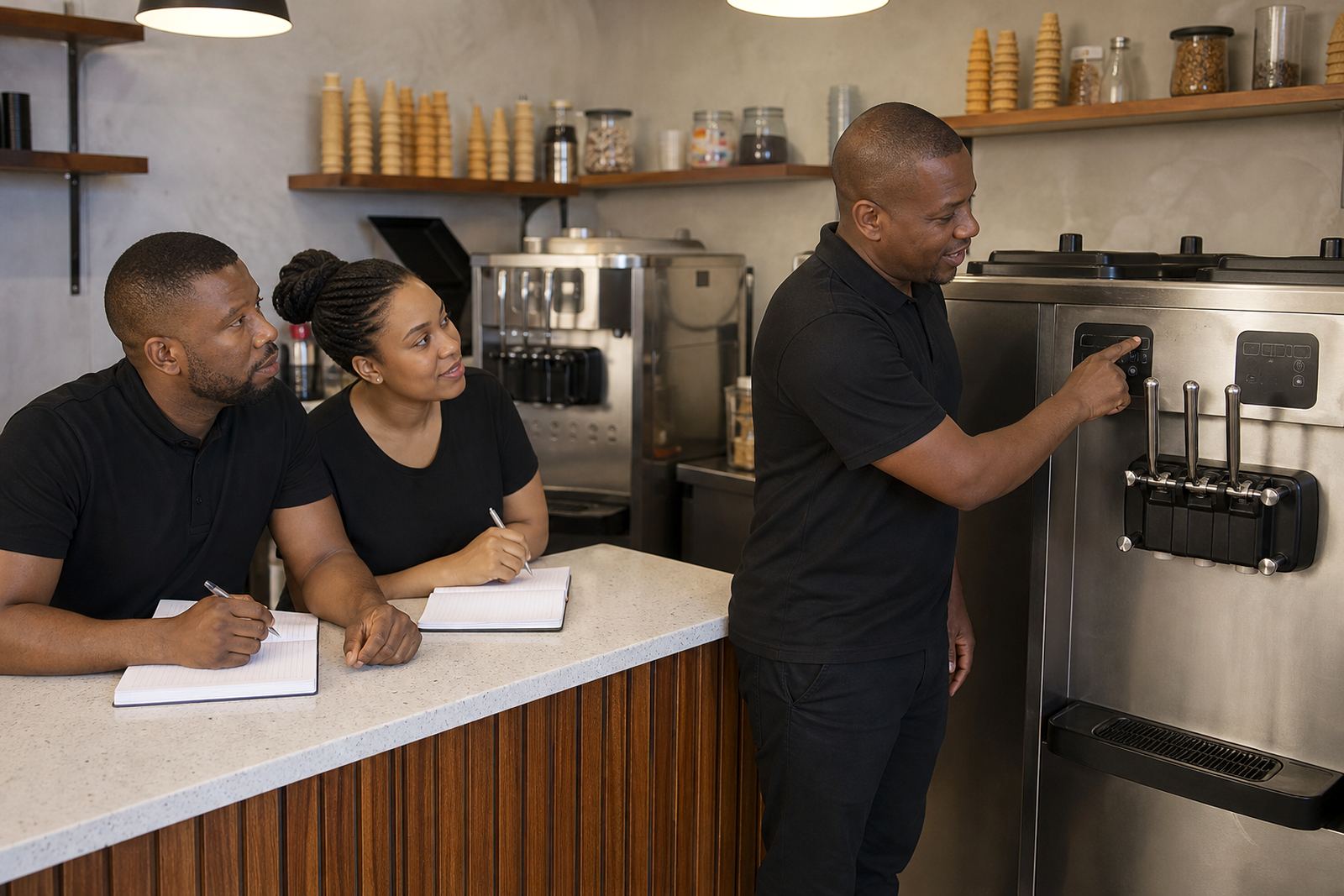
We recommend that every new operator completes supervised shifts before being signed off. During training, they should be able to explain the machine parts in plain language, identify warning lights or unusual noises, and follow your shop rules for hygiene, stock rotation and customer service.
Daily Start-Up Checks Before You Serve
A proper start-up routine prevents most service problems. The machine should be clean, assembled correctly and ready for the first batch before trade starts. If the room is hot, the product may take longer to freeze, so operators should work steadily and keep the mix refrigerated until needed.
- Check that the machine is level and plugged into the correct power supply.
- Confirm that all panels, lids and seals are fitted properly.
- Inspect the hopper, freezing cylinder and tap area for leftover product.
- Make sure the mix is within date and has been stored at the correct temperature.
- Run a short test to confirm the product is freezing and dispensing evenly.
- Keep a clean cloth, sanitiser and waste container close to the service point.
If the machine was off overnight or after a power interruption, the operator should not rush the first batch. It is better to test the consistency than to serve soft product that has not set correctly. A few extra minutes at opening can save a whole morning of complaints.
How to Load Mix and Keep Texture Consistent
Correct loading is one of the main skills an operator must learn. The mix should be poured in carefully to avoid air pockets and spills, and the machine must never run dry. Operators should understand the difference between a proper mix, a mix that is too thin, and a mix that has started to separate after standing too long.
For coffee shops, kiosks and restaurants serving different flavours, consistency matters just as much as speed. The same recipe should produce the same result from the first cone to the last. If one side is overfrozen or the product comes out too soft, the operator should check the mix calibration, air intake and serving habits before changing settings.
- Use the correct mix ratio for the product being sold.
- Stir or shake the mix only as instructed for that product type.
- Top up before the hopper gets too low.
- Do not mix old product with fresh product unless the procedure allows it.
- Record which flavour was loaded and when it was opened.
Hygiene Rules That Protect the Machine and the Customer
Frozen dessert equipment needs strict cleaning habits because sugar, dairy and yoghurt residue can build up fast. In humid places like Durban and coastal Gqeberha, residue can become sticky very quickly, so operators need to clean as they go. A clean machine gives better texture, reduces odours and helps the business stay ready for inspections.
Staff should know which parts need rinsing during trade, which parts need deep cleaning after close, and which chemicals are allowed on food-contact surfaces. They also need to wash hands properly, use clean gloves where required, and keep wipes, cloths and brushes separate from general cleaning tools.
Training should include the full sanitising sequence, from draining the mix through to rinsing, washing, sanitising and reassembling. If seals are not seated properly after cleaning, the machine can leak or draw in air, so the final check is just as important as the wash itself.
Reading Faults Early and Knowing When to Stop
A trained operator should be able to spot early signs of trouble before a full breakdown happens. That includes unusual noise, weak dispense flow, product that is too soft, a temperature issue, or water around the base of the unit. In busy branches, small problems often start when someone ignores a change in sound or texture for too long.
Operators do not need to fix every fault themselves. They do need to know when to stop service, isolate the machine and report the issue clearly. Good fault reporting saves time for the technician and keeps the shop from making the problem worse.
- What the machine was doing when the issue started.
- Which flavour or side was affected.
- Whether the unit had just been cleaned, filled or switched on.
- Any recent power cuts, relocations or warm-room conditions.
- Any alarms, lights or odd sounds noticed by staff.
Training for Busy Shifts, New Staff and Seasonal Peaks
Some teams only need basic daily operation, while others need deeper training because they handle higher volumes or more than one machine. Busy summer trading, school holidays and weekends place extra pressure on staff, especially in Johannesburg, Pretoria, Cape Town and Durban where foot traffic can jump fast. Training should prepare the team for that pressure before the rush starts.
Seasonal refreshers are useful before school holidays, festive trade and hot weather periods. We also recommend retraining after site relocations, equipment changes or a long shutdown. If a machine has stood idle for a while, the operator should not assume it will behave the same way as it did last month.
For new staff, keep the sign-off simple: they should be able to start, serve, clean and shut down the machine correctly without help. If they cannot do all four steps, they are not ready to work alone yet.
Operator Sign-Off Checklist for Independent Service
Before a team member runs the machine without supervision, use a simple sign-off list. This protects your stock, your equipment and your customers. It also gives managers a clear record of who has been trained and on which machine.
- Can identify all main controls and safety points.
- Can complete opening checks without prompting.
- Can load mix correctly and monitor consistency.
- Can serve product at the right texture and portion.
- Can clean and sanitise the machine after trading.
- Can report faults clearly and stop service when needed.
- Understands stock handling, hygiene and basic food safety rules.
Once the team can handle those steps with confidence, service becomes more consistent and the machine lasts longer. That is the point of training: fewer errors, better product and less downtime.