Start With the Right Cleaning Kit
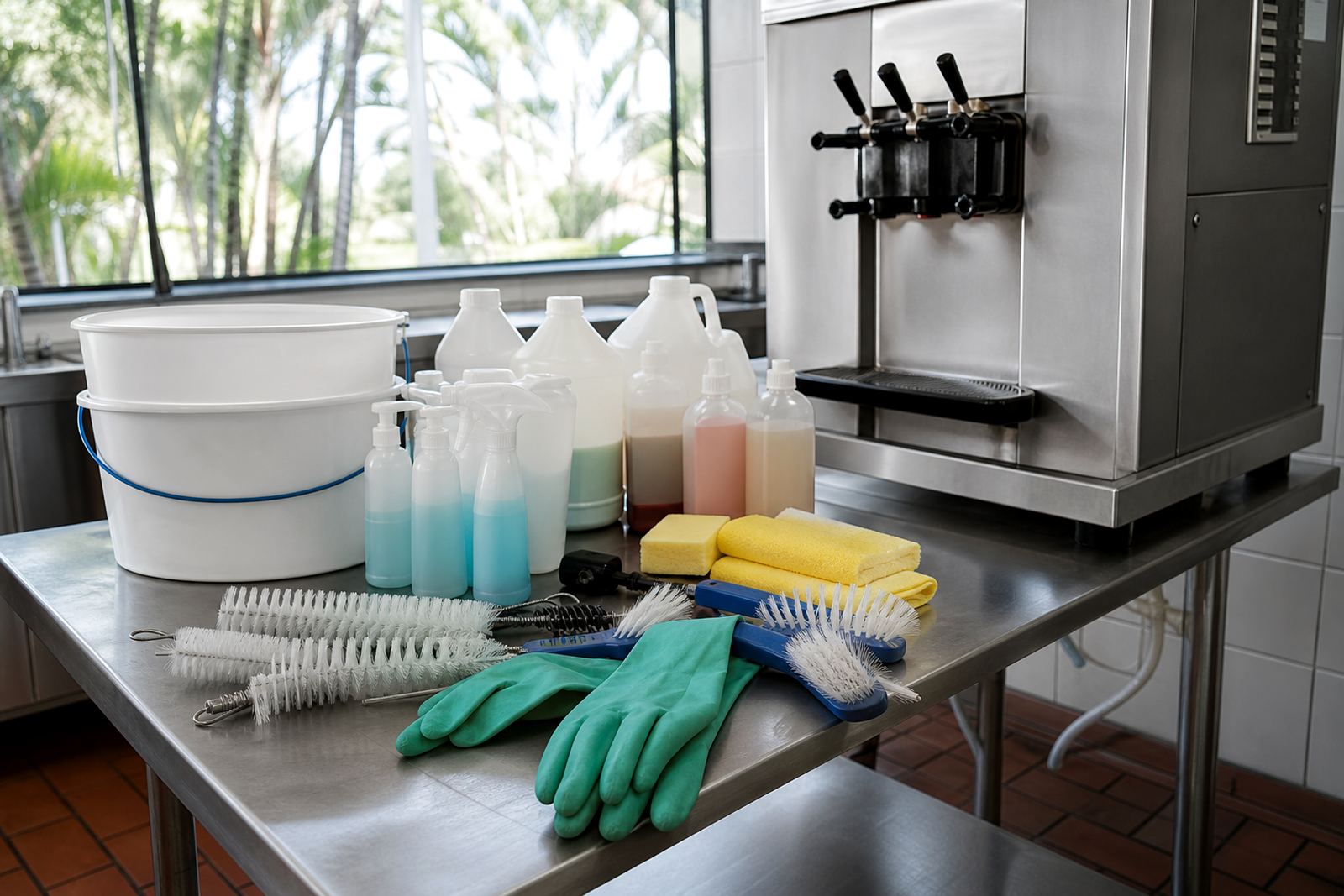
A proper cleaning kit saves time and helps staff do the job the same way every day. For soft-serve and frozen yoghurt machines, keep the tools close to the unit so cleaning does not get skipped after a rush or during load-shedding pressure. A small kit can fit in a labelled container near the prep area, but it should still cover every food contact point.
Use soft brushes for mix hoppers, a narrow brush for the draw valve area, and a longer brush for mix lines where the machine allows it. Keep separate cloths for the outside panels and the food contact parts. Never use a kitchen scourer on stainless steel or plastic surfaces, it leaves scratches that hold residue and make sanitising harder.
- Soft bristle brush for bowls, hoppers and lids
- Narrow valve brush for nozzles, seals and spouts
- Long flexible brush for tubes and narrow passages
- Microfibre cloths for outer surfaces and splash marks
- Food-safe sanitiser approved for dairy equipment
- Disposable gloves, bucket and measuring jug
Daily Clean Down After Service
A daily clean down is the minimum standard for reliable machine hygiene, especially in Durban’s humidity where residue can turn sticky fast. Once service ends, switch off the machine, follow the maker’s clean cycle and remove all product from the freezing chamber. Rinse with lukewarm water first, then wash with a mild cleaning solution before sanitising.
Pay close attention to the draw area, drip tray, seals and any parts that customers can see or touch. If your kiosk serves through a counter opening in a mall or forecourt, wipe the exterior handles and splash points more often during trading hours. A neat machine tells staff and customers that the product is handled properly.
- Empty remaining mix before it thickens overnight
- Rinse with lukewarm water, not hot water first
- Wash removable parts in the correct sequence
- Sanitise all food contact parts and allow proper contact time
- Leave components to air dry before reassembly
Sanitisers, Concentrates and Safe Mixing
Not every cleaner is suitable for frozen dessert machines. Use a food-safe sanitiser that works on dairy-contact surfaces and mix it at the correct strength. Too weak and it will not do the job, too strong and it can leave smell, taste or surface damage. Always check the label and use a measuring jug so the mix is consistent from one shift to the next.
For cafes and kiosks in Cape Town, Johannesburg or Pretoria, where different staff may handle the machine across the week, keep the sanitiser instructions printed near the sink. That helps new operators avoid guesswork. If your site gets hard water, rinse parts properly after cleaning because residue can build up around seals and nozzles.
- Use only food-safe sanitiser on product contact parts
- Measure every batch, do not guess the dilution
- Label spray bottles and buckets clearly
- Replace cleaning solution when it becomes dirty or weak
- Rinse and dry parts before putting the machine back into service
Brushes and Parts That Need Extra Attention
Some parts collect residue faster than others. Draw valves, O-rings, nozzles and seals are the first places where product can harden. If these are not brushed properly, the machine may drip, draw air or give uneven texture. That leads to wasted mix and unhappy customers. In busy sites, a quick wipe is not enough, the parts need to be removed and cleaned properly.
Keep spare seals and small parts on hand so a worn item can be changed without delay. In coastal areas, corrosion and moisture can shorten the life of metal fittings, so staff should inspect fittings for pitting, cracks or stiffness. If a part feels rough or does not seat properly, replace it before the next service period.
- Remove and clean draw valves daily where possible
- Inspect seals for cracks, swelling or flattening
- Brush under the drip tray and around splash guards
- Check lid edges and hinge points for trapped residue
- Keep spare small parts in a dry, labelled container
Weekly Deep Clean Routine for Better Performance
Even with good daily cleaning, a weekly deep clean helps keep output steady and reduces the chance of repairs. This is when the machine should be fully stripped within the allowed cleaning procedure, then washed, sanitised and checked for wear. A deep clean is especially useful before school holidays, weekends with heavier traffic or summer trading in tourist areas.
Use the same sequence every time so nothing is missed. Staff should clean one machine section at a time and lay parts out in order on a clean tray or towel. This avoids mix-ups and helps with reassembly. If the machine has sat unused for a while, do a full clean before restarting, even if it looks clean on the outside.
- Shut down and isolate the machine
- Drain remaining product and rinse the system
- Remove all washable parts
- Wash, rinse and sanitise each part
- Inspect seals, valves and tubes for wear
- Reassemble and test before trading resumes
When Staff Training Makes the Biggest Difference
The best tools are only useful if the team uses them the same way every time. Train operators on the cleaning order, the correct sanitiser mix and the parts that should never be forced back into place. Short training at startup commissioning time is often enough to prevent common mistakes like using the wrong brush or skipping the contact time on sanitiser.
For multi-site businesses across Durban, Pietermaritzburg, Gqeberha and other centres, a simple checklist works well. Put it on the wall near the machine and tick it off after each shift. That makes it easier for managers to see where standards are slipping and where a refresher is needed.
- Show staff how to strip and reassemble the machine safely
- Explain sanitiser contact time in plain terms
- Teach the difference between a rinse, wash and sanitise step
- Record when seals and brushes are replaced
- Use a daily sign-off sheet for accountability
A Simple Hygiene Checklist for Busy Sites
If you need a quick routine that works in a cafe, kiosk or restaurant, use this checklist at closing time. It keeps the process short enough for busy shifts while still covering the important steps. Print it, laminate it and keep it by the sink or prep counter.
Good hygiene is not only about appearance. It protects product texture, keeps the machine running more consistently and cuts down on callouts for avoidable issues. A clean machine also helps during municipal inspections or internal audits because the process is visible and organised.
- Remove product and switch off the unit
- Wash all removable parts with the correct cleaner
- Sanitise food contact surfaces and let them air dry
- Wipe the exterior, handles and drip tray
- Check seals, nozzles and brushes for wear
- Store cleaning tools in a clean, dry place