
Start With Weekly Servings, Not Monthly Guesswork
The easiest way to plan stock is to count expected servings per week, then convert that into cups, cones and spoons. If you are opening in Durban, Johannesburg, Pretoria, Cape Town or Gqeberha, your trade pattern will shift with weather, school holidays, weekends and the lunch rush, so weekly planning gives a clearer picture than a once-off bulk order.
Work out your average servings first. A small kiosk might move 150 to 300 serves a week, a busy cafe 300 to 700, and a high-footfall site or restaurant counter can go beyond that in summer. Once you know the number of serves, split it by product mix. For example, if 70% of sales are cones and 30% are cups, that ratio should guide the stock order and not the other way round.
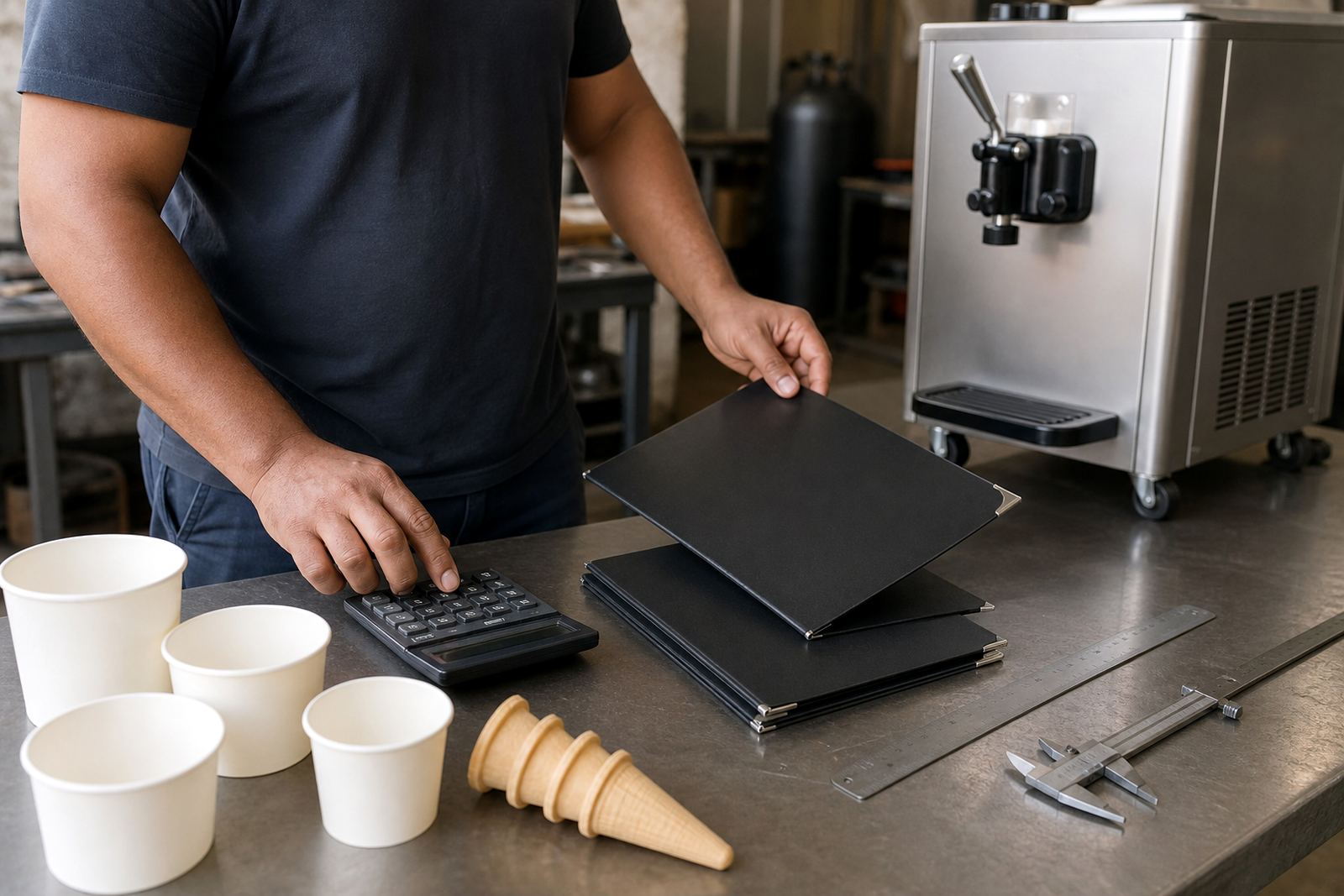
Keep a simple count sheet near the till or prep area and record daily servings for at least 2 to 4 weeks. That gives you a fair base line before you place your next order. It also helps you spot the days when trade jumps after rain, sporting events or payday weekends.
How Many Cups To Keep Per Week
Cups are the safest stock item to over-prepare slightly, especially if you sell both soft-serve and frozen yoghurt. They store neatly, are easy to count, and suit takeaway trade where customers are moving quickly through malls, forecourts and roadside kiosks. In coastal areas like Umhlanga and Durban South, keep them in a dry storage room or sealed cartons because humidity can soften packaging.
A practical guide is to hold 1.2 to 1.5 times your expected weekly cup usage. If you expect to sell 200 cup portions in a week, keep 240 to 300 cups on site. For a busier outlet expecting 500 cup sales, hold 600 to 750 cups. That buffer covers unplanned demand and gives you breathing room if a delivery is delayed or a load-shedding slot interrupts your receiving schedule.
If your outlet offers multiple sizes, track each size separately. A common mistake is keeping enough small cups but running short of larger ones. Split stock by size and check the actual serve mix every Friday before the weekend rush.
Cone Stock Planning For Mixed Foot Traffic
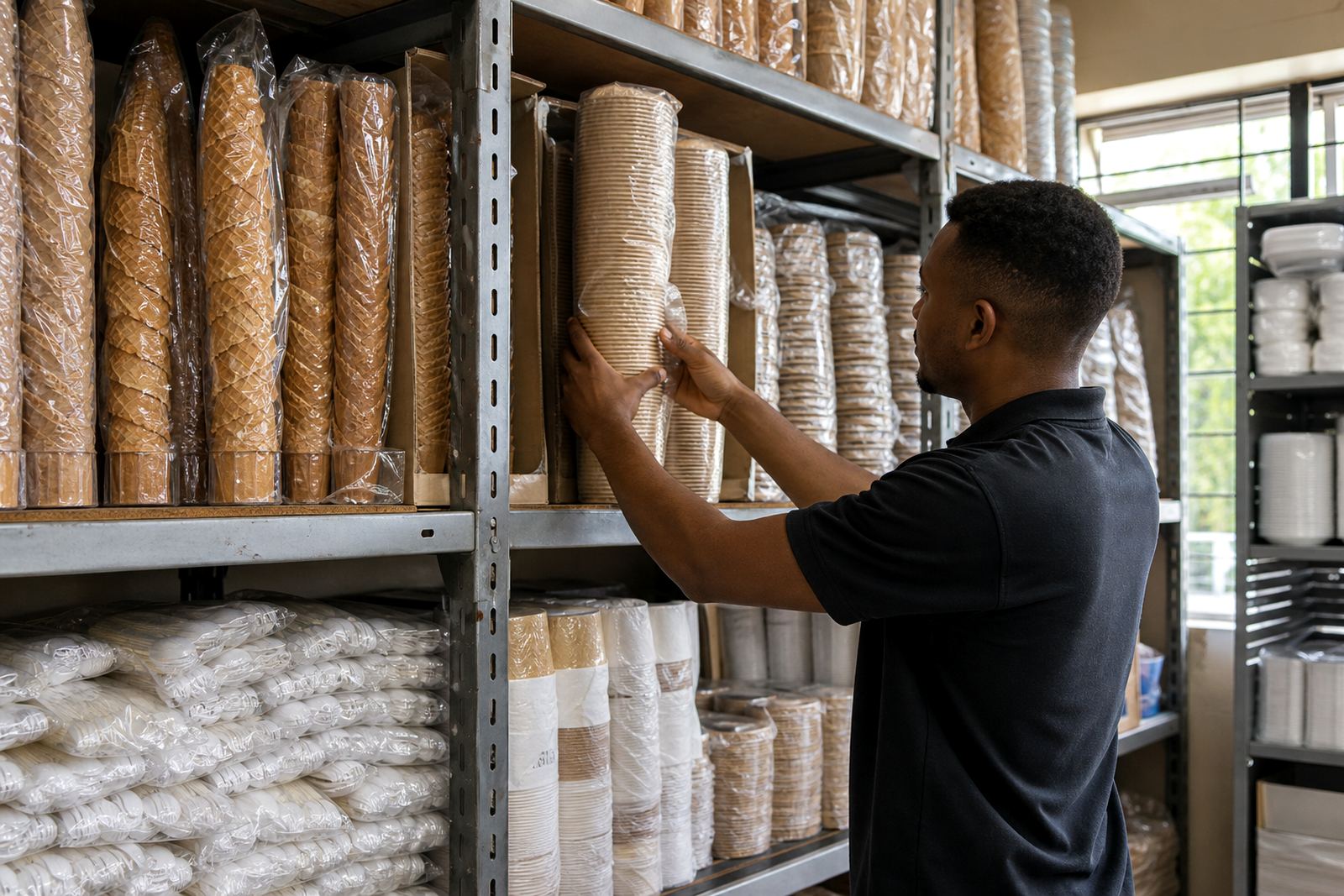
Cones are more sensitive to breakage and moisture than cups, so handle them carefully and store them in closed boxes away from cleaning chemicals and hot prep areas. In older shopfronts or sites near the coast, moisture can cause cones to lose crispness faster than expected. Do not open every carton at once unless you have the trade to use it quickly.
For cones, a good holding level is 1.1 to 1.3 times the weekly sell-through. If you expect 350 cone sales a week, carry 385 to 455 cones. If your site is seasonal, go higher before school holidays, December or long weekends and then review the numbers after the peak has passed.
- Check that cone cartons are sealed and undamaged on delivery.
- Store stock off the floor on shelving or pallets.
- Rotate older cartons to the front and use first in, first out.
- Keep a small emergency box at the counter for peak periods.
If your area gets heavy afternoon trade, especially in Pretoria and Johannesburg, plan for a second top-up in the week rather than one large order. That keeps the cones fresher and reduces handling damage.
Spoons, Napkins And Small Extras That Run Out Fast
Spoons look small but they create the most complaints when they run out. Many operators under-order them because the item seems minor, yet every cup sale and many cone sales still need a spoon for tasting, sharing or topping off the last bit. The safest approach is to hold at least 1.5 times weekly use, because spoons are cheap to store and easy to miscount.
If you sell 400 dessert portions a week, keep 600 spoons on hand. For a larger restaurant or dessert counter moving 1,000 portions, keep 1,500 or more. It is better to have a small overhang of spoons than to stop service and lose a sale while staff search for extras.
- Count spoons at the start and end of each day for one week, then set your reorder level.
- Keep a separate box for tasting spoons so they do not mix with serving stock.
- Store paper goods in a dry cupboard, not beside the freezer or wash area.
- Match spoon size to the cup size you serve most often.
Build Your Reorder Point Around Real Trade
The best reorder point is not a fixed number for every site. It should reflect your daily sales, your supplier lead time, and whether the outlet can receive stock only on certain days. If your supply route to Pietermaritzburg or the outer suburbs of Cape Town takes 2 to 4 days, your buffer needs to be larger than a site that receives next-day delivery in Durban.
A simple rule is this: reorder when you have about 7 to 10 days of stock left on fast-moving items. If you sell 300 cups a week, your reorder point may be 300 to 450 cups depending on delivery timing. For cones and spoons, use the same method but add a little more for peak months. This helps protect against sudden demand spikes, breakdown repairs or a missed delivery during load shedding.
Review your stock every Monday morning and again before the weekend. That is usually enough for most cafes and kiosks, though busy restaurants may need a midweek check as well.
Practical Checklist For Busy Sites
Use this checklist before you place an order or start a new trading week. It helps the team stay aligned and cuts down on emergency buying, which is often more expensive and less reliable.
- Confirm expected servings for the week.
- Check cup sizes, cone counts and spoon packs separately.
- Inspect packaging for dampness, cracks or crushed cartons.
- Review weather, holidays and local events that may push trade up.
- Make sure storage space is dry, clean and pest-free.
- Check that the team knows which item to top up first during service.
- Keep a spare box of each key item for unexpected busy days.
If you are running an outlet from Springfield Park, or servicing multiple branches across South Africa, keep one person responsible for the count. That avoids duplicate orders and keeps the numbers accurate. A clear system also makes training easier for new staff members.