Start with your real daily demand, not your busiest dream day
The right machine starts with honest numbers. Count how many cones, tubs or dessert cups you sell on a normal weekday, then check your peak times such as school breaks, Friday evenings or weekend rushes. A small kiosk in Springfield Park may only need a compact unit for steady foot traffic, while a beachfront outlet in Durban or a mall site in Johannesburg may need higher output to avoid queues.
As a simple rule, work out your expected servings per hour during peak trade, then allow for a buffer. If you are serving frozen yoghurt after lunch and soft-serve after school, the machine has to keep pace without slowing down or softening mix too much. It is better to choose a size that handles your real rush with headroom, not one that only looks adequate on paper.
- Count average sales for a normal day and for your busiest day.
- Check the number of serves needed in a 30 minute rush.
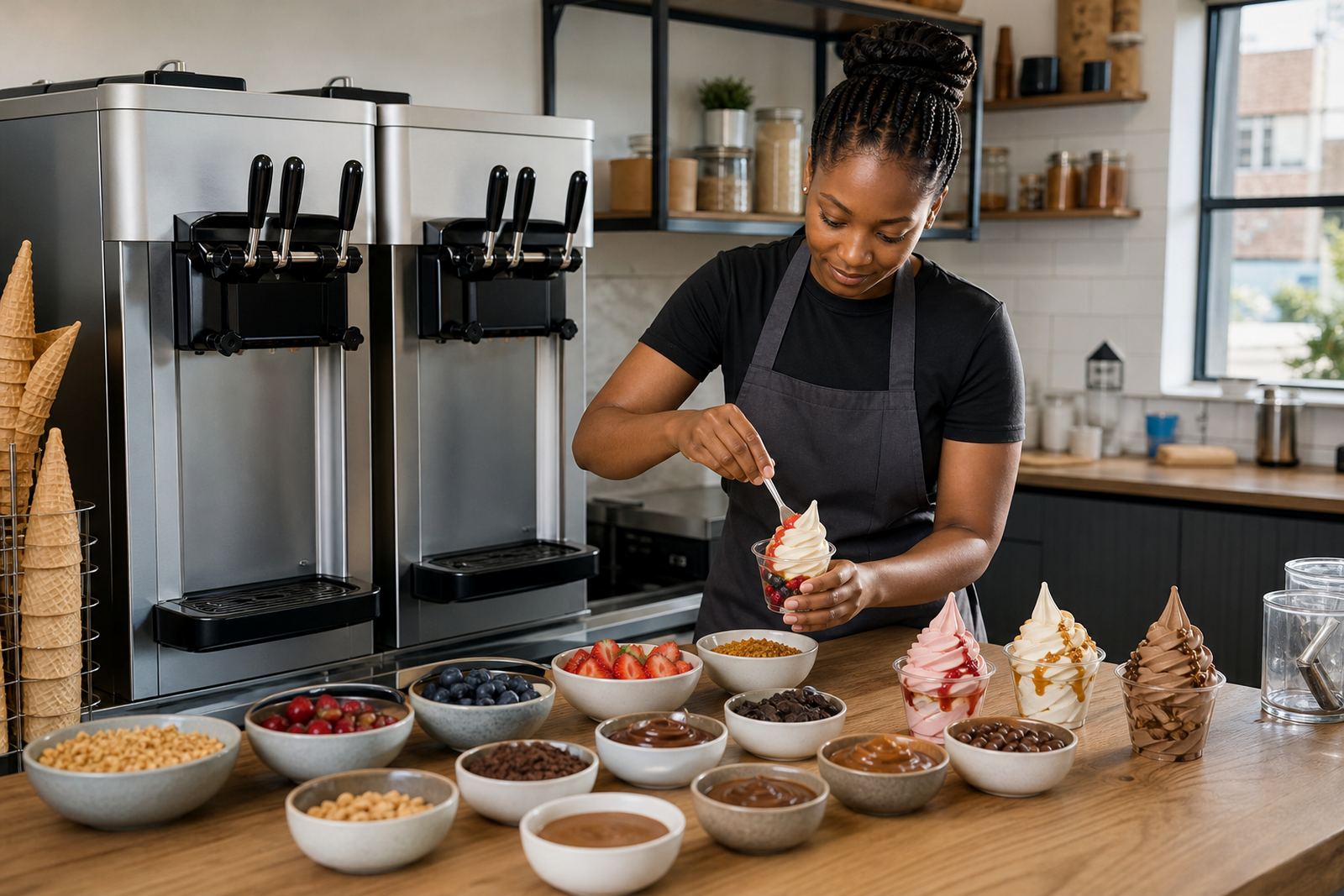
- Allow extra capacity if you offer toppings, cones or takeaway tubs.
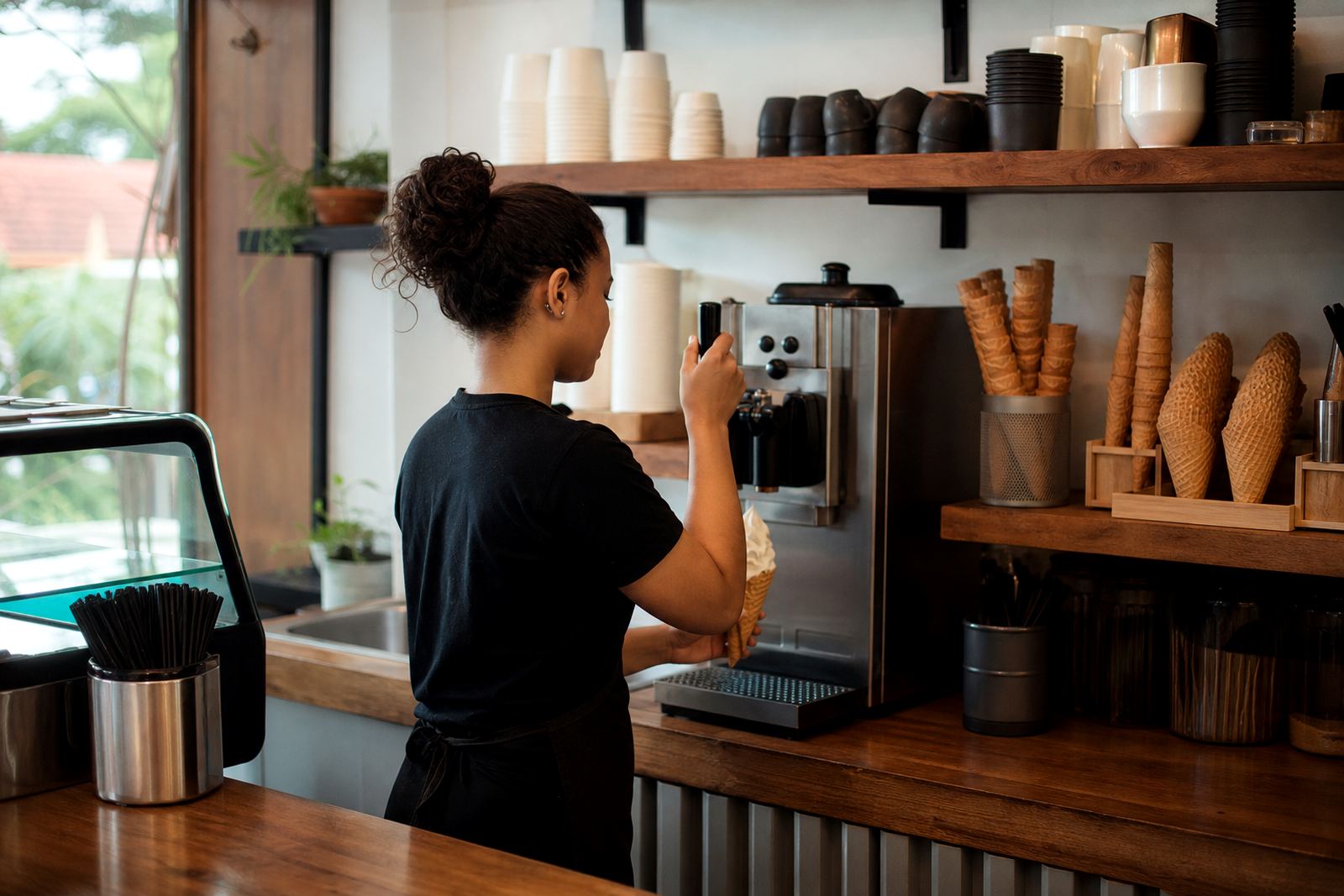
- Remember staff skill and service speed also affect output.
Measure floor space, service clearance and customer flow
Cabinet size matters, but the space around the machine matters just as much. You need room for opening panels, cleaning access, ingredient loading and safe movement behind the counter. In a compact kiosk, a machine that fits the counter footprint may still be awkward if the side vents are blocked or if staff have to squeeze past each other during load-shedding backups and busy service periods.
Before ordering, measure the actual site in metres and check doorways, counter heights and the path from delivery point to installation area. If your business is in a mall, airport or busy municipal zone, also confirm the building rules for placement, drainage and waste water handling. Coastal humidity in Durban and Gqeberha can also affect where a machine sits, so keep it away from direct spray, salt air and hot equipment where possible.
- Measure width, depth and height of the machine space.
- Leave clearance for ventilation and cleaning access.
- Check doorway and passage widths for delivery and relocation.
- Keep the machine clear of direct heat, steam and water splash.
Choose between single flavour, twin flavour and higher output units
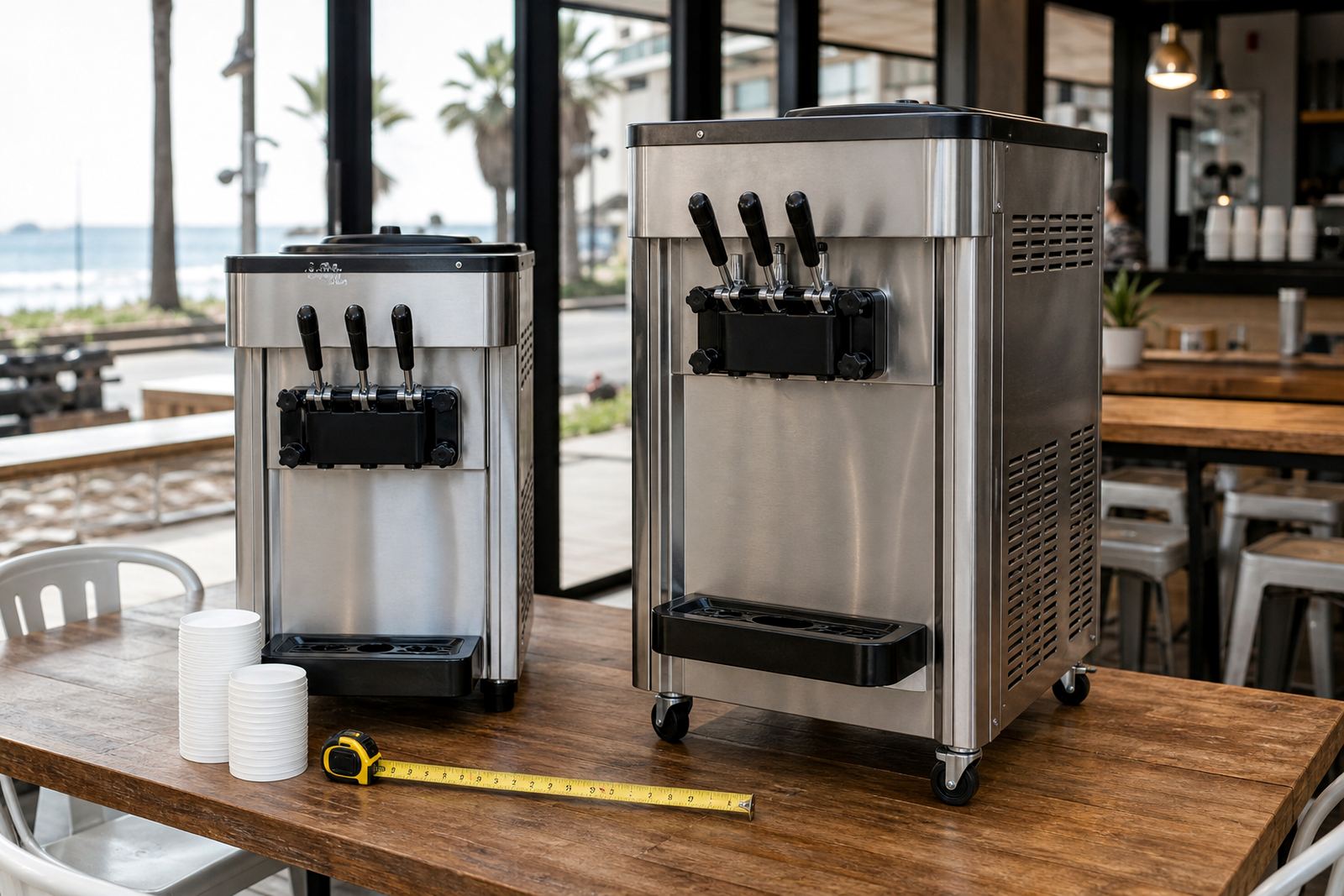
Machine size is not only about cabinet dimensions. It is also about how many flavours you want to serve, how fast you need to serve them and whether you want a mix of soft-serve and frozen yoghurt on the same site. A single-flavour unit suits tighter counters, simpler menus and lower volume. A twin-flavour machine gives you more choice and helps with upselling, but it needs more space and usually more attention during setup and cleaning.
For larger sites like restaurants, busy kiosks or dessert counters with strong evening trade, a higher output machine can reduce waiting time and improve consistency. If you serve multiple flavours, think about how often each side will be used. One side may carry most of the load, which means your menu should match the machine rather than forcing the machine to carry a menu it was never sized for.
- Single flavour suits lower volume and simpler menus.
- Twin flavour suits variety, specials and mixed ordering patterns.
- Higher output works best where queues build quickly.
- Match the machine to your menu, not the other way round.
Check power, backup plans and the reality of South African trading
Machine size and power demand go together. A larger unit may need a stronger electrical setup and a cleaner supply, especially where load-shedding, voltage dips or shared circuits are common. Before you choose a machine, confirm what power is available at the site and whether the rest of your equipment is already drawing from the same line. If you are operating in a busy precinct in Pretoria or Cape Town, it is worth checking what backup arrangements you have for trading during outages.
Do not size a machine only around what looks good in the brochure. Consider startup timing after outages, the time needed for mix to reach service temperature and how your team will manage peak demand if power returns during the lunch rush. A machine that is too large for your site can become expensive to run, and one that is too small can cost you sales when the queue grows.
- Confirm the site electrical supply before choosing size.
- Ask how the machine behaves after power interruptions.
- Allow for backup plans during load-shedding.
- Make sure the circuit can handle the machine plus your other equipment.
Use staff time and cleaning routines to narrow the size
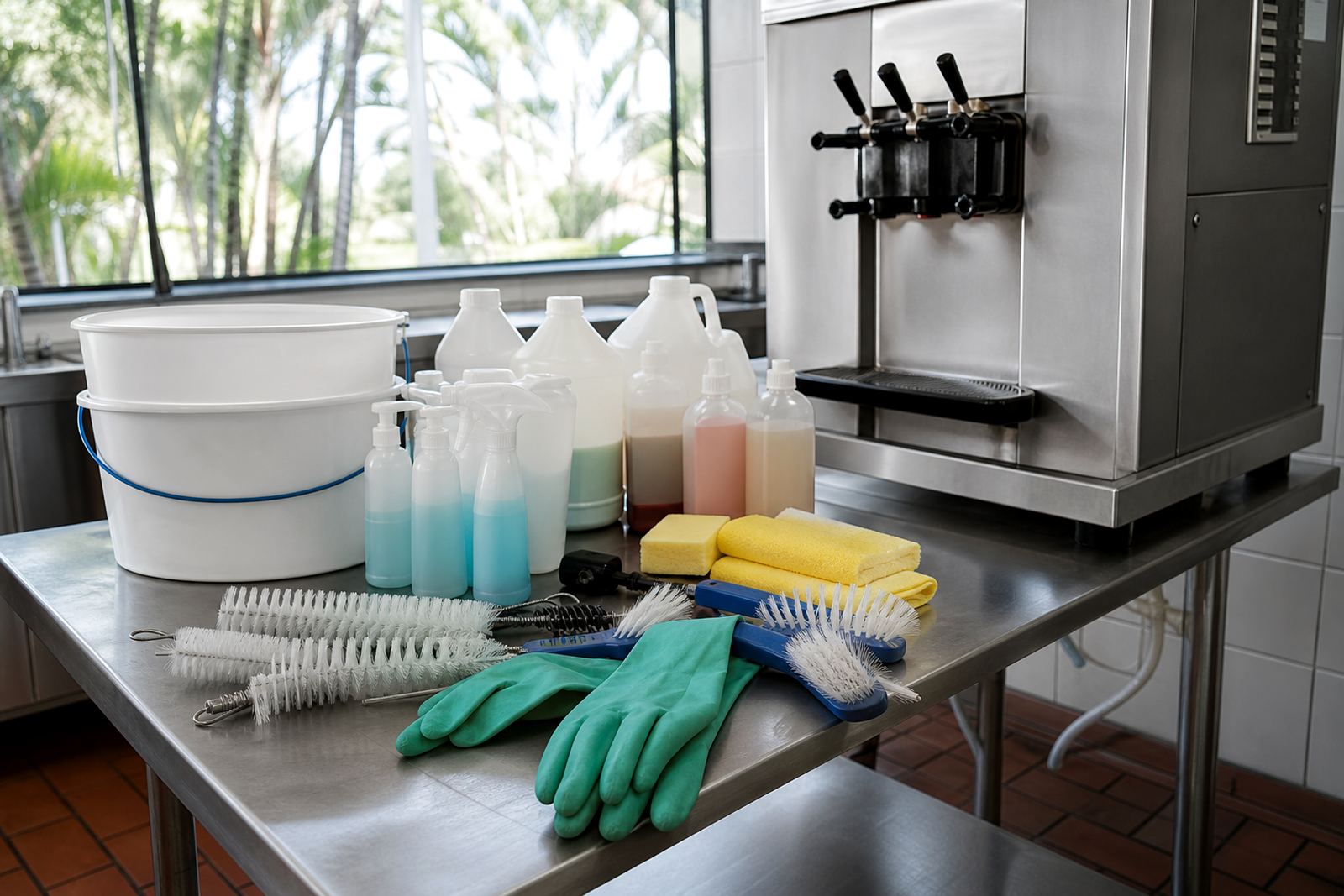
Every machine needs daily care, but larger units usually take longer to clean, flush and reset. If you have a small team, a machine that is too big can slow service at closing time and increase the chance of missed steps during sanitising. That matters for cafes and kiosks that trade long hours and still need to hand over a clean unit at the end of the day.
Think about who will run the machine, who will do the deep clean and whether your team has enough time for preventive maintenance. A simple service routine is easier to keep up with when staff are stretched. If your team changes often, a straightforward machine with a clear training process may be the better fit, even if it means accepting slightly lower output.
- Match machine size to the number of staff on shift.
- Allow time for daily cleaning and end-of-day shutdown.
- Choose a model your team can learn quickly.
- Keep spare seals, parts and sanitising supplies on hand.
A practical site checklist before you place an order
Use a proper checklist before you commit. It saves time, avoids rework and helps you choose a machine that suits the site from day one. Our team in Springfield Park works with cafes, kiosks and restaurants across Durban, Johannesburg, Pretoria, Cape Town, Gqeberha and Pietermaritzburg, so we see the same issues often: too little counter space, underpowered circuits, and menus that ask for more than the machine can comfortably produce.
When you are comparing sizes, ask for the full picture rather than just the cabinet dimensions. Consider installation, startup commissioning, operator training, mix calibration, seasonal prep checks and breakdown support after launch. A machine should fit your trading plan, your floor space and your service routine, not just the empty gap on the counter.
- Have your counter measurements ready in metres and millimetres.
- List your expected serves per hour at peak time.
- Confirm power supply and any backup arrangement.
- Check delivery access, drainage and cleaning space.
- Set out who will run, clean and service the unit.