
Start With Your Serving Volume and Menu Mix
The first question is not what looks best on the counter, it is how many cones, cups and sundaes you need to serve in a busy hour. A small cafe in Umhlanga that sells soft-serve as an add-on may do well with a compact countertop unit, while a kiosk near a school or beachfront promenade may need a floor-standing machine with higher output and better recovery time.
If you also plan to offer frozen yoghurt, consider how often you will run the machine through the day. Soft-serve and yoghurt both need steady operation, and if the machine is stopping and starting all day, consistency can suffer. A good rule is to think in peak periods, not quiet trade. Lunch rush, weekend traffic and holiday spikes in Durban, Cape Town or Gqeberha can push a small unit harder than expected.
Countertop Machines Suit Tight Spaces and Faster Setups
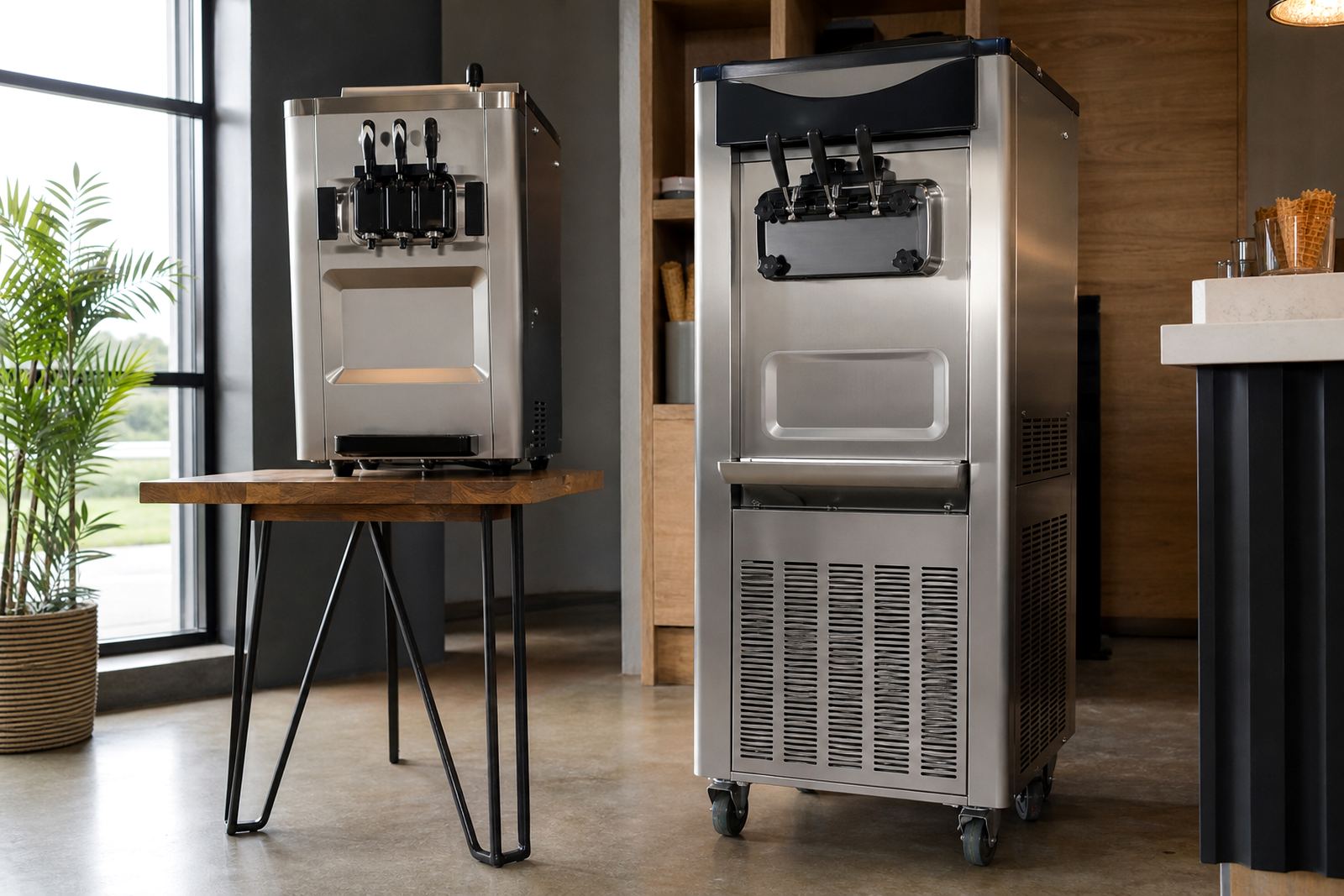
Countertop units are a practical fit where floor space is limited and the machine needs to sit close to the serving point. They are common in cafes, dessert bars and smaller kiosks where the operator wants the machine near the till and toppings station. These units usually work well when the team wants a simple layout and shorter product runs.
- Best for smaller counters, compact kiosks and side service areas
- Easier to place on a stable prep surface with clear access for cleaning
- Often simpler to install where the power supply is already close by
- Suitable when one person needs to run the machine and serve at the same time
Check that the counter can carry the full weight, especially once the machine is filled and operating. Leave enough clearance at the back and sides for ventilation and daily wipe-downs. In humid coastal areas, good airflow matters, because moisture and heat can make compressors work harder. If your site has regular load-shedding, ask how the machine behaves after power interruptions and what restart steps the staff must follow.
Floor-Standing Machines Work Better for Higher Foot Traffic
Floor-standing machines make sense where output matters more than saving counter space. Restaurants, busy kiosks and dessert counters with strong trade often choose this format because it gives you a more dedicated service point and can handle longer trading periods. These machines are easier to position as a focal point in the service area and they usually suit sites with a larger footprint.
They are a stronger fit when you need steadier production through the day, or when the machine will be used by several staff members across shifts. For sites in Johannesburg, Pretoria or busy parts of Durban, that extra capacity can help keep queues moving. A floor unit can also be easier to manage if you want the machine kept away from customer contact and splash zones.
- Good for higher sales volumes and longer trading hours
- Better when you have a dedicated service area and more floor space
- Useful where several staff members rotate during the day
- Often preferred when presentation and speed are both important
Compare the Site Before You Decide
Before you choose, walk the site and check the practical points that affect day-to-day use. Measure the available area, confirm the doorway access for delivery, and note where the power point sits. If the venue is in an older building or a mall with fixed service corridors, moving a larger machine later can be difficult and costly.
Also look at cleaning access. The machine must be easy to reach for seals, parts and sanitising routines, not just easy to place. In KwaZulu-Natal and other coastal regions, salt air and moisture can shorten component life if the unit is not cleaned and serviced properly. For inland sites, dust and heat are often the bigger issue. Either way, the right machine is one that your team can maintain without struggle.
- Measure width, depth and height, then add clearance for ventilation
- Check doorways, lifts, ramps and delivery access
- Confirm electrical capacity and whether the site has backup power
- Plan a cleaning route that staff can follow every day
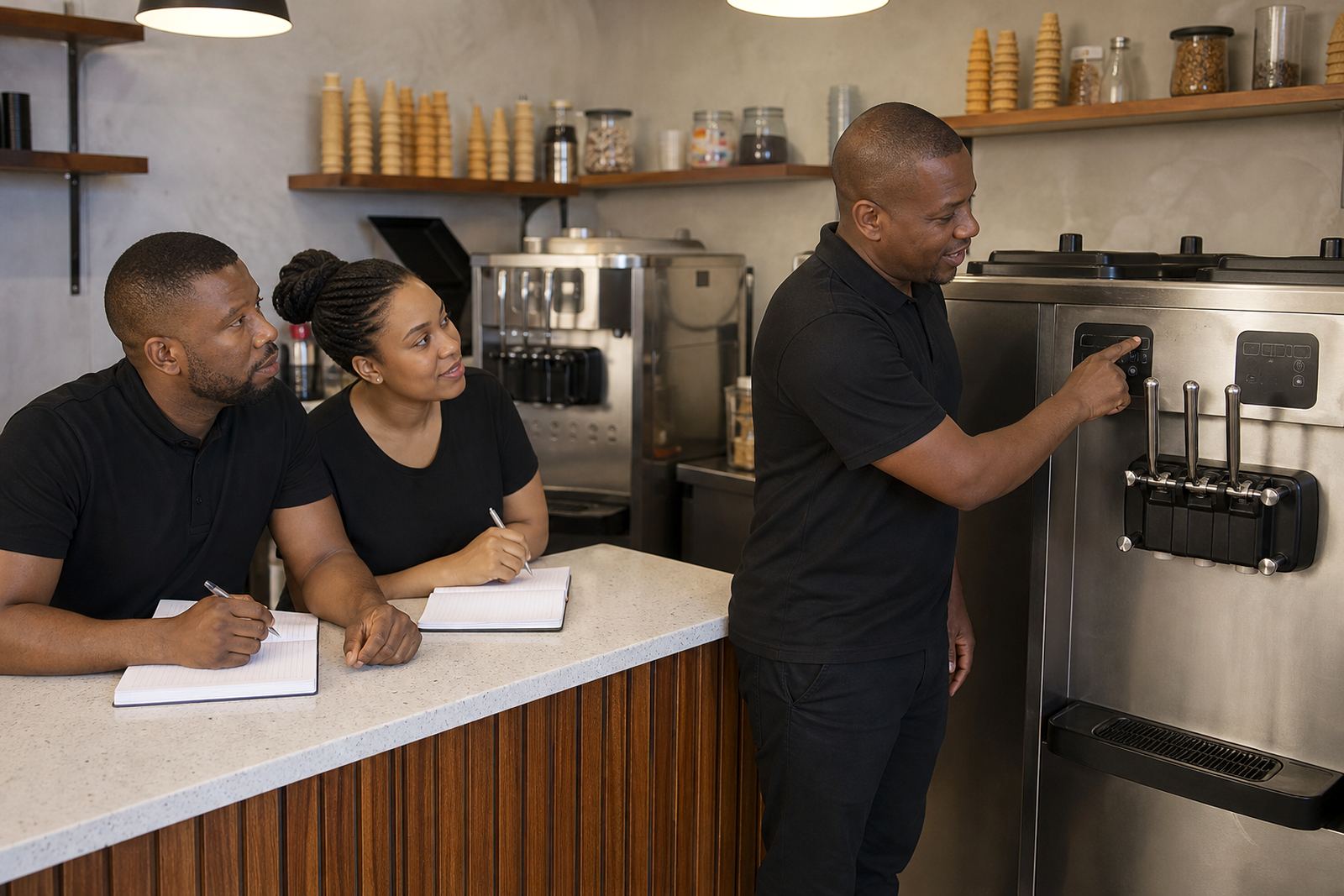
- Decide who will train new operators if shifts change
Think About Power, Maintenance and Downtime
Soft-serve and yoghurt machines need regular attention if you want steady product quality. A countertop unit may be easier to service in a small venue, but the team still needs a routine for deep cleaning, mix calibration and seal checks. A floor-standing machine may have more capacity, yet it also needs a proper maintenance schedule so breakdowns do not interrupt trade on a busy Saturday.
Ask yourself how much downtime the business can tolerate. If one machine stops, does the whole dessert offer stop too? For restaurants with a full menu, the answer may be yes. That means preventive maintenance and season prep checks are worth more than waiting for a fault. It is also wise to plan for power cuts. After load-shedding, staff should know the restart steps, how to check product quality and when to call for support.
Use This Simple Decision Checklist
If you are still weighing the two options, use a straight checklist. Start with the site, then match the machine to the way you sell. A kiosk in Springfield Park or Pietermaritzburg with limited room may lean toward countertop. A high-traffic dessert station in Cape Town or Gqeberha may need a floor-standing unit. The right answer is the one that supports sales without creating daily friction.
- Choose countertop if space is tight and output is moderate
- Choose floor-standing if trade is heavy and the service area is larger
- Choose countertop if one operator handles most of the service
- Choose floor-standing if you need better visibility and faster queue movement
- Choose either only after checking power, ventilation and cleaning access
When in doubt, think about the next 12 months, not just opening day. If you expect growth, a larger machine can save you from replacing equipment too soon. If your venue is seasonal or compact, a smaller unit may be the smarter fit. Either way, the machine should suit your menu, your staff and your premises, not just the footprint on paper.