
What our phone support covers for busy service periods
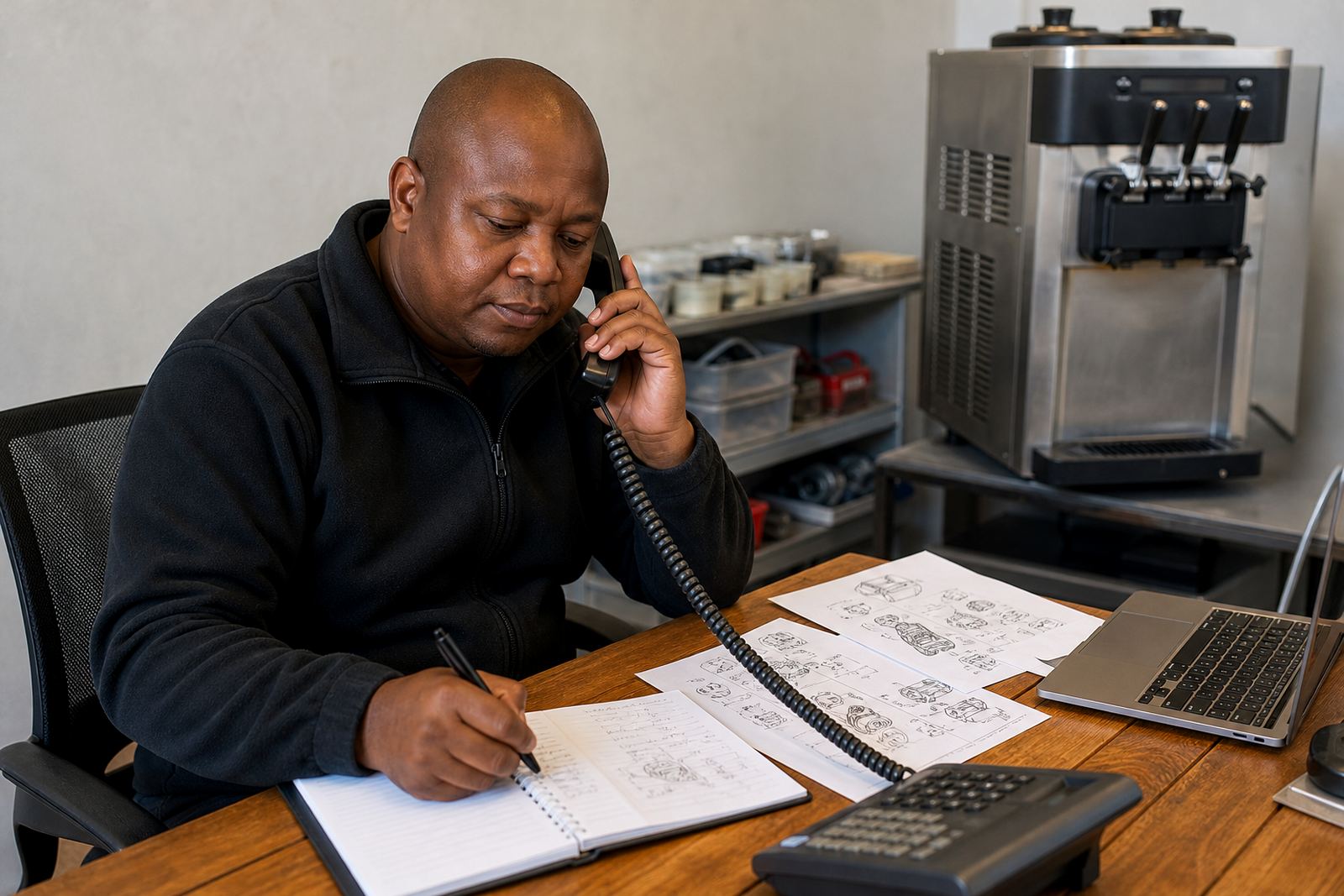
Phone support is for quick, practical troubleshooting on soft-serve and frozen yoghurt machines, plus the mix handling and cone service around them. It is aimed at cafés, kiosks and restaurants that need help during trading hours, during load-shedding changeovers, or after a minor setup issue that can be solved without sending a technician on site.
We help your team work through basic checks, confirm the right settings, and decide whether the problem can be corrected on the spot or needs follow-up parts or maintenance. The focus is on getting service restarted safely and keeping product quality consistent. In many cases the issue is simple, such as air in the line, a blocked feed, temperature drift or a mix that is too thick for the machine setup.
- Basic troubleshooting for freezing, overrun and product consistency
- Guidance for mix flow, hopper checks and sanitising steps
- Help with error indicators, alarms and start-up interruptions
- Advice for power cuts, voltage fluctuations and restart routines
- Support for staff who need clear instructions during peak trade
How the process works from first call to restart
When you contact us through the enquiry form, our team gathers the machine type, the symptom, and what happened just before the fault started. That first conversation matters because it saves time and often points to the exact cause. If your team is standing by the machine, we will talk them through a short set of checks in the right order.
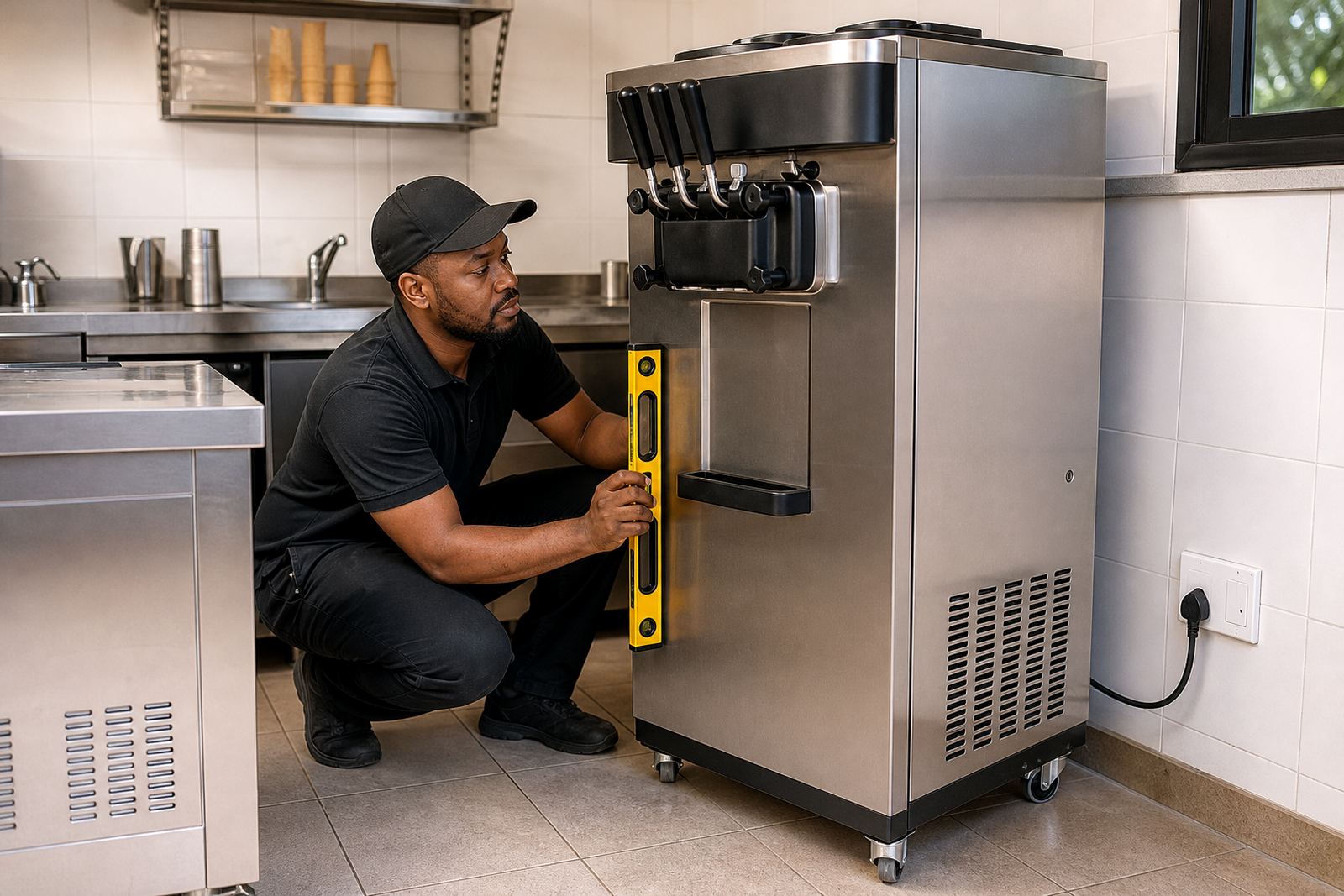
The process is simple. We ask a few questions, narrow the fault, then give step-by-step instructions that match the machine and the operating conditions at your site. If the issue is beyond basic phone support, we will advise on the next action, such as a deep clean, seal replacement, mix calibration or a repair visit. This keeps staff from guessing, and it helps avoid making a small issue worse.
- Step 1: Log the fault through the enquiry form
- Step 2: Confirm machine model, symptoms and recent changes
- Step 3: Work through checks in a safe order
- Step 4: Restart service where possible, or plan the next intervention
Typical issues we help with on the day
Most calls are about issues that interrupt sales but do not always mean the machine has failed completely. We help staff isolate the problem and check the most likely causes first. That often means looking at temperature, product flow, sanitation timing and whether the unit was started correctly after a pause or power cut. In Durban and coastal areas, humidity can also affect storage and mix handling, so we factor that in too.
Phone support is especially useful when your team has trained staff on duty but needs a second set of eyes for a specific fault. It is not a generic script, we work with the actual machine behaviour and the conditions at your site.
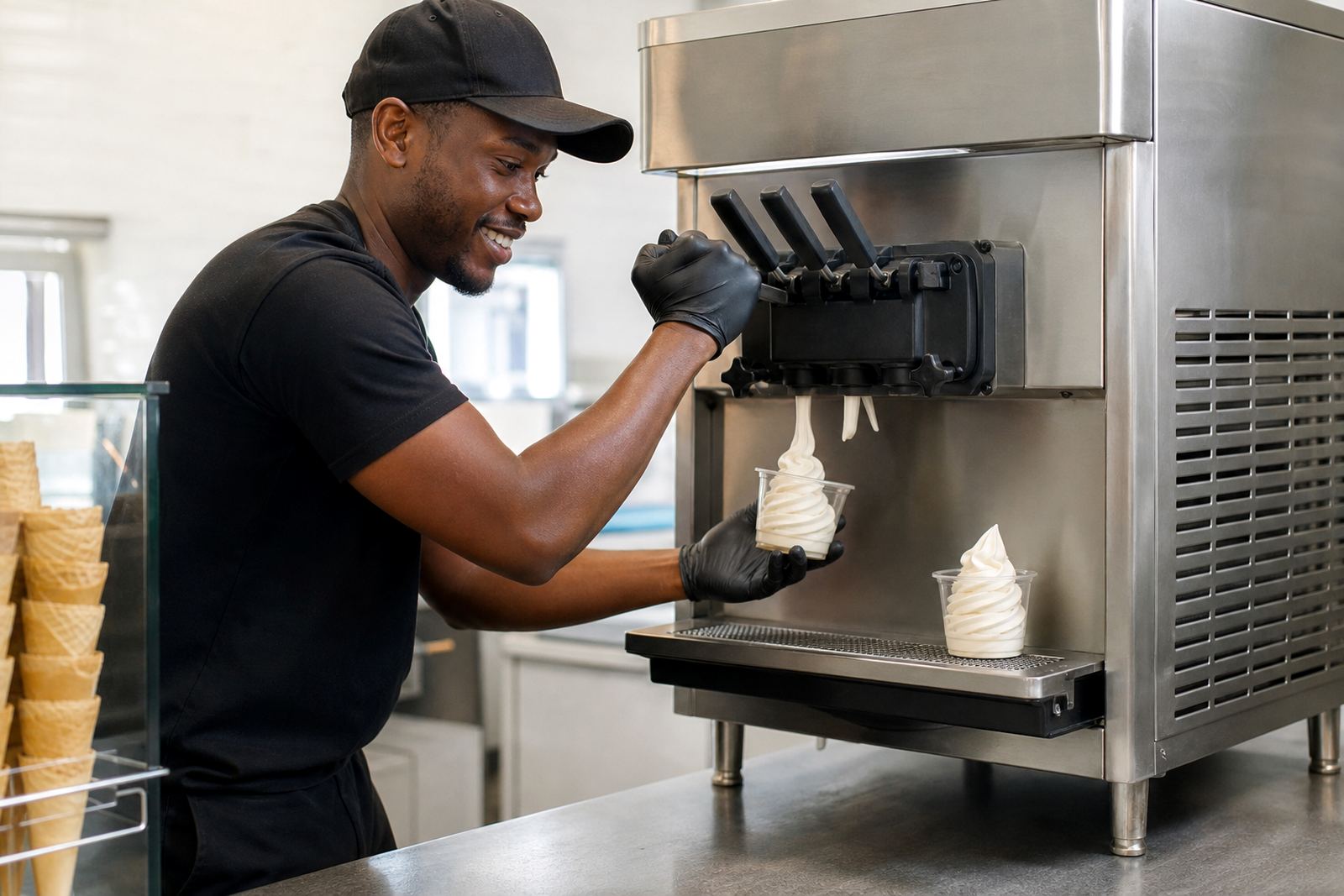
- Soft-serve that is too soft, too hard or not dispensing smoothly
- Frozen yoghurt mix not whipping evenly or separating in the hopper
- Air locks, blocked feed lines or poor product flow
- Alarm messages, unusual sounds or repeated stop-start cycling
- Restart guidance after power interruption or low voltage conditions
Response times and when to expect follow-up
Phone support is intended for same-day troubleshooting during trading hours, with urgent cases handled as quickly as possible in line with queue pressure and site location. If the issue comes through during a busy period, we focus first on getting the machine to a safe working point, even if a full correction needs to happen later. That way your staff can at least keep trading, or make a controlled decision about which product line to pause.
Where a call reveals a maintenance or parts issue, we will advise the next available route. That may include a technician visit in Durban, Springfield Park, Umhlanga, Pietermaritzburg, Johannesburg, Pretoria, Cape Town or Gqeberha. Response times vary by area and load, but the support process is built to reduce downtime fast rather than leaving the team to figure it out alone.
Pricing approach for phone-based technical help
Phone support is priced according to the time needed, the complexity of the fault and whether the issue can be resolved as part of routine customer support or needs more involved technical guidance. We keep the pricing approach practical and transparent, so you know whether the matter is likely to stay within a basic support level or move into a paid service follow-up.
For many customers, the benefit is avoiding a full call-out when the fault can be solved with a short guided check. For larger sites, phone support is often used as the first line before a service booking is confirmed. This helps manage costs and reduces unnecessary downtime, especially during school holidays, weekends and peak summer trade. If a site has repeated calls for the same fault, we may recommend a maintenance interval review rather than repeated reactive support.
Recommended maintenance rhythm to reduce repeat faults
Phone support works best when the machine is already being cleaned and checked on a regular schedule. Soft-serve and frozen yoghurt units need disciplined daily care, plus planned servicing at set intervals. In practice, most operators benefit from daily sanitising, weekly checks on seals and product path, and deeper preventative maintenance every few months depending on trade volume.
For high-volume stores, we usually recommend a tighter maintenance cycle because the machine runs harder and small wear points show up sooner. For seasonal kiosks, a pre-season check is important before trading picks up again. A clean machine with correct mix calibration is much easier to troubleshoot over the phone than a unit that has been sitting unused with old residue or dried product inside.
- Daily: rinse, sanitise and confirm clean product flow
- Weekly: inspect seals, visible wear points and hopper condition
- Monthly: review settings, overrun and mix consistency
- Quarterly or seasonal: preventative maintenance and deep clean check
What your staff should have ready before they call
To make phone support useful, it helps if staff have a few details on hand before they start the conversation. That includes the machine type, what the product looks like, any error lights or sounds, and whether the fault started after cleaning, refilling or a power cut. The more specific the information, the faster the advice.
We also recommend keeping the current mix batch details, recent service dates and cleaning records nearby. That makes it easier to rule out simple causes first. If the issue turns out to be beyond a phone fix, those same notes help the next service step happen faster. In busy outlets, a clear handover from one shift to the next can save a lot of time and frustration.
- Machine model and a short description of the fault
- Any recent cleaning, mix change or start-up steps
- What product is doing at the nozzle or in the hopper
- Whether the issue started after a power interruption
Key facts
| Service type | Remote troubleshooting and restart guidance |
|---|---|
| Best for | Cafés, kiosks and restaurants with soft-serve or frozen yoghurt equipment |
| Coverage | Durban, Springfield Park, Umhlanga, Pietermaritzburg, Johannesburg, Pretoria, Cape Town and Gqeberha |
| Typical use case | Fixing basic service interruptions before they become a full breakdown |
| Recommended maintenance interval | Daily sanitising, weekly checks, quarterly or seasonal preventative maintenance |
| Key focus | Safe restart, mix flow, temperature checks and operator guidance |