
What our deep clean service covers
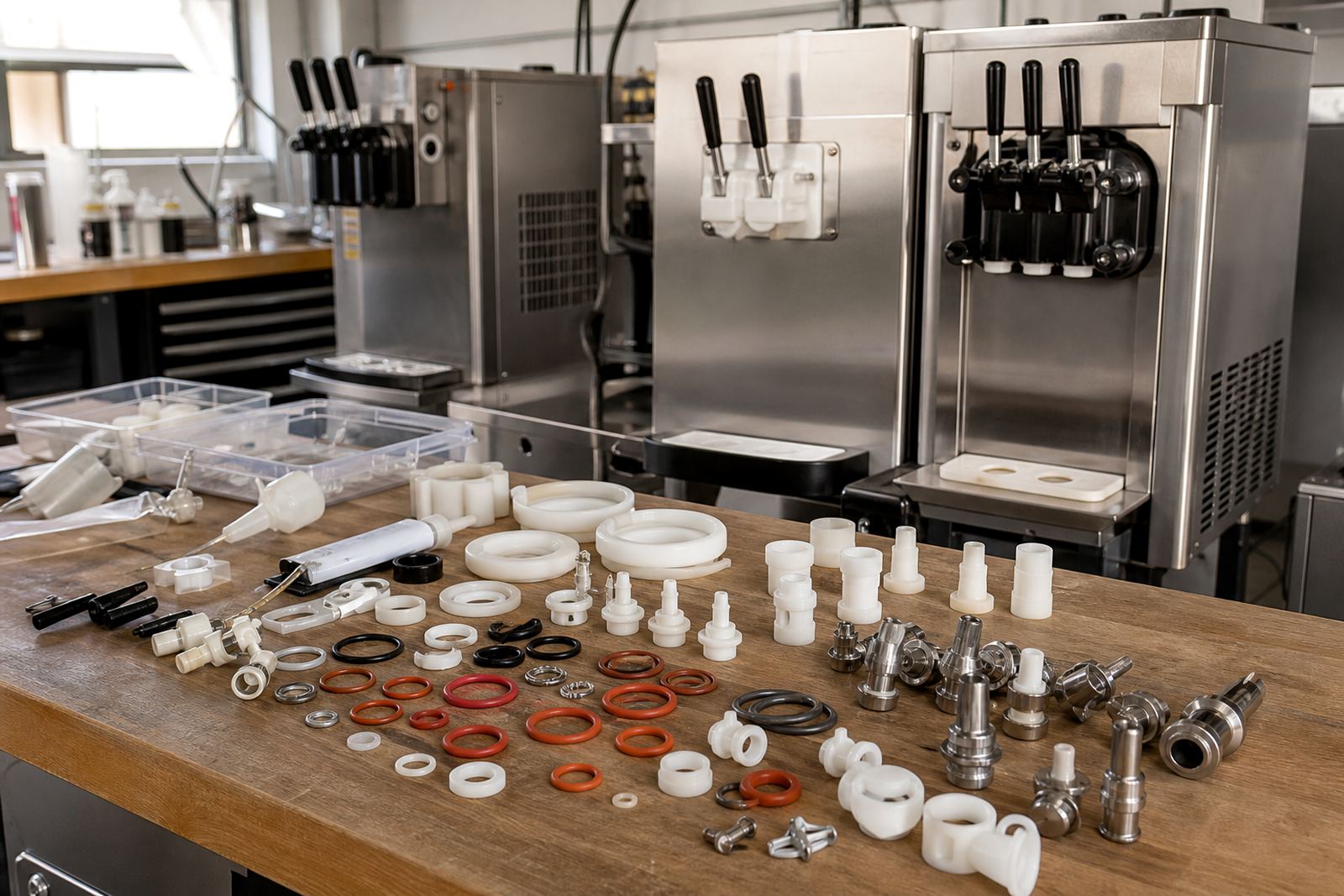
This service is for soft-serve and frozen yoghurt machines that need more than a daily rinse. We strip down the product path, clean the hopper, mix chamber, draw valve area, nozzles, seals, O-rings, scraper blades and drip areas, then inspect the parts for wear. The aim is to remove product residue, sugar build-up, milk fat, and sanitiser film that can affect taste and machine performance.
We also check the outside panels, airflow openings and splash zones, which matters in Durban where coastal humidity can make residue stick faster and encourage corrosion if cleaning is left too long. In busy sites such as Springfield Park, Umhlanga, Johannesburg malls or Cape Town promenade shops, a proper clean helps reduce breakdowns during peak trading. For most machines, this service suits units that have been in daily use for weeks or months without a full strip-down.
Inside the process from drop-off to handover
We follow a fixed process so the machine is cleaned correctly and tested before it goes back into service. If the unit is collected or brought in from your site, we begin with a visual check, note any faults and confirm whether parts replacement is needed before work continues.
- Initial inspection for leakage, worn seals, weak draw or temperature issues.
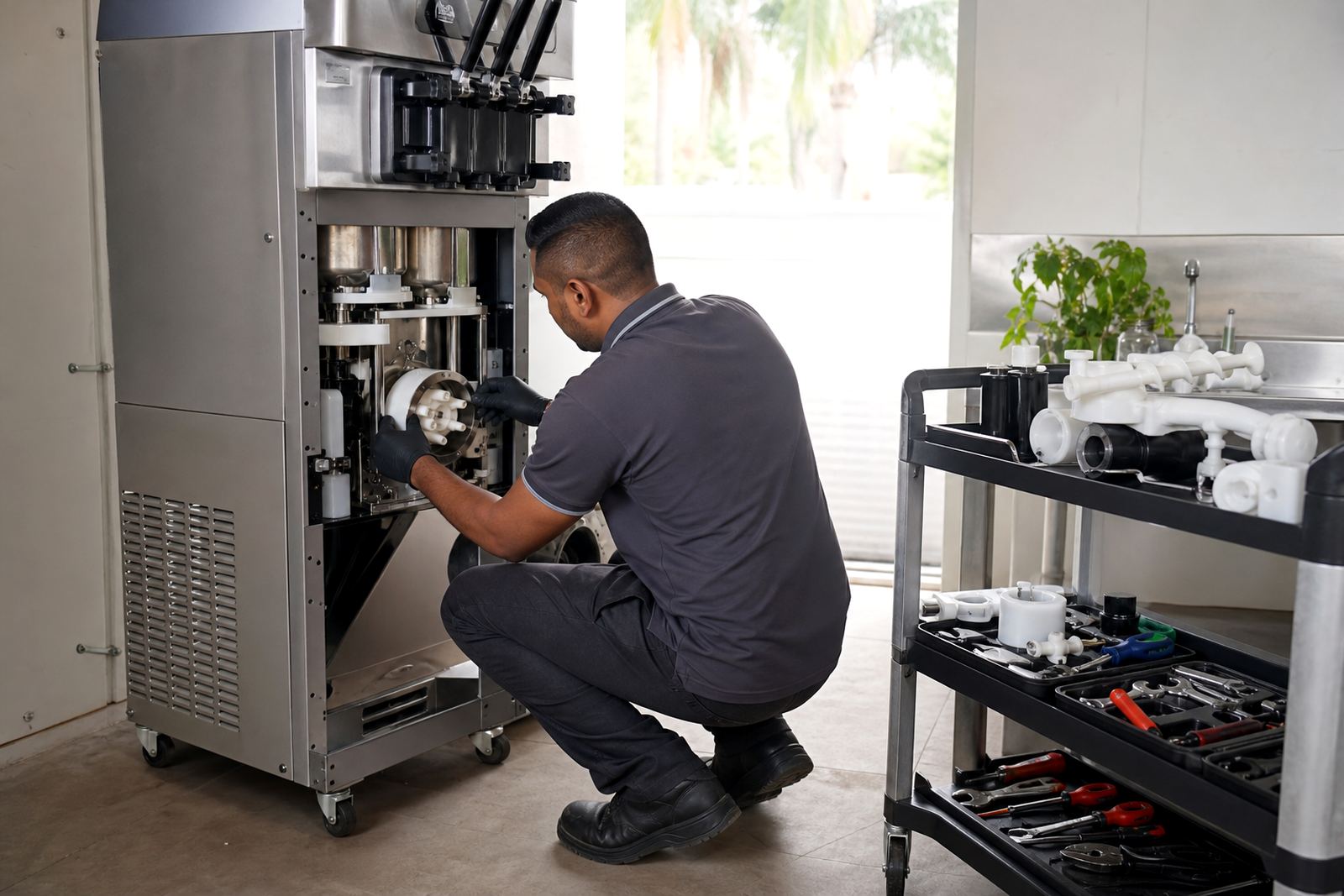
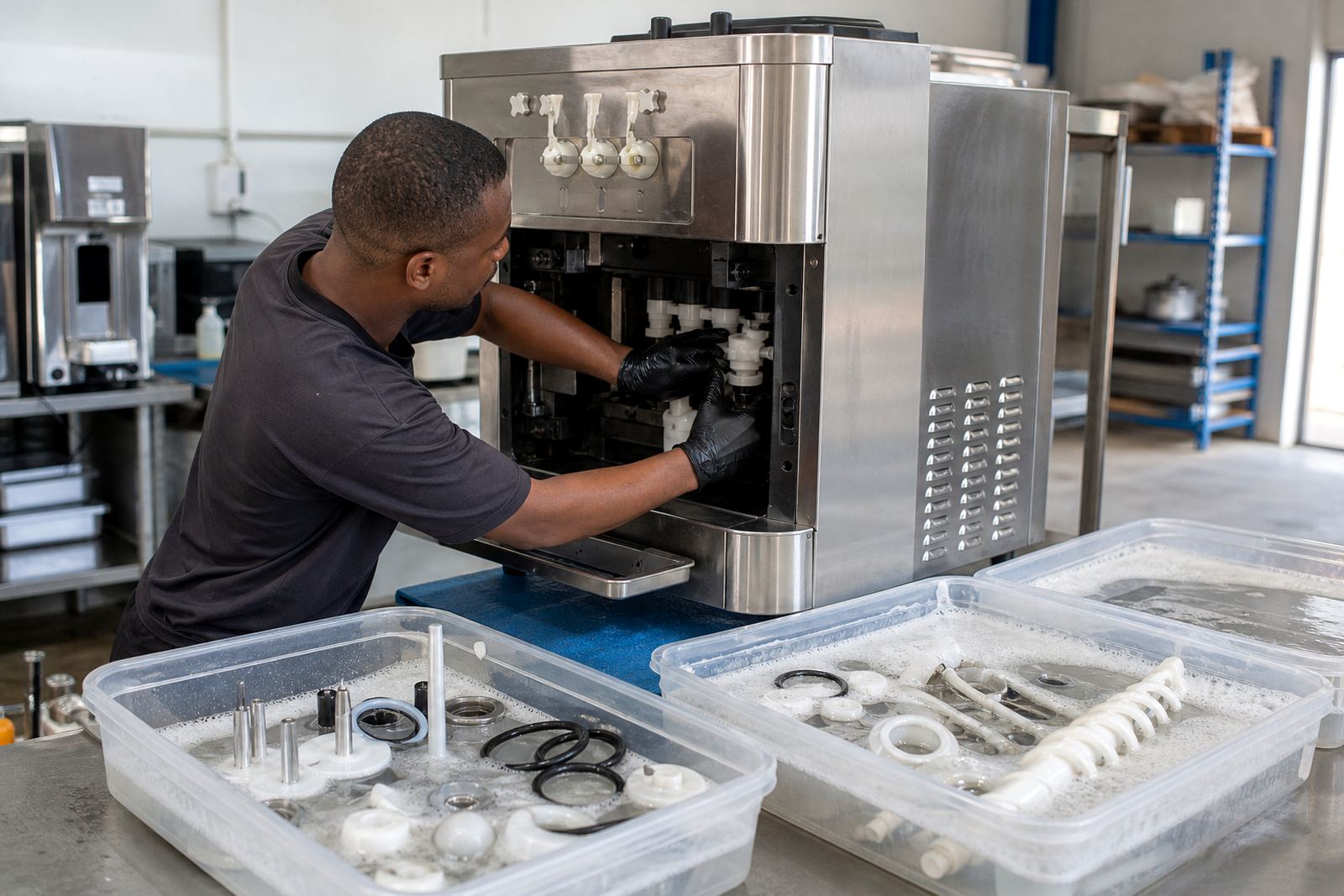
- Safe strip-down of the product path and removable food-contact parts.
- Degreasing, sanitising and manual clean of high-contact surfaces.
- Inspection of seals, valves, scraper blades, gaskets and fittings.
- Reassembly, test run and function check under operating conditions.
- Final wipe-down and hygiene sign-off before handover.
If we find damaged seals, cracked parts or a valve that is starting to bind, we will flag it before the machine goes back onto the floor. That avoids a second stoppage after the clean, which can be costly for kiosks running on tight trading hours.
Why a deep clean matters for daily sales
A machine can look clean on the outside and still have residue inside the product path. That residue changes flavour, affects texture and can lead to a sour smell or uneven overrun. In restaurants and dessert counters, customers notice that quickly. A deep clean supports better product consistency and helps the machine pull a cleaner, smoother serve.
It also helps with food safety and municipal hygiene requirements, especially where inspection standards are strict. For sites in busy centres like Pretoria, Gqeberha and central Durban, a clean machine is easier to manage during inspections and easier for staff to maintain between shifts. It can also cut down on nuisance calls because operators are less likely to battle blocked outlets, sticky valves or poor freezing caused by product build-up.
- Better product taste and texture.
- Lower risk of contamination in food-contact areas.
- Less wear on seals and moving parts.
- Cleaner appearance behind the counter.
Turnaround times and site planning
Turnaround depends on machine size, condition and whether parts need replacing during the clean. A single-counter unit in fair condition may be completed quickly, while a heavily used machine with hardened build-up may need extra soaking, inspection and test time. We work in a practical way so you can plan around trading hours and stock levels.
For many customers, it makes sense to schedule a deep clean during a quiet weekday, after a weekend rush or ahead of school holidays and summer trade. If your store is in Pietermaritzburg or the Johannesburg area and you are planning a refurbishment, site relocation or season prep, the deep clean can be timed with other maintenance work. This reduces downtime and helps the machine go back to work properly the first time.
- Small to mid-size units: usually quicker if there is no major wear.
- Heavier build-up: allow extra time for soaking and inspection.
- Complex faults: may require follow-up repair or parts replacement.
Pricing approach that matches the condition of the machine
We price deep cleaning based on the machine type, the level of build-up, the number of food-contact parts to strip and whether seals or consumables must be changed during the service. That means the quote reflects the actual work needed, not just a flat figure that ignores condition. If a machine has been running hard through a busy season, there is usually more labour involved than on a lightly used unit.
Before work starts, we confirm the scope so you know what is included. If we find parts that should be replaced, we will discuss that before proceeding. This approach helps cafés, kiosks and restaurant groups keep their maintenance spend under control without guessing. It also keeps the machine in line with practical hygiene standards instead of pushing it too long between cleans.
How often a machine should be deeply cleaned
The right interval depends on daily sales, product type, ambient heat and how disciplined the operators are with end-of-day cleaning. In high-volume sites, a deep clean is usually needed more often than in a low-volume kiosk. Heat, dust and coastal moisture can all speed up residue build-up, especially in Durban and other humid coastal towns. If staff are using sugary mixes, the machine will also need closer attention.
As a practical guide, most busy outlets should plan a full deep clean at regular intervals, with daily rinsing and sanitising between services. We also recommend a deep clean before reopening after long shutdowns, after a relocation, or when changing product mix. That is the point where stale residue, old sanitiser and trapped moisture can cause trouble if the unit is switched straight back on.
- Busy cafés and kiosks: more frequent deep cleaning is sensible.
- Seasonal sites: deep clean before and after peak trade.
- After relocation: always clean before restart.
What you should prepare before we start
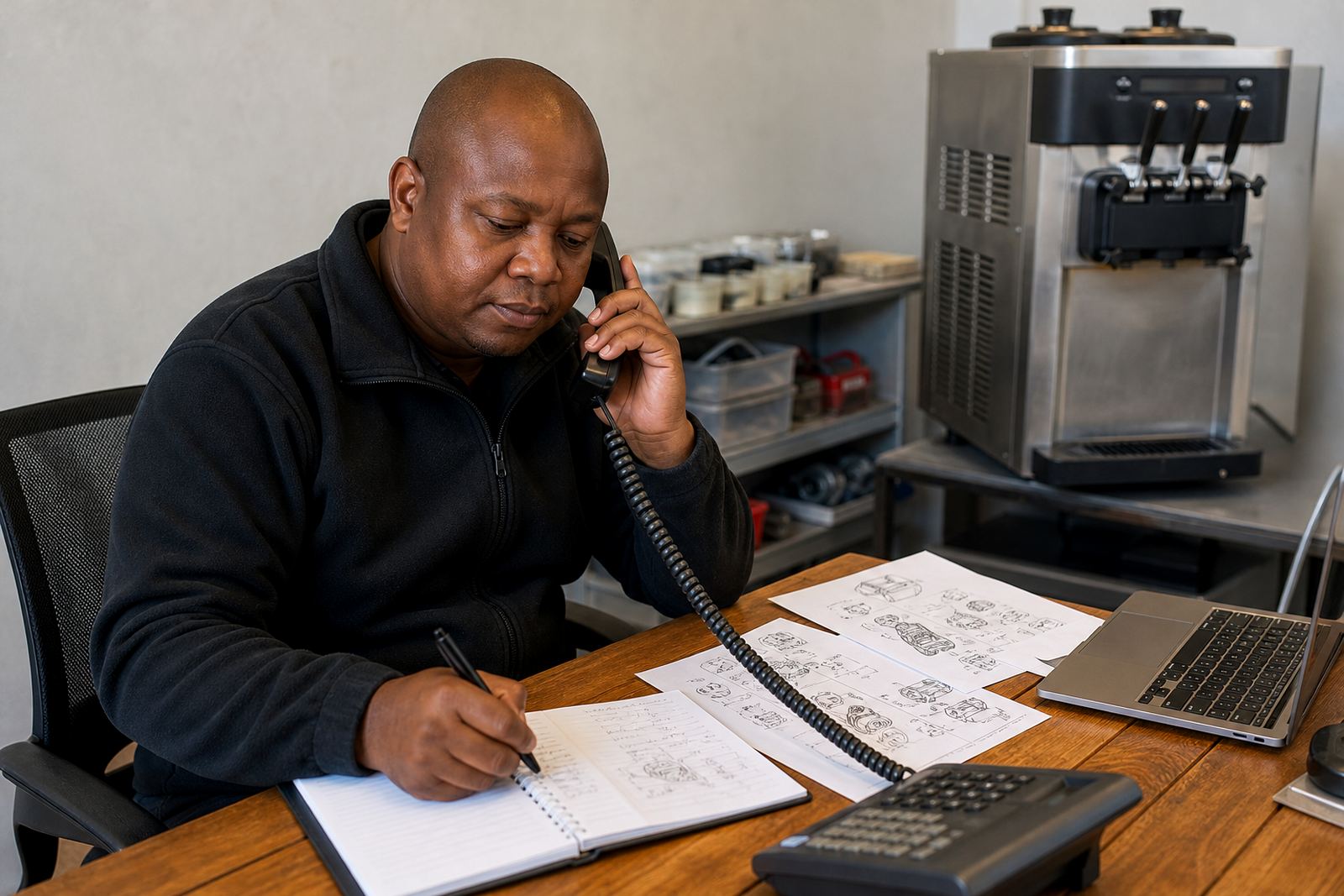
To keep the service moving, please make sure the machine is powered down, emptied and accessible. If the unit is on a counter or built into a serving line, clear the area so the technician can work safely and lay out parts properly. If your site has load-shedding schedules, tell us in advance so we can plan around power interruptions and avoid test delays.
It also helps to have your operators point out any recent issues such as low freezing, strange noise, leaking, or product that has been coming out too soft. That small bit of information can save time during inspection and makes it easier to spot the underlying cause. From Springfield Park to Cape Town, our aim is to leave the machine clean, checked and ready for normal trading.
Key facts
| Service type | Full hygiene reset and inspection for soft-serve and frozen yoghurt machines |
|---|---|
| What is cleaned | Hopper, product path, draw valve area, nozzles, seals, gaskets, splash zones and outer touch points |
| What is checked | Leaks, worn seals, blocked outlets, weak flow, temperature issues and unusual wear |
| Best for | Cafés, kiosks, dessert counters, restaurants and high-traffic food service sites |
| Typical interval | Based on usage, product type and site conditions, with deeper cleaning needed after heavy trading or shutdowns |
| Service area | Durban, Springfield Park, Umhlanga, Johannesburg, Pretoria, Cape Town, Gqeberha and Pietermaritzburg |