
What Seal And Parts Covers
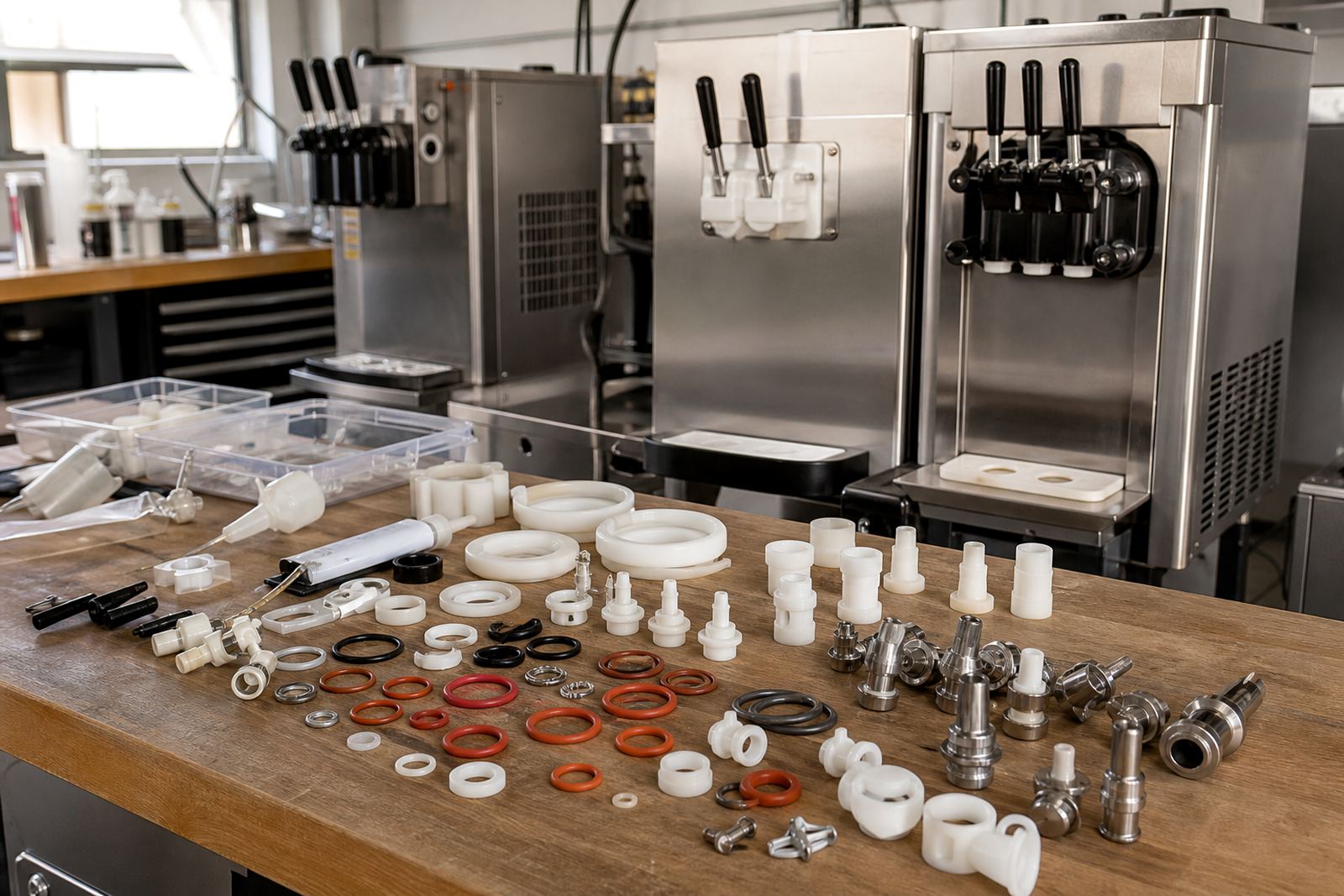
This service is for the parts that wear out through daily use and regular wash cycles. We replace product seals, O-rings, scraper rings, shaft seals, gaskets, valves, drive components and other common wear items that affect hygiene, freezing performance and drip control. If a machine is running but not holding mix properly or showing signs of leakage, this is usually the first place to look.
We work on machines used in busy service points from Durban to Cape Town, where long trading hours, heat, humidity and frequent cleaning can shorten part life. In coastal areas like Durban and Gqeberha, seals often need attention sooner because moisture and sugar residue can harden around moving parts. In Gauteng, heavy daily throughput usually means faster wear on valves and scraper parts.
- Replacement of worn seals, gaskets and O-rings
- Inspection of product path, hopper and draw components
- Fitment of common wear parts to reduce leaks and pressure loss
- Basic post-fit checks for smooth operation and sanitation
Signs Your Machine Needs Parts Replaced
If a machine is starting to drip after shut-down, struggling to keep mix in the freezing cylinder, or leaving inconsistent texture at the nozzle, the seals may be past their best. A small leak can turn into a bigger fault if it is left too long, because mix residue draws in air and puts extra strain on moving parts. That can also lead to sticky product build-up and more cleaning time for staff.
Other common signs include unusual noise from the auger area, hard-to-turn handles, loss of product pressure, or visible wear on flexible seals and rings. In some cases the machine still dispenses, but the draw is weak or the portion size changes during service. That is usually a good time to replace the affected parts before a full breakdown happens.
- Dripping from the front after cleaning or overnight shutdown
- Air in the product stream or uneven serving texture
- Leaks around doors, shafts or valves
- Parts that feel dry, cracked or flattened
How We Handle the Replacement Process
We start by identifying the machine type and the symptoms you are seeing, then match the correct wear parts to the unit. Where possible, we check the removed parts against the machine condition so we can tell whether the issue is simply ageing seals or if there is a deeper alignment or cleaning problem. That helps avoid repeat call-outs and wasted spend.
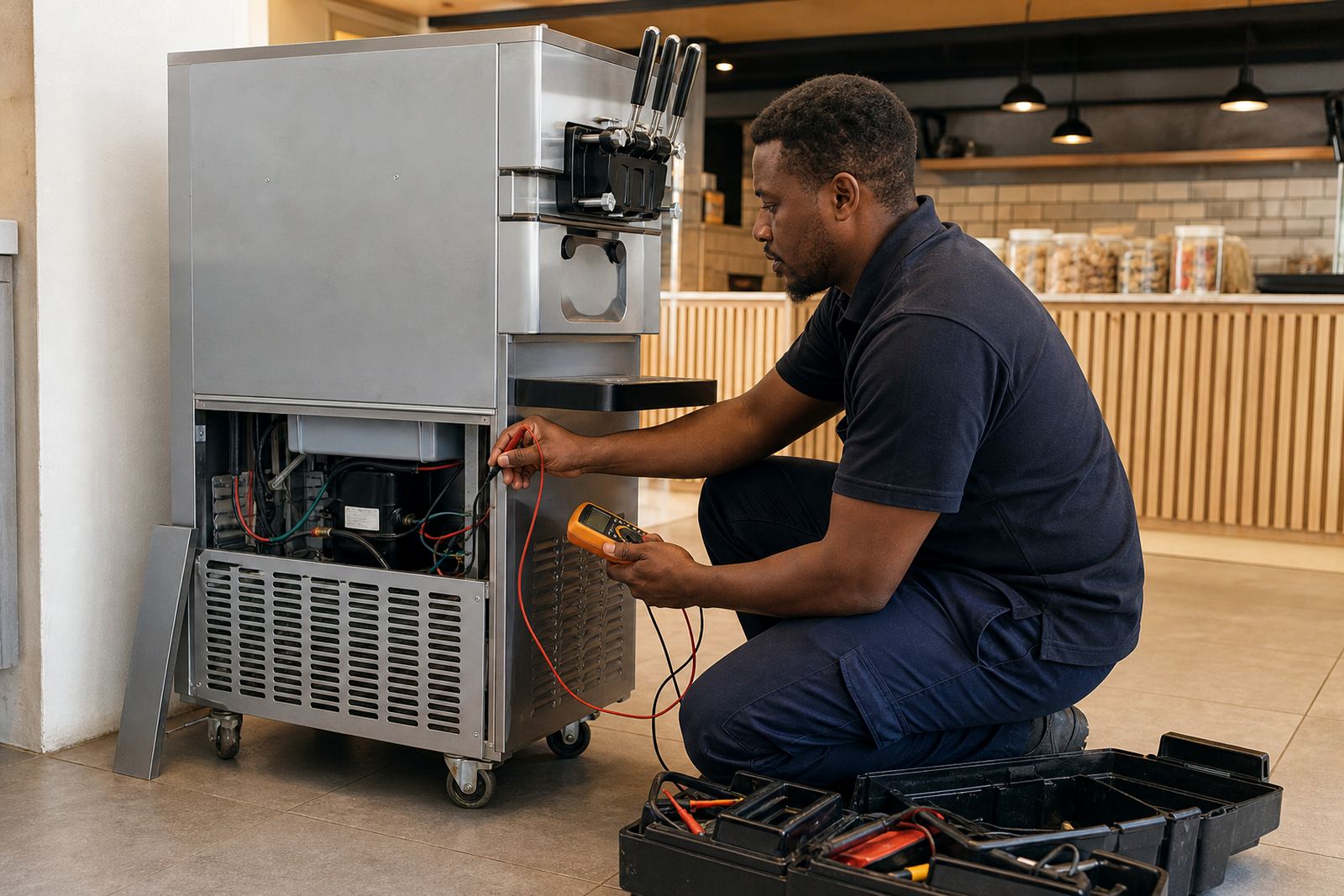
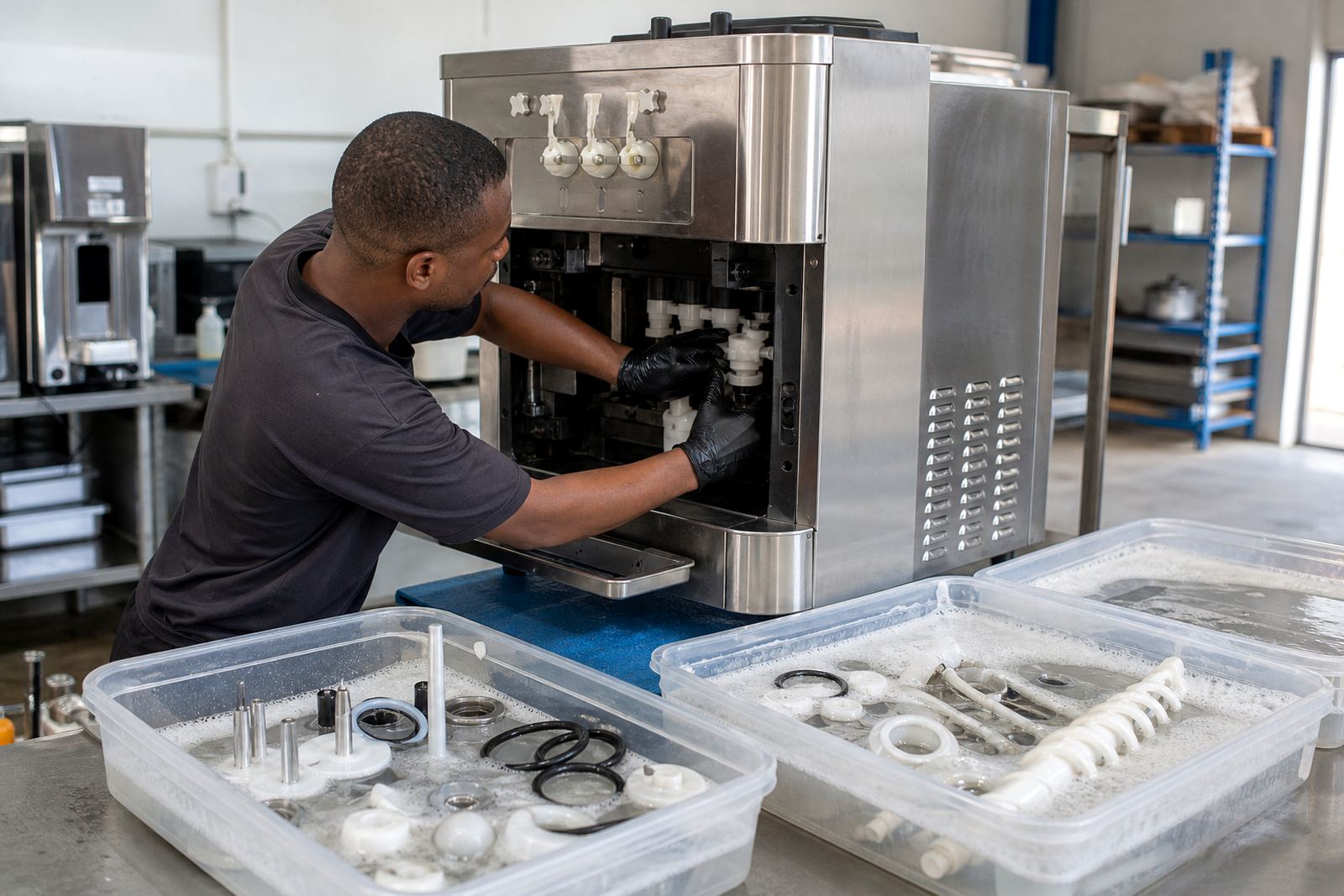
The usual process is straightforward. We isolate the machine, remove the worn items, clean the contact surfaces, fit the new parts and run a working check. If the machine has been running with leakage, we also inspect for residue around the mix path and clean the affected sections. On some units we will recommend a full seal set rather than one single part, because replacing just one item can leave the rest to fail soon after.
- Machine identification and fault check
- Removal and inspection of worn components
- Cleaning of contact faces and food-safe fitment
- Working test and basic operating guidance
Turnaround Times Across Durban and Beyond
Turnaround depends on the machine model, the part required and whether the item is a standard wear piece or a less common component. Common seals and O-rings are usually quicker to handle than specialised valves or drive parts. In Durban and nearby areas such as Springfield Park, Umhlanga and Pietermaritzburg, response is often faster because the team is close to the base of operations.
For clients in Johannesburg, Pretoria, Cape Town and Gqeberha, timing also depends on stock and courier movement. We aim to keep the process practical, with clear updates so you know whether the job can be completed on site or needs a parts supply first. If a machine is down in a busy trading period, we will prioritise the order where possible, especially before weekends, school holidays or season peaks.
Where a part is in stock, the replacement work can often be handled in a short visit. If a machine has multiple worn items, or if it needs a deeper strip and clean, allow a bit more time. It is better to fit the correct parts once than rush the job and have it fail again a week later.
Pricing Approach That Makes Sense for Operators
Pricing is based on the machine type, the number of parts required, labour time and any travel or courier cost if the unit is outside the Durban area. We do not price seal work as a one size fits all item, because a small kiosk machine and a high-output restaurant unit do not wear the same way and they do not use the same parts. A proper quote starts with the model and the issue reported.
For many operators, the best approach is to replace the worn parts before they cause product loss or downtime. A leaking seal can waste mix, create cleaning time and affect customer service at peak periods, so a planned replacement is often cheaper than waiting for a breakdown. If you are comparing options, we can explain the difference between a single part swap and a full wear-kit change so you can choose what suits your trading pattern.
- Quoted from the machine model and fault description
- Parts and labour separated where needed
- Courier or travel added only when applicable
- Best value often comes from replacing matched wear parts together
Recommended Maintenance Intervals for South African Trading Conditions
Seal life depends on use, cleaning habits and water quality. As a general guide, busy sites should inspect visible seals weekly and have a proper wear check during scheduled maintenance every 3 to 6 months. In coastal areas with higher humidity, or in sites that wash down heavily each day, seals may need attention sooner. If the machine runs through long trading hours in summer, the parts will work harder and should be checked more often.
We also recommend checking seals after site relocations, deep cleans and any period where a machine has been standing unused. A long shut-down can dry out rubber parts, while rough handling during transport can shift components out of alignment. If staff notice product leaks or a change in texture, do not wait for the next service window. Small issues are easier to sort when they are caught early.
- Weekly visual checks for leakage, cracks and residue
- 3 to 6 monthly wear inspections for active sites
- Immediate check after relocation or long idle periods
- Shorter intervals in coastal or high-volume locations
Why Operators Keep This Service on a Schedule
Good seal care protects the machine and the product. Fresh parts help keep the draw smooth, reduce leakage around the front end and make cleaning easier for staff. They also support better portion control, which matters when you are serving soft-serve or frozen yoghurt in busy periods where every extra drip counts. A machine that seals well is simpler to run and less likely to give trouble at the wrong time.
For cafes, kiosks and restaurants across South Africa, planned seal and parts work is one of the most practical ways to keep equipment dependable without overspending. It is a small job compared with a full breakdown, but it has a big effect on trading confidence and on how customers experience the counter. Regular attention here saves hassle later, plain and simple.
Key facts
| Service type | Replacement of seals and common wear parts for soft-serve and frozen yoghurt machines |
|---|---|
| Typical parts | O-rings, product seals, scraper rings, gaskets, valves and related wear items |
| Coverage area | Durban, Johannesburg, Pretoria, Cape Town, Gqeberha and surrounding areas |
| Turnaround | Depends on machine model, stock and location, with common parts handled faster |
| Maintenance interval | Visual checks weekly and full wear inspection every 3 to 6 months |
| Best suited for | Cafes, kiosks, restaurants and high-traffic dessert counters |