Fast fault finding when service stops
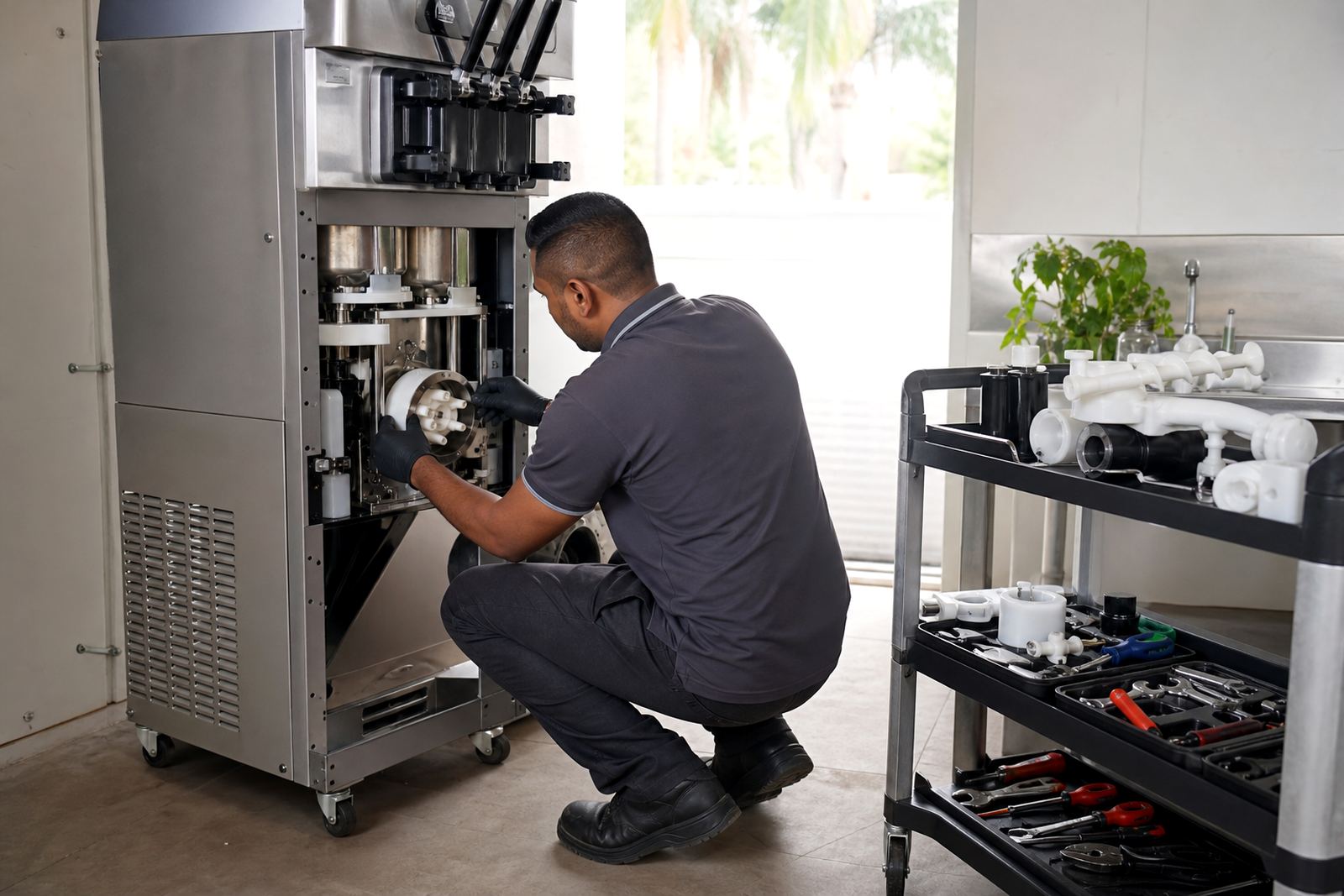
Breakdowns usually show up at the worst time, during a lunch rush, school holiday trade or a weekend queue. Our breakdown repair service is for machines that are not dispensing properly, not freezing to the right consistency, making unusual noise, tripping the supply, or cycling too often. We work on soft-serve and frozen yoghurt units used in cafes, kiosks and restaurants, and we look at the whole machine, not just the obvious symptom.
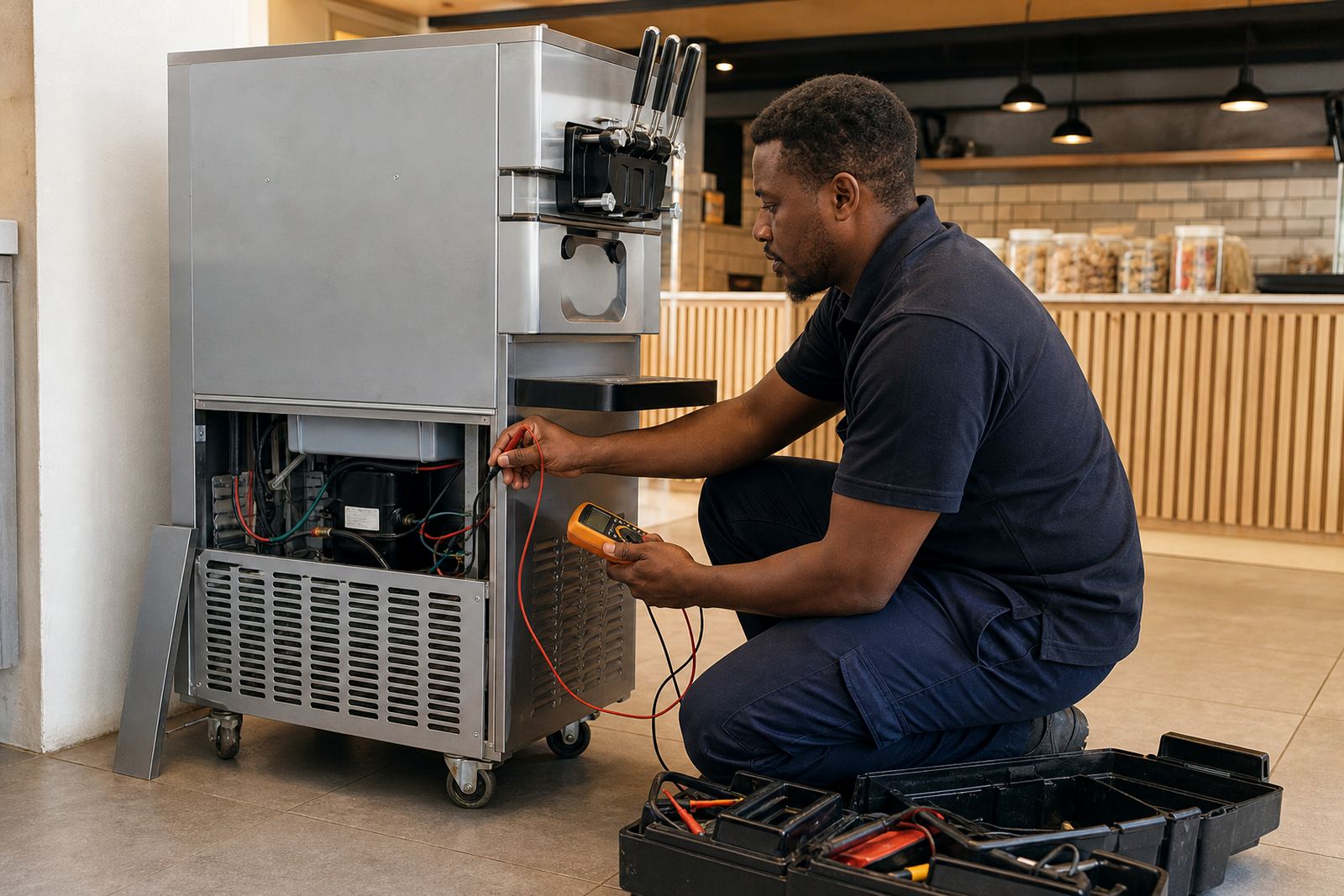
The first step is proper fault finding. That includes checking the power supply, switches, sensors, compressor operation, hopper temperature, auger action, drive components, seals and any signs of air leaks or product blockages. In Durban and other coastal areas, humidity and salty air can speed up corrosion on fittings and terminals, so we also inspect contact points and control panels for moisture damage. If the machine has been affected by load-shedding, we check for restart issues, control faults and overloads before the unit goes back into service.
- Not dispensing or weak product flow
- Cooling problems or soft product texture
- Compressor not starting or short cycling
- Noise, vibration or uneven mixing
- Leaks around seals, cylinders or drip areas
What the repair call-out includes
A breakdown repair call-out is set up to get the machine running safely again with as little downtime as possible. Where practical, we carry common wear items and essential tools for on-site work. If the fault needs a workshop repair or a specific part that is not on hand, we will explain the options before anything goes ahead. We do not guess at faults, because the wrong adjustment can lead to more downtime and higher power draw.
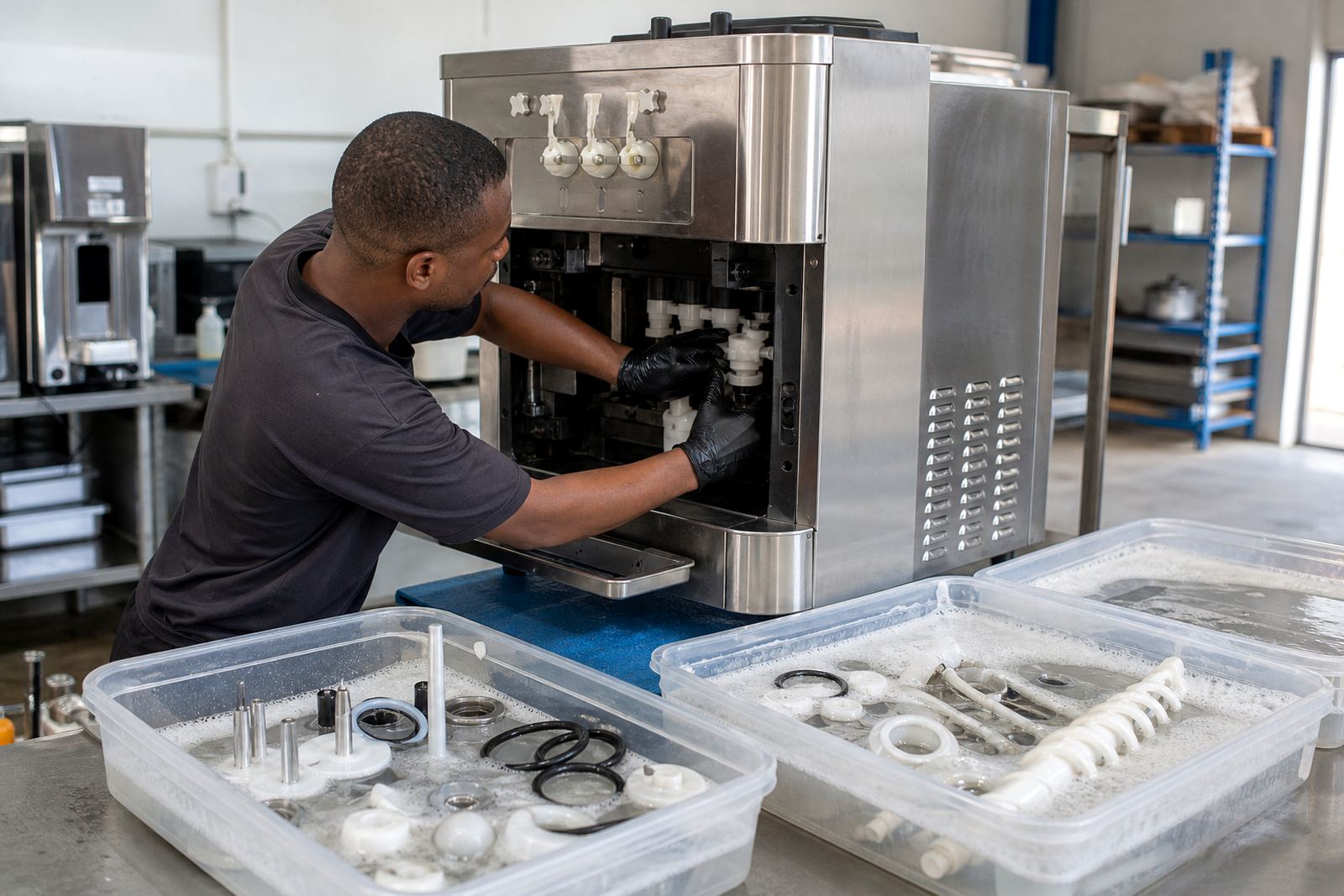
Typical repairs may include replacing worn seals, correcting mix feed problems, clearing blockages, changing damaged switches or sensors, testing motors and drive parts, and checking refrigeration performance. If a machine has been running too hot, too cold, or with the wrong mix setting, we also look at calibration. That matters because a machine can appear to work while still serving poor product and wasting mix. On many units, a small issue like a sticky valve or tired seal can cause repeated leaks and product loss.
- On-site inspection and fault report
- Repair or replacement of common wear parts
- Operational testing after the fix
- Basic settings check and mix flow check
- Advice on what caused the breakdown
Step-by-step repair process
We keep the repair process straightforward so you know what is happening and what the machine needs next. When you submit an enquiry through the contact page, our team checks the machine type, symptoms, location and urgency. For food service businesses, a clear description of whether the unit is not cooling, not dispensing, or stopping mid-cycle helps us plan the visit properly.
Once the repair is scheduled, a technician or technical supervisor assesses the machine on site and confirms the fault. If a part must be ordered, we will tell you whether the machine can be safely isolated and returned to service later, or whether a further visit is needed. After repair, we run a test cycle, check product consistency and make sure the machine starts and stops correctly. For sites in busy retail areas or malls, we also look at noise levels, drainage and cleaning access so the fix suits the trading environment.
- Receive the repair request and machine details
- Check symptoms, service history and access requirements
- Inspect, test and isolate the fault
- Repair on site or schedule parts replacement
- Run a full functional test before handover
Turnaround times and after-hours pressure
Turnaround depends on the fault, access to the unit and whether parts are needed. Minor electrical or mechanical faults can often be handled in a single visit if the machine is serviceable and the issue is straightforward. More involved refrigeration faults, repeated overloads, or damage caused by poor cleaning may need additional time. We always aim to restore trading first, then address the root cause so the problem does not keep returning.
For high-volume sites, time matters. A kiosk in Springfield Park or a restaurant in Umhlanga may lose a full day’s trade if a machine sits idle, while a busy site in Johannesburg or Pretoria may need a same-day decision on whether to repair or temporarily take the machine out of service. In Durban’s coastal heat, breakdowns can become more obvious in afternoon trade when ambient temperature climbs. We factor that in when checking cooling performance and product hold time.
- Simple faults: often same day or next available service slot
- Parts-dependent faults: allow extra time for sourcing and return visit
- Repeated electrical trips or cooling faults: testing may take longer
- High-traffic sites: priority scheduling can be arranged where possible
Pricing that matches the fault, not guesswork
Repair pricing is based on the actual fault, the time required, the parts needed and the location of the site. We do not use one flat price for every breakdown because a blocked mix line is very different from a compressor fault or damaged control board. You will get a clear picture of the likely cost before repair work proceeds, especially where parts must be replaced.
Many businesses prefer this approach because it helps with budgeting and avoids unnecessary spend. A machine that has been neglected may need a repair now and a service plan later, while a machine that has only one worn seal may need a much smaller intervention. We can also advise whether a repair is worthwhile or whether the unit needs more extensive attention based on age, usage and condition. If you are running more than one outlet, we can look at patterns across sites so the same fault does not keep happening.
- Pricing depends on fault type and parts required
- Travel and labour may vary by area
- Quoted work is explained before proceeding
- Repairs can be paired with preventative maintenance if needed
Keeping the machine from breaking again
Most breakdowns do not come out of nowhere. They build up through heavy use, poor cleaning, skipped seals, incorrect mix ratios or long periods of strain during summer trade. For that reason, we always look at maintenance intervals after a repair. In many food service settings, a machine should be checked regularly rather than waiting for a full failure. This is especially important where the machine runs daily, or where power interruptions and restarts are common.
As a practical guide, seals and product-contact parts should be inspected often, cooling performance checked during peak season, and a deep clean carried out on schedule. After load-shedding events, operators should confirm that the machine restarts correctly and is not showing unusual fault codes or temperature drift. In busy branches, a preventive visit every 3 to 6 months can help avoid emergency downtime. For seasonal sites, a pre-summer check before trade peaks is a good idea.
- Check seals and moving parts regularly
- Watch for changes in noise, product texture or cycle time
- Book maintenance before peak season and school holidays
- Keep the machine clean and the vents clear for airflow
If your machine is already down, the quickest way to start is through the enquiry form on our contact page. The more detail you give us, the faster we can match the fault to the right repair plan and get your counter serving again.
Key facts
| Service area | Durban, Springfield Park, Umhlanga, Johannesburg, Pretoria, Cape Town, Gqeberha and Pietermaritzburg |
|---|---|
| Machine types | Soft-serve and frozen yoghurt machines |
| Common faults | No dispensing, poor cooling, tripping, leaks, noise, uneven freezing |
| Repair method | On-site fault finding, parts replacement and operational testing |
| Typical turnaround | Same day for simple faults, longer where parts or detailed testing are needed |
| Maintenance interval | Every 3 to 6 months, with extra checks after heavy use or power interruptions |