
What our preventive maintenance covers
Our preventive maintenance service is planned work for soft-serve and frozen yoghurt machines used in cafes, kiosks, restaurants and dessert counters. It is aimed at keeping output steady, reducing avoidable repairs and helping the machine stay within normal operating temperatures and mix settings.
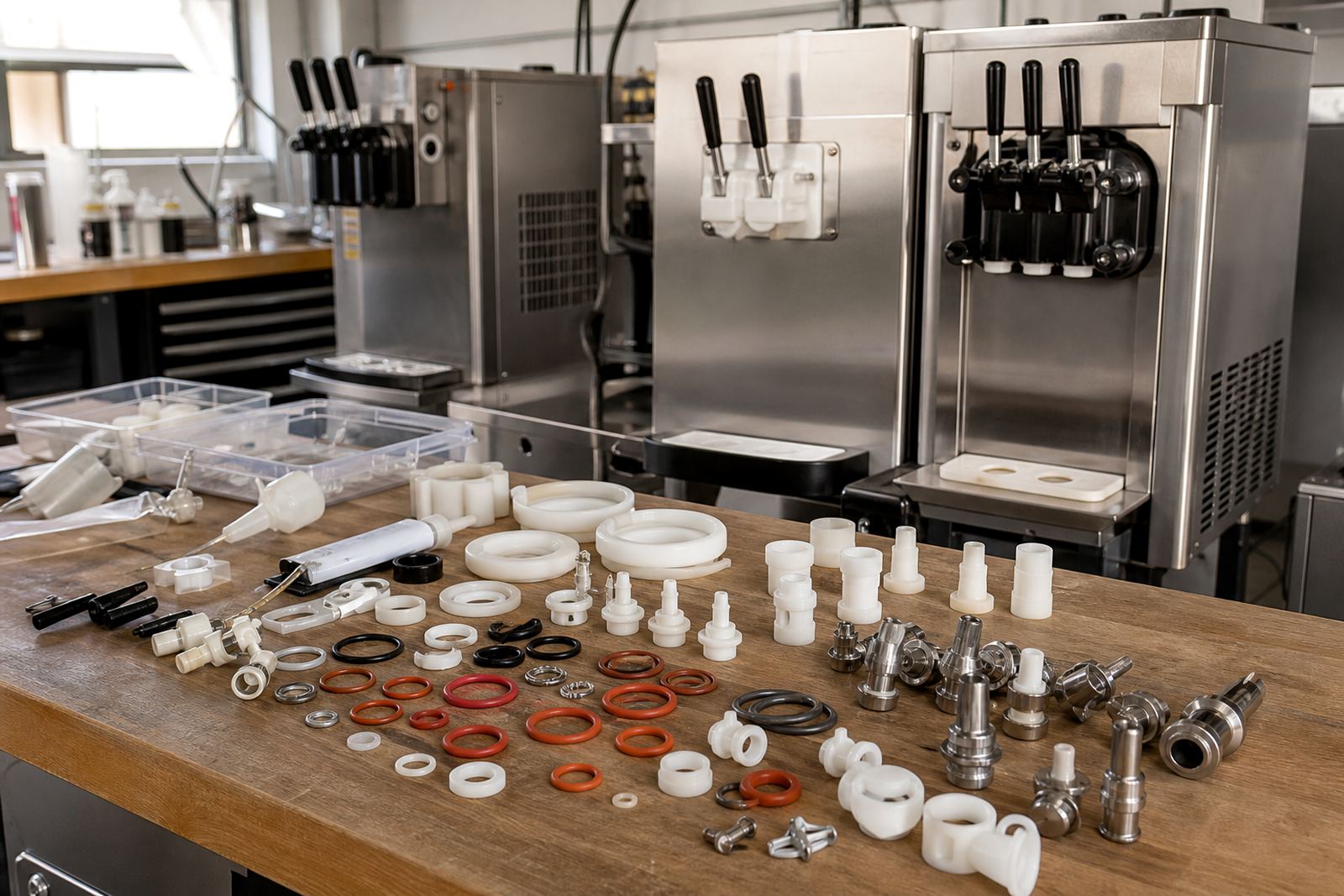
The service covers the main working parts that take the most strain during daily use, including the freezing cylinder, hopper components, agitator parts, door seals, gaskets, drive systems, mix feed lines and control settings. In Durban and other coastal areas, we also pay close attention to moisture, salt air and corrosion on fittings, because those conditions can shorten component life if they are ignored.
- Full operational check before cleaning starts
- Inspection of seals, O-rings, gaskets and scraper parts
- Cleaning of product-contact components and food-safe sanitising
- Calibration of mix flow and serving consistency
- Testing of freezer performance, motor load and controls
- Basic electrical and safety checks on plugs, switches and indicators
How the service process works
We keep the process simple and practical. First, your team logs the machine condition, how often it is used, and whether you have noticed slow freezing, uneven texture, leaks or noisy operation. From there, we book a suitable time and plan the visit around your trading hours where possible.
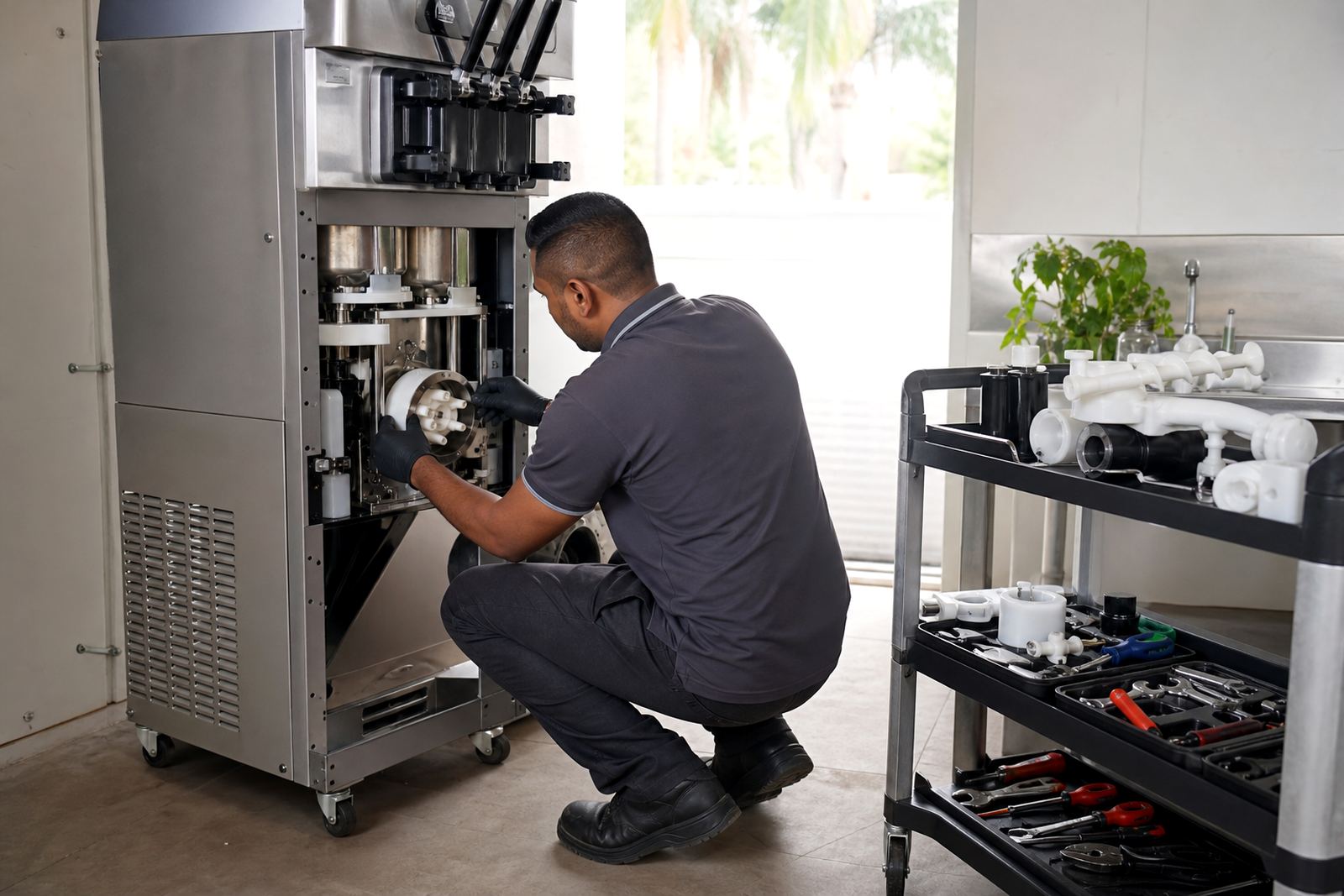
On arrival, the technician isolates the machine, carries out the agreed checks, then works through cleaning, inspection and adjustment. If a part is worn beyond serviceable condition, you get a clear note before anything is replaced. Where access is tight in a kiosk or counter build, the technician will work around the site safely and keep the area tidy during the job.
- Booking and condition check
- On-site inspection and strip-down of service parts
- Cleaning, sanitising and functional testing
- Adjustment of settings and calibration if needed
- Report with findings, parts required and next service date
Typical maintenance intervals for South African trading conditions
Maintenance intervals depend on the machine size, daily volume and the site environment. A high-volume kiosk in Johannesburg or Cape Town may need more frequent attention than a small cafe serving moderate volumes. Coastal humidity, dust, and power interruptions also affect how often checks should be done.
As a guide, we recommend monthly visual checks by staff, with a professional preventive service every 3 to 6 months for active machines. During peak summer trading, school holidays or weekend rush periods, some sites benefit from a shorter interval. If the machine is used daily, or if it sits in a hot area near ovens or windows, the service gap should be shorter. Regular checks help prevent overspeed wear on seals and keep mix consistency more stable.
- Monthly in-house checks for leaks, noise and temperature changes
- Every 3 months for heavy-use sites
- Every 4 to 6 months for moderate-use sites
- Additional check before busy season or new menu launches
What specifications we verify during maintenance
Our technicians work to the machine's normal operating requirements and confirm that the unit is still performing within safe working limits. This includes product temperature behaviour, drive performance, seal condition, feed consistency and cleaning access. If a machine is struggling after load-shedding or frequent power interruptions, we also look at restart behaviour and whether the system is recovering properly after outages.
The aim is not only to keep it running, but to keep it serving the right texture and portion control. That matters for profit control, customer consistency and reducing wasted mix.
- Freezing cylinder performance and recovery time
- Motor current draw and drive movement
- Mix temperature and hopper stability
- Door seal condition and leak checks
- Sanitary condition of all product-contact parts
- Serving consistency and calibration settings
Turnaround, scheduling and service coverage
Most preventive maintenance visits are completed within a single appointment, depending on the machine type and what the inspection reveals. If a unit needs extra work, such as seal replacement or a deep clean on a neglected system, we will explain the extra time required before continuing. For sites across Durban, Springfield Park, Umhlanga, Johannesburg, Pretoria, Cape Town, Gqeberha and Pietermaritzburg, scheduling is arranged according to route planning and site urgency.
We try to minimise downtime by working efficiently and by booking planned maintenance before the machine reaches the point where a breakdown becomes likely. For businesses with more than one machine, we can stagger service dates so trading is not interrupted on all units at once.
- Standard visit: same day where route and workload allow
- Complex service: extra time quoted before work proceeds
- Multi-site clients: planned route-based scheduling
- After-service handover with operating notes for staff
Pricing approach and what affects the cost
Pricing is based on the machine type, number of units, site location and the amount of work needed during the visit. A well-maintained machine usually costs less to service than one that has been left too long without cleaning or inspection. Travel distance, after-hours access, and replacement parts also affect the final amount.
We quote clearly before the job starts, so you know what is included. For many clients, the value comes from avoiding a full breakdown during a busy lunch rush or weekend. On older units, a preventive service can identify a weak seal, worn scraper, or blocked line before it becomes a bigger repair bill. That makes budgeting easier and keeps your service counter open.
- Quoted according to machine condition and service scope
- Parts charged only when replacements are needed
- Discounts may apply for multiple machines on one site
- Service plans can be arranged for regular intervals
Key facts
| Service type | Scheduled preventive maintenance for soft-serve and frozen yoghurt machines |
|---|---|
| Coverage | Durban, Johannesburg, Pretoria, Cape Town, Gqeberha and surrounding areas |
| Typical interval | Every 3 to 6 months, depending on usage and environment |
| Common checks | Seals, gaskets, cleaning, calibration, motor load, temperature and controls |
| Turnaround | Usually within one site visit, subject to machine condition |
| Best for | Cafes, kiosks, dessert bars, restaurants and multi-site operators |