
The first thing they notice is whether service looks steady
In a cafe, kiosk or restaurant, customers often judge frozen dessert by the first few seconds at the counter. If the machine is slow to recover after a serving, the swirl comes out uneven or the cup looks half filled, people notice. That is true in a busy Durban shopping centre, a beachfront kiosk or a family restaurant in Pretoria. A reliable machine helps keep the queue moving and keeps the serving size looking consistent.
Owners often think customers notice taste first, but the eye comes before the palate. A clean nozzle, smooth dispense and a neat finish make the product look worth paying for. When a machine is set up properly and maintained on schedule, it shows in the cup every day.
- Even product texture from the first serve to the last
- Consistent portion size during peak trade
- Less waiting at the counter when foot traffic picks up
- A cleaner serving area with fewer drips and spillages
Clean lines and tidy counters matter more than most owners think
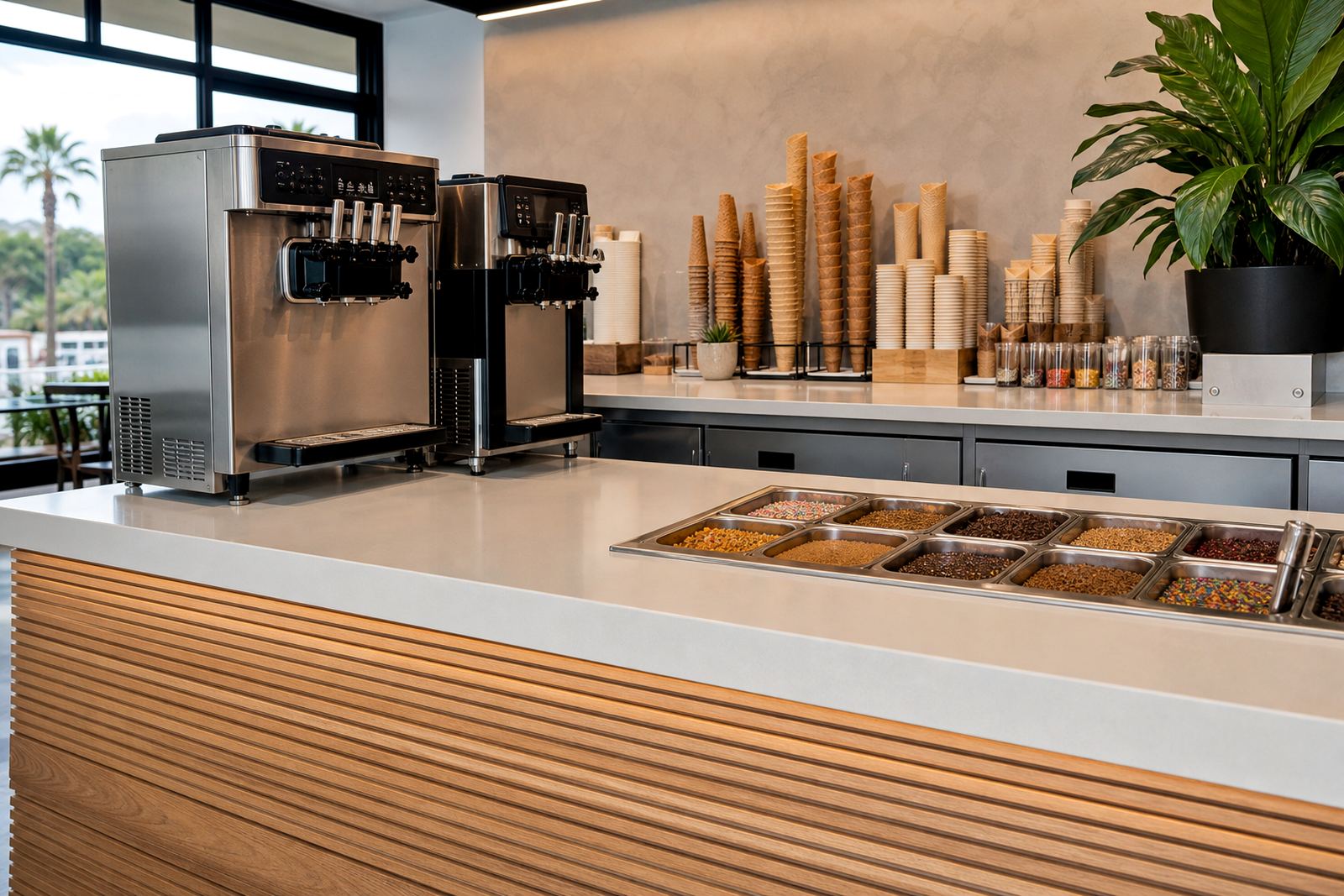
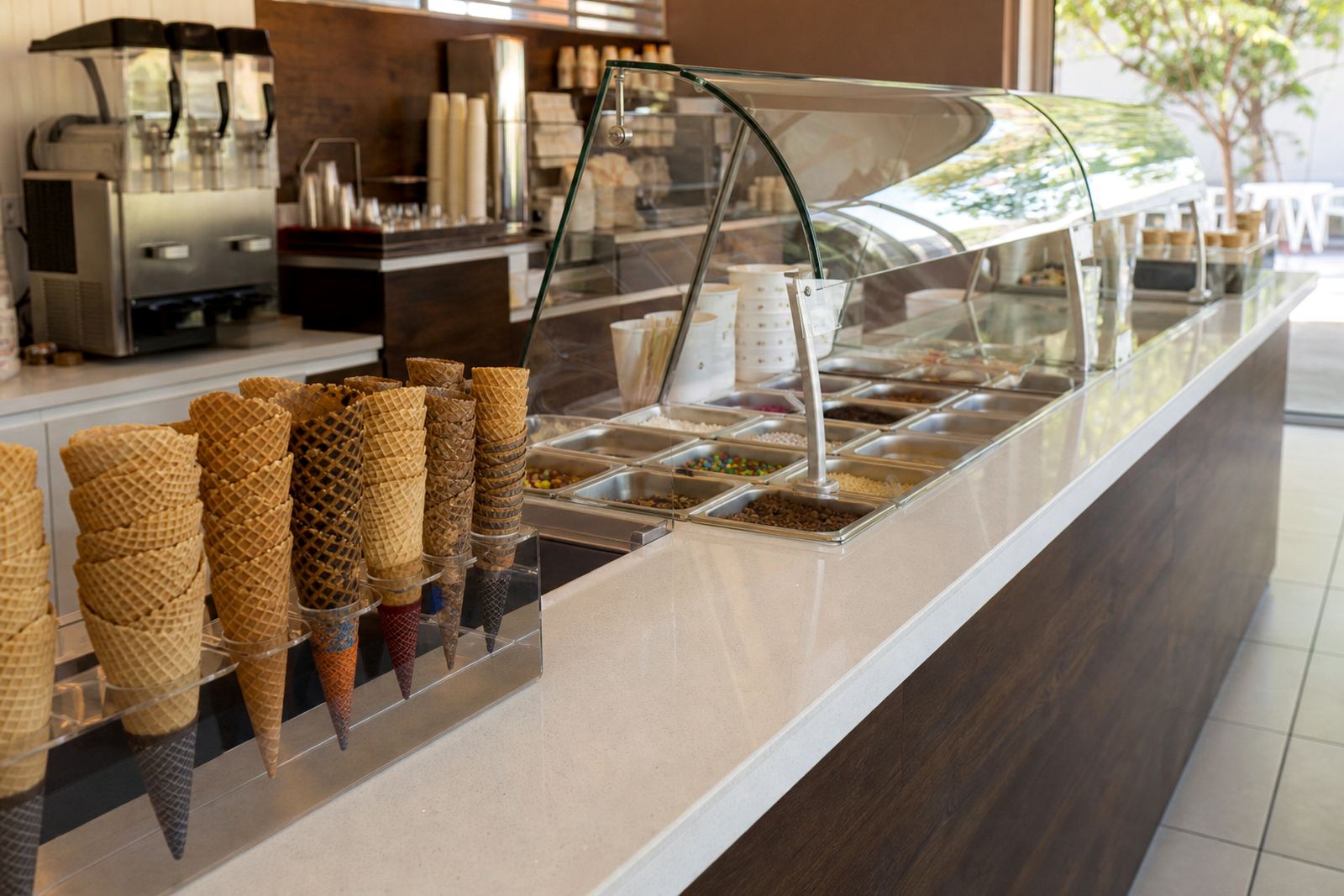
Frozen dessert sales are visual sales. Customers see the cone stack, the mix containers, the drip tray and the general order around the machine before they ask for a flavour. If the area looks cramped or sticky, it creates doubt. If it looks organised, they trust it. This matters in a kiosk where space is tight and every item must earn its place.
In humid coastal areas like Durban and Gqeberha, moisture can affect how packaging, cones and serving areas hold up. Cones need to stay dry and easy to reach. Mixes should be stored correctly so the result stays the same through the day. A tidy layout also helps staff move quicker during school holidays, month-end and warm weekends when queues build fast.
- Keep cones sealed and away from moisture
- Place cleaning tools where staff can reach them quickly
- Use clear labelling for mix batches and prep times
- Leave enough space for safe refilling and wiping down
Customers remember taste, but they stay for consistency
A customer may buy once because the product looks good, but they come back when it tastes the same every time. That is why mix calibration matters. Too much air, too little mix or poor temperature control can change the product from one shift to the next. People may not know the technical reason, but they notice when one visit is perfect and the next one is watery or icy.
For cafes and restaurants, consistency also protects the wider menu. If a frozen yoghurt cone is serving well during breakfast and again at lunch, it becomes a dependable add-on rather than an occasional special. In a place like Springfield Park in Durban, where many operators run tight schedules, regular calibration and operator training save time and cut waste.
- Standardise portion control for all staff on duty
- Check temperature settings before the rush starts
- Use the same mix procedure across branches
- Record any changes after a service visit or deep clean
What staff handling says about the whole operation
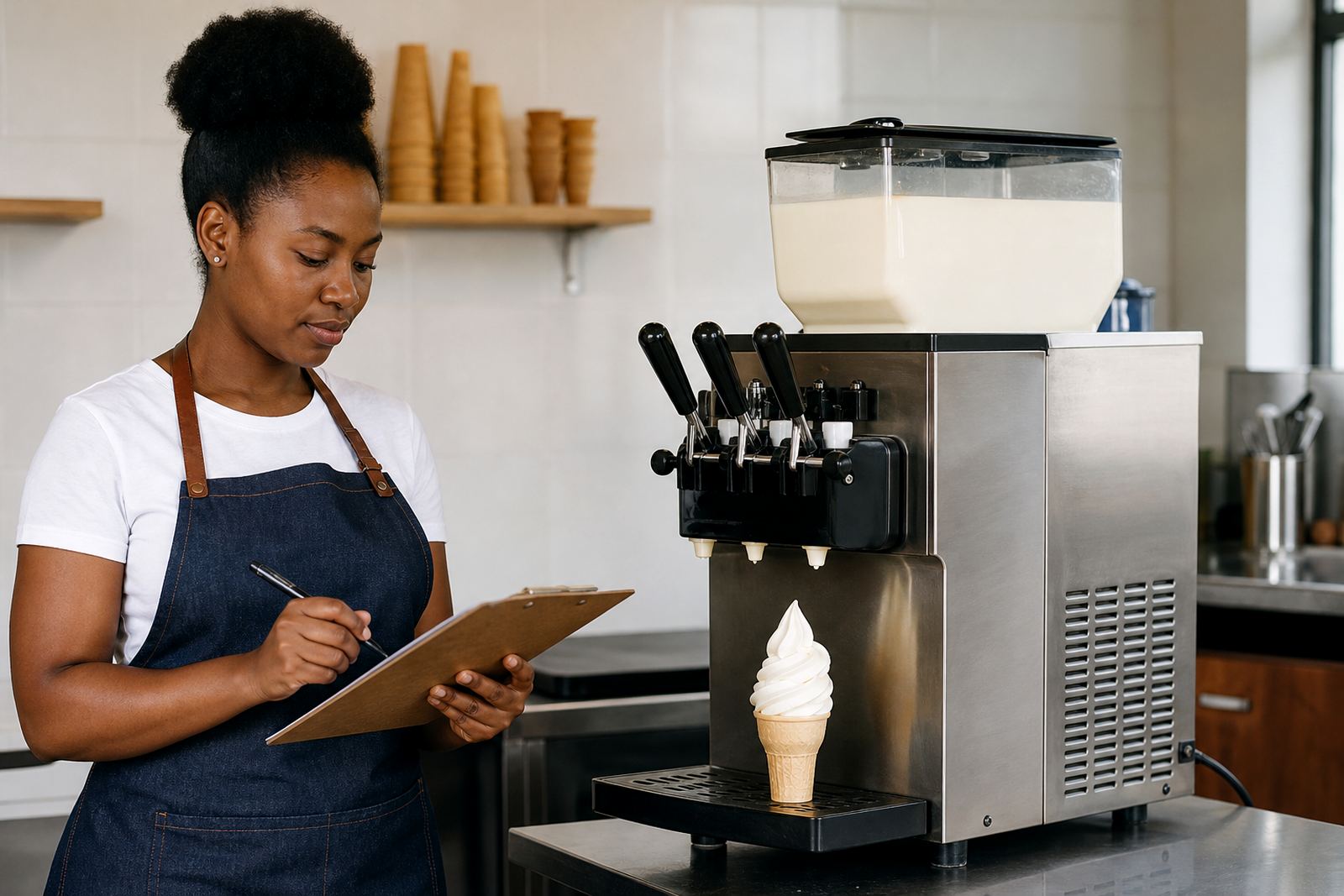
Customers do notice the person serving them. If staff are unsure about the machine, fumbling with the lever or calling for help every few minutes, confidence drops. Good training shows in simple ways: the cup is filled properly, the cone is handed over neatly, and the counter keeps moving without fuss. In many cases, this is what separates a one-time sale from repeat custom.
Operator training is especially useful where different staff members work different shifts. A trained team can handle startup checks, basic cleaning and simple product adjustments without wasting time. If a fault comes up, phone support can help the team decide whether it is a quick fix or a call-out for breakdown repairs. That support matters when load-shedding or a sudden power dip affects the serving plan.
- Train each shift on startup and shutdown steps
- Show staff how to spot early signs of wear
- Teach basic sanitising between busy periods
- Make sure someone knows the correct response to a fault
Local weather, power cuts and busy weekends change buying decisions
South African customers do not buy frozen desserts in a vacuum. Weather, power interruptions and local foot traffic all affect what they see and how long they wait. A machine that handles a warm Saturday in Cape Town or a humid afternoon in Pietermaritzburg without losing pace earns trust quickly. The same goes for outlets that need a solid plan during load-shedding, because a cold product that turns too soft loses appeal fast.
That is why preventive maintenance and season prep checks are not just technical tasks. They are part of the sales plan. Before summer, many operators inspect seals, test mix flow, check spare parts and confirm the machine is ready for heavier trading. A site relocation also needs care, because a machine moved without proper setup can give uneven results from day one.
For example, a kiosk in Umhlanga that serves families after beach visits needs fast turnaround, clean presentation and staff who can cope when the queue stretches to the door. If the machine is serviced, the cones are dry and the mix is calibrated, customers usually move straight from looking to buying.
The small details that build repeat trade
Most customers will not ask about seals, parts or calibration, but they will notice the outcome. They notice when the product is smooth, when the cone is crisp and when the counter feels organised. They also notice when a machine is out of action for too long, especially if the outlet has built a following around frozen treats.
That is why the practical details matter so much for cafes, kiosks and restaurants. The right mix, a clean machine and timely servicing do more than protect equipment. They support the whole customer experience and keep the frozen dessert offer looking worth returning for.
- Routine cleaning protects flavour and texture
- Spare parts on hand reduce downtime
- Good product presentation supports higher sales
- Regular servicing helps the machine perform through busy seasons