
What the Kiosk Launch Package includes
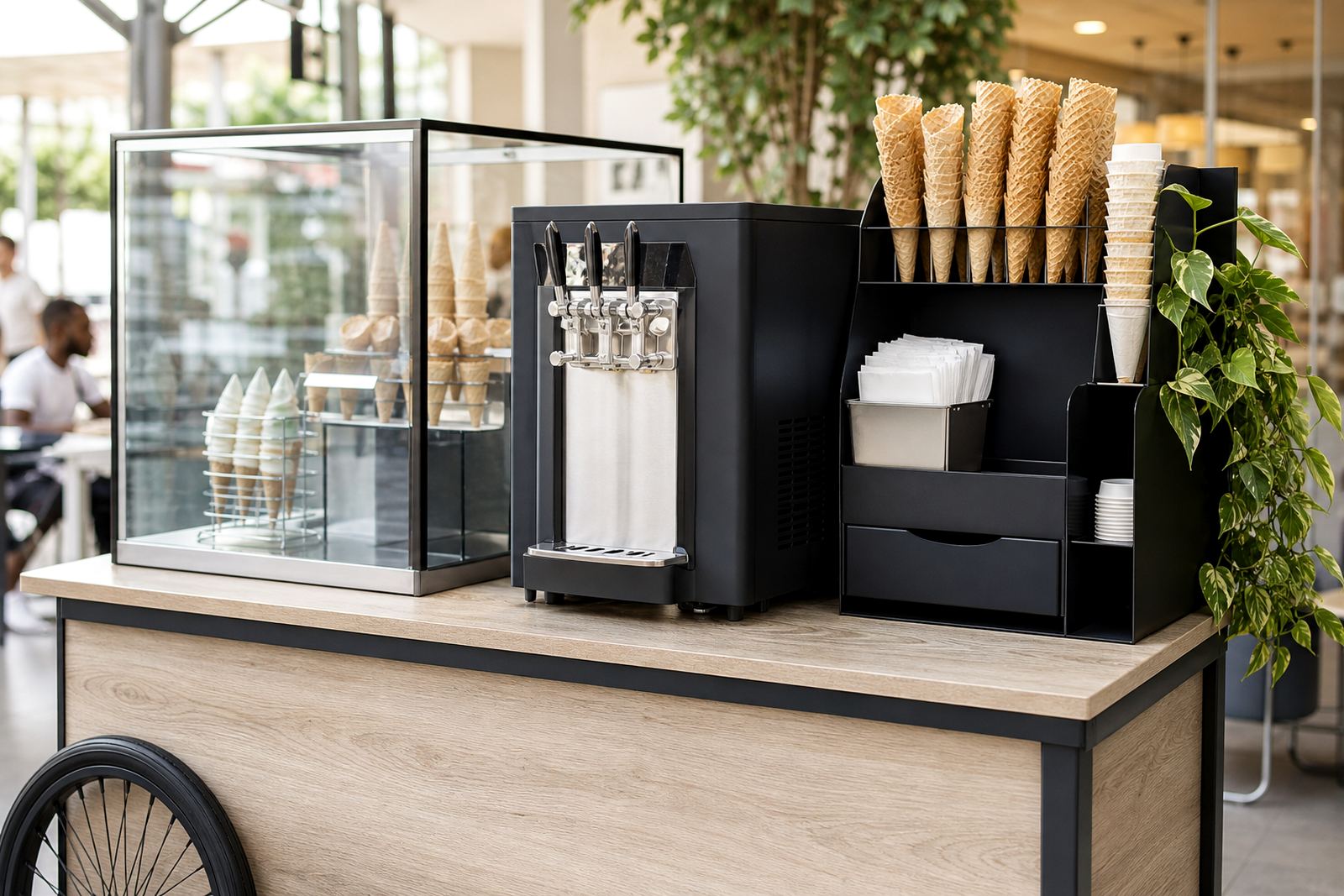
This package is built for kiosk operators who want a practical start-up bundle instead of piecing together machines, cones, mixes and cleaning stock one by one. It combines soft-serve or frozen yoghurt equipment with the everyday serving items that keep the counter moving during lunch rushes, school traffic and weekend trade. The idea is simple: one order, one coordinated set-up, fewer gaps on day one.
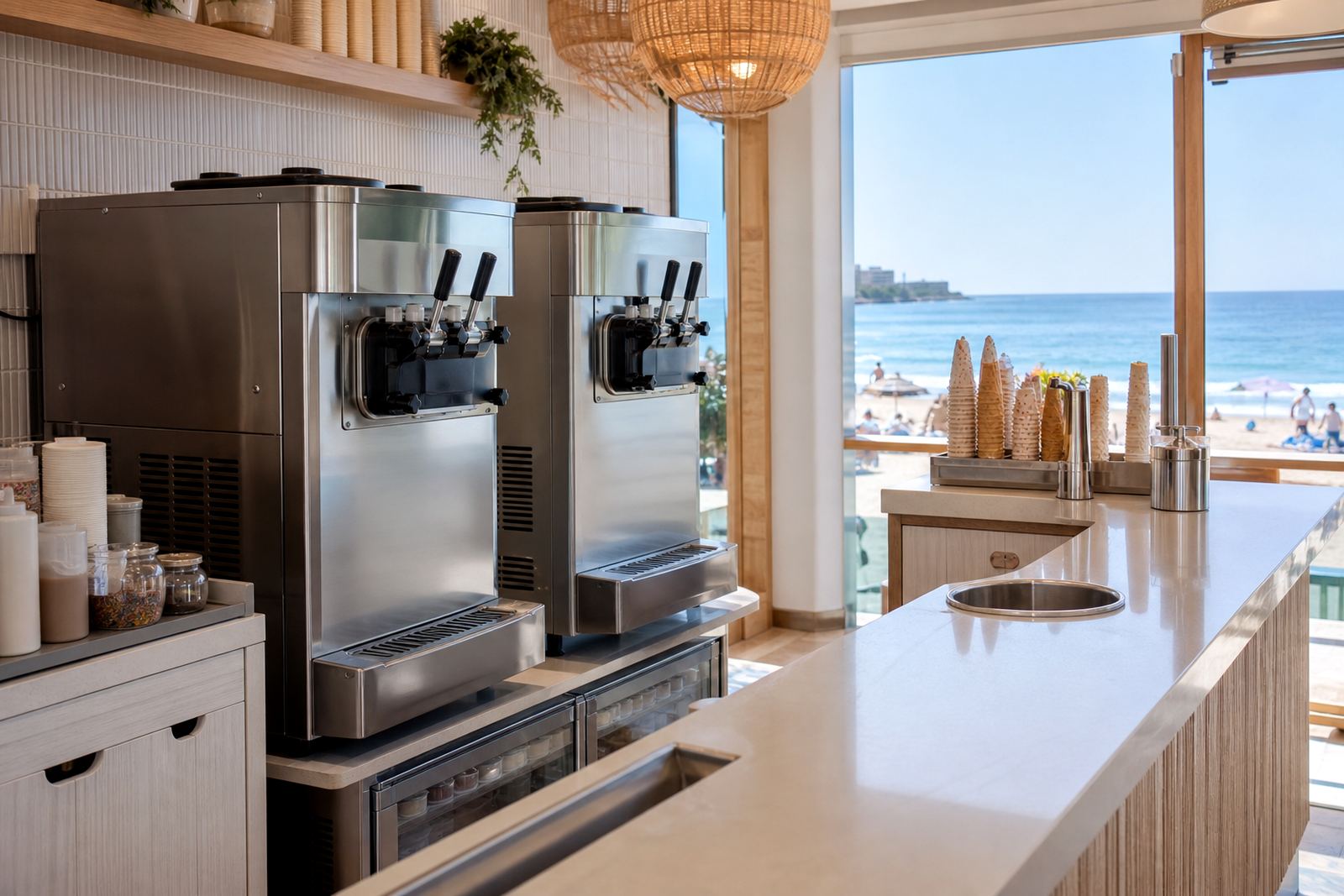
Depending on your counter space and expected footfall, the package can be matched to a single-flavour unit for tighter sites or a higher-output machine where sales are stronger. It suits compact mall kiosks, forecourt setups, beachfront stands and small restaurant counters where frozen desserts need to be served quickly without taking over the floor space. In coastal areas like Durban and Gqeberha, the materials and storage plan should also take humidity into account.
- Soft-serve or frozen yoghurt machine matched to your service style
- Mixes sized for daily use with cone supply for immediate trading
- Basic serving essentials for quick counter service
- Setup support, operator handover and initial calibration
- Options for sanitising supplies and seasonal top-up stock
Machine sizes and output options for different kiosks
Not every kiosk needs the same output. A small site trading from a narrow counter may only need a compact machine with a smaller hopper and lower hourly draw, while a busier site in a mall or tourist area may need more capacity to keep queues moving. The package can be specified with one or two mix chambers depending on the menu and how much variety you want to offer.
Typical options include compact countertop units for tighter kiosks, mid-size floor units for moderate daily sales and higher-capacity machines for operations that trade hard over weekends or holidays. If you are serving soft-serve only, a simpler setup may work well. If you want frozen yoghurt with more control over texture, you will need to look closely at freezing capacity and mix consistency. Our team will advise on what fits the site instead of oversizing the machine and wasting space.
- Countertop and floor-standing machine options
- Single-flavour or dual-flavour configurations
- Approximate output guidance based on expected daily trade
- Options for pre-mix and refill workflow at the counter
Where this package suits best
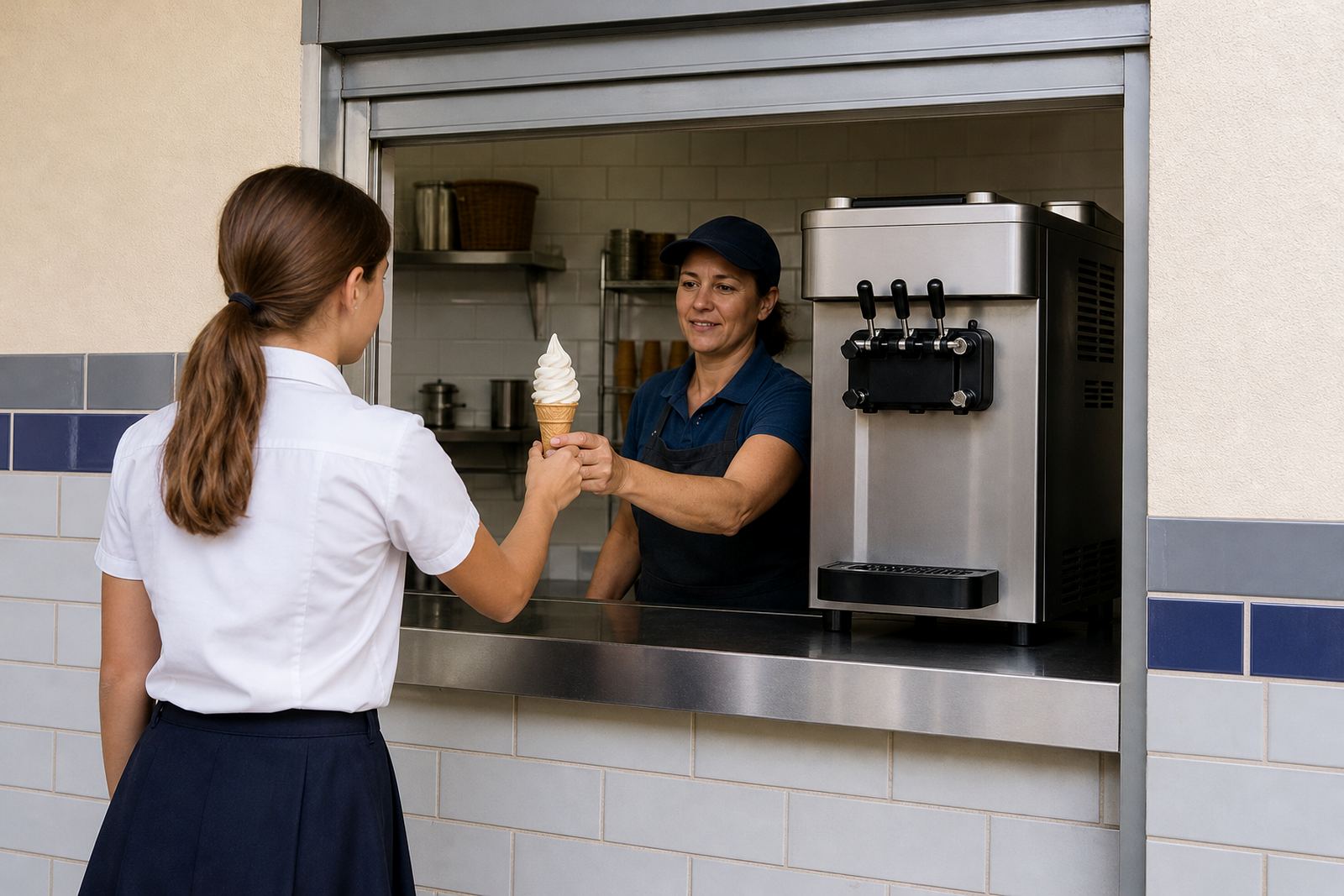
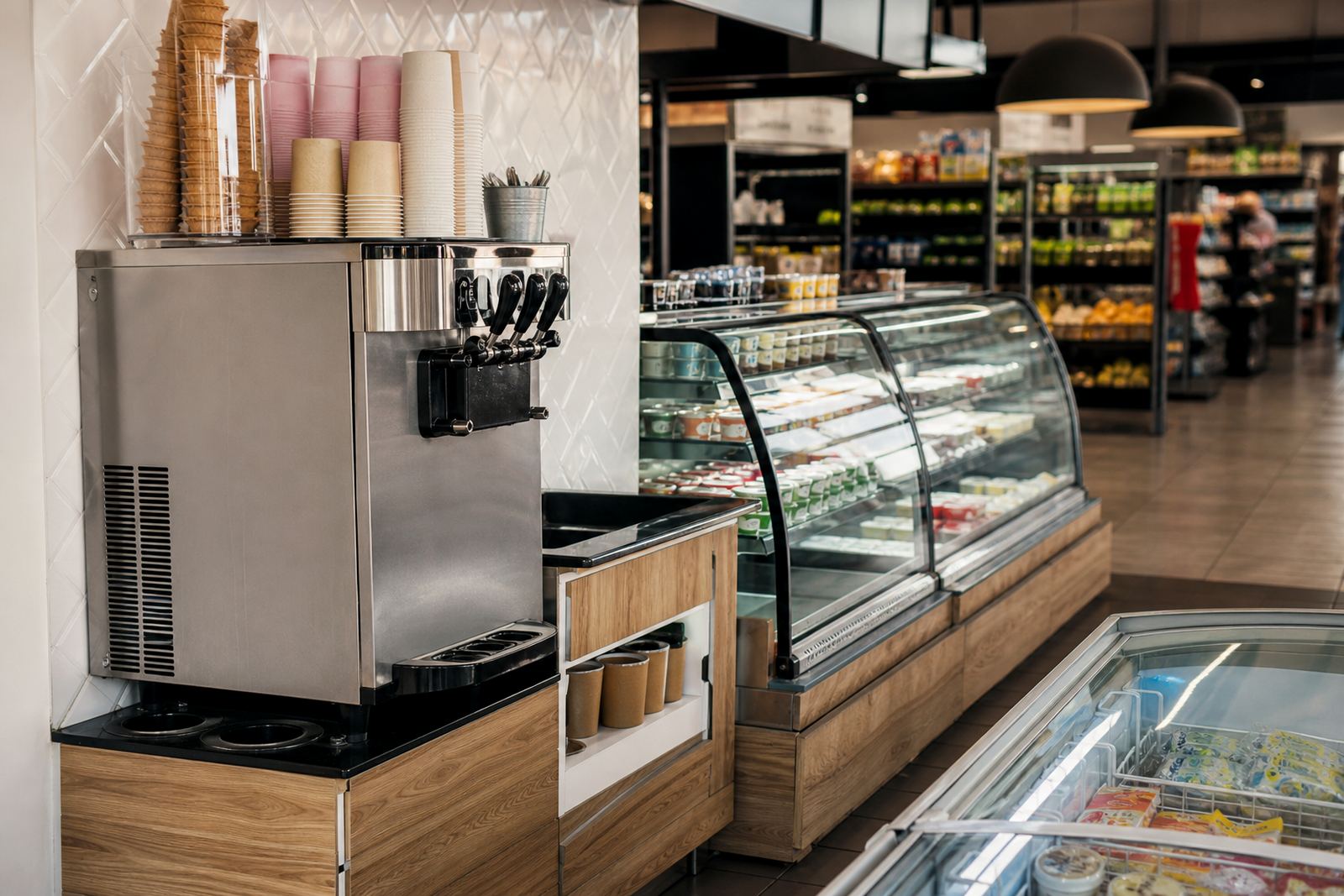
The package suits kiosks that need a dependable frozen dessert offer without complicated kitchen requirements. It works well in shopping centres, fuel stations, leisure precincts, food courts and takeaway counters where the selling point is fast service and consistent portions. For restaurants, it can add a dessert line without taking over the main kitchen or requiring a separate prep area.
It is also a good fit for new operators who want to launch with a clear menu and a clean serving routine. In smaller towns and busy metro areas alike, the same rules apply: keep the equipment easy to clean, make sure the footprint fits the lease and check the power supply before delivery. If you are near the coast, allow for regular wipe-downs and keep consumables dry and sealed.
- Kiosks with limited back-of-house space
- Sites with high foot traffic and quick turnover
- Restaurants adding a simple dessert menu
- Seasonal operations that need reliable start-up and pack-down routines
Installation, power and site readiness
Before the machine is installed, the site needs a proper check on space, ventilation, electrical supply and cleaning access. Most kiosk operators in South Africa work with limited load capacity, so the power point and circuit protection must be confirmed before ordering. If a site has unstable supply or frequent load-shedding, you should also plan for controlled shutdowns and safe restart procedures. The machine must sit level and have enough clearance for airflow and servicing.
Some sites may need relocation planning, especially when a kiosk is moved within a centre or from a temporary stand to a permanent counter. Where the setup includes chilled storage or ancillary electrical equipment, the installer must confirm the load and position carefully. For any gas-assisted preparation area close to the kiosk, keep it separate from the machine zone and follow the site rules and local municipal requirements. It is worth checking the available plug type, breaker size and cleaning water access before delivery day.
- Verify footprint, clearance and service access
- Confirm power supply, socket type and breaker rating
- Plan for load-shedding shutdown and restart procedures
- Keep cleaning access and drainage in mind from the start
Care, cleaning and regular servicing
Frozen dessert machines need steady attention if you want smooth service and consistent texture. Daily cleaning, sanitising and a proper deep clean schedule protect the mix quality and help prevent spoilage. In hot inland conditions, and in humid coastal sites, it is especially important to manage product storage carefully and to keep seals, fittings and moving parts in good condition. A machine that is cleaned properly also starts better after a quiet morning and is less likely to give trouble during a busy afternoon.
Servicing should include preventative maintenance, seal checks, calibration and prompt breakdown support if anything starts to drift. Operators should be trained on startup, shutdown, cleaning and basic fault checks so small issues are picked up early. If your kiosk runs every day, set a regular service rhythm rather than waiting for a problem. That keeps the unit working harder for longer and helps protect sales during peak season.
- Daily wash down and sanitising routine
- Deep clean service at planned intervals
- Seal and parts replacement when wear appears
- Preventive maintenance before peak trading periods
What to check before placing your order
Before you confirm the package, check the size of the kiosk, the type of dessert you want to sell and the volume you expect on a normal trading day. It helps to know whether your team wants a simple one-flavour offer or a broader menu with multiple mix choices. You should also confirm whether the site can support the machine electrically and whether there is enough room for cone stock, cleaning supplies and safe handling at the counter.
It is wise to think about the first few weeks of trade as well. Will you need extra mixes, cones and sanitising supplies for launch month? Do you need operator training for several staff members or just one supervisor? Are you moving an existing kiosk and need site relocation support? Getting these details right from the beginning avoids delays and keeps the opening schedule on track.
- Measure the kiosk footprint and service counter space
- Confirm expected daily sales and flavour choice
- Check power supply and any site restrictions
- List the extra consumables you need for launch week
Key facts
| Machine type | Soft-serve or frozen yoghurt package options |
|---|---|
| Configuration | Single-flavour or dual-flavour depending on site needs |
| Use case | Kiosks, cafes, restaurants, food courts and forecourt sites |
| Power needs | Site-specific electrical supply to be confirmed before installation |
| Support | Installation, startup commissioning, training and maintenance |
| Consumables | Mixes, cones and sanitising supplies available with the package |