
What the Beachfront Trade Unit is for
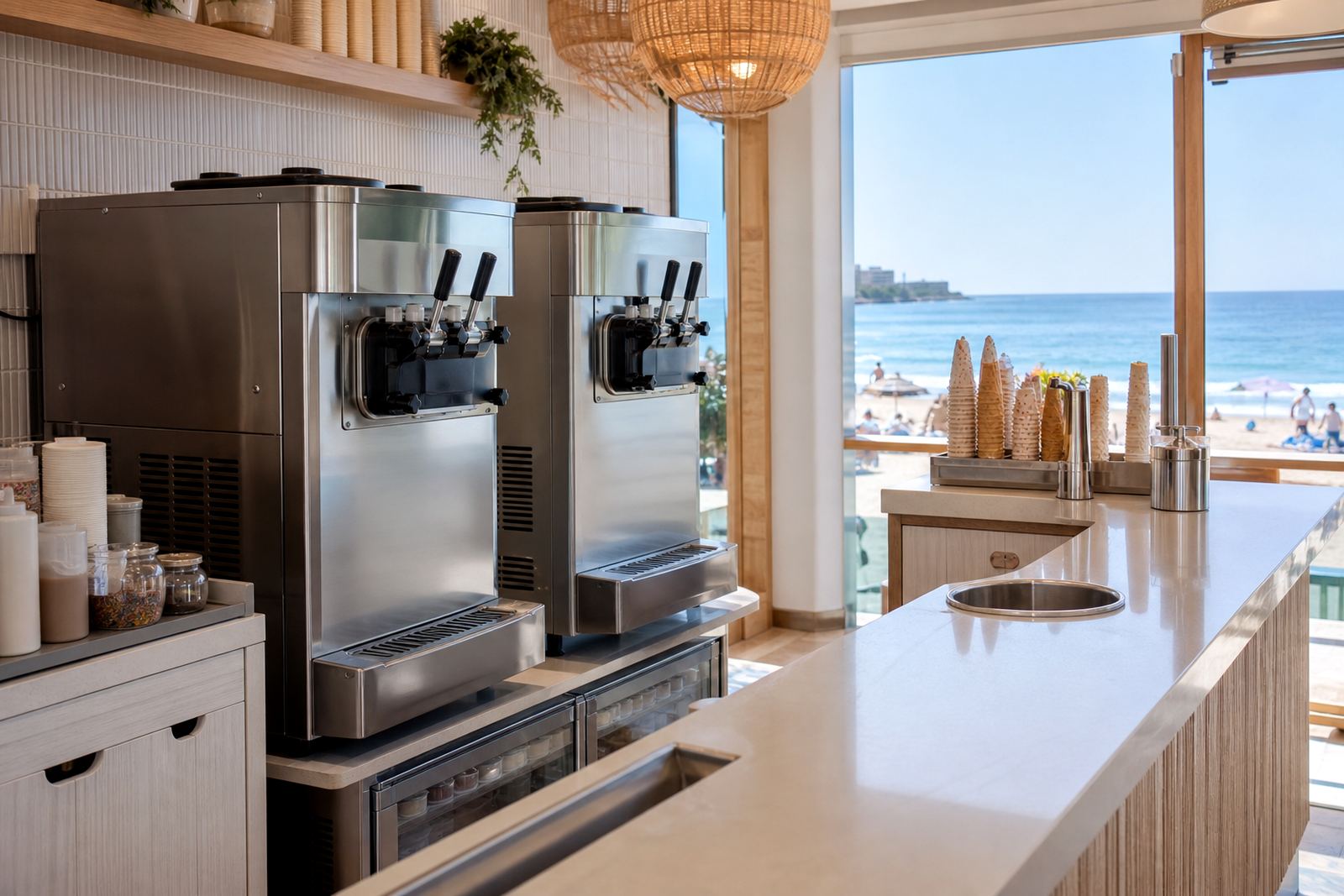
The Beachfront Trade Unit is a practical frozen dessert package set up for coastal trade, holiday traffic and seasonal spikes. It is suited to operators who need a machine that can handle steady service during weekend rushes, school holidays and summer crowds without making the front counter complicated to run.
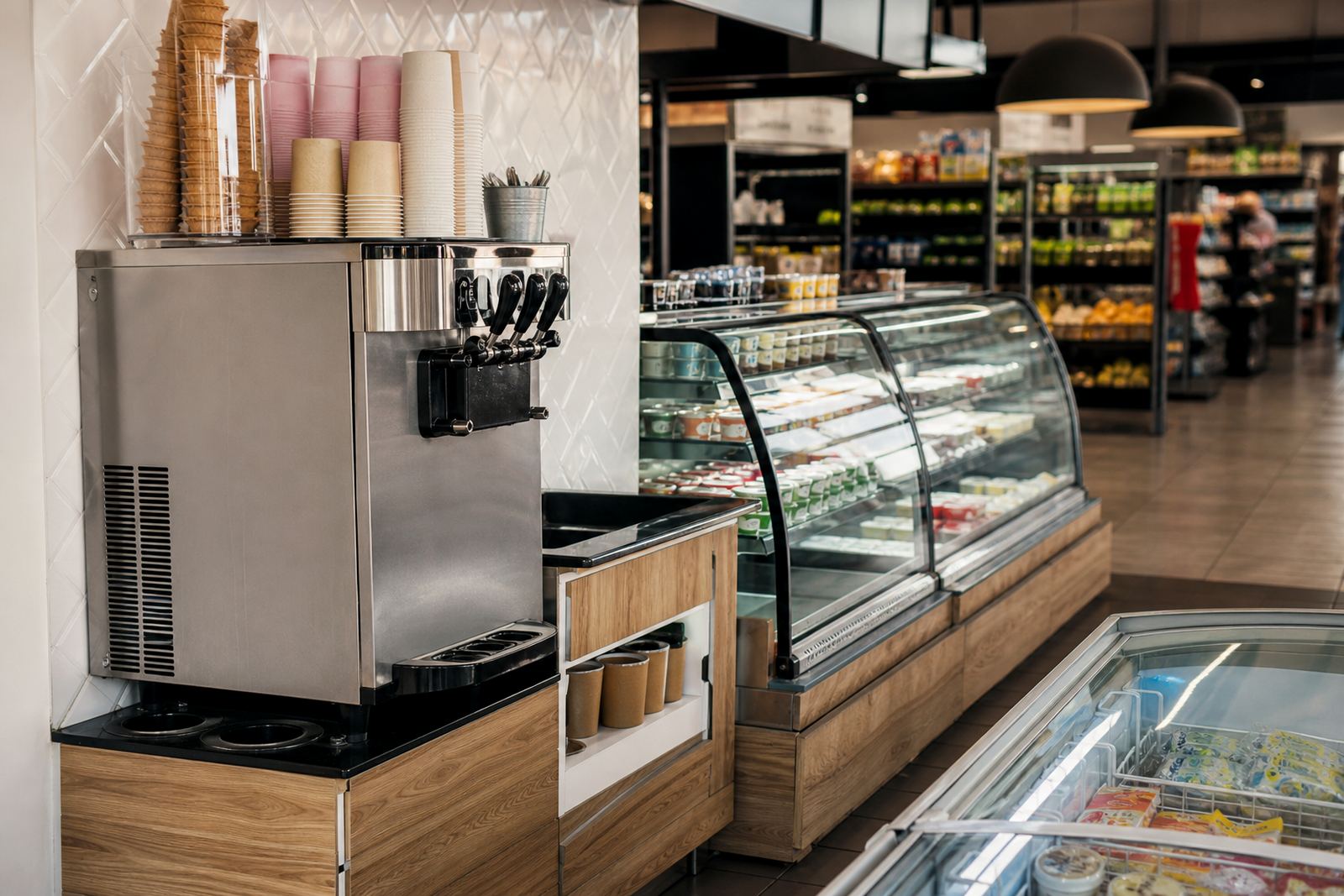
This package is commonly used for soft-serve or frozen yoghurt service, depending on the model selected. It is a good fit for beachfront cafes, promenade kiosks, takeaway counters and restaurant dessert stations where space is limited but customer flow can rise sharply from one hour to the next.
Durban operators often ask for equipment that can cope with humid air, salt in the atmosphere and frequent door opening. That matters because coastal conditions can affect switches, seals and the way a machine is cleaned and stored. The Beachfront Trade Unit is specified with everyday service in mind, so your team can keep serving even when the weather changes and the queue builds.
Size options and output choices
There is no single setup that suits every site, so the unit is supplied in several output and footprint options. Smaller counters in Umhlanga or Pietermaritzburg may only need a compact single-flavour machine, while a larger beachfront shop in Durban or Cape Town can benefit from a higher output machine with more holding capacity.
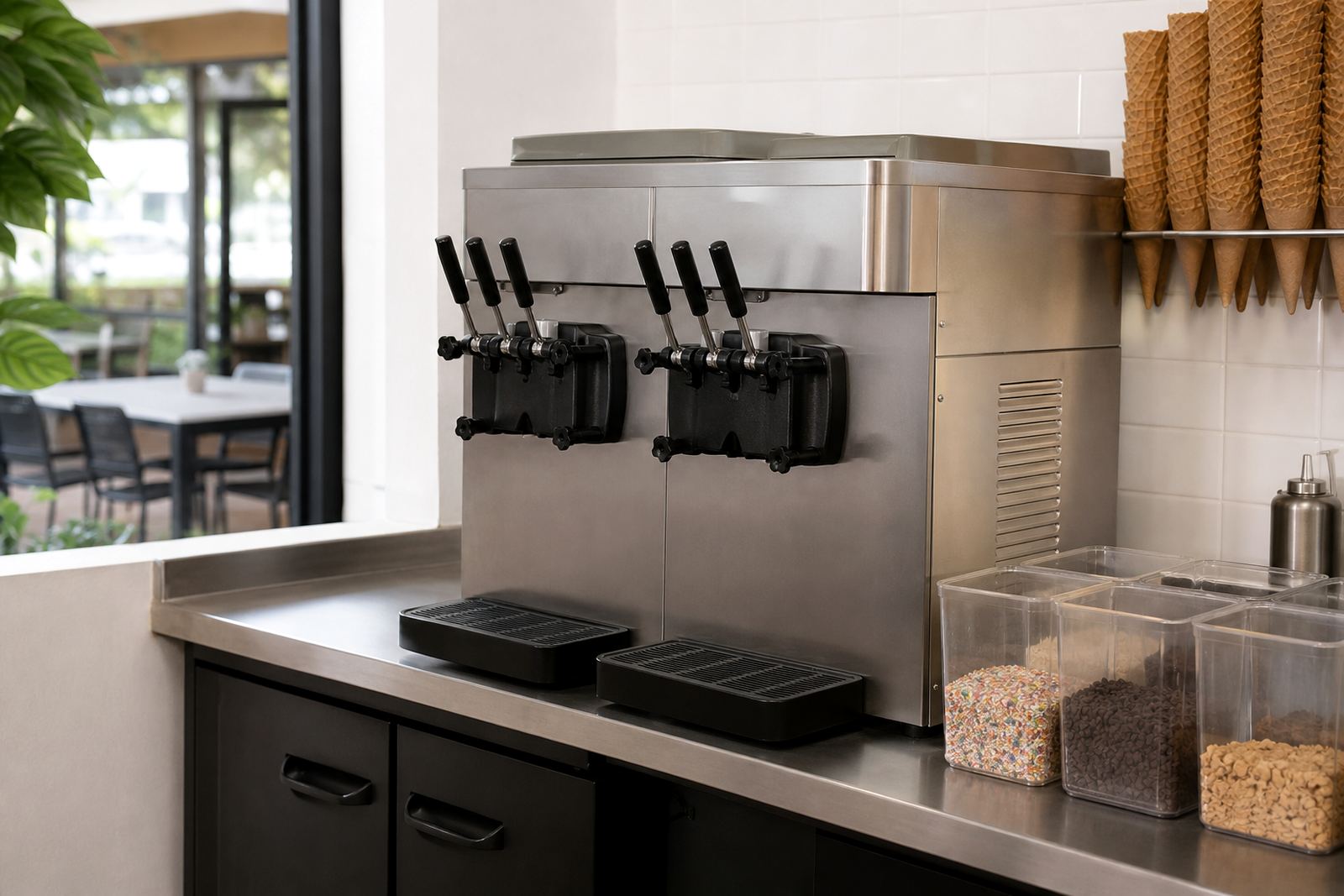
Typical options include one-flavour and dual-flavour formats, with gravity-feed or pump-assisted product delivery depending on the consistency you want. A single-flavour unit keeps the counter simple and can suit a lower-volume kiosk, while a dual-flavour machine gives you more flexibility for mixed serves, swirls and seasonal menu changes.
- Compact counter unit for limited floor space
- Single-flavour or dual-flavour output
- Air-cooled and water-cooled versions, depending on site conditions
- Mix hopper and cylinder sizes selected to match expected daily volume
- Optional cone holder and topping space for service speed
For busy tourist spots, it is worth matching the machine size to peak demand rather than average demand. A unit that is too small will force long waits at exactly the times you want to sell most, while a unit that is too large can use more power and take up valuable prep space.
Where it suits best along the coast and inland
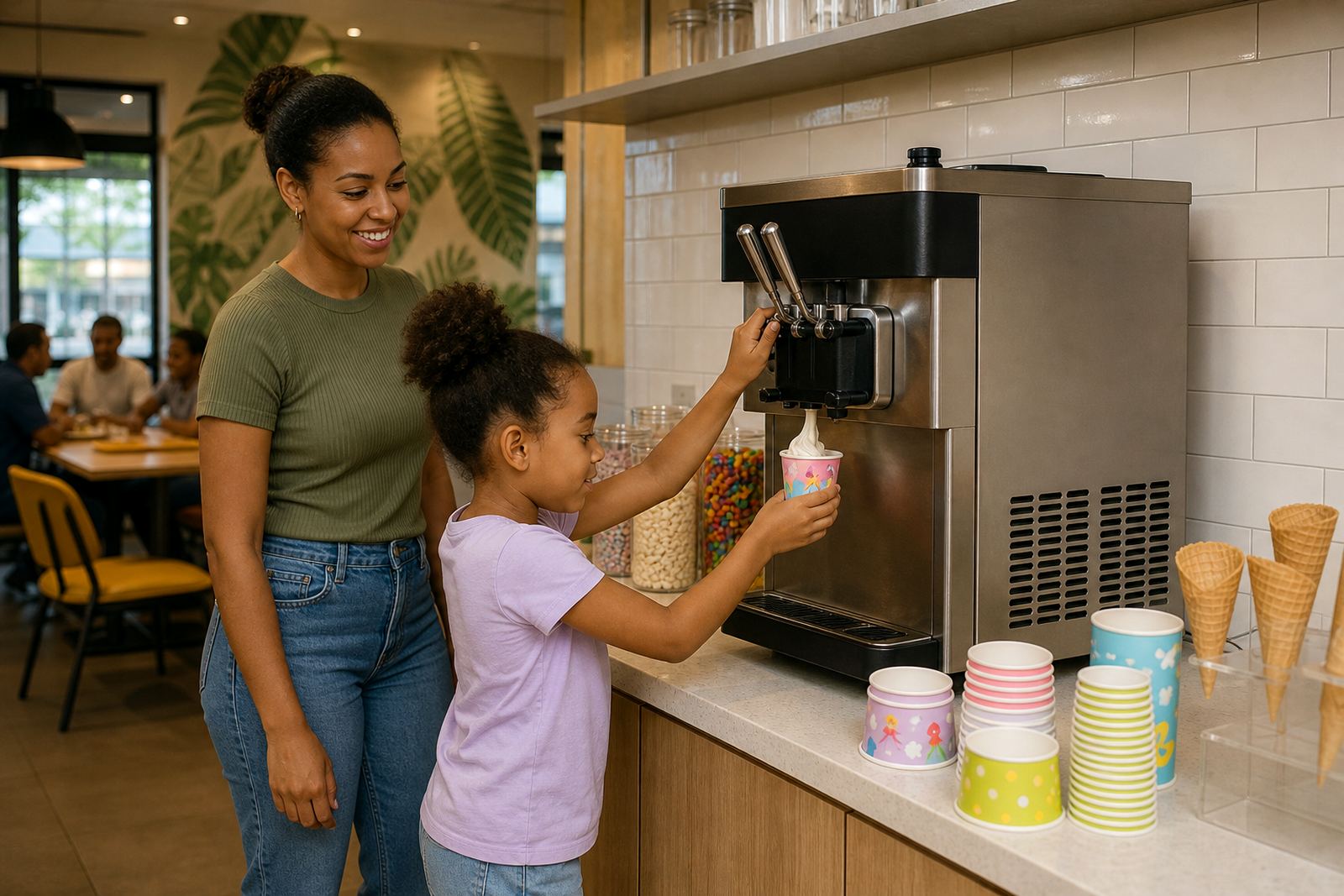
This package works well in places where dessert sales depend on weather, weekend trade and holiday foot traffic. It is often chosen for beachfront restaurants, marina cafes, ice cream kiosks, garden centres, family entertainment sites and mall food counters that want a simple frozen offer with low staff training demands.
Coastal sites in Durban, Gqeberha and Cape Town may need extra attention to airflow, corrosion resistance and daily wiping down of external surfaces. Inland locations such as Johannesburg and Pretoria can also use the unit effectively, especially in high-traffic areas where customers want a quick cold dessert after lunch or during warm months.
If your business trades near the sea, it is sensible to keep the machine under cover and away from direct spray. Even a good unit will last longer when it is protected from windborne sand, damp floors and constant exposure to salt air.
- Beachfront kiosks and promenade counters
- Cafes serving quick desserts and takeaway treats
- Restaurants adding an easy dessert line
- Tourist sites with summer and holiday peaks
- School canteens and family venues with seasonal demand
Power, ventilation and site requirements
Before ordering, check the available power supply at the site and confirm whether the unit will run from standard single-phase power or needs a different electrical arrangement. A reliable socket position, correct breaker capacity and a clean route for the cable are basic checks that save time on installation day.
Air-cooled machines need good ventilation around the side and rear panels, so do not box them into a tight corner. That is especially important in warm coastal kitchens where heat builds up quickly. Water-cooled units may suit enclosed prep areas better, but they need a proper water supply and drain arrangement.
For many sites, the simplest setup is a level counter, access to cold storage for mix, a nearby handwash point and enough working room for cone supply and cleaning tools. If your premises are under a municipal or landlord fit-out rule, confirm the positioning before delivery so you do not have to move the unit after installation.
Load-shedding planning matters too. If your trade depends on long service windows, consider how the machine will be affected by interruptions and whether your operation has backup power for the rest of the shop. A dessert machine performs best when the whole site is kept stable, not just the machine itself.
Startup, cleaning and daily servicing
The Beachfront Trade Unit is intended for operators who want straightforward service routines. Once installed and commissioned, your team should be able to start up, fill, serve and clean the machine with clear instructions. Good training reduces waste, keeps the texture consistent and helps avoid the common issues that cause breakdowns later on.
Daily care should include rinsing, washing food-contact parts, checking seals and keeping the outside surfaces free of sticky build-up. In humid coastal areas, this is more than just tidiness, it helps prevent premature wear. A machine that is cleaned properly after service is far less likely to give trouble during the next busy spell.
- Rinse and wash at the end of each trading day
- Check mix levels and avoid running the hopper too low
- Wipe down vents and external panels to remove salt and dust
- Inspect seals, O-rings and product path components regularly
- Book preventive maintenance before peak season starts
Regular servicing can include mix calibration, deep cleaning, breakdown repairs, seal and parts replacement and season prep checks. For coastal trade, a planned service visit before summer is often a better investment than waiting until the first busy weekend exposes a fault.
What to confirm before you place the order
Before you commit, make sure the machine specification matches your menu and your site. The main questions are simple: how many flavours do you need, how many servings per hour do you expect, where will the machine sit, and what power is already available on site?
You should also check whether you need a full machine package or only a replacement unit, and whether cones, mixes and sanitising supplies should be included from the start. If the site is a new kiosk or a relocation, the logistics plan matters as much as the equipment itself because access, stairs, parking and delivery timing can all affect installation.
For coastal operators, it is wise to ask about ventilation, cleaning access and how the unit will be protected after trading hours. A practical question now can prevent a costly change later, especially when the season is already underway and every day of service counts.
If you are unsure which size to choose, provide the expected trade area, daily footfall and the type of dessert you want to sell. That information makes it easier to match the machine to your counter space and turnover, without overspending on capacity you will not use.
Our team in Springfield Park supports customers across Durban, Johannesburg, Pretoria, Cape Town, Gqeberha and Pietermaritzburg, with enquiries handled through the form on our contact page. If your site has special access or timing needs, include that from the start so the setup can be planned properly.
Key facts
| Product type | Soft-serve or frozen yoghurt machine package |
|---|---|
| Configuration | Single-flavour or dual-flavour options |
| Cooling | Air-cooled or water-cooled, depending on site |
| Power | Site-specific single-phase or alternative electrical setup |
| Best use | Cafes, kiosks, restaurants and tourist trade |
| Support | Installation, training, servicing and repairs available |