
What the Family Restaurant Unit does at service time
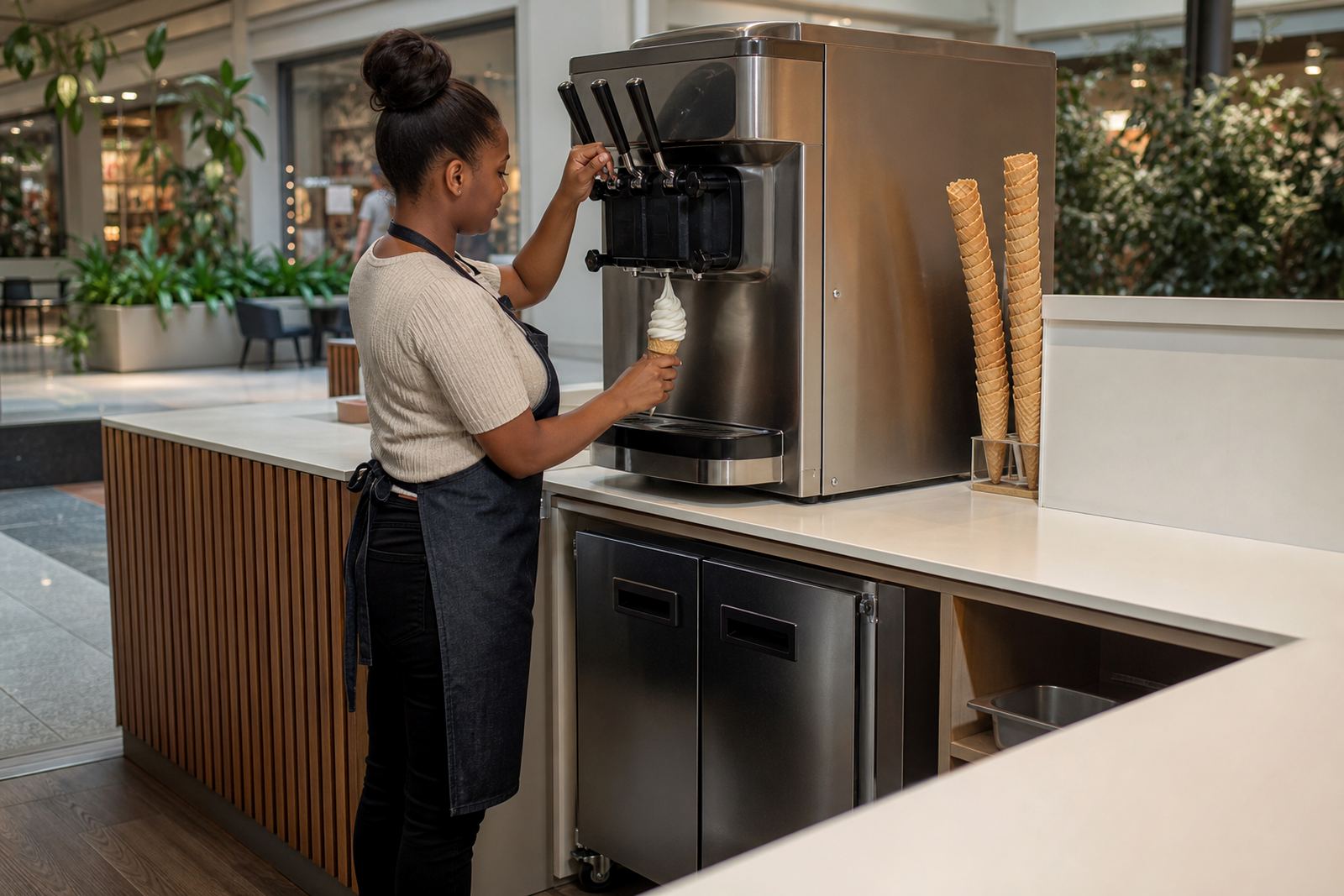
This unit is built for restaurants that serve lunches, suppers and weekend trade where desserts need to move quickly. It gives you a consistent portion of soft-serve or frozen yoghurt, so staff can plate desserts in seconds instead of making a fresh dessert from scratch every time. For family restaurants in Durban, Johannesburg, Pretoria, Cape Town and Gqeberha, that kind of consistency helps when tables turn faster over school holidays and weekend rushes.
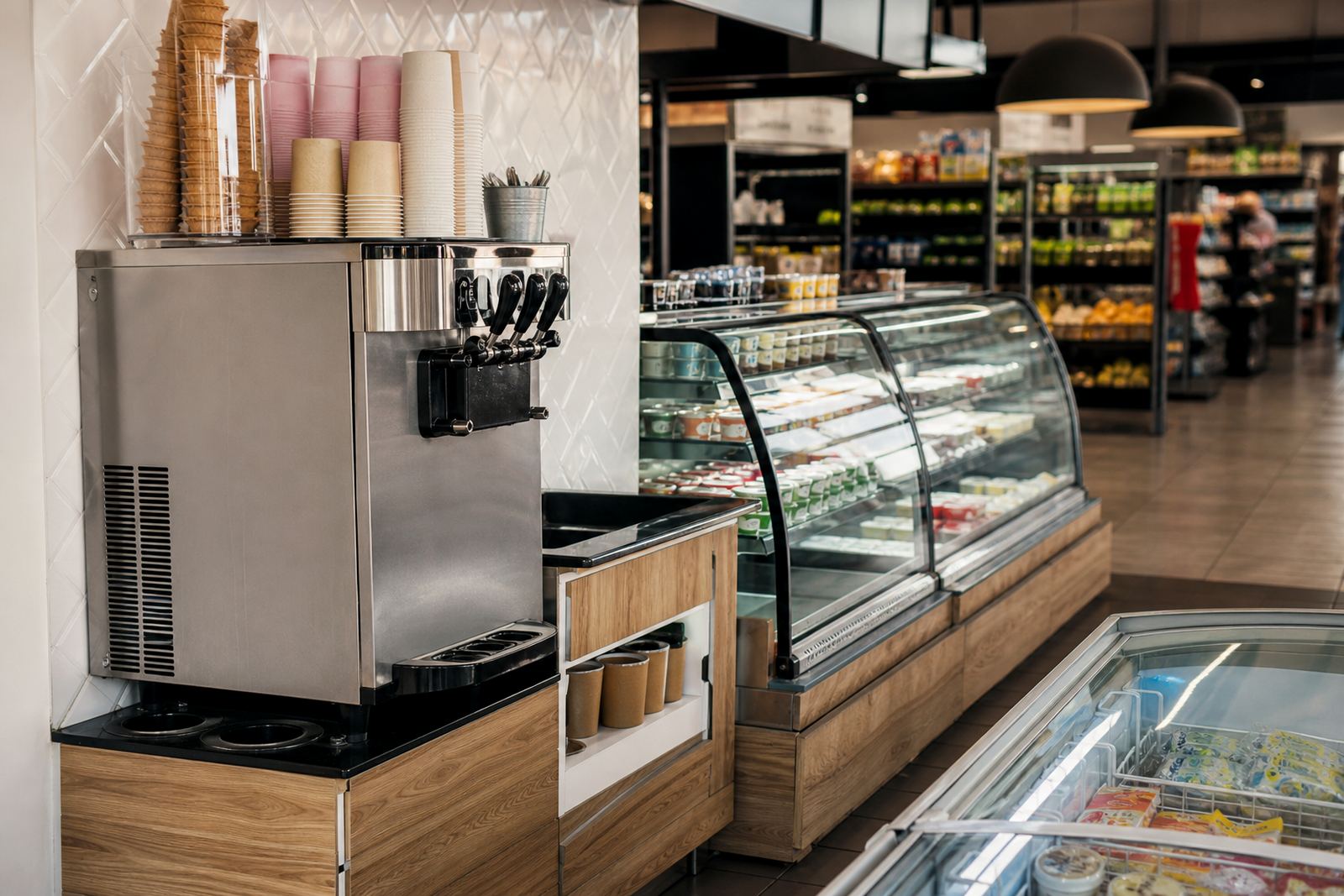
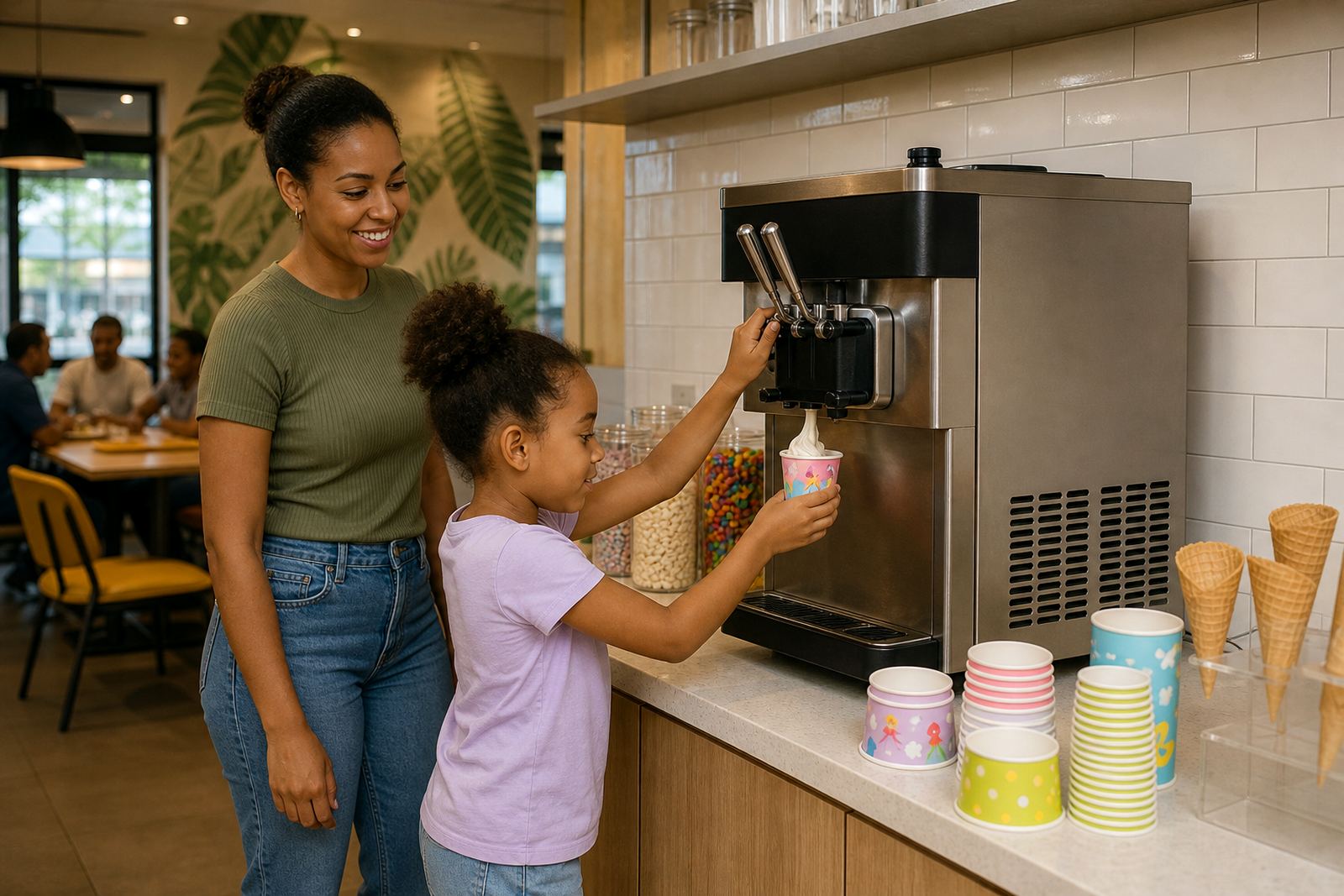
The machine is suited to indoor counter service, dessert stations and takeaway counters. It is also a strong choice for mixed menus where ice cream sundaes, cones, waffle bowls and plated desserts are all part of the offer. The unit is designed for daily use and regular refilling, with controls that are easy for front-of-house teams to learn. One of the main benefits is that it keeps output steady even when the service team is busy and the kitchen is already under strain.
- Suitable for soft-serve and frozen yoghurt service
- Helps keep portion size more consistent from one serving to the next
- Works well in family dining rooms, kiosks and dessert counters
- Simple controls for staff rotation and shift changes
Sizes and configuration options for different restaurant floors
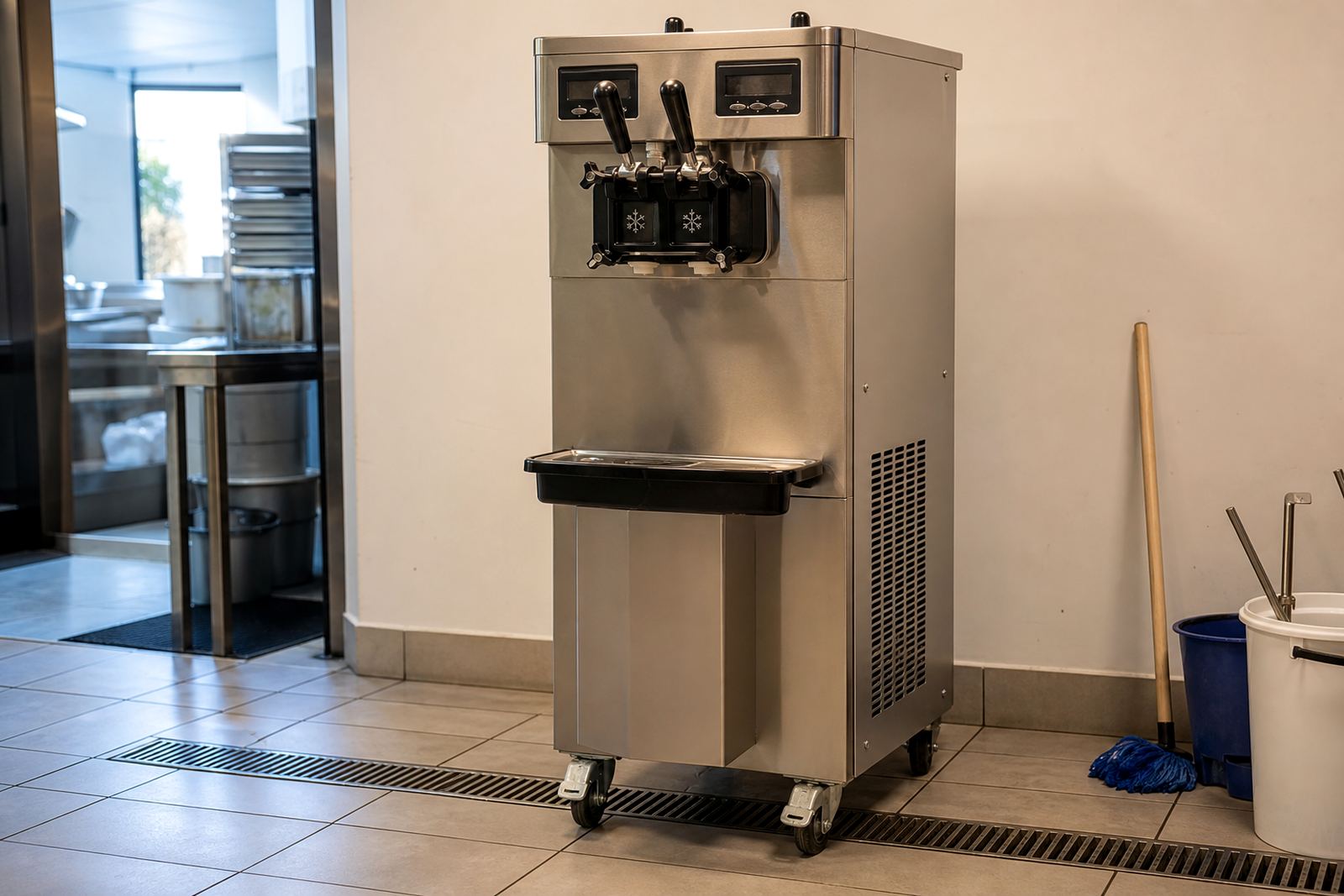
Family restaurant operations vary a lot, so the unit is supplied in different output sizes and cabinet layouts. Smaller restaurants often choose a single-flavour counter unit where floor space is limited. Larger stores, especially those with a dessert focus, may prefer a dual-flavour or twin-cylinder setup so they can offer two flavours plus a mix option. If you have a compact servery or a tight back counter in Springfield Park or Umhlanga, the footprint matters just as much as the output.
Typical options include air-cooled and water-cooled versions, bench-top or floor-standing bodies, and hopper sizes that suit low to medium or medium to high throughput. A smaller family restaurant may only need enough capacity for after-school and evening trade, while a busier site may want extra buffer for school holidays, long weekends and load-shedding planning. The right option depends on your expected covers, the space you have available and how often you want to refill product through the day.
- Single-flavour or dual-flavour options
- Bench-top or floor-standing format
- Air-cooled or water-cooled cooling system
- Low, medium or higher output configurations
Where it suits best in family dining and casual eateries
This machine suits restaurants that want dessert sales without turning the kitchen into a production line. It is a practical fit for family diners, pizza restaurants, burger restaurants, buffet-style venues, cafes with a dessert counter and kiosks that rely on fast service. In coastal areas like Durban and Gqeberha, a well set-up machine can also handle the humidity better when the service area is kept clean and well ventilated. In inland locations like Pretoria and Johannesburg, the focus is often on service speed, energy planning and making sure the unit sits in a stable position close to the serving point.
It is also a sensible choice for venues that want a lower-waste dessert option. Soft-serve and frozen yoghurt can be portioned accurately, which helps with stock control. If your menu already includes waffles, shakes, cakes or pastries, the machine gives you another item that can be sold with minimal prep time. That makes it useful for restaurants trying to improve average spend per table without adding much labour. For a busy family restaurant, that extra dessert sale often comes down to how easy it is for the team to serve it quickly and cleanly.
Power, cooling and site setup before installation
Before installation, it is important to check the available power supply, ventilation and floor space. Depending on the model, the unit may require a standard single-phase electrical supply or a higher-capacity connection. Some sites also need a water connection if they choose a water-cooled version. The machine should be placed where staff can refill it, clean around it and serve from it without crossing too many service paths. A stable power source matters in areas affected by load-shedding, so many operators plan for backup power and a proper shutdown procedure.
For restaurants with limited back-of-house room, it helps to measure the exact area first and check the service door width, counter height and access path for delivery. If you are relocating a site or fitting out a new restaurant, it is worth planning for the machine, cone storage and mix storage together. That saves rework later. Our team handles machine installation, startup commissioning and site relocations, so the unit is set up correctly from day one, with the mix output checked before trading starts.
- Check power supply, plug point position and circuit capacity
- Allow space for airflow around the machine
- Confirm access for delivery and future servicing
- Plan for generator or inverter use where required
Care, cleaning and preventative servicing that keeps trade moving
Like any food service machine, this unit works best when it is cleaned and serviced on schedule. Daily cleaning keeps product quality consistent and helps reduce the risk of blocked passages, worn seals or sticky build-up. In busy family restaurants, the biggest problems often come from rushed closing procedures, so it helps to assign the task clearly and keep the cleaning kit nearby. A proper clean also makes the next opening shift quicker, which matters when the breakfast team is already setting up.
We recommend preventative maintenance, deep clean service and periodic seal and parts checks to keep the machine in good working order. Mix calibration is also important because the final texture and overrun can change if the settings drift. If your restaurant is near the coast, salt air and moisture can affect exposed components over time, so a regular inspection schedule is worth it. We also support sanitising supplies and season prep checks for venues that need the machine ready before school holidays or peak summer trade.
- Daily rinse and clean after service
- Regular deep clean service and sanitising checks
- Seal, wear part and calibration inspections
- Seasonal preparation before busy trading periods
What to check when ordering the right unit
When choosing a Family Restaurant Unit, it helps to look beyond the machine itself and think about how it will work in your restaurant. Start with expected servings per hour, available floor space and whether you want one flavour or two. Then check the mix type you plan to use, whether you need cones as part of the offer, and how much storage space you have for dry stock. If the unit is going into a restaurant that already has a full kitchen line, the dessert machine should complement the flow not block it.
You should also confirm whether you need installation, operator training and after-sales support at the same time. Staff who understand startup, cleaning and shut-down procedures are much less likely to cause downtime. Our team in Springfield Park supports customers across Durban, Umhlanga, Pietermaritzburg and other major centres, with phone support and on-site servicing arranged through the enquiry form. That gives restaurants a practical way to keep dessert service going through ordinary trade, busy weekends and the odd power interruption.
- Number of servings needed per hour
- Single or dual flavour preference
- Available power supply and space
- Need for cones, mixes and sanitising supplies
Key facts
| Product type | Family restaurant soft-serve and frozen yoghurt unit |
|---|---|
| Output | Suitable for low to medium daily dessert volumes |
| Flavour setup | Single-flavour or dual-flavour options |
| Cooling system | Air-cooled or water-cooled models |
| Power | Single-phase or higher-capacity supply depending on model |
| Typical use | Restaurants, cafes, kiosks and dessert counters |